Fast fashion brands flood the market with cheap, trendy clothing at an unsustainable rate, creating enormous environmental and social harm. Despite their attempts at greenwashing (especially those involving the use of sustainability labels covering environmental or social aspects), their business model is fundamentally incompatible with true sustainability.
Here are four key reasons why fast fashion will never be green, and why we should slow down the fast fashion industry!
Four reasons Fast Fashion will never be green
- Overproduction and waste
- Resource-intensive supply chains
- Exploitative labour practices
- Encouraging disposable consumption
- And the path toward rejecting fast fashion!
1. Overproduction and waste: a never-ending cycle of fast fashion
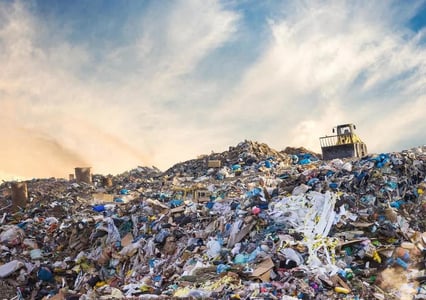
Fast fashion thrives on overproduction. Brands like Shein, Temu, Zara, and H&M release hundreds of new designs weekly, fuelling a culture of overconsumption. But what happens to the clothes once the trends fade? Millions of garments end up in landfills or are incinerated each year, with devastating environmental consequences.
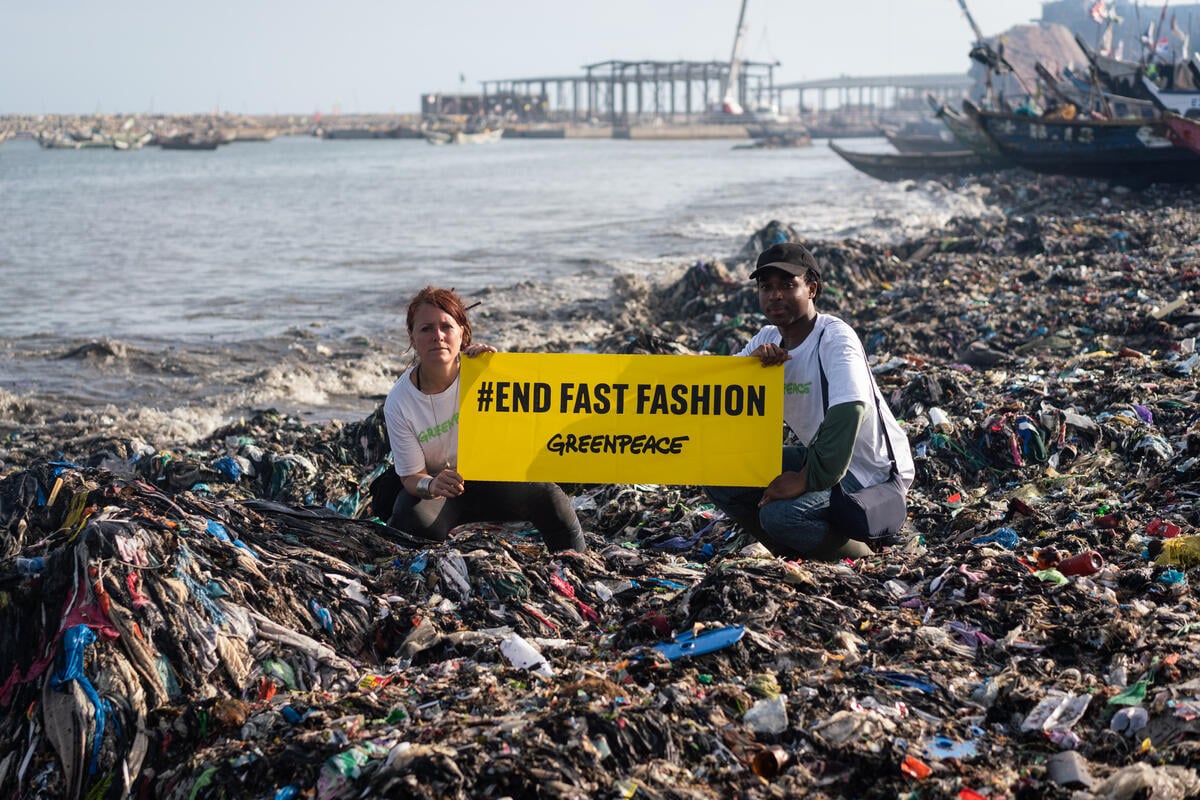
Greenpeace has extensively documented the waste crisis caused by fast fashion. A recent investigation in Ghana highlighted the dire consequences of this overproduction. According to Greenpeace Africa, Accra’s largest second-hand market is now a dumping ground for unwearable clothing, much of it imported from Europe and North America. With low-quality materials making resale impossible, vast quantities of garments are discarded, forming towering waste mountains or being burned in public washhouses, releasing toxic fumes into the atmosphere.
Even brands that claim to use “recycled” materials cannot escape the sheer volume of waste they produce. The paradox of fast fashion is that even supposedly sustainable garments are produced at such a scale that their environmental benefits are nullified. Circularity alone cannot solve fast fashion’s waste problem; a systemic shift toward slow fashion is the only real solution.
The scale of fast fashion waste is so extreme that it is visible from space. In Chile’s Atacama Desert, vast mountains of discarded clothing – including unsold and second-hand garments from the US, Europe, and Asia – continue to pile up. Aerial and satellite images reveal an environmental disaster where fast fashion waste accumulates in what should be one of the world’s most pristine ecosystems. Despite local efforts to repurpose some of the waste, the sheer volume remains overwhelming, showcasing the industry’s relentless overproduction and inability to deal with its own refuse.
2. Resource-intensive supply chains: the hidden environmental cost of fast fashion
Fast fashion’s reliance on resource-heavy materials makes it inherently unsustainable. Cotton farming consumes vast amounts of water and pesticides, while polyester – derived from fossil fuels – contributes to microplastic pollution in oceans and rivers. Even so-called “sustainable” fabrics require energy-intensive processes and chemical treatments that damage ecosystems.
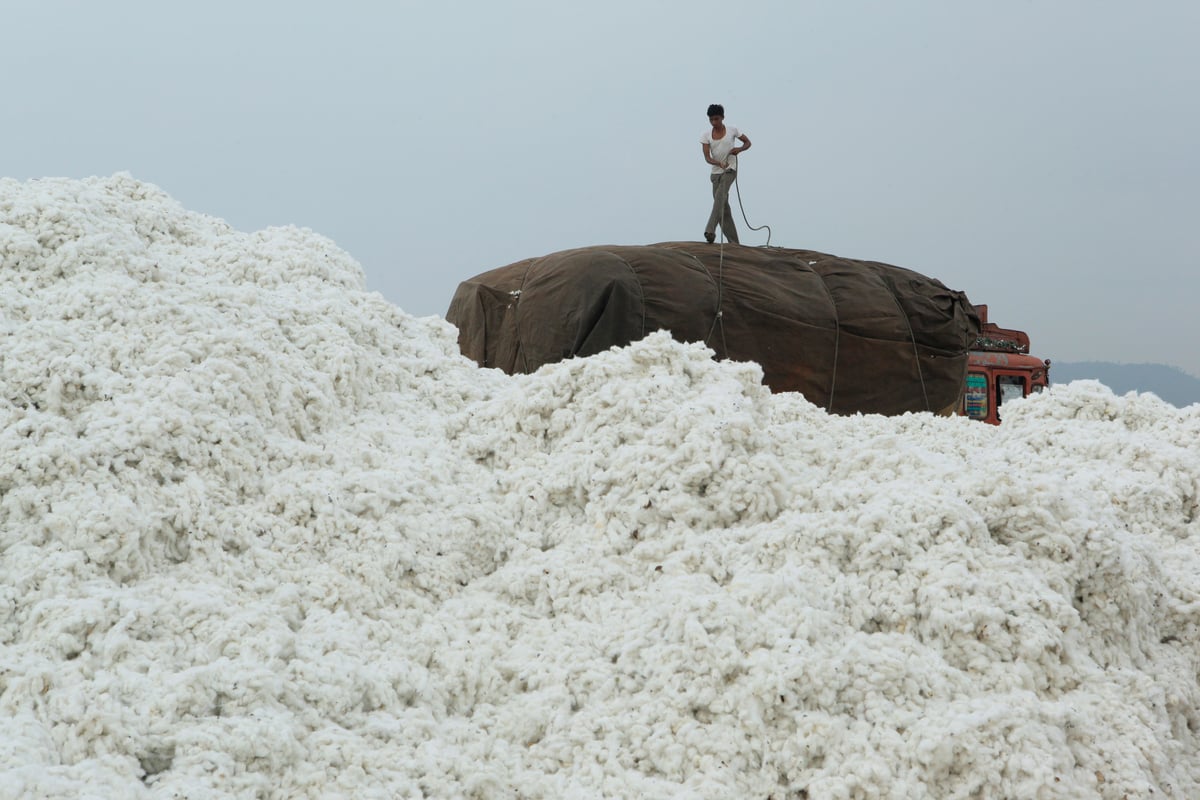
The industry is the second-largest consumer of water worldwide, with textile production consuming vast quantities of this precious resource. For instance, producing a single pair of jeans requires approximately 7,000 liters of water, while a typical T-shirt takes about 2,700 liters – the amount an average person drinks over 900 days.
Beyond consumption, the fashion industry is a significant polluter of water resources. Textile processing contributes to 20% of global water pollution, making it the second-largest polluter of freshwater resources on the planet. The dyeing process alone utilises 1.7 million tonnes of various chemicals, many of which are hazardous and leave a lasting impact on the environment.
A Greenpeace Spain investigation tracked the journey of second-hand clothing deposited in collection bins. Shockingly, many items were exported thousands of miles rather than being properly recycled, adding to the industry’s already enormous carbon footprint.
Meanwhile, toxic chemicals used in textile production pollute rivers and drinking water supplies worldwide. Greenpeace Africa’s report Fast Fashion, Slow Poison exposes how discarded textiles leach hazardous substances into Ghanaian soil and waterways, posing long-term health risks to local communities.
3. Exploitative labour practices: the human cost of cheap clothing in the fast fashion industry
True sustainability extends beyond environmental impact – it must also account for social justice. Fast fashion brands rely on low-wage labour in countries with weak environmental and labour protections. Factories in Bangladesh, Vietnam, China and many other countries are notorious for unsafe working conditions, poverty wages, and pollution that devastates local communities.
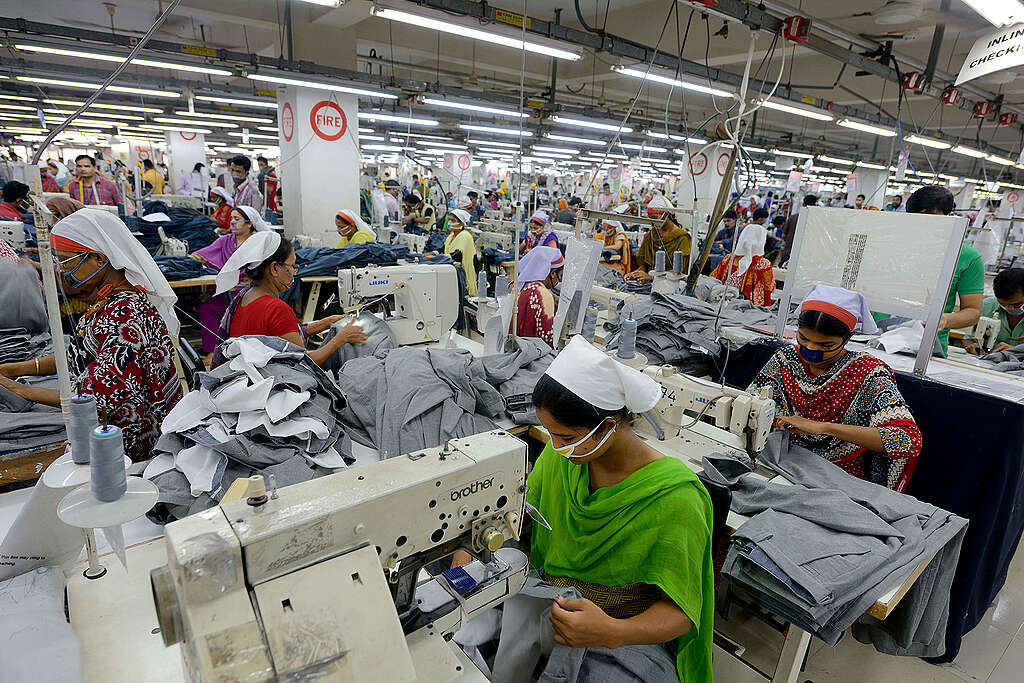
The 2023 Fashion Transparency Index reveals that nearly half (45%) of 250 major fashion brands lack transparency, with many failing to disclose the facilities where their clothes are made. The pay gap between fashion CEOs and garment workers continues to widen. Evidence is mounting that major fashion brands engage in violative and abusive practices towards their suppliers, and few disclose evidence of working with them under fair terms.
On April 24, 2013, the Rana Plaza building in Savar, Bangladesh, collapsed, resulting in the tragic loss of at least 1,134 lives and injuring over 2,500 individuals. This catastrophe starkly highlighted the devastating human cost of the fast fashion industry’s relentless pursuit of low-cost, high-speed production, often at the expense of worker safety and environmental considerations.
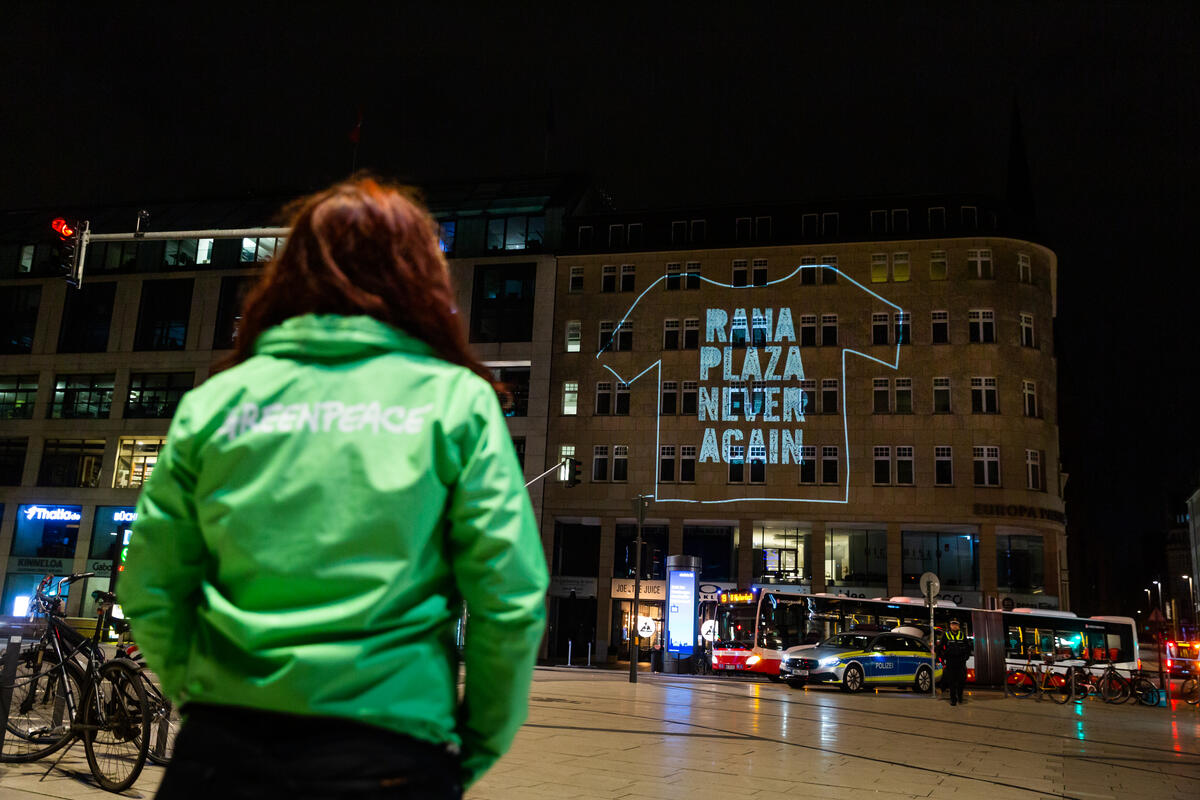
In the years following the disaster, while some progress has been made in raising awareness and implementing safety measures, the global fashion industry continues to produce over 100 billion garments annually, predominantly from petroleum-based polyester, perpetuating environmental degradation and maintaining hazardous working conditions.
4. Encouraging disposable consumption: the greenwashing trap of fast fashion
Fast fashion survives by convincing consumers to buy more than they need. Shein epitomises this disposable culture, producing tens of thousands of new styles weekly. While brands attempt to improve their image with “eco-friendly” collections, their fundamental business model remains unchanged.
Greenpeace International has called out this greenwashing, arguing that brands push so-called sustainable fashion lines while continuing to churn out billions of garments annually. True sustainability demands a shift away from excessive production and consumption, yet fast fashion brands refuse to adopt this model because it threatens their profits.
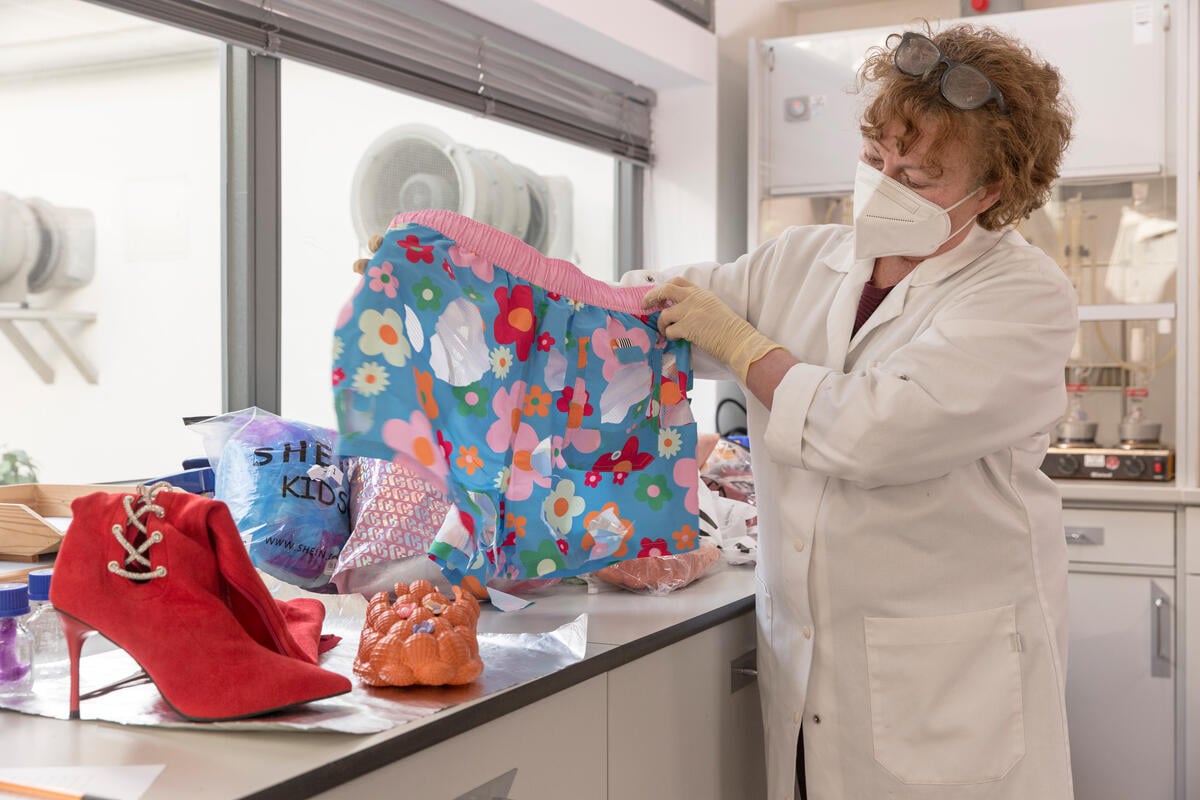
Shein has become the face of hyper-fast fashion, but rather than changing its exploitative practices, the brand invests heavily in lobbying to secure favourable policies. In the European Union, Shein has enlisted former European Commissioner for Budget and Digital Economy, German politician Günther Oettinger, to influence regulations in its favour. Oettinger has been working behind the scenes to shield the company’s business model from stricter EU policies, raising concerns over corporate influence on policymaking.
Similarly, in France, former minister of Emmanuel Macron’s government, Christophe Castaner, has recently been hired as a lobbyist for Shein, facing heavy criticism for defending the brand despite its widely documented environmental and social abuses. These cases illustrate how Shein strategically recruits former high-ranking officials to shape regulations in ways that prioritise corporate interests over sustainability.

The path forward: rejecting fast fashion and embracing second-hand and repairing
Despite the challenges, activists and grassroots movements continue to fight back. Environmentalists and campaigners are leading efforts to hold fast fashion accountable for its environmental destruction. Drag artists have also joined the movement, using creative activism to challenge fashion’s role in plastic pollution.
![<!-- wp:planet4-block-templates/page-header {"mediaPosition":"right","metadata":{"categories":["page-headers"],"patternName":"p4/page-header-img-right","name":"Page Header with image on the right"}} -->
<!-- wp:group {"align":"full"} -->
<div class="wp-block-group alignfull"><!-- wp:group {"className":"container"} -->
<div class="wp-block-group container"><!-- wp:media-text {"align":"full","mediaPosition":"right","mediaId":74523,"mediaLink":"https://www.greenpeace.org/aotearoa/foodfarming/meat-dairy-agricultural-methane-emissions/methane-cooks-the-climate-action-at-fonterra-in-te-rapa-new-zealand-2/","mediaType":"image","imageFill":false,"className":"is-pattern-p4-page-header is-style-parallax"} -->
<div class="wp-block-media-text alignfull has-media-on-the-right is-stacked-on-mobile is-pattern-p4-page-header is-style-parallax"><div class="wp-block-media-text__content"><!-- wp:group -->
<div class="wp-block-group"><!-- wp:heading {"level":1,"placeholder":"Enter title","backgroundColor":"white"} -->
<h1 class="wp-block-heading has-white-background-color has-background" id="h-agricultural-emissions-and-the-meat-amp-dairy-industry">Agricultural emissions and the meat & dairy industry</h1>
<!-- /wp:heading --></div>
<!-- /wp:group -->
<!-- wp:paragraph {"placeholder":"Enter description","style":{"typography":{"fontSize":"1.25rem"}}} -->
<p style="font-size:1.25rem">Agricultural emissions are cooking the climate. Here’s everything you need to know about the intensive livestock industry, and its rising methane emissions.</p>
<!-- /wp:paragraph --></div><figure class="wp-block-media-text__media"><img src="https://www.greenpeace.org/static/planet4-aotearoa-stateless/2025/10/0c32a191-gp0su2qer_low-res-800px.jpg" alt="" class="wp-image-74523 size-full"/></figure></div>
<!-- /wp:media-text --></div>
<!-- /wp:group --></div>
<!-- /wp:group -->
<!-- /wp:planet4-block-templates/page-header -->
<!-- wp:paragraph -->
<p>Agricultural emissions from industrial meat and dairy production are cooking the climate. Intensive livestock farming is expanding globally, leading to deforestation and rising methane emissions.</p>
<!-- /wp:paragraph -->
<!-- wp:paragraph -->
<p>Meanwhile, disasters fuelled by climate change - storms, droughts, cyclones, and wildfires - are intensifying and becoming increasingly common. They are putting the food and agriculture sector at risk and jeopardising farm livelihoods.</p>
<!-- /wp:paragraph -->
<!-- wp:paragraph -->
<p>You’ve heard about Big Oil’s role in fuelling the climate crisis - but did you know that the intensive livestock industry - AKA Big Meat and Dairy - are playing a big role in making it worse?</p>
<!-- /wp:paragraph -->
<!-- wp:paragraph -->
<p>To add insult to injury, rich governments are right now doing the bidding of livestock industry lobbyists, and rolling back urgently needed climate action on agriculture.</p>
<!-- /wp:paragraph -->
<!-- wp:paragraph -->
<p>Here’s everything you need to know about the intensive livestock industry, and how their actions are cooking the planet.</p>
<!-- /wp:paragraph -->
<!-- wp:planet4-blocks/submenu {"title":"Quick links","levels":[{"heading":2,"link":true,"style":"bullet"}]} /-->
<!-- wp:spacer {"height":"20px"} -->
<div style="height:20px" aria-hidden="true" class="wp-block-spacer"></div>
<!-- /wp:spacer -->
<!-- wp:heading -->
<h2 class="wp-block-heading" id="whatismethane">What is methane? Why is methane such a big deal?</h2>
<!-- /wp:heading -->
<!-- wp:media-text {"mediaId":62025,"mediaLink":"https://www.greenpeace.org/aotearoa/climate-protest-at-fonterra-dairy-giant-hq-in-auckland-2/","mediaType":"image","imageFill":true} -->
<div class="wp-block-media-text is-stacked-on-mobile is-image-fill-element"><figure class="wp-block-media-text__media"><img src="https://www.greenpeace.org/static/planet4-aotearoa-stateless/2023/12/e7575d38-gp0stvnmt_medium_res_with_credit_line-1024x683.jpg" alt="Greenpeace Aotearoa activists turn dairy giant Fonterra's Auckland HQ into flood zone in climate protest. An activist holds a large pink banner reading 'big dairy big storms', in front of a mattress which has the same message. The activists delivered household items damaged in recent flooding from Cyclone Gabrielle and the Auckland Anniversary floods to Fonterra, in protest over livestock emissions. " class="wp-image-62025 size-full" style="object-position:50% 50%"/></figure><div class="wp-block-media-text__content"><!-- wp:paragraph {"placeholder":"Content…"} -->
<p>Methane is a superheating greenhouse gas, 80 times more powerful than carbon dioxide over a 20 year period. The largest source of human-made methane emissions globally is the intensive livestock industry - large-scale farming of animals like cows, pigs and sheep.</p>
<!-- /wp:paragraph -->
<!-- wp:paragraph {"placeholder":"Content…"} -->
<p>Methane is a big deal for our climate because it’s so powerful, but it also stays in the atmosphere for less time. That means that it has a massive impact on global temperature increase, but also that if we reduce methane emissions rapidly, we can cool the climate within our lifetimes.</p>
<!-- /wp:paragraph -->
<!-- wp:buttons -->
<div class="wp-block-buttons"><!-- wp:button -->
<div class="wp-block-button"><a class="wp-block-button__link wp-element-button" href="https://www.greenpeace.org/aotearoa/story/what-is-methane-the-invisible-gas-that-cooks-the-climate/">Read more on methane</a></div>
<!-- /wp:button --></div>
<!-- /wp:buttons --></div></div>
<!-- /wp:media-text -->
<!-- wp:spacer {"height":"20px"} -->
<div style="height:20px" aria-hidden="true" class="wp-block-spacer"></div>
<!-- /wp:spacer -->
<!-- wp:heading -->
<h2 class="wp-block-heading" id="climatepolluters">Who are the worst climate polluters in the meat and dairy industry?</h2>
<!-- /wp:heading -->
<!-- wp:paragraph -->
<p>Some of the worst climate polluters in the intensive livestock industry include:</p>
<!-- /wp:paragraph -->
<!-- wp:media-text {"mediaPosition":"right","mediaId":74515,"mediaLink":"https://www.greenpeace.org/aotearoa/protest-against-jbs-in-luxembourg/","mediaType":"image","mediaWidth":40,"imageFill":false} -->
<div class="wp-block-media-text has-media-on-the-right is-stacked-on-mobile" style="grid-template-columns:auto 40%"><div class="wp-block-media-text__content"><!-- wp:heading {"level":3} -->
<h3 class="wp-block-heading" id="h-1-jbs-the-world-s-biggest-meat-packer-and-worst-agricultural-polluter">1. JBS - the world’s biggest meat packer and worst agricultural polluter</h3>
<!-- /wp:heading -->
<!-- wp:paragraph -->
<p>Based in Brazil, JBS’ methane emissions are more than those of Shell and Exxon combined.</p>
<!-- /wp:paragraph -->
<!-- wp:paragraph -->
<p>JBS are also complicit in destroying the Amazon rainforest to make room for more cattle ranches.</p>
<!-- /wp:paragraph -->
<!-- wp:list {"ordered":true} -->
<ol class="wp-block-list"></ol>
<!-- /wp:list --></div><figure class="wp-block-media-text__media"><img src="https://www.greenpeace.org/static/planet4-aotearoa-stateless/2025/10/d95485c8-gp0su5b5y.jpg" alt="Greenpeace activists protest against JBS in Luxembourg. Two activists in green raincoats hold a large banner which reads 'JBS profits, forests burn'." class="wp-image-74515 size-full"/></figure></div>
<!-- /wp:media-text -->
<!-- wp:media-text {"mediaPosition":"right","mediaId":74249,"mediaLink":"https://www.greenpeace.org/aotearoa/small-ish-hero_02/","mediaType":"image","mediaWidth":40,"imageFill":false} -->
<div class="wp-block-media-text has-media-on-the-right is-stacked-on-mobile" style="grid-template-columns:auto 40%"><div class="wp-block-media-text__content"><!-- wp:heading {"level":3} -->
<h3 class="wp-block-heading" id="h-2-fonterra-the-world-s-largest-exporter-of-dairy-products">2. <strong>Fonterra - the world’s largest exporter of dairy products</strong></h3>
<!-- /wp:heading -->
<!-- wp:paragraph -->
<p>Fonterra is New Zealand’s worst climate polluter.</p>
<!-- /wp:paragraph -->
<!-- wp:paragraph -->
<p>Along with immense methane emissions, Fonterra is involved in pushing for weaker climate regulations, with its CEO Miles Hurrell chairing the notorious Global Dairy Platform in 2025.</p>
<!-- /wp:paragraph --></div><figure class="wp-block-media-text__media"><img src="https://www.greenpeace.org/static/planet4-aotearoa-stateless/2025/10/7d054262-small-ish-hero_02.jpg" alt="Projection onto the Fonterra headquarters in Auckland, showing a modified Fonterra farm sign reading “The nitrate emergency: It starts here”" class="wp-image-74249 size-full"/></figure></div>
<!-- /wp:media-text -->
<!-- wp:media-text {"mediaPosition":"right","mediaId":74517,"mediaLink":"https://www.greenpeace.org/aotearoa/delivering-dairytales-arlas-climate-commitments-challenged-by-activists-in-denmark/","mediaType":"image","mediaWidth":40,"imageFill":false} -->
<div class="wp-block-media-text has-media-on-the-right is-stacked-on-mobile" style="grid-template-columns:auto 40%"><div class="wp-block-media-text__content"><!-- wp:heading {"level":3} -->
<h3 class="wp-block-heading" id="h-3-arla-the-biggest-dairy-company-in-europe">3. <strong>Arla - the biggest dairy company in Europe</strong></h3>
<!-- /wp:heading -->
<!-- wp:paragraph {"placeholder":"Content…"} -->
<p>Arla produces huge amounts of methane from its milk supply.</p>
<!-- /wp:paragraph -->
<!-- wp:paragraph {"placeholder":"Content…"} -->
<p>Despite this, the company has no clear plan to cut methane emissions. Arla has also been accused of greenwashing. Its climate claims mislead consumers about the real impact of its dairy production.</p>
<!-- /wp:paragraph --></div><figure class="wp-block-media-text__media"><img src="https://www.greenpeace.org/static/planet4-aotearoa-stateless/2025/10/d28409a2-gp0su4ct2.jpg" alt="Greenpeace activists wearing cow heads hold banners reading 'Arla, no more dairytales. Reduce your methane emissions' in both English and Danish. Activists were protesting over the European dairy giant's immense livestock emissions." class="wp-image-74517 size-full"/></figure></div>
<!-- /wp:media-text -->
<!-- wp:spacer {"height":"20px"} -->
<div style="height:20px" aria-hidden="true" class="wp-block-spacer"></div>
<!-- /wp:spacer -->
<!-- wp:heading -->
<h2 class="wp-block-heading" id="cop30">BRIEFING: Methane and COP30</h2>
<!-- /wp:heading -->
<!-- wp:paragraph -->
<p>Methane is the fastest way to slow global heating. It traps 80 times more heat than CO₂ over 20 years and is responsible for nearly a third of current warming.</p>
<!-- /wp:paragraph -->
<!-- wp:paragraph -->
<p>But high-income, high-emitting nations such as New Zealand and Ireland are weakening their methane reduction targets under the misleading concept of “no additional warming” or “temperature neutrality.”</p>
<!-- /wp:paragraph -->
<!-- wp:paragraph -->
<p>Greenpeace is warning that this risks undermining the Paris Climate Agreement, and breaching international law. A briefing for those attending COP30 is available below.</p>
<!-- /wp:paragraph -->
<!-- wp:buttons -->
<div class="wp-block-buttons"><!-- wp:button -->
<div class="wp-block-button"><a class="wp-block-button__link wp-element-button" href="https://www.greenpeace.org/static/planet4-aotearoa-stateless/2025/11/01e2fea2-cop-30-policy-brief_-no-additional-warming-and-methane-final-31-oct.pdf">Read the policy brief</a></div>
<!-- /wp:button --></div>
<!-- /wp:buttons -->
<!-- wp:spacer {"height":"20px"} -->
<div style="height:20px" aria-hidden="true" class="wp-block-spacer"></div>
<!-- /wp:spacer -->
<!-- wp:heading -->
<h2 class="wp-block-heading" id="turningdowntheheat">REPORT: <strong>Turning Down the Heat</strong></h2>
<!-- /wp:heading -->
<!-- wp:columns -->
<div class="wp-block-columns"><!-- wp:column -->
<div class="wp-block-column"><!-- wp:paragraph -->
<p>The meat and dairy industry is sitting on a big dirty secret: its massive methane emissions. Between 1910 and 2015, there was an enormous increase in both the production and consumption of meat and dairy. Livestock is the single biggest source of human-made methane.</p>
<!-- /wp:paragraph -->
<!-- wp:paragraph -->
<p>Reducing methane associated with meat and dairy is a critical lever that will influence how quickly or slowly the world heats up in the near-term. Cutting large amounts of methane through a shift in how we produce and consume meat and dairy is key, together with a fossil fuel phaseout, for an iconic victory against catastrophic climate change.</p>
<!-- /wp:paragraph -->
<!-- wp:paragraph -->
<p>In this report, Greenpeace Nordic shows how changes in overproduction and overconsumption of meat and dairy could avert the worst of the climate crisis, reducing warming significantly by 2050.</p>
<!-- /wp:paragraph -->
<!-- wp:buttons -->
<div class="wp-block-buttons"><!-- wp:button -->
<div class="wp-block-button"><a class="wp-block-button__link wp-element-button" href="https://www.greenpeace.org/static/planet4-aotearoa-stateless/2025/10/192de9f2-2024.10.07_turning-down-the-heat-report-with-design_english-1.pdf">Read the report</a></div>
<!-- /wp:button --></div>
<!-- /wp:buttons --></div>
<!-- /wp:column --></div>
<!-- /wp:columns -->
<!-- wp:spacer {"height":"20px"} -->
<div style="height:20px" aria-hidden="true" class="wp-block-spacer"></div>
<!-- /wp:spacer -->
<!-- wp:heading -->
<h2 class="wp-block-heading" id="methanemetrics"><strong>Methane metrics</strong>: No additional warming</h2>
<!-- /wp:heading -->
<!-- wp:heading {"level":3} -->
<h3 class="wp-block-heading" id="h-no-additional-warming-gwp-climate-neutrality-and-more">'No additional warming', GWP*, climate neutrality, and more</h3>
<!-- /wp:heading -->
<!-- wp:paragraph -->
<p>These are all terms used by the intensive livestock industry to justify why they shouldn't have to deal with their outsized methane emissions. But they're fundamentally flawed.</p>
<!-- /wp:paragraph -->
<!-- wp:paragraph -->
<p>So why do big meat and dairy corporations and lobby groups love them so much?</p>
<!-- /wp:paragraph -->
<!-- wp:columns {"verticalAlignment":"center"} -->
<div class="wp-block-columns are-vertically-aligned-center"><!-- wp:column {"verticalAlignment":"center"} -->
<div class="wp-block-column is-vertically-aligned-center"><!-- wp:heading {"level":3} -->
<h3 class="wp-block-heading" id="h-what-is-no-additional-warming-0">What is 'no additional warming'?</h3>
<!-- /wp:heading -->
<!-- wp:paragraph -->
<p>'<strong>No additional warming' </strong>is a political trick dressed up as science.</p>
<!-- /wp:paragraph -->
<!-- wp:paragraph -->
<p>It pretends current methane emissions are fine - when in reality, they’re fuelling the climate crisis.</p>
<!-- /wp:paragraph -->
<!-- wp:paragraph -->
<p>This controversial accounting trick is designed to justify continued high levels of agricultural methane emissions - even as science shows they must fall fast.</p>
<!-- /wp:paragraph -->
<!-- wp:paragraph -->
<p>Agriculture industry lobby groups have pushed the concept of 'no additional warming' heavily, in an attempt to avoid having to deal with their outsized methane emissions.</p>
<!-- /wp:paragraph --></div>
<!-- /wp:column -->
<!-- wp:column {"verticalAlignment":"center"} -->
<div class="wp-block-column is-vertically-aligned-center"><!-- wp:image {"id":14099,"sizeSlug":"large","linkDestination":"none"} -->
<figure class="wp-block-image size-large"><img src="https://www.greenpeace.org/static/planet4-aotearoa-stateless/2020/07/1edfc797-gp01hrs_medium_res-1024x631.jpg" alt="" class="wp-image-14099"/></figure>
<!-- /wp:image --></div>
<!-- /wp:column --></div>
<!-- /wp:columns -->
<!-- wp:heading {"level":3} -->
<h3 class="wp-block-heading" id="h-no-additional-warming-resources">'No additional warming' resources</h3>
<!-- /wp:heading -->
<!-- wp:paragraph -->
<p>Below are some resources on 'no additional warming' and all things methane.</p>
<!-- /wp:paragraph -->
<!-- wp:columns -->
<div class="wp-block-columns"><!-- wp:column -->
<div class="wp-block-column"><!-- wp:heading {"level":4} -->
<h4 class="wp-block-heading" id="h-for-jounalists">For jounalists</h4>
<!-- /wp:heading -->
<!-- wp:paragraph -->
<p>Are you a journalist and curious about ‘no additional warming’? Want to know more about why climate scientists and environmentalists are so concerned about it?</p>
<!-- /wp:paragraph -->
<!-- wp:paragraph -->
<p>We’ve produced this media briefing on ‘no additional warming’ and methane emissions reductions to answer your questions!</p>
<!-- /wp:paragraph -->
<!-- wp:paragraph -->
<p>For additional questions, please <a href="mailto:rhiannon.mackie@greenpeace.org">reach out to our press contact</a>.</p>
<!-- /wp:paragraph -->
<!-- wp:buttons -->
<div class="wp-block-buttons"><!-- wp:button -->
<div class="wp-block-button"><a class="wp-block-button__link wp-element-button" href="https://www.greenpeace.org/static/planet4-aotearoa-stateless/2025/10/1896e4c3-greenpeace-media-briefing-no-additional-warming-gwp-and-methane-updated-october-2025.pdf">Resources for journalists</a></div>
<!-- /wp:button --></div>
<!-- /wp:buttons --></div>
<!-- /wp:column -->
<!-- wp:column -->
<div class="wp-block-column"><!-- wp:heading {"level":4} -->
<h4 class="wp-block-heading" id="h-for-policy-makers">For policy-makers</h4>
<!-- /wp:heading -->
<!-- wp:paragraph -->
<p>Are you working on climate policy and wondering why ‘no additional warming’ and ‘temperature neutrality’ are being brought up?</p>
<!-- /wp:paragraph -->
<!-- wp:paragraph -->
<p>Here’s a briefing for policy-makers on all things methane – and what good policy to tackle methane emissions from the intensive livestock industry should include.</p>
<!-- /wp:paragraph -->
<!-- wp:paragraph -->
<p>For more information or to meet the team, <a href="mailto:amanda.larsson@greenpeace.org">get in contact</a>.</p>
<!-- /wp:paragraph -->
<!-- wp:buttons -->
<div class="wp-block-buttons"><!-- wp:button -->
<div class="wp-block-button"><a class="wp-block-button__link wp-element-button" href="https://www.greenpeace.org/static/planet4-aotearoa-stateless/2025/10/7215d7a3-gpao-gwp_-methane-policy-briefing-unfccc-1-1.pdf">Resources for policy-makers</a></div>
<!-- /wp:button --></div>
<!-- /wp:buttons --></div>
<!-- /wp:column --></div>
<!-- /wp:columns -->
<!-- wp:spacer {"height":"20px"} -->
<div style="height:20px" aria-hidden="true" class="wp-block-spacer"></div>
<!-- /wp:spacer -->
<!-- wp:heading -->
<h2 class="wp-block-heading" id="h-take-action-against-agricultural-emissions"><strong>Take action against agricultural emissions</strong></h2>
<!-- /wp:heading -->
<!-- wp:group {"layout":{"type":"constrained","contentSize":"80%"}} -->
<div class="wp-block-group"><!-- wp:spacer {"height":"20px"} -->
<div style="height:20px" aria-hidden="true" class="wp-block-spacer"></div>
<!-- /wp:spacer -->
<!-- wp:planet4-blocks/take-action-boxout {"title":"Call for an end to meat and dairy expansion!","excerpt":"Prevent catastrophic climate change from superheating livestock industry emissions - sign the petition now.","link":"https://action.greenpeace.org.nz/petition/stop-intensive-meat-dairy-expansion-protect-climate-nature?utm_source=P4\u0026utm_campaign=Agriculture","linkText":"Add your name!","newTab":true,"imageId":69818} /-->
<!-- wp:spacer {"height":"20px"} -->
<div style="height:20px" aria-hidden="true" class="wp-block-spacer"></div>
<!-- /wp:spacer --></div>
<!-- /wp:group -->
<!-- wp:planet4-blocks/accordion {"title":"Frequently asked questions","tabs":[{"headline":"Why is it so hard to reduce methane emissions from livestock?","text":"It’s actually not hard to reduce agricultural methane emissions. We simply need fewer livestock, and less intensive methods of farming. A shift to more plant-based, ecological farming methods is both achievable and has many co-benefits for people, nature and animals.\u003cbr\u003e\u003cbr\u003eTo make that happen, we need decision-makers and world leaders to regulate the livestock industry, because voluntary efforts from the industry have proven not to be enough."},{"headline":"How can we reduce methane emissions from livestock?","text":"The easiest way to reduce agricultural methane emissions is to reduce stocking rates. That means fewer cows, sheep, pigs, or chickens creating methane. \u003cbr\u003e\u003cbr\u003eUnfortunately, there are not currently any technological solutions to reduce methane emissions at the scale or speed necessary to prevent climate chaos. That means we have to do what we can with the tools and knowledge already at our disposal."},{"headline":"How do we do farming differently? Is it even possible? What should agriculture look like?","text":"Ultimately, we need to diversify land use, away from intensive livestock - but that doesn’t mean stopping farming. We just need to change the way that we farm to ensure that our food systems are sustainable into the future.\u003cbr\u003e\u003cbr\u003eAlready, some farmers are shifting toward ecological, plant-based farming practices. It is not only possible, but it has many benefits for both people and the planet. But farmers need support to be able to scale up these practices."},{"headline":"Why is 'no additional warming' problematic?","text":"'No Additional Warming' is a problematic concept used to justify maintaining current levels of climate pollution. It suggests that as long as no extra global warming is produced - i.e. as long as levels of agricultural methane emissions remain stable - it’s okay to continue polluting the climate. It basically resets the status quo, enabling business as usual for agribusiness.\u003cbr\u003e\u003cbr\u003eAgribusiness has pushed for methane emissions targets to be set using the 'no additional warming' approach, arguing that because methane is a short-lived gas, they shouldn’t be responsible for the pollution they’re causing. This is patently false - methane is much more powerful than carbon dioxide, and does a significant amount of damage over its lifetime. In fact, reducing methane emissions rapidly is the climate emergency brake we need to prevent catastrophic climate change."},{"headline":"Who benefits from 'no additional warming'?","text":"The agribusiness lobby ultimately benefits from 'No Additional Warming' - while the rest of us, including farmers and rural communities, suffer from the consequences of weakening action on climate change.\u003cbr\u003e\u003cbr\u003eAgribusiness benefits because they get to continue making billions from their business-as-usual approach of continuously producing more livestock and more pollution."},{"headline":"Which countries are adopting the concept of 'No Additional Warming'?","text":"New Zealand has announced that it will rewrite its climate laws to adopt a new, weaker, methane target aligned with 'No Additional Warming'. It will also amend the law so that future methane targets are required to be set in line with 'No Additional Warming'. The Government aims to do this by the end of 2025.\u003cbr\u003e\u003cbr\u003eIreland is also looking to do the same, likely within the same timeframe. Paraguay and Uruguay are also looking into the concept.\u003cbr\u003e\u003cbr\u003ePrimarily, this is being adopted by wealthy export-driven nations with high levels of livestock emissions, as it means they can get away with doing less on climate change."},{"headline":"What alternatives are there for measuring methane?","text":"The Intergovernmental Panel on Climate Change (IPCC) uses a tool called GWP100 to measure methane emissions. This is the tool used for reporting on methane emissions to the UN Framework Convention on Climate Change (UNFCCC). It is the globally-agreed metric for measuring methane. The key difference is that it uses a baseline of not emitting - i.e. pre-industrial levels - rather than arbitrarily setting a baseline in the recent past."},{"headline":"But isn't methane a short-lived gas?","text":"Methane is an extremely powerful greenhouse gas. It is 80 times more powerful than carbon dioxide over a 20 year period. It is a short-lived gas, so stays in the atmosphere for less time than carbon dioxide, but still has a significant impact on the climate."},{"headline":"Why does methane matter anyway?","text":"Scientists have called methane our ‘emergency brake’ for preventing the worst of the climate crisis. Because it is a short-lived gas, if we reduce methane emissions now and keep them down, we can slow global temperature rise within our lifetimes. Every fraction of a degree matters when it comes to climate change."}],"className":"is-style-light"} -->
<section class="block accordion-block wp-block-planet4-blocks-accordion is-style-light"><header><h2 class="page-section-header">Frequently asked questions</h2></header><div class="accordion-content"><div class="accordion-headline" name="Why is it so hard to reduce methane emissions from livestock?">Why is it so hard to reduce methane emissions from livestock?</div><div class="panel panel-hidden"><p class="accordion-text">It’s actually not hard to reduce agricultural methane emissions. We simply need fewer livestock, and less intensive methods of farming. A shift to more plant-based, ecological farming methods is both achievable and has many co-benefits for people, nature and animals.<br><br>To make that happen, we need decision-makers and world leaders to regulate the livestock industry, because voluntary efforts from the industry have proven not to be enough.</p></div></div><div class="accordion-content"><div class="accordion-headline" name="How can we reduce methane emissions from livestock?">How can we reduce methane emissions from livestock?</div><div class="panel panel-hidden"><p class="accordion-text">The easiest way to reduce agricultural methane emissions is to reduce stocking rates. That means fewer cows, sheep, pigs, or chickens creating methane. <br><br>Unfortunately, there are not currently any technological solutions to reduce methane emissions at the scale or speed necessary to prevent climate chaos. That means we have to do what we can with the tools and knowledge already at our disposal.</p></div></div><div class="accordion-content"><div class="accordion-headline" name="How do we do farming differently? Is it even possible? What should agriculture look like?">How do we do farming differently? Is it even possible? What should agriculture look like?</div><div class="panel panel-hidden"><p class="accordion-text">Ultimately, we need to diversify land use, away from intensive livestock - but that doesn’t mean stopping farming. We just need to change the way that we farm to ensure that our food systems are sustainable into the future.<br><br>Already, some farmers are shifting toward ecological, plant-based farming practices. It is not only possible, but it has many benefits for both people and the planet. But farmers need support to be able to scale up these practices.</p></div></div><div class="accordion-content"><div class="accordion-headline" name="Why is 'no additional warming' problematic?">Why is 'no additional warming' problematic?</div><div class="panel panel-hidden"><p class="accordion-text">'No Additional Warming' is a problematic concept used to justify maintaining current levels of climate pollution. It suggests that as long as no extra global warming is produced - i.e. as long as levels of agricultural methane emissions remain stable - it’s okay to continue polluting the climate. It basically resets the status quo, enabling business as usual for agribusiness.<br><br>Agribusiness has pushed for methane emissions targets to be set using the 'no additional warming' approach, arguing that because methane is a short-lived gas, they shouldn’t be responsible for the pollution they’re causing. This is patently false - methane is much more powerful than carbon dioxide, and does a significant amount of damage over its lifetime. In fact, reducing methane emissions rapidly is the climate emergency brake we need to prevent catastrophic climate change.</p></div></div><div class="accordion-content"><div class="accordion-headline" name="Who benefits from 'no additional warming'?">Who benefits from 'no additional warming'?</div><div class="panel panel-hidden"><p class="accordion-text">The agribusiness lobby ultimately benefits from 'No Additional Warming' - while the rest of us, including farmers and rural communities, suffer from the consequences of weakening action on climate change.<br><br>Agribusiness benefits because they get to continue making billions from their business-as-usual approach of continuously producing more livestock and more pollution.</p></div></div><div class="accordion-content"><div class="accordion-headline" name="Which countries are adopting the concept of 'No Additional Warming'?">Which countries are adopting the concept of 'No Additional Warming'?</div><div class="panel panel-hidden"><p class="accordion-text">New Zealand has announced that it will rewrite its climate laws to adopt a new, weaker, methane target aligned with 'No Additional Warming'. It will also amend the law so that future methane targets are required to be set in line with 'No Additional Warming'. The Government aims to do this by the end of 2025.<br><br>Ireland is also looking to do the same, likely within the same timeframe. Paraguay and Uruguay are also looking into the concept.<br><br>Primarily, this is being adopted by wealthy export-driven nations with high levels of livestock emissions, as it means they can get away with doing less on climate change.</p></div></div><div class="accordion-content"><div class="accordion-headline" name="What alternatives are there for measuring methane?">What alternatives are there for measuring methane?</div><div class="panel panel-hidden"><p class="accordion-text">The Intergovernmental Panel on Climate Change (IPCC) uses a tool called GWP100 to measure methane emissions. This is the tool used for reporting on methane emissions to the UN Framework Convention on Climate Change (UNFCCC). It is the globally-agreed metric for measuring methane. The key difference is that it uses a baseline of not emitting - i.e. pre-industrial levels - rather than arbitrarily setting a baseline in the recent past.</p></div></div><div class="accordion-content"><div class="accordion-headline" name="But isn't methane a short-lived gas?">But isn't methane a short-lived gas?</div><div class="panel panel-hidden"><p class="accordion-text">Methane is an extremely powerful greenhouse gas. It is 80 times more powerful than carbon dioxide over a 20 year period. It is a short-lived gas, so stays in the atmosphere for less time than carbon dioxide, but still has a significant impact on the climate.</p></div></div><div class="accordion-content"><div class="accordion-headline" name="Why does methane matter anyway?">Why does methane matter anyway?</div><div class="panel panel-hidden"><p class="accordion-text">Scientists have called methane our ‘emergency brake’ for preventing the worst of the climate crisis. Because it is a short-lived gas, if we reduce methane emissions now and keep them down, we can slow global temperature rise within our lifetimes. Every fraction of a degree matters when it comes to climate change.</p></div></div></section>
<!-- /wp:planet4-blocks/accordion -->
<!-- wp:spacer {"height":"20px"} -->
<div style="height:20px" aria-hidden="true" class="wp-block-spacer"></div>
<!-- /wp:spacer -->
<!-- wp:query {"queryId":2,"query":{"perPage":3,"pages":0,"offset":0,"postType":"post","order":"desc","orderBy":"date","author":"","search":"","exclude":[73511],"sticky":"","inherit":false,"postIn":[74267,66697,67952,622],"block_name":"planet4-blocks/posts-list"},"namespace":"planet4-blocks/posts-list","className":"posts-list p4-query-loop is-custom-layout-list","layout":{"type":"default","columnCount":3},"current_post_id":73511} -->
<div class="wp-block-query posts-list p4-query-loop is-custom-layout-list"><!-- wp:group {"layout":{"type":"flex","justifyContent":"space-between"}} -->
<div class="wp-block-group"><!-- wp:heading {"lock":{"move":true}} -->
<h2 class="wp-block-heading" id="h-recent-news-more-on-the-intensive-livestock-industry-s-climate-pollution">Recent news: <strong>More on the intensive livestock industry’s climate pollution</strong></h2>
<!-- /wp:heading -->
<!-- wp:navigation-link {"label":"See all posts","url":"https://www.greenpeace.org/aotearoa/news-stories/","className":"see-all-link"} /--></div>
<!-- /wp:group -->
<!-- wp:paragraph {"placeholder":"Enter description","lock":{"move":true},"style":{"spacing":{"margin":{"top":"24px","bottom":"36px"}}}} -->
<p style="margin-top:24px;margin-bottom:36px"></p>
<!-- /wp:paragraph -->
<!-- wp:query-no-results -->
<!-- wp:paragraph -->
<p>No posts found.</p>
<!-- /wp:paragraph -->
<!-- /wp:query-no-results -->
<!-- wp:post-template {"lock":{"move":true,"remove":true}} -->
<!-- wp:columns -->
<div class="wp-block-columns"><!-- wp:post-featured-image {"isLink":true} /-->
<!-- wp:group -->
<div class="wp-block-group"><!-- wp:group {"layout":{"type":"flex"}} -->
<div class="wp-block-group"><!-- wp:p4/taxonomy-breadcrumb {"post_type":"posts"} /-->
<!-- wp:post-terms {"term":"post_tag","separator":" "} /--></div>
<!-- /wp:group -->
<!-- wp:post-title {"level":3,"isLink":true} /-->
<!-- wp:post-excerpt /-->
<!-- wp:group {"className":"posts-list-meta"} -->
<div class="wp-block-group posts-list-meta"><!-- wp:post-author-name {"isLink":true} /-->
<!-- wp:post-date {"metadata":{"bindings":{"datetime":{"source":"core/post-data","args":{"field":"date"}}}}} /--></div>
<!-- /wp:group --></div>
<!-- /wp:group --></div>
<!-- /wp:columns -->
<!-- /wp:post-template -->
<!-- wp:buttons {"lock":{"move":true},"className":"carousel-controls","layout":{"type":"flex","justifyContent":"space-between","orientation":"horizontal","flexWrap":"nowrap"}} -->
<div class="wp-block-buttons carousel-controls"><!-- wp:button {"tagName":"button","className":"carousel-control-prev"} -->
<div class="wp-block-button carousel-control-prev"><button type="button" class="wp-block-button__link wp-element-button">Previous Carousel Slide</button></div>
<!-- /wp:button -->
<!-- wp:button {"tagName":"button","className":"carousel-control-next"} -->
<div class="wp-block-button carousel-control-next"><button type="button" class="wp-block-button__link wp-element-button">Next Carousel Slide</button></div>
<!-- /wp:button --></div>
<!-- /wp:buttons -->
<!-- wp:navigation-link {"label":"See all posts","url":"https://www.greenpeace.org/aotearoa/news-stories/","className":"see-all-link"} /--></div>
<!-- /wp:query -->
<!-- wp:spacer {"height":"20px"} -->
<div style="height:20px" aria-hidden="true" class="wp-block-spacer"></div>
<!-- /wp:spacer -->
<!-- wp:heading -->
<h2 class="wp-block-heading" id="h-social-media-taking-on-the-livestock-industry">Social media: <strong>Taking on the livestock industry</strong></h2>
<!-- /wp:heading -->
<!-- wp:paragraph -->
<p>Below are some recent posts from Greenpeace Aotearoa about the livestock industry. Watch, share and follow to get involved!</p>
<!-- /wp:paragraph -->
<!-- wp:html -->
<div class="share-buttons">
<!-- Facebook -->
<a href="https://www.facebook.com/greenpeace.nz" onclick="dataLayerPush('Facebook');" target="_blank" class="share-btn facebook">
<svg viewBox="0 0 32 32" class="icon"><use xlink:href="https://www.greenpeace.org/aotearoa/wp-content/themes/planet4-master-theme/assets/build/sprite.symbol.svg#facebook-f"></use></svg>
<span class="visually-hidden">Follow on Facebook</span>
</a>
<!-- Instagram -->
<a href="https://www.instagram.com/greenpeacenz/" onclick="dataLayerPush('Instagram');" target="_blank" class="share-btn instagram">
<svg viewBox="0 0 32 32" class="icon"><use xlink:href="https://www.greenpeace.org/aotearoa/wp-content/themes/planet4-master-theme/assets/build/sprite.symbol.svg#instagram"></use></svg>
<span class="visually-hidden">Follow on Instagram</span>
</a>
<!-- TikTok -->
<a href="https://www.tiktok.com/@greenpeacenz" onclick="dataLayerPush('TikTok');" target="_blank" class="share-btn tiktok">
<svg viewBox="0 0 32 32" class="icon"><use xlink:href="https://www.greenpeace.org/aotearoa/wp-content/themes/planet4-master-theme/assets/build/sprite.symbol.svg#tiktok"></use></svg>
<span class="visually-hidden">Follow on TikTok</span>
</a>
<!-- Twitter -->
<a href="https://x.com/GreenpeaceNZ" onclick="dataLayerPush('Twitter');" target="_blank" class="share-btn twitter">
<svg viewBox="0 0 32 32" class="icon"><use xlink:href="https://www.greenpeace.org/aotearoa/wp-content/themes/planet4-master-theme/assets/build/sprite.symbol.svg#twitter"></use></svg>
<span class="visually-hidden">Follow on Twitter</span>
</a>
</div>
<!-- /wp:html -->
<!-- wp:group {"layout":{"type":"constrained","contentSize":"55%","justifyContent":"center"}} -->
<div class="wp-block-group"><!-- wp:embed {"url":"https://twitter.com/GreenpeaceNZ/status/1930404533055709472","type":"rich","providerNameSlug":"twitter","responsive":true,"align":"center"} -->
<figure class="wp-block-embed aligncenter is-type-rich is-provider-twitter wp-block-embed-twitter"><div class="wp-block-embed__wrapper">
https://twitter.com/GreenpeaceNZ/status/1930404533055709472
</div></figure>
<!-- /wp:embed -->
<!-- wp:embed {"url":"https://twitter.com/GreenpeaceNZ/status/1930026100303814899","type":"rich","providerNameSlug":"twitter","responsive":true,"align":"center"} -->
<figure class="wp-block-embed aligncenter is-type-rich is-provider-twitter wp-block-embed-twitter"><div class="wp-block-embed__wrapper">
https://twitter.com/GreenpeaceNZ/status/1930026100303814899
</div></figure>
<!-- /wp:embed --></div>
<!-- /wp:group -->
<!-- wp:embed {"url":"https://www.tiktok.com/@greenpeacenz/video/7560233692258520376","type":"video","providerNameSlug":"tiktok","responsive":true} -->
<figure class="wp-block-embed is-type-video is-provider-tiktok wp-block-embed-tiktok"><div class="wp-block-embed__wrapper">
https://www.tiktok.com/@greenpeacenz/video/7560233692258520376
</div></figure>
<!-- /wp:embed -->](https://www.greenpeace.org/static/planet4-international-stateless/2025/03/6404c439-gp0styqay.jpg "Fast Fashion and Waste Colonialism in Ghana. © Kevin McElvaney / Greenpeace")
Ultimately, fast fashion will never be truly green. Its model is built on exploitation – of resources, workers, and consumers. Rather than falling for greenwashing tactics, we must push for systemic change, embracing slow fashion and rejecting overconsumption. Before we buy something we don’t need, let’s ask ourselves if we really need it. Sharing, repairing and second-hand must become the new normal.
The future of fashion must be one that prioritises people and the planet over profit.
Call on Govt to implement producer responsibility to slow down the fast fashion industry in NZ