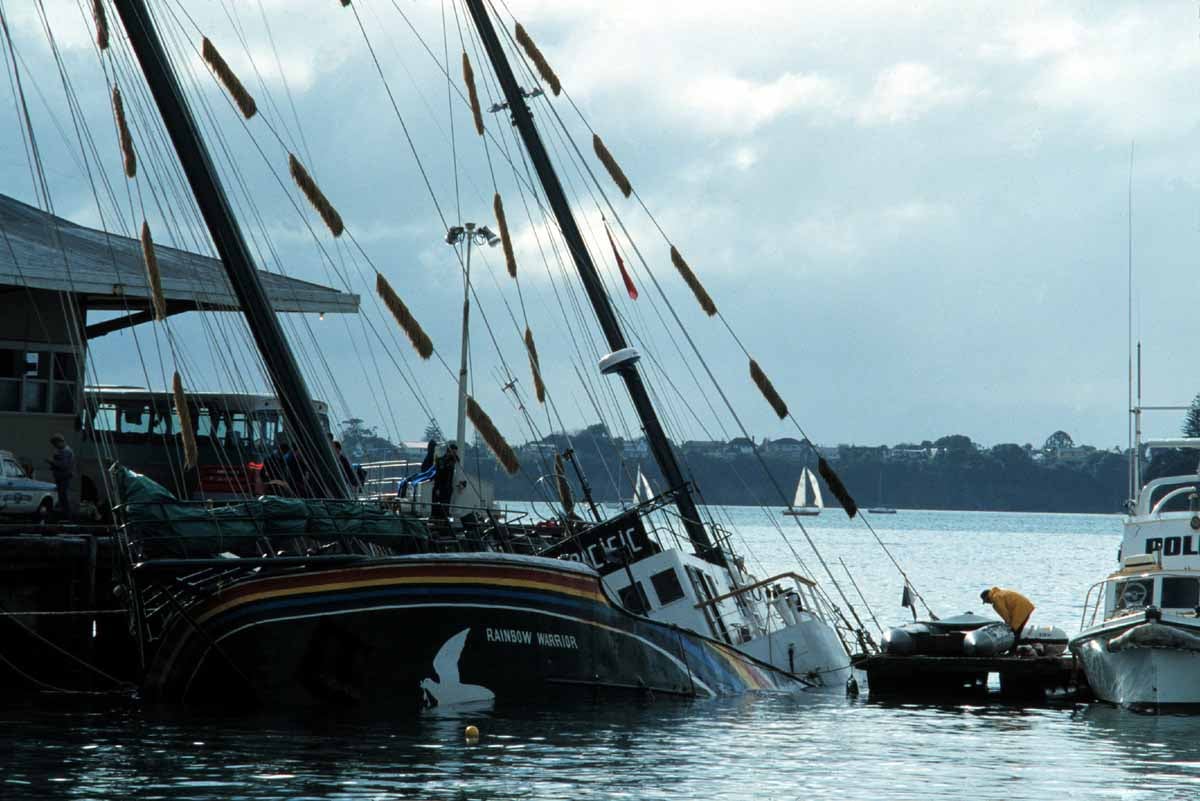
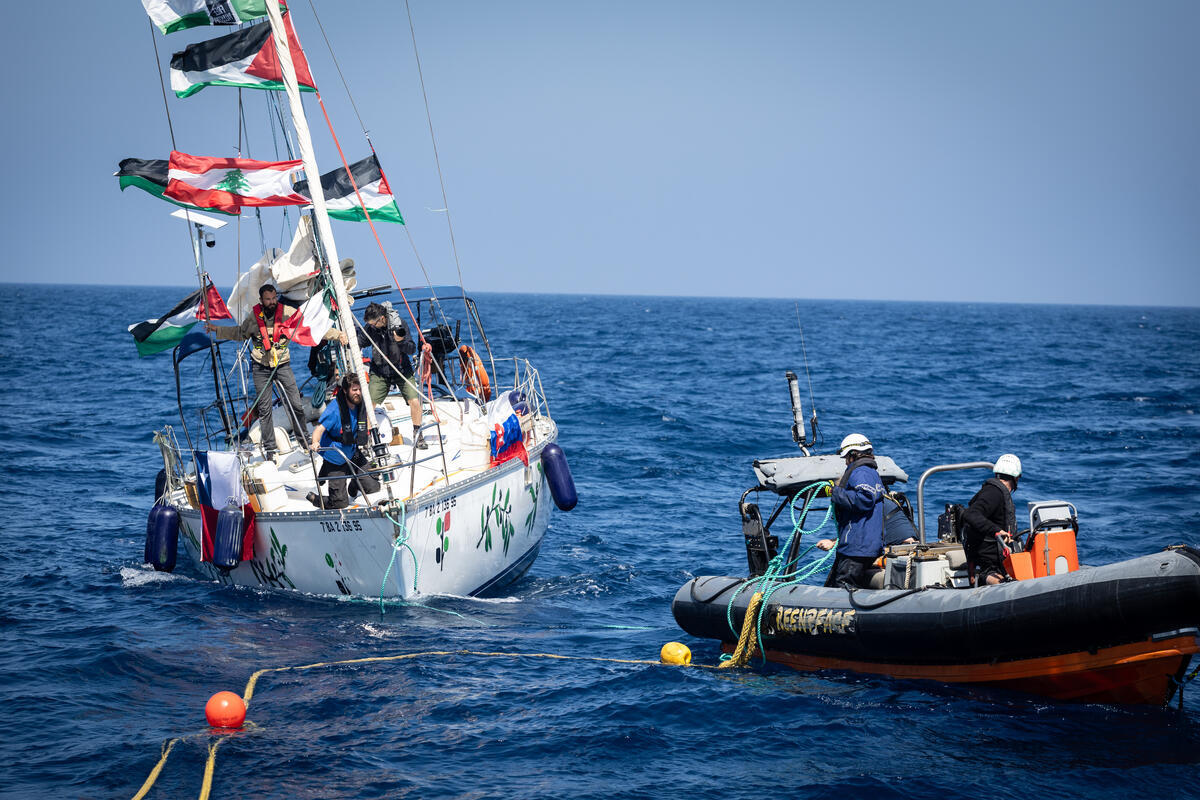
40 years since the bombing of the Rainbow Warrior
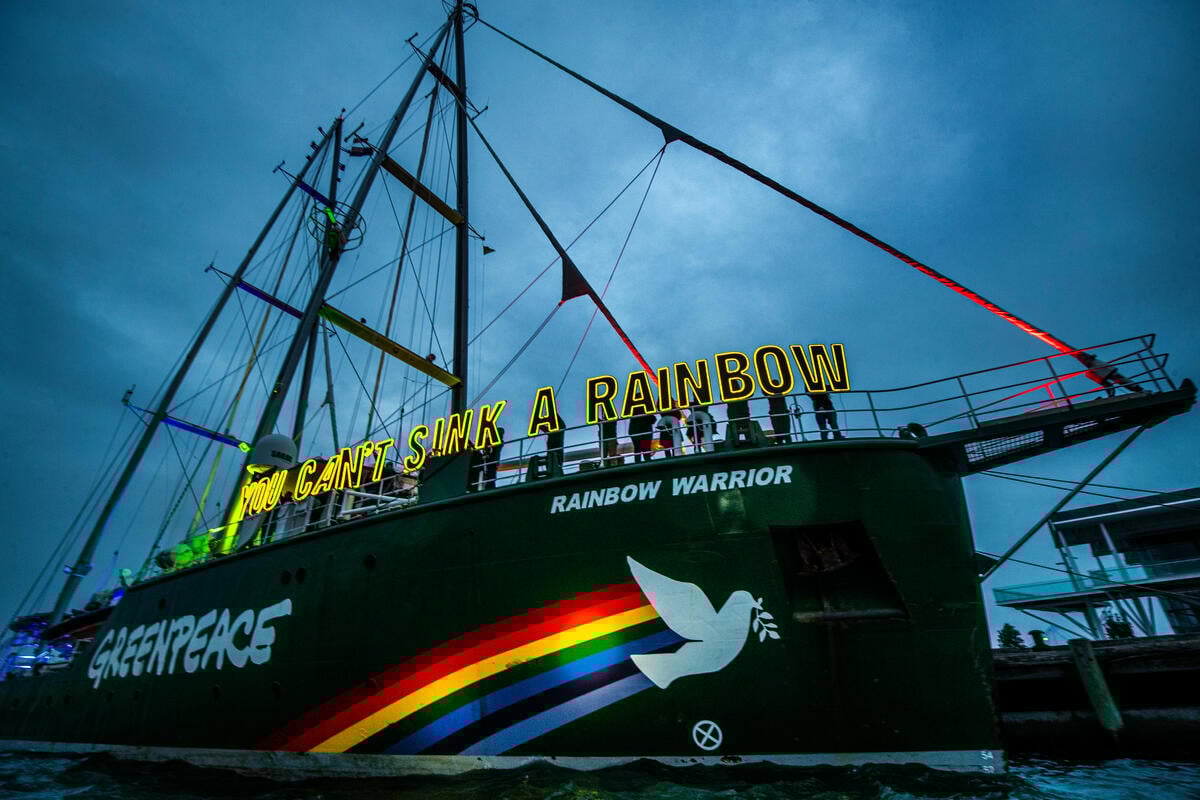
The bombing of the Rainbow Warrior and the murder of photographer Fernando Pereira is a reminder that there are forces in the world who will defend their self-interests and power no matter the consequences. That they will stop at nothing.
Forty years later, that remains true.
But more than that, it is a reminder of the power of resistance and courage that is contagious and collective. As we remember Fernando and that terrible night, we also recall the courage of the activists who stood steadfast and unbroken. Defiant as they mourned their friend. Resolute in the conviction that ‘You can’t sink a Rainbow’.
![<!-- wp:heading {"level":1} -->
<h1 class="wp-block-heading" id="h-sign-the-open-letter-to-the-oil-industry">Sign the open letter to the oil industry</h1>
<!-- /wp:heading -->
<!-- wp:planet4-block-templates/action -->
<!-- wp:group {"className":"block"} -->
<div class="wp-block-group block"><!-- wp:group {"align":"full","className":"is-style-default","style":{"spacing":{"padding":{"top":"0px","bottom":"0px","right":"0","left":"0px"}},"border":{"radius":"0px"}},"backgroundColor":"white","layout":{"type":"default"}} -->
<div class="wp-block-group alignfull is-style-default has-white-background-color has-background" style="border-radius:0px;padding-top:0px;padding-right:0;padding-bottom:0px;padding-left:0px"><!-- wp:group {"className":"container"} -->
<div class="wp-block-group container"><!-- wp:columns -->
<div class="wp-block-columns"><!-- wp:column {"backgroundColor":"white"} -->
<div class="wp-block-column has-white-background-color has-background"><!-- wp:paragraph -->
<p>For <a href="https://www.greenpeace.org/aotearoa/story/greenpeace-oil-campaign-seven-years-in-the-wilderness/" target="_blank" rel="noreferrer noopener">nearly a decade</a>, we campaigned alongside iwi and hapū, environmental groups and many thousands of people to resist new offshore oil exploration. <a href="https://www.greenpeace.org/aotearoa/explore/resist/deep-sea-oil-timeline/" target="_blank" rel="noreferrer noopener">And we s쳮ded</a>. Together we pushed oil giant after oil giant out of Aotearoa. The <a href="https://www.nzherald.co.nz/business/amid-a-storm-of-protests-the-man-with-omvs-half-billion-bit-between-his-teeth/G6DD7UJ526CUBMC434NMMTVWFA/" target="_blank" rel="noreferrer noopener">head of OMV said</a> their industry would not be able to stay here if they continued to face such opposition.</p>
<!-- /wp:paragraph -->
<!-- wp:paragraph -->
<p>Now Christopher Luxon wants to invite them back, so let's remind them of the staunch resistance they would face if they were foolhardy enough to attempt a return.</p>
<!-- /wp:paragraph -->
<!-- wp:paragraph -->
<p><strong>Sign the open letter of resistance now to make sure there is no return of offshore oil exploration. </strong></p>
<!-- /wp:paragraph -->
<!-- wp:planet4-blocks/accordion {"title":"We will resist oil exploration","description":"\u003cstrong\u003e\u003cem\u003eTo the global oil industry,\u003c/em\u003e\u003c/strong\u003e\u003cbr\u003e\u003cbr\u003e\u003cem\u003eEveryone deserves to have a thriving ocean without the risk of catastrophic oil spills. Everyone has the right to a stable climate and a future in which Earth can sustain life in all its diversity.\u003c/em\u003e","tabs":[{"headline":"Continue reading the full letter","text":"\u003cem\u003eThousands of New Zealanders from all around the country marched in the streets, mobilised on beaches, fought legal battles, sailed in flotillas and raised their voices year after year until we won a ban on new offshore oil exploration permits.\u003c/em\u003e\u003cbr\u003e\u003cbr\u003e\u003cem\u003eWe resisted. Year after year. Oil company after oil company. And we won...\u003c/em\u003e\u003cbr\u003e\u003cbr\u003e\u003cem\u003eThrough unrelenting peaceful protest, civil disobedience, and iwi-led opposition up and down the country, one by one, we forced the withdrawal of Petrobras, Anadarko, Shell, Equinor/Statoil and Chevron.\u003cbr\u003e\u003cbr\u003eTogether, we won the globally significant ban on offshore oil and gas exploration across New Zealand’s vast ocean territories in 2018.\u003cbr\u003e\u003cbr\u003eNow, the new National-led Government under Prime Minister Christopher Luxon has threatened to reverse this ban but know this: We, the people, are steadfast in our resolve to repel you again.\u003cbr\u003e\u003cbr\u003eWe will never allow offshore oil and gas exploration to recommence in Aotearoa.\u003cbr\u003e\u003cbr\u003eNobody wants to see oil spilling into the sea and onto New Zealand’s coastlines and beaches, nor harming our precious wildlife. Nobody wants to see climate induced storms like Cyclone Gabrielle happening even more frequently, or more communities devastated by fires and floods.\u003cbr\u003e\u003cbr\u003eYour presence here would threaten not only New Zealand’s unique marine areas but the very future of life on Earth.\u003cbr\u003e\u003cbr\u003eYou are not welcome here.\u003cbr\u003e\u003cbr\u003eWe pledge to do everything we can to resist the oil and gas industry if the New Zealand government overturns the ban on offshore oil and gas exploration.\u003cbr\u003e\u003cbr\u003eRussel Norman,\u003cbr\u003eExecutive Director\u003cbr\u003eGreenpeace Aotearoa\u003c/em\u003e"}],"className":"is-style-light"} -->
<section class="block accordion-block wp-block-planet4-blocks-accordion is-style-light"><header><h2 class="page-section-header">We will resist oil exploration</h2></header><p class="page-section-description"><strong><em>To the global oil industry,</em></strong><br><br><em>Everyone deserves to have a thriving ocean without the risk of catastrophic oil spills. Everyone has the right to a stable climate and a future in which Earth can sustain life in all its diversity.</em></p><div class="accordion-content"><div class="accordion-headline" name="Continue reading the full letter">Continue reading the full letter</div><div class="panel panel-hidden"><p class="accordion-text"><em>Thousands of New Zealanders from all around the country marched in the streets, mobilised on beaches, fought legal battles, sailed in flotillas and raised their voices year after year until we won a ban on new offshore oil exploration permits.</em><br><br><em>We resisted. Year after year. Oil company after oil company. And we won...</em><br><br><em>Through unrelenting peaceful protest, civil disobedience, and iwi-led opposition up and down the country, one by one, we forced the withdrawal of Petrobras, Anadarko, Shell, Equinor/Statoil and Chevron.<br><br>Together, we won the globally significant ban on offshore oil and gas exploration across New Zealand’s vast ocean territories in 2018.<br><br>Now, the new National-led Government under Prime Minister Christopher Luxon has threatened to reverse this ban but know this: We, the people, are steadfast in our resolve to repel you again.<br><br>We will never allow offshore oil and gas exploration to recommence in Aotearoa.<br><br>Nobody wants to see oil spilling into the sea and onto New Zealand’s coastlines and beaches, nor harming our precious wildlife. Nobody wants to see climate induced storms like Cyclone Gabrielle happening even more frequently, or more communities devastated by fires and floods.<br><br>Your presence here would threaten not only New Zealand’s unique marine areas but the very future of life on Earth.<br><br>You are not welcome here.<br><br>We pledge to do everything we can to resist the oil and gas industry if the New Zealand government overturns the ban on offshore oil and gas exploration.<br><br>Russel Norman,<br>Executive Director<br>Greenpeace Aotearoa</em></p></div></div></section>
<!-- /wp:planet4-blocks/accordion --></div>
<!-- /wp:column -->
<!-- wp:column -->
<div class="wp-block-column"><!-- wp:gravityforms/form {"formId":"27","title":false,"description":false,"inputPrimaryColor":"#204ce5"} /--></div>
<!-- /wp:column --></div>
<!-- /wp:columns --></div>
<!-- /wp:group --></div>
<!-- /wp:group -->
<!-- wp:group {"align":"full","style":{"spacing":{"padding":{"bottom":"40px","top":"35px"}}},"backgroundColor":"grey-200"} -->
<div class="wp-block-group alignfull has-grey-200-background-color has-background" style="padding-top:35px;padding-bottom:40px"><!-- wp:group {"className":"container"} -->
<div class="wp-block-group container"><!-- wp:planet4-block-templates/side-image-with-text-and-cta {"title":"The problem","mediaPosition":"right"} -->
<!-- wp:media-text {"align":"wide","mediaPosition":"right","mediaId":61265,"mediaLink":"https://www.greenpeace.org/aotearoa/cosl-prospector-arrives-in-new-zealand/","mediaType":"image","backgroundColor":""} -->
<div class="wp-block-media-text alignwide has-media-on-the-right is-stacked-on-mobile"><div class="wp-block-media-text__content"><!-- wp:heading {"placeholder":"Enter title"} -->
<h2 class="wp-block-heading" id="h-the-problem-with-oil-exploration">The problem with oil exploration</h2>
<!-- /wp:heading -->
<!-- wp:paragraph {"placeholder":"Enter description"} -->
<p>Oil drives the climate crisis. Science clearly shows that we cannot afford to burn even known oil reserves if we are to avoid total climate breakdown. Yet, the new National-led Government has said it will overturn Jacinda Ardern's celebrated ban on new offshore oil exploration and take New Zealand back to the bad old days of risking catastrophic oil spills like Deepwater Horizon.</p>
<!-- /wp:paragraph -->
<!-- wp:buttons -->
<div class="wp-block-buttons"><!-- wp:button -->
<div class="wp-block-button"><a class="wp-block-button__link wp-element-button" href="https://www.greenpeace.org/aotearoa/story/luxons-threat-to-restart-oil-exploration-would-be-a-disaster-for-the-climate-and-the-ocean/" target="_blank" rel="noreferrer noopener">Read more</a></div>
<!-- /wp:button --></div>
<!-- /wp:buttons --></div><figure class="wp-block-media-text__media"><img src="https://www.greenpeace.org/static/planet4-aotearoa-stateless/2023/10/11c70947-gp0sttfxw_medium_res-1024x683.jpg" alt="" class="wp-image-61265 size-full"/></figure></div>
<!-- /wp:media-text -->
<!-- /wp:planet4-block-templates/side-image-with-text-and-cta --></div>
<!-- /wp:group --></div>
<!-- /wp:group -->
<!-- wp:query {"queryId":1,"query":{"pages":0,"perPage":24,"offset":0,"author":"","search":"","exclude":[61546],"sticky":"","inherit":false,"postType":"p4_action","block_name":"planet4-blocks/actions-list","postIn":[61438,52060,143],"hasPassword":false,"order":"desc","orderBy":"date"},"namespace":"planet4-blocks/actions-list","className":"actions-list p4-query-loop is-custom-layout-actions-list p4-query-loop is-custom-layout-grid","layout":{"type":"grid","columnCount":3},"current_post_id":61546} -->
<div class="wp-block-query actions-list p4-query-loop is-custom-layout-actions-list is-custom-layout-grid"><!-- wp:heading {"lock":{"move":true}} -->
<h2 class="wp-block-heading" id="h-more-you-can-do">More you can do</h2>
<!-- /wp:heading -->
<!-- wp:paragraph {"placeholder":"Enter description","lock":{"move":true},"style":{"spacing":{"margin":{"top":"24px","bottom":"32px"}}}} -->
<p style="margin-top:24px;margin-bottom:32px"></p>
<!-- /wp:paragraph -->
<!-- wp:query-no-results -->
<!-- wp:paragraph {"placeholder":"No posts found. (This default text can be edited)"} -->
<p>No posts found.</p>
<!-- /wp:paragraph -->
<!-- /wp:query-no-results -->
<!-- wp:post-template {"lock":{"move":true,"remove":true}} -->
<!-- wp:post-featured-image /-->
<!-- wp:group {"className":"group-stretched-link"} -->
<div class="wp-block-group group-stretched-link"><!-- wp:p4/taxonomy-breadcrumb {"post_type":"p4_action","isLink":false} /-->
<!-- wp:post-title {"level":3,"isLink":true} /-->
<!-- wp:post-excerpt /--></div>
<!-- /wp:group -->
<!-- wp:group {"className":"read-more-nav"} -->
<div class="wp-block-group read-more-nav"><!-- wp:planet4-blocks/action-button-text /--></div>
<!-- /wp:group -->
<!-- /wp:post-template -->
<!-- wp:group {"tagName":"nav","className":"carousel-controls"} -->
<nav class="wp-block-group carousel-controls" aria-label="Actions List carousel controls"><!-- wp:buttons {"lock":{"move":true},"layout":{"type":"flex","justifyContent":"space-between","orientation":"horizontal","flexWrap":"nowrap"}} -->
<div class="wp-block-buttons"><!-- wp:button {"tagName":"button","className":"carousel-control-prev"} -->
<div class="wp-block-button carousel-control-prev"><button type="button" class="wp-block-button__link wp-element-button">Prev</button></div>
<!-- /wp:button -->
<!-- wp:button {"tagName":"button","className":"carousel-control-next"} -->
<div class="wp-block-button carousel-control-next"><button type="button" class="wp-block-button__link wp-element-button">Next</button></div>
<!-- /wp:button --></div>
<!-- /wp:buttons -->
</nav>
<!-- /wp:group -->
<!-- wp:buttons {"className":"load-more-actions-container","layout":{"type":"flex","justifyContent":"center"}} -->
<div class="wp-block-buttons load-more-actions-container"><!-- wp:button {"tagName":"button","className":"is-style-secondary"} -->
<div class="wp-block-button is-style-secondary"><button type="button" class="wp-block-button__link wp-element-button">Load more</button></div>
<!-- /wp:button --></div>
<!-- /wp:buttons --></div>
<!-- /wp:query -->
<!-- wp:separator {"backgroundColor":"grey-500"} -->
<hr class="wp-block-separator has-text-color has-grey-500-color has-alpha-channel-opacity has-grey-500-background-color has-background"/>
<!-- /wp:separator -->
<!-- wp:query {"queryId":0,"query":{"pages":0,"offset":0,"postType":"post","order":"desc","orderBy":"date","author":"","search":"","exclude":[61546],"sticky":"","inherit":false,"hasPassword":false,"postIn":[],"perPage":3,"taxQuery":{"post_tag":[26]}},"namespace":"planet4-blocks/posts-list","className":"posts-list p4-query-loop is-custom-layout-list","layout":{"type":"default","columnCount":3}} -->
<div class="wp-block-query posts-list p4-query-loop is-custom-layout-list"><!-- wp:group {"layout":{"type":"flex","justifyContent":"space-between"}} -->
<div class="wp-block-group"><!-- wp:heading {"lock":{"move":true}} -->
<h2 class="wp-block-heading" id="h-related-stories">Related Stories</h2>
<!-- /wp:heading -->
<!-- wp:navigation-link {"label":"See all stories","url":"http://www.greenpeace.org/aotearoa/news-stories/?tag=oil-and-gas","className":"see-all-link"} /--></div>
<!-- /wp:group -->
<!-- wp:paragraph {"placeholder":"Enter description","lock":{"move":true},"style":{"spacing":{"margin":{"top":"24px","bottom":"36px"}}}} -->
<p style="margin-top:24px;margin-bottom:36px"></p>
<!-- /wp:paragraph -->
<!-- wp:query-no-results -->
<!-- wp:paragraph {"placeholder":"No posts found. (This default text can be edited)"} -->
<p>No posts found.</p>
<!-- /wp:paragraph -->
<!-- /wp:query-no-results -->
<!-- wp:post-template {"lock":{"move":true,"remove":true}} -->
<!-- wp:columns -->
<div class="wp-block-columns"><!-- wp:post-featured-image {"isLink":true} /-->
<!-- wp:group -->
<div class="wp-block-group"><!-- wp:group {"layout":{"type":"flex"}} -->
<div class="wp-block-group"><!-- wp:p4/taxonomy-breadcrumb /-->
<!-- wp:post-terms {"term":"post_tag","separator":" "} /--></div>
<!-- /wp:group -->
<!-- wp:post-title {"level":3,"isLink":true} /-->
<!-- wp:post-excerpt /-->
<!-- wp:group {"className":"posts-list-meta"} -->
<div class="wp-block-group posts-list-meta"><!-- wp:post-author-name {"isLink":true} /-->
<!-- wp:post-date /--></div>
<!-- /wp:group --></div>
<!-- /wp:group --></div>
<!-- /wp:columns -->
<!-- /wp:post-template -->
<!-- wp:buttons {"lock":{"move":true},"className":"carousel-controls","layout":{"type":"flex","justifyContent":"space-between","orientation":"horizontal","flexWrap":"nowrap"}} -->
<div class="wp-block-buttons carousel-controls"><!-- wp:button {"tagName":"button","className":"carousel-control-prev"} -->
<div class="wp-block-button carousel-control-prev"><button type="button" class="wp-block-button__link wp-element-button">Prev</button></div>
<!-- /wp:button -->
<!-- wp:button {"tagName":"button","className":"carousel-control-next"} -->
<div class="wp-block-button carousel-control-next"><button type="button" class="wp-block-button__link wp-element-button">Next</button></div>
<!-- /wp:button --></div>
<!-- /wp:buttons -->
<!-- wp:navigation-link {"label":"See all stories","url":"http://www.greenpeace.org/aotearoa/news-stories/?tag=oil-and-gas","className":"see-all-link"} /--></div>
<!-- /wp:query --></div>
<!-- /wp:group -->
<!-- /wp:planet4-block-templates/action -->](https://www.greenpeace.org/static/planet4-international-stateless/2025/07/cd501c8f-gp0ou7.jpg "Fernando Pereira on Rainbow Warrior. © Greenpeace")
Forty years later, we need that courage more than ever. In 2025, civil society is under increased attacks from billionaires and fossil fuel companies trying to silence dissent, but we will show again that hope rises as we join together to meet this moment with increased unity and courage.
In 1985, the ship had just returned from evacuating the radiation-poisoned island of Rongelap and was refuelling and conducting maintenance ahead of a planned protest against French nuclear weapons at Mururoa Atoll.
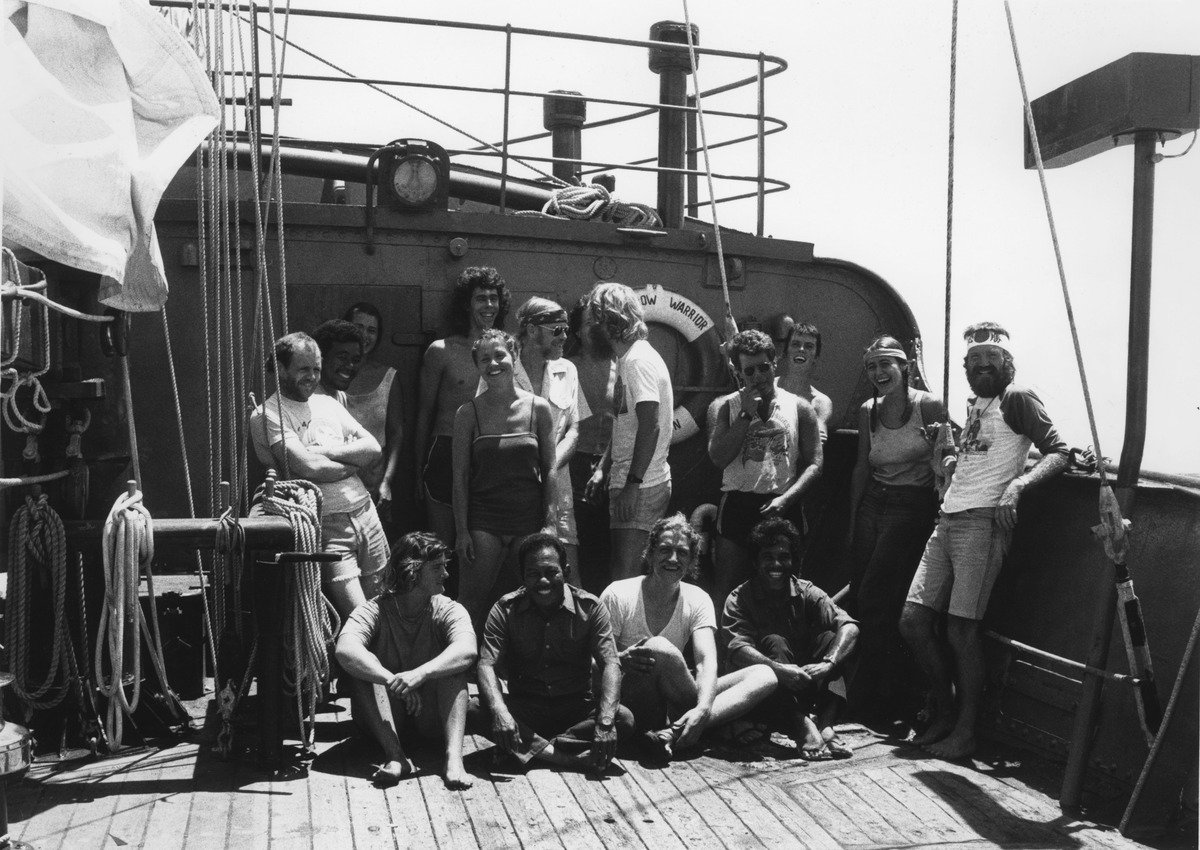
Earlier that night, the crew and campaigners had been celebrating the birthday of one of the crew Steve Sawyer. Most were already asleep when two frogmen slipped into the water and planted their explosives.
The twin explosions scuttled the ship. Photographer Fernando Pereira, a father and a man who was committed to bearing witness to the injustices of nuclear testing in the Pacific, was murdered, caught in the sudden rush of water and drowned.
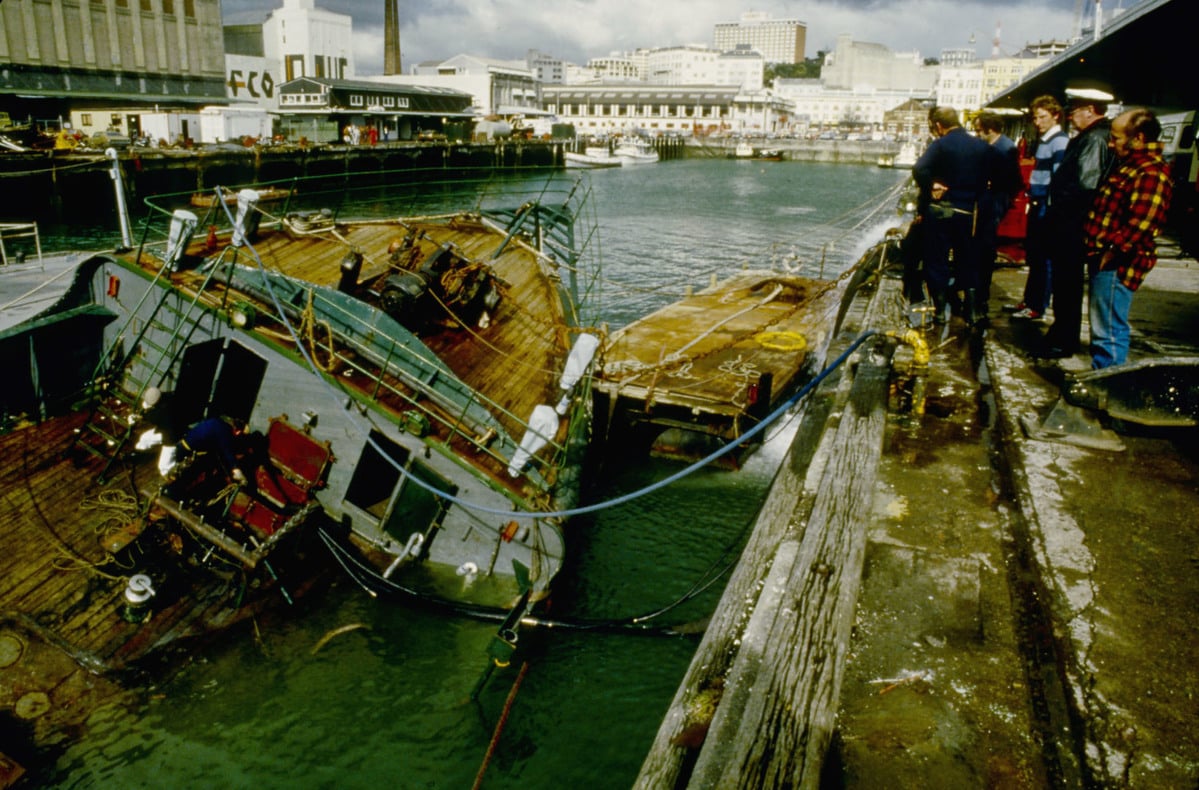
That night, the French government wasn’t just trying to sink a ship – it was attempting to sink a movement, to attack activism and to silence the voice of hope.
It failed.
In the months that followed, the world was outraged at the state-sponsored terrorism against peaceful protesters. The story of the bombing, as well as the nuclear tests and aftermath, became globally condemned. People around the world heard the story of the crew aboard the ship and their conviction that hope is not a passive or simple state of mind – hope is a decision to act. Hope is the hammer that breaks the glass in times of emergency.
Rather than back down in the face of violence, Greenpeace and the movement doubled down and continued to campaign against nuclear testing until, in 1996, they won.
Today, as we mark the 40th anniversary of the attack, the assault on activism, the voyage of the forces which brought the Rainbow Warrior to Auckland Harbour are still painfully relevant.
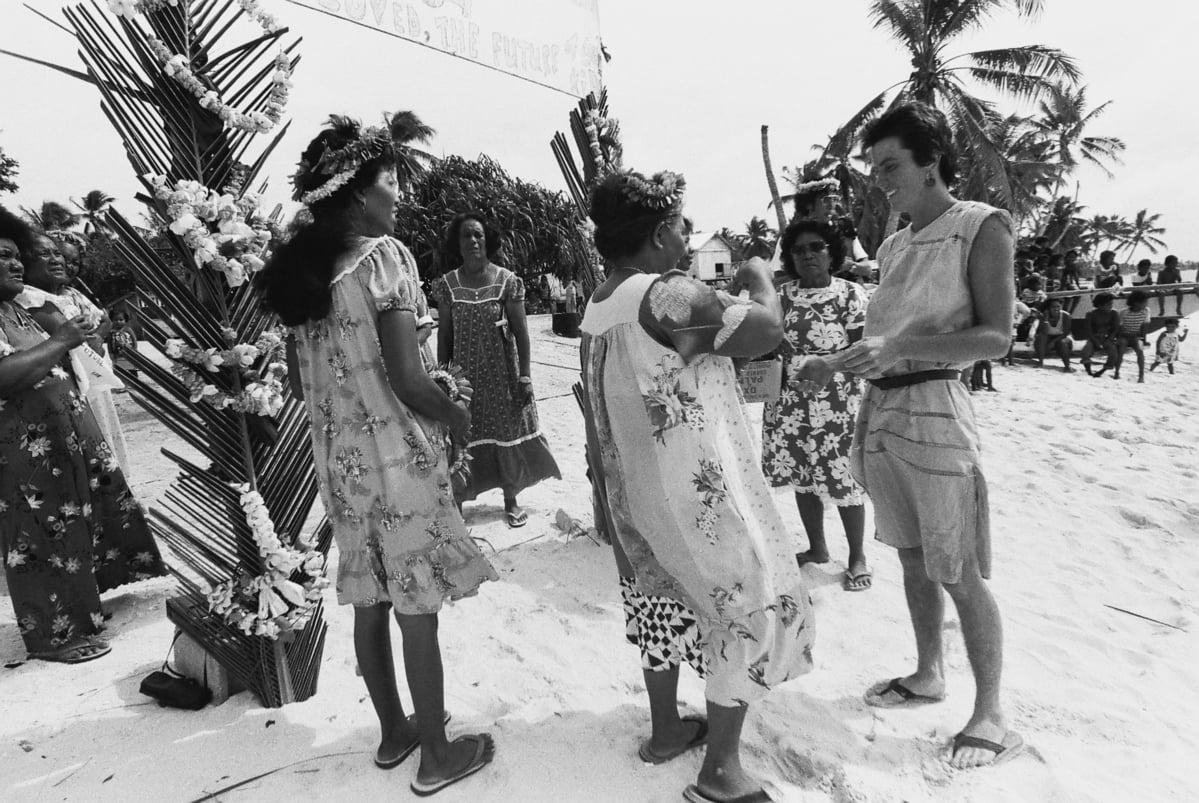
In the past few months, Greenpeace has been on a tour of the Marshall Islands, documenting the ongoing legacy of nuclear testing. Generations of Marshallese people still live with the ongoing health impacts, the radioactive contamination of their land and waters, and forced dislocation from their homes.
The shadow of nuclear war, rather than receding, is growing once more
Around the world short-term greed is placed over people and planet. Autocracy and oligarchy are on the rise. A might is right mentality is dominating international relations and the norms of international law are being ignored.
Attacks on activism and civil society are intensifying.
The toll from the catastrophic impacts of climate change continues to rise as many of the mechanisms which previously protected environmental or humanitarian norms are being dismantled or ignored.
![<!-- wp:planet4-block-templates/page-header {"mediaPosition":"right"} -->
<!-- wp:group {"align":"full"} -->
<div class="wp-block-group alignfull"><!-- wp:group {"className":"container"} -->
<div class="wp-block-group container"><!-- wp:media-text {"align":"full","mediaPosition":"right","mediaId":5994,"mediaLink":"https://www.greenpeace.org/aotearoa/press-release/feds-must-stop-kicking-farmers-over-systemic-agricultural-failures/beef-herd-alongside-national-park-in-winter-cropping-mud-paddock-eating-hay-with-effluent-running-into-river-otago-2019/","mediaType":"image","imageFill":false,"className":"is-pattern-p4-page-header is-style-parallax"} -->
<div class="wp-block-media-text alignfull has-media-on-the-right is-stacked-on-mobile is-pattern-p4-page-header is-style-parallax"><div class="wp-block-media-text__content"><!-- wp:group -->
<div class="wp-block-group"><!-- wp:heading {"level":1,"placeholder":"Enter title","backgroundColor":"white"} -->
<h1 class="wp-block-heading has-white-background-color has-background" id="h-water-pollution-in-aotearoa">Water pollution in Aotearoa</h1>
<!-- /wp:heading --></div>
<!-- /wp:group -->
<!-- wp:paragraph {"placeholder":"Enter description","style":{"typography":{"fontSize":"1.25rem"}}} -->
<p style="font-size:1.25rem">Water pollution in New Zealand is a growing problem. Two thirds of rivers are too polluted to swim in and once-safe drinking water is increasingly contaminated with harmful nitrate. We must protect fresh water.</p>
<!-- /wp:paragraph -->
<!-- wp:buttons -->
<div class="wp-block-buttons"><!-- wp:button {"className":"is-style-cta"} -->
<div class="wp-block-button is-style-cta"><a class="wp-block-button__link wp-element-button" href="https://action.greenpeace.org.nz/petition/agriculture-luxon-hands-off-freshwater-protection?utm_source=web&utm_medium=campaign-freshwater&utm_campaign=Agriculture">Take action</a></div>
<!-- /wp:button --></div>
<!-- /wp:buttons --></div><figure class="wp-block-media-text__media"><img src="https://www.greenpeace.org/static/planet4-aotearoa-stateless/2019/07/9d1242da-beef-herd-alongside-national-park-in-winter-cropping-mud-paddock-eating-hay-with-effluent-running-into-river-otago-2019-1024x727.png" alt="" class="wp-image-5994 size-full"/></figure></div>
<!-- /wp:media-text --></div>
<!-- /wp:group --></div>
<!-- /wp:group -->
<!-- /wp:planet4-block-templates/page-header -->
<!-- wp:planet4-blocks/secondary-navigation /-->
<!-- wp:heading -->
<h2 class="wp-block-heading" id="h-a-fresh-water-crisis">A fresh water crisis</h2>
<!-- /wp:heading -->
<!-- wp:paragraph -->
<p id="h-">Water pollution in Aotearoa is a massive threat to our health and the health of the environment - and you should be concerned.</p>
<!-- /wp:paragraph -->
<!-- wp:columns {"verticalAlignment":"top"} -->
<div class="wp-block-columns are-vertically-aligned-top"><!-- wp:column {"verticalAlignment":"top"} -->
<div class="wp-block-column is-vertically-aligned-top"><!-- wp:paragraph -->
<p id="h-intensive-dairy-is-reliant-on-several-inputs-to-sustain-the-sheer-number-of-cows-in-the-dairy-herd-not-only-do-dairy-cattle-pollute-fresh-water-but-these-inputs-like-fertiliser-and-irrigation-do-too">Everyone, no matter where they live, should have access to clean, safe drinking water. This is a fundamental human right. But across New Zealand, drinking water is increasingly contaminated with harmful nitrate.</p>
<!-- /wp:paragraph -->
<!-- wp:paragraph -->
<p id="h-everyone-no-matter-where-they-live-should-have-access-to-clean-safe-drinking-water-this-is-a-fundamental-human-right-but-across-new-zealand-drinking-water-is-increasingly-contaminated-with-harmful-nitrate-in-2025-environment-canterbury-declared-a-nitrate-emergency-and-in-the-last-few-years-multiple-do-not-drink-notices-have-been-issued-due-to-excessive-levels-of-nitrate-in-drinking-water">In 2025, <a href="https://www.greenpeace.org/aotearoa/story/nitrate-emergency-canterbury-what-does-it-mean/">Environment Canterbury declared a nitrate emergency</a> and in the last few years, multiple Do Not Drink notices have been issued due to excessive levels of nitrate in drinking water.</p>
<!-- /wp:paragraph -->
<!-- wp:paragraph -->
<p>Lakes and rivers are under threat too. Lakes are choked with toxic algae, fish species are dying, and two thirds of rivers are too polluted to swim in.</p>
<!-- /wp:paragraph --></div>
<!-- /wp:column -->
<!-- wp:column {"verticalAlignment":"top"} -->
<div class="wp-block-column is-vertically-aligned-top"><!-- wp:image {"id":51259,"sizeSlug":"full","linkDestination":"none"} -->
<figure class="wp-block-image size-full"><img src="https://www.greenpeace.org/static/planet4-aotearoa-stateless/2022/03/28f6d3e8-cows-gp04nex_web_size.jpg" alt="A herd of cows in a field with a backdrop of pine trees" class="wp-image-51259"/></figure>
<!-- /wp:image --></div>
<!-- /wp:column --></div>
<!-- /wp:columns -->
<!-- wp:group {"layout":{"type":"constrained","contentSize":"70%"}} -->
<div class="wp-block-group"><!-- wp:spacer {"height":"20px"} -->
<div style="height:20px" aria-hidden="true" class="wp-block-spacer"></div>
<!-- /wp:spacer -->
<!-- wp:planet4-blocks/take-action-boxout {"take_action_page":75510} /-->
<!-- wp:spacer {"height":"20px"} -->
<div style="height:20px" aria-hidden="true" class="wp-block-spacer"></div>
<!-- /wp:spacer --></div>
<!-- /wp:group -->
<!-- wp:spacer {"height":"20px"} -->
<div style="height:20px" aria-hidden="true" class="wp-block-spacer"></div>
<!-- /wp:spacer -->
<!-- wp:heading -->
<h2 class="wp-block-heading" id="h-why-is-the-water-in-new-zealand-so-polluted"><strong>Why is the water in New Zealand so polluted?</strong></h2>
<!-- /wp:heading -->
<!-- wp:paragraph -->
<p>Everyone in New Zealand should be able to safely drink water from the kitchen tap, or swim in lakes and rivers. But pollution from intensive dairy is putting fresh water at risk in two major ways:</p>
<!-- /wp:paragraph -->
<!-- wp:list -->
<ul class="wp-block-list"><!-- wp:list-item -->
<li>There are <strong>too many cows</strong> and <strong>too much synthetic nitrogen fertiliser</strong> being dumped onto pasture. This overuse of fertiliser, as well as concentrated patches of cow urine, result in nitrate leaching and runoff ending up in lakes, rivers, and the water table. It's from here that nitrate ends up in drinking water.</li>
<!-- /wp:list-item -->
<!-- wp:list-item -->
<li>Irrigation is another big source of water pollution in Aotearoa. <strong>Big irrigation schemes </strong>suck water from rivers, and spray it onto farmland to grow more grass for cattle to eat. This means there is less water in the rivers, which leads to a build-up of sediment downstream from water takes. It also means more dairying, which results in more water pollution.</li>
<!-- /wp:list-item --></ul>
<!-- /wp:list -->
<!-- wp:spacer {"height":"20px"} -->
<div style="height:20px" aria-hidden="true" class="wp-block-spacer"></div>
<!-- /wp:spacer -->
<!-- wp:heading -->
<h2 class="wp-block-heading" id="h-agriculture-and-water-pollution">Agriculture and water pollution</h2>
<!-- /wp:heading -->
<!-- wp:paragraph -->
<p>Ultimately, the main cause of freshwater pollution in Aotearoa is the intensive dairy industry. If we want clean, safe water and swimmable lakes and rivers, we must transition away from intensive dairying towards <a href="https://www.greenpeace.org/aotearoa/story/what-is-regenerative-agriculture/">more plant based, ecological farming practices</a>.</p>
<!-- /wp:paragraph -->
<!-- wp:columns {"verticalAlignment":"top"} -->
<div class="wp-block-columns are-vertically-aligned-top"><!-- wp:column {"verticalAlignment":"top"} -->
<div class="wp-block-column is-vertically-aligned-top"><!-- wp:embed {"url":"https://www.youtube.com/watch?v=_WNQbSzseqI","type":"video","providerNameSlug":"youtube","responsive":true,"className":"wp-embed-aspect-16-9 wp-has-aspect-ratio"} -->
<figure class="wp-block-embed is-type-video is-provider-youtube wp-block-embed-youtube wp-embed-aspect-16-9 wp-has-aspect-ratio"><div class="wp-block-embed__wrapper">
https://www.youtube.com/watch?v=_WNQbSzseqI
</div><figcaption class="wp-element-caption">Will Appelbe, Greenpeace Freshwater Campaigner, explains how the Luxon Government is set to make water pollution worse across Aotearoa</figcaption></figure>
<!-- /wp:embed --></div>
<!-- /wp:column -->
<!-- wp:column {"verticalAlignment":"top"} -->
<div class="wp-block-column is-vertically-aligned-top"><!-- wp:paragraph -->
<p id="h-intensive-dairy-is-reliant-on-several-inputs-to-sustain-the-sheer-number-of-cows-in-the-dairy-herd-not-only-do-dairy-cattle-pollute-fresh-water-but-these-inputs-like-fertiliser-and-irrigation-do-too">Intensive dairy is reliant on several inputs to sustain the sheer number of cows in the dairy herd. Not only do dairy cattle pollute fresh water, but these inputs like fertiliser and irrigation do too.</p>
<!-- /wp:paragraph -->
<!-- wp:paragraph -->
<p>Synthetic nitrogen fertiliser is one of the worst - and it’s applied in huge quantities by intensive dairy farmers. Runoff from fertiliser and manure ends up in lakes and rivers, making them unsafe to swim due to algal blooms, E. coli and other pathogens. </p>
<!-- /wp:paragraph -->
<!-- wp:paragraph -->
<p>The nitrate from fertiliser also leaches through the ground and ends up in the water we drink - which can have <a href="https://www.greenpeace.org/aotearoa/freshwater/nitrate-contamination-in-drinking-water-what-you-need-to-know-and-some-frequently-asked-questions/#nitrate-contamination-in-drinking-water---what-are-the-health-risks-">significant health impacts</a>.</p>
<!-- /wp:paragraph --></div>
<!-- /wp:column --></div>
<!-- /wp:columns -->
<!-- wp:spacer {"height":"40px"} -->
<div style="height:40px" aria-hidden="true" class="wp-block-spacer"></div>
<!-- /wp:spacer -->
<!-- wp:group {"align":"full","style":{"spacing":{"padding":{"top":"var:preset|spacing|30","bottom":"var:preset|spacing|30","left":"var:preset|spacing|40","right":"var:preset|spacing|40"}}},"backgroundColor":"beige-100","layout":{"type":"constrained","contentSize":"1116px"}} -->
<div class="wp-block-group alignfull has-beige-100-background-color has-background" style="padding-top:var(--wp--preset--spacing--30);padding-right:var(--wp--preset--spacing--40);padding-bottom:var(--wp--preset--spacing--30);padding-left:var(--wp--preset--spacing--40)"><!-- wp:group {"layout":{"type":"default"}} -->
<div class="wp-block-group"><!-- wp:spacer {"height":"30px"} -->
<div style="height:30px" aria-hidden="true" class="wp-block-spacer"></div>
<!-- /wp:spacer -->
<!-- wp:heading -->
<h2 class="wp-block-heading" id="h-what-s-greenpeace-doing-about-water-pollution">What's Greenpeace doing about water pollution?</h2>
<!-- /wp:heading -->
<!-- wp:paragraph -->
<p>Greenpeace is sounding the alarm on <a href="https://www.greenpeace.org/aotearoa/freshwater/nitrate-contamination-in-drinking-water-what-you-need-to-know-and-some-frequently-asked-questions/">nitrate contamination in drinking water</a> – a looming public health crisis. And we’re taking action to protect fresh water - and we need all hands on deck. </p>
<!-- /wp:paragraph -->
<!-- wp:columns -->
<div class="wp-block-columns"><!-- wp:column -->
<div class="wp-block-column"><!-- wp:group {"layout":{"type":"constrained"}} -->
<div class="wp-block-group"><!-- wp:image {"id":76674,"width":"80px","height":"80px","scale":"cover","sizeSlug":"thumbnail","linkDestination":"none","align":"center","className":"is-resized caption-alignment-center is-style-default"} -->
<figure class="wp-block-image aligncenter size-thumbnail is-resized caption-alignment-center is-style-default"><img src="https://www.greenpeace.org/static/planet4-aotearoa-stateless/2026/04/3745bbeb-water-testing-icon-black-300x300.png" alt="" class="wp-image-76674" style="object-fit:cover;width:80px;height:80px"/></figure>
<!-- /wp:image -->
<!-- wp:heading {"textAlign":"center","level":3} -->
<h3 class="wp-block-heading has-text-align-center" id="h-free-water-testing">Free water testing</h3>
<!-- /wp:heading -->
<!-- wp:paragraph -->
<p>We’ve released <a href="https://maps.greenpeace.org/maps/aotearoa/know-your-nitrate/?gp_anonymous_id=7811129c-7d46-4b94-bf4f-68d8f154834e">the Know your Nitrate map</a>, which maps nitrate levels in drinking water across the country, and <a href="https://www.greenpeace.org/aotearoa/story/free-water-testing-nitrate-contamination/">offer free water testing for nitrate contamination</a>.<br><br>It’s an essential service to people in rural communities on private bores, who would otherwise have to pay to get their water tested for pollution they didn’t cause.</p>
<!-- /wp:paragraph --></div>
<!-- /wp:group --></div>
<!-- /wp:column -->
<!-- wp:column -->
<div class="wp-block-column"><!-- wp:group {"layout":{"type":"constrained"}} -->
<div class="wp-block-group"><!-- wp:image {"id":76672,"width":"80px","height":"80px","scale":"cover","sizeSlug":"full","linkDestination":"none","align":"center","className":"is-resized caption-alignment-center is-style-default"} -->
<figure class="wp-block-image aligncenter size-full is-resized caption-alignment-center is-style-default"><img src="https://www.greenpeace.org/static/planet4-aotearoa-stateless/2026/04/8a165f56-fertiliser-cow-farm-icon-black.png" alt="" class="wp-image-76672" style="object-fit:cover;width:80px;height:80px"/></figure>
<!-- /wp:image -->
<!-- wp:heading {"textAlign":"center","level":3} -->
<h3 class="wp-block-heading has-text-align-center" id="h-phasing-out-fertiliser">Phasing out fertiliser</h3>
<!-- /wp:heading -->
<!-- wp:paragraph -->
<p>To truly stop the pollution of fresh water, we need to tackle the source of the pollution.<br><br>That’s why we’re calling for a phase out of <a href="https://www.greenpeace.org/aotearoa/story/new-zealands-hidden-climate-killer-synthetic-nitrogen/">synthetic nitrogen fertiliser</a>. The overuse of fertiliser is one of the biggest drivers of water pollution in Aotearoa.</p>
<!-- /wp:paragraph --></div>
<!-- /wp:group --></div>
<!-- /wp:column --></div>
<!-- /wp:columns -->
<!-- wp:columns -->
<div class="wp-block-columns"><!-- wp:column -->
<div class="wp-block-column"><!-- wp:group {"layout":{"type":"constrained"}} -->
<div class="wp-block-group"><!-- wp:image {"id":76668,"width":"80px","height":"80px","scale":"cover","sizeSlug":"thumbnail","linkDestination":"none","align":"center","className":"is-resized caption-alignment-center is-style-default"} -->
<figure class="wp-block-image aligncenter size-thumbnail is-resized caption-alignment-center is-style-default"><img src="https://www.greenpeace.org/static/planet4-aotearoa-stateless/2026/04/968abf3e-cow-icon-black-300x300.png" alt="" class="wp-image-76668" style="object-fit:cover;width:80px;height:80px"/></figure>
<!-- /wp:image -->
<!-- wp:heading {"textAlign":"center","level":3} -->
<h3 class="wp-block-heading has-text-align-center" id="h-limiting-dairy-expansion">Limiting dairy expansion</h3>
<!-- /wp:heading -->
<!-- wp:paragraph -->
<p>And we’re calling for an end to the expansion of the dairy industry, because more cows means more water pollution, which means more people getting sick from polluted rivers and contaminated drinking water.<br><br>Ultimately, we have too many cows, and we need to reduce cow numbers - and we can start by preventing any expansion of the dairy herd.</p>
<!-- /wp:paragraph --></div>
<!-- /wp:group --></div>
<!-- /wp:column -->
<!-- wp:column -->
<div class="wp-block-column"><!-- wp:group {"layout":{"type":"constrained"}} -->
<div class="wp-block-group"><!-- wp:image {"id":76670,"width":"80px","height":"80px","scale":"cover","sizeSlug":"full","linkDestination":"none","align":"center","className":"is-resized caption-alignment-center is-style-default"} -->
<figure class="wp-block-image aligncenter size-full is-resized caption-alignment-center is-style-default"><img src="https://www.greenpeace.org/static/planet4-aotearoa-stateless/2026/04/9df6943e-milk-factory-icon-black.png" alt="" class="wp-image-76670" style="object-fit:cover;width:80px;height:80px"/></figure>
<!-- /wp:image -->
<!-- wp:heading {"textAlign":"center","level":3} -->
<h3 class="wp-block-heading has-text-align-center" id="h-holding-fonterra-accountable">Holding Fonterra accountable</h3>
<!-- /wp:heading -->
<!-- wp:paragraph -->
<p>We’re standing up to Fonterra, who are profiting from water pollution, and calling on them to be accountable for their actions. <br><br>Because while Fonterra executives make millions of dollars a year, and the corporation turns billions of dollars in profit, rural communities are facing massive bills to access safe drinking water.</p>
<!-- /wp:paragraph --></div>
<!-- /wp:group --></div>
<!-- /wp:column --></div>
<!-- /wp:columns -->
<!-- wp:spacer {"height":"30px"} -->
<div style="height:30px" aria-hidden="true" class="wp-block-spacer"></div>
<!-- /wp:spacer --></div>
<!-- /wp:group --></div>
<!-- /wp:group -->
<!-- wp:spacer {"height":"40px"} -->
<div style="height:40px" aria-hidden="true" class="wp-block-spacer"></div>
<!-- /wp:spacer -->
<!-- wp:query {"queryId":1,"query":{"pages":0,"perPage":24,"offset":0,"author":"","search":"","exclude":[68497],"sticky":"","inherit":false,"postType":"p4_action","block_name":"planet4-blocks/actions-list","postIn":[62387,15662,75510],"hasPassword":false,"order":"desc","orderBy":"date"},"namespace":"planet4-blocks/actions-list","className":"actions-list p4-query-loop is-custom-layout-grid","layout":{"type":"grid","columnCount":3},"current_post_id":68497} -->
<div class="wp-block-query actions-list p4-query-loop is-custom-layout-grid"><!-- wp:heading {"lock":{"move":true}} -->
<h2 class="wp-block-heading" id="h-join-the-campaign">Join the campaign</h2>
<!-- /wp:heading -->
<!-- wp:paragraph {"placeholder":"Enter description","lock":{"move":true},"style":{"spacing":{"margin":{"top":"24px","bottom":"32px"}}}} -->
<p style="margin-top:24px;margin-bottom:32px">It is only through collective action that we can protect freshwater. Use your voice, join us today.</p>
<!-- /wp:paragraph -->
<!-- wp:query-no-results -->
<!-- wp:paragraph {"placeholder":"No posts found. (This default text can be edited)"} -->
<p>No posts found.</p>
<!-- /wp:paragraph -->
<!-- /wp:query-no-results -->
<!-- wp:post-template {"lock":{"move":true,"remove":true}} -->
<!-- wp:post-featured-image /-->
<!-- wp:group {"className":"group-stretched-link"} -->
<div class="wp-block-group group-stretched-link"><!-- wp:p4/taxonomy-breadcrumb {"post_type":"p4_action","isLink":false} /-->
<!-- wp:post-title {"level":3,"isLink":true} /-->
<!-- wp:post-excerpt /--></div>
<!-- /wp:group -->
<!-- wp:group {"className":"read-more-nav"} -->
<div class="wp-block-group read-more-nav"><!-- wp:planet4-blocks/action-button-text /--></div>
<!-- /wp:group -->
<!-- /wp:post-template -->
<!-- wp:group {"tagName":"nav","className":"carousel-controls"} -->
<nav class="wp-block-group carousel-controls" aria-label="Actions List carousel controls"><!-- wp:buttons {"lock":{"move":true},"layout":{"type":"flex","justifyContent":"space-between","orientation":"horizontal","flexWrap":"nowrap"}} -->
<div class="wp-block-buttons"><!-- wp:button -->
<div class="wp-block-button"><a class="wp-block-button__link wp-element-button"></a></div>
<!-- /wp:button --></div>
<!-- /wp:buttons -->
</nav>
<!-- /wp:group -->
<!-- wp:buttons {"className":"load-more-actions-container","layout":{"type":"flex","justifyContent":"center"}} -->
<div class="wp-block-buttons load-more-actions-container"><!-- wp:button {"tagName":"button","className":"is-style-secondary"} -->
<div class="wp-block-button is-style-secondary"><button type="button" class="wp-block-button__link wp-element-button">Load more</button></div>
<!-- /wp:button --></div>
<!-- /wp:buttons --></div>
<!-- /wp:query -->
<!-- wp:spacer {"height":"10px"} -->
<div style="height:10px" aria-hidden="true" class="wp-block-spacer"></div>
<!-- /wp:spacer -->
<!-- wp:group {"align":"full","style":{"spacing":{"padding":{"top":"var:preset|spacing|30","bottom":"var:preset|spacing|30","left":"var:preset|spacing|40","right":"var:preset|spacing|40"}}},"backgroundColor":"beige-100","layout":{"type":"constrained","contentSize":"1116px"}} -->
<div class="wp-block-group alignfull has-beige-100-background-color has-background" style="padding-top:var(--wp--preset--spacing--30);padding-right:var(--wp--preset--spacing--40);padding-bottom:var(--wp--preset--spacing--30);padding-left:var(--wp--preset--spacing--40)"><!-- wp:media-text {"mediaPosition":"right","mediaId":60663,"mediaLink":"https://www.greenpeace.org/aotearoa/nitrate-map-og/","linkDestination":"custom","mediaType":"image","className":"is-style-default","backgroundColor":"beige-100"} -->
<div class="wp-block-media-text has-media-on-the-right is-stacked-on-mobile is-style-default has-beige-100-background-color has-background"><div class="wp-block-media-text__content"><!-- wp:spacer {"height":"20px"} -->
<div style="height:20px" aria-hidden="true" class="wp-block-spacer"></div>
<!-- /wp:spacer -->
<!-- wp:heading -->
<h2 class="wp-block-heading" id="h-free-nitrate-testing">Free nitrate testing</h2>
<!-- /wp:heading -->
<!-- wp:paragraph -->
<p>Everyone should be able to trust that the water from their tap is safe to drink.</p>
<!-- /wp:paragraph -->
<!-- wp:paragraph -->
<p>We’re offering free, mail-in water testing so you can check your water for <a href="https://www.greenpeace.org/aotearoa/freshwater/nitrate-contamination-in-drinking-water-what-you-need-to-know-and-some-frequently-asked-questions/">nitrate contamination</a> which is linked to bowel cancer and preterm birth.</p>
<!-- /wp:paragraph -->
<!-- wp:paragraph -->
<p>Nitrate contamination is mostly caused by synthetic nitrogen fertiliser and dairy cow urine - you can check your risk level on <a href="https://maps.greenpeace.org/maps/aotearoa/know-your-nitrate/" type="link" id="https://maps.greenpeace.org/maps/aotearoa/know-your-nitrate/">the Know Your Nitrate map</a>.</p>
<!-- /wp:paragraph -->
<!-- wp:buttons {"layout":{"type":"flex","justifyContent":"left","verticalAlignment":"center"}} -->
<div class="wp-block-buttons"><!-- wp:button {"className":"is-style-cta"} -->
<div class="wp-block-button is-style-cta"><a class="wp-block-button__link wp-element-button" href="https://petition.act.greenpeace.org.nz/agriculture-nitrate-testing-request">Order a mail-in test</a></div>
<!-- /wp:button -->
<!-- wp:button -->
<div class="wp-block-button"><a class="wp-block-button__link wp-element-button" href="https://www.greenpeace.org/aotearoa/freshwater/nitrate-contamination-in-drinking-water-what-you-need-to-know-and-some-frequently-asked-questions/">FAQs about nitrates</a></div>
<!-- /wp:button --></div>
<!-- /wp:buttons -->
<!-- wp:spacer {"height":"20px"} -->
<div style="height:20px" aria-hidden="true" class="wp-block-spacer"></div>
<!-- /wp:spacer --></div><figure class="wp-block-media-text__media"><a href="https://maps.greenpeace.org/maps/aotearoa/know-your-nitrate/"><img src="https://www.greenpeace.org/static/planet4-aotearoa-stateless/2023/08/a5a79058-nitrate-map-og-1024x577.jpg" alt="" class="wp-image-60663 size-full"/></a></figure></div>
<!-- /wp:media-text --></div>
<!-- /wp:group -->
<!-- wp:spacer {"height":"10px"} -->
<div style="height:10px" aria-hidden="true" class="wp-block-spacer"></div>
<!-- /wp:spacer -->
<!-- wp:heading -->
<h2 class="wp-block-heading" id="h-why-is-the-water-in-canterbury-so-bad">Why is the water in Canterbury so bad?</h2>
<!-- /wp:heading -->
<!-- wp:paragraph -->
<p>There are many different reasons why water pollution in Canterbury is so bad. Some reasons include:</p>
<!-- /wp:paragraph -->
<!-- wp:list -->
<ul class="wp-block-list"><!-- wp:list-item -->
<li> Farming in Canterbury has changed massively over the last 30 years. There's been a huge expansion of dairying. Dairying is much more intensive and polluting than the sheep, beef, and crop farming that took place previously. </li>
<!-- /wp:list-item -->
<!-- wp:list-item -->
<li>Canterbury’s soil is not fit for dairy farming. The soil is largely stony and porous, like what you’d find in a riverbed. It's called alluvial soil, and it’s really easy for water to pass through. Runoff from farming - like cow urine, or fertiliser mixed with irrigation water - soaks through this soil and into lakes, rivers, and drinking water.</li>
<!-- /wp:list-item -->
<!-- wp:list-item -->
<li>Canterbury's dry climate means the industry uses heaps of irrigation and fertiliser to sustain huge cow herds- both of which make water pollution worse</li>
<!-- /wp:list-item --></ul>
<!-- /wp:list -->
<!-- wp:paragraph -->
<p>All of these factors together mean Canterbury has <a href="https://www.greenpeace.org/aotearoa/press-release/greenpeace-raises-alarm-over-looming-public-health-crisis-in-canterbury">some of the worst water pollution in New Zealand</a>. Christchurch city’s water is also under threat. And it’s going to get worse, unless we change things. Unless we stop the pollution at source, it will become increasingly contaminated.</p>
<!-- /wp:paragraph -->
<!-- wp:spacer {"height":"10px"} -->
<div style="height:10px" aria-hidden="true" class="wp-block-spacer"></div>
<!-- /wp:spacer -->
<!-- wp:group {"align":"full","style":{"spacing":{"padding":{"top":"var:preset|spacing|30","bottom":"var:preset|spacing|30","left":"var:preset|spacing|40","right":"var:preset|spacing|40"}}},"backgroundColor":"beige-100","layout":{"type":"constrained","contentSize":"1116px"}} -->
<div class="wp-block-group alignfull has-beige-100-background-color has-background" style="padding-top:var(--wp--preset--spacing--30);padding-right:var(--wp--preset--spacing--40);padding-bottom:var(--wp--preset--spacing--30);padding-left:var(--wp--preset--spacing--40)"><!-- wp:columns {"verticalAlignment":"center"} -->
<div class="wp-block-columns are-vertically-aligned-center"><!-- wp:column {"verticalAlignment":"center"} -->
<div class="wp-block-column is-vertically-aligned-center"><!-- wp:embed {"url":"https://www.youtube.com/watch?v=chZNP_BhBdg","type":"video","providerNameSlug":"youtube","responsive":true,"className":"wp-embed-aspect-16-9 wp-has-aspect-ratio"} -->
<figure class="wp-block-embed is-type-video is-provider-youtube wp-block-embed-youtube wp-embed-aspect-16-9 wp-has-aspect-ratio"><div class="wp-block-embed__wrapper">
https://www.youtube.com/watch?v=chZNP_BhBdg
</div></figure>
<!-- /wp:embed --></div>
<!-- /wp:column -->
<!-- wp:column {"verticalAlignment":"center"} -->
<div class="wp-block-column is-vertically-aligned-center"><!-- wp:spacer {"height":"20px"} -->
<div style="height:20px" aria-hidden="true" class="wp-block-spacer"></div>
<!-- /wp:spacer -->
<!-- wp:heading -->
<h2 class="wp-block-heading" id="h-something-in-the-water">Something in the Water</h2>
<!-- /wp:heading -->
<!-- wp:paragraph -->
<p>Greenpeace's 2025 freshwater documentary, <em>Something in the Water</em>, tells the story of people across Canterbury who are standing up to defend lakes, rivers and drinking water.</p>
<!-- /wp:paragraph -->
<!-- wp:paragraph -->
<p>Join campaigner Will Appelbe as he travels throughout the Canterbury region, speaking to communities who are on the frontlines of the freshwater crisis.</p>
<!-- /wp:paragraph -->
<!-- wp:buttons {"layout":{"type":"flex","justifyContent":"left","verticalAlignment":"center"}} -->
<div class="wp-block-buttons"><!-- wp:button {"className":"is-style-cta"} -->
<div class="wp-block-button is-style-cta"><a class="wp-block-button__link wp-element-button" href="https://www.greenpeace.org/aotearoa/video/something-in-the-water-documentary/">Watch now</a></div>
<!-- /wp:button --></div>
<!-- /wp:buttons -->
<!-- wp:spacer {"height":"20px"} -->
<div style="height:20px" aria-hidden="true" class="wp-block-spacer"></div>
<!-- /wp:spacer --></div>
<!-- /wp:column --></div>
<!-- /wp:columns --></div>
<!-- /wp:group -->
<!-- wp:spacer {"height":"10px"} -->
<div style="height:10px" aria-hidden="true" class="wp-block-spacer"></div>
<!-- /wp:spacer -->
<!-- wp:planet4-blocks/accordion {"title":"Your water questions, answered","tabs":[{"text":"Intensive dairying is the main cause of water pollution in New Zealand.\u003cbr\u003e\u003cbr\u003eOver the past 30 years, Aotearoa’s dairy herd has nearly doubled. Some regions, like Canterbury, are seeing even more extreme increases in cow numbers. The combination of excessive cow numbers and a \u003ca href=\u0022https://environment.govt.nz/publications/new-zealands-greenhouse-gas-inventory-1990-2020-snapshot/\u0022\u003e693% surge in synthetic nitrogen fertiliser\u003c/a\u003e use has led to heightened climate emissions, polluted rivers, and increasingly contaminated drinking water.\u003cbr\u003e\u003cbr\u003eThe water pollution caused by intensive dairying is so bad that i\u003ca href=\u0022https://www.tandfonline.com/doi/full/10.1080/14486563.2022.2068685\u0022\u003et takes a staggering 11,000 litres of water\u003c/a\u003e to dilute the pollution from just 1 litre of dairy milk produced in Canterbury. This is why increasingly, Canterbury’s water is becoming undrinkable, and its lakes and rivers are more and more unsafe for swimming.\u003cbr\u003e\u003cbr\u003eThis wasn’t an accident, and politicians of all political stripes are to blame. Regional councils set regional land and water plans and approve resource consents, and the Government sets national policy statements for freshwater management – both of which have been too permissive for decades, which has enabled dairy expansion and the subsequent degradation of lakes, rivers and drinking water.","headline":"What is the main cause of water pollution in New Zealand?"},{"text":"Yes, drinking water is affected by pollution from the intensive dairy industry.\u003cbr\u003e\u003cbr\u003eIn New Zealand, up to 15% of people could be drinking water that is contaminated with potentially unsafe levels of nitrate. This number is even higher in rural communities. At the end of 2024, a shocking\u003ca href=\u0022https://www.greenpeace.org/aotearoa/press-release/drinking-water-at-100-rural-schools-contaminated-with-cancer-causing-nitrate/\u0022\u003e new report revealed that rural children are twice as likely as the average New Zealander\u003c/a\u003e to be exposed to dangerous levels of nitrate contamination in their school drinking water.\u003cbr\u003e\u003cbr\u003eHigh levels of nitrate have been shown to increase risks of harm to human health, like i\u003ca href=\u0022https://www.greenpeace.org/aotearoa/press-release/greenpeace-raises-alarm-over-looming-public-health-crisis-in-canterbury/#:~:text=A%20growing%20body%20of%20science,risk%20of%20developing%20bowel%20cancer.\u0022\u003encreased risk of cancer and pregnancy complications\u003c/a\u003e.\u003cbr\u003e\u003cbr\u003eGreenpeace’s \u003ca href=\u0022https://maps.greenpeace.org/maps/aotearoa/know-your-nitrate/\u0022\u003eKnow Your Nitrate map\u003c/a\u003e outlines levels of nitrate pollution in drinking water across the country \u003ca href=\u0022https://www.greenpeace.org/aotearoa/story/nitrate-map-drinking-water-contamination-levels-new-zealand/\u0022\u003ebased on a combination\u003c/a\u003e of Greenpeace testing and local council testing. \u003ca href=\u0022https://maps.greenpeace.org/maps/aotearoa/know-your-nitrate/\u0022\u003eYou can view the Know Your Nitrate map here\u003c/a\u003e.\u003cbr\u003e\u003cbr\u003eOther contaminants like E. coli and campylobacter also threaten drinking water. In 2016, Hawke’s Bay experienced \u003ca href=\u0022https://www.greenpeace.org/aotearoa/story/havelock-water-and-ruataniwha-its-time-to-join-the-dots/\u0022\u003ea devastating outbreak of the \u003c/a\u003ewaterborne disease, campylobacteriosis, that resulted in many becoming seriously unwell. It is also believed to have contributed to four deaths. This was later found to have been caused by sheep\u003ca href=\u0022https://www.greenpeace.org/aotearoa/press-release/havelock-contamination-scandal-not-a-one-off/\u0022\u003e effluent ending up in drinking water supply\u003c/a\u003e.\u003cbr\u003eIt is predicted that drinking water contamination as a result of the intensive dairy industry will get worse over the coming decades.","headline":"Is drinking water affected by water pollution?"},{"text":"The impacts of water pollution on people can include:\u003cbr\u003e\u003cbr\u003e1. \u003cstrong\u003eHigh levels of nitrate can cause harm to human health\u003c/strong\u003e, like \u003ca href=\u0022https://www.greenpeace.org/aotearoa/press-release/greenpeace-raises-alarm-over-looming-public-health-crisis-in-canterbury/#:~:text=A%20growing%20body%20of%20science,risk%20of%20developing%20bowel%20cancer.\u0022\u003eincreased risks of cancer and pregnancy complications\u003c/a\u003e.\u003cbr\u003e\u003cbr\u003eNew Zealand’s legal limit for nitrate in drinking water is set at 11.3 mg/L – there is a risk of infants developing Blue Baby Syndrome if they are fed formula that has been mixed with water at this level of nitrate contamination. However, recent studies have shown that there are increased risks to human health from exposure to nitrate at much lower levels – as low as 1 mg/L.\u003cbr\u003e\u003cbr\u003e\u003cstrong\u003eStudies have shown that up to 15% of New Zealanders could be drinking water with levels of nitrate contamination that could increase the risk of developing bowel cancer.\u003c/strong\u003e And when nitrate levels reach 5 mg/L, the New Zealand College of Midwives has advised that pregnant women should consider seeking an alternative source of drinking water.\u003cbr\u003e\u003cbr\u003e2. Polluted and unswimmable rivers mean that \u003cstrong\u003ewe can’t swim or fish in the waterways\u003c/strong\u003e in our neighbourhoods.\u003cbr\u003e\u003cbr\u003eThe quality of New Zealand’s lakes and rivers has been in decline for many years. Several lakes in Canterbury are at risk of ‘flipping’ – of becoming so polluted that they cannot sustain plant and animal life. \u003cstrong\u003eOf New Zealand’s many rivers, almost two thirds are degrading in quality\u003c/strong\u003e. Every summer, we see more and more warnings of toxic algal blooms or unsafe levels of \u003cem\u003eE.coli\u003c/em\u003e, meaning that it is unsafe to swim or fish in those rivers. This leads to people feeling increasingly disconnected from nature.\u003cbr\u003e\u003cbr\u003eThis is even more significant for tangata whenua, who have important ancestral and spiritual connections to freshwater lakes and rivers. For example, the Ōtūwharekai/Ashburton Lakes – an important seasonal mahinga kai area lying on the route between the east and west coasts – are at risk of flipping. \u003cstrong\u003eThe loss of mahinga kai like these lakes can result in tangata whenua experiencing a loss of connection to their whakapapa and cultural heritage\u003c/strong\u003e.\u003cbr\u003e\u003cbr\u003eWater pollution impacts on animals can include:\u003cbr\u003e\u003cbr\u003e1. Eutrophication, where the water receives an excessive amount of nutrients, especially nitrogen and phosphorus, \u003cstrong\u003ecan lead to lakes and rivers no longer being able to support New Zealand’s native fish\u003c/strong\u003e. That’s because their biological safe zone is very limited – if the amount of a certain nutrient in the water exceeds what they can tolerate, they will die. For example, \u003cstrong\u003eNew Zealand’s native fish can generally only tolerate a very low level of nitrate.\u003c/strong\u003e\u003cbr\u003e\u003cbr\u003e2. If the bugs and fish that live in and around the lakes and rivers die off, or can no longer tolerate the conditions, that impacts the birds that prey on these animals, and can lead to starvation. Lake Heron – so named for the kotuku or white heron that was once so common in the area – no longer sees the same high numbers of these birds, because \u003cstrong\u003ethere simply are not enough fish for them to live on.\u003c/strong\u003e\u003cbr\u003e\u003cbr\u003e3. \u003cstrong\u003eFish can suffocate as a result of large algal blooms.\u003c/strong\u003e While many organisms cannot survive when there are excess amounts of nutrients such as nitrogen and phosphorus in the water, algal blooms thrive. When these algal blooms die off, oxygen is consumed in the process. \u003cstrong\u003eThis can create ‘dead zones’ where there is not enough oxygen, so the fish suffocate.\u003c/strong\u003e\u003cbr\u003e\u003cbr\u003e4. \u003cstrong\u003eIrrigation schemes reduce the flow of water in rivers\u003c/strong\u003e, which means that in the summer they often dry up, leaving fish to die.","headline":"How does water pollution affect people and animals?"},{"text":"Intensive dairying is a model of farming that crams as many cows as possible onto the land, in order to produce as much milk as possible. It uses significant amounts of inputs like synthetic nitrogen fertiliser, imported feed, and irrigation, to sustain these cattle, as the land cannot naturally sustain so many cows.\u003cbr\u003e\u003cbr\u003eIntensive dairying is pushed onto New Zealand farmers by the intensive dairy industry. The intensive dairy industry is led by Fonterra, but includes all of the big corporations who profit off of the dairy sector in Aotearoa. It also includes big corporate mega-farms, which are often owned by overseas investors.","headline":"What is intensive dairying and who is the intensive dairy industry?"},{"text":"For more about our nitrate testing programme – including where our next water testing events will take place – \u003ca href=\u0022https://www.greenpeace.org/aotearoa/story/free-water-testing-nitrate-contamination/\u0022\u003eclick here\u003c/a\u003e.\u003cbr\u003e\u003cbr\u003eYou can get a free mail-in testing kit at any time \u003ca href=\u0022https://petition.act.greenpeace.org.nz/agriculture-nitrate-testing-request\u0022\u003ehere.\u003c/a\u003e","headline":"I want to get my water tested for nitrate, how do I do that?"},{"text":"\u003ca href=\u0022https://www.greenpeace.org/aotearoa/freshwater/nitrate-contamination-in-drinking-water-what-you-need-to-know-and-some-frequently-asked-questions/\u0022\u003eCheck out our FAQs on nitrate contamination and nitrate testing results.\u003c/a\u003e\u003cbr\u003e\u003cbr\u003eIf you would like to speak to someone further about what your nitrate test result means, or if you would like to learn more about our work to ensure healthy drinking water for all and how you can be involved, please get in touch with us at \u003ca href=\u0022mailto:info@greenpeace.org.nz\u0022\u003einfo@greenpeace.org.nz\u003c/a\u003e","headline":"I have questions about my nitrate test result!"}],"className":"wp-block-planet4-blocks-accordion is-style-light"} -->
<section class="block accordion-block wp-block-planet4-blocks-accordion is-style-light"><header><h2 class="page-section-header">Your water questions, answered</h2></header><div class="accordion-content"><div class="accordion-headline" name="What is the main cause of water pollution in New Zealand?">What is the main cause of water pollution in New Zealand?</div><div class="panel panel-hidden"><p class="accordion-text">Intensive dairying is the main cause of water pollution in New Zealand.<br><br>Over the past 30 years, Aotearoa’s dairy herd has nearly doubled. Some regions, like Canterbury, are seeing even more extreme increases in cow numbers. The combination of excessive cow numbers and a <a href="https://environment.govt.nz/publications/new-zealands-greenhouse-gas-inventory-1990-2020-snapshot/">693% surge in synthetic nitrogen fertiliser</a> use has led to heightened climate emissions, polluted rivers, and increasingly contaminated drinking water.<br><br>The water pollution caused by intensive dairying is so bad that i<a href="https://www.tandfonline.com/doi/full/10.1080/14486563.2022.2068685">t takes a staggering 11,000 litres of water</a> to dilute the pollution from just 1 litre of dairy milk produced in Canterbury. This is why increasingly, Canterbury’s water is becoming undrinkable, and its lakes and rivers are more and more unsafe for swimming.<br><br>This wasn’t an accident, and politicians of all political stripes are to blame. Regional councils set regional land and water plans and approve resource consents, and the Government sets national policy statements for freshwater management – both of which have been too permissive for decades, which has enabled dairy expansion and the subsequent degradation of lakes, rivers and drinking water.</p></div></div><div class="accordion-content"><div class="accordion-headline" name="Is drinking water affected by water pollution?">Is drinking water affected by water pollution?</div><div class="panel panel-hidden"><p class="accordion-text">Yes, drinking water is affected by pollution from the intensive dairy industry.<br><br>In New Zealand, up to 15% of people could be drinking water that is contaminated with potentially unsafe levels of nitrate. This number is even higher in rural communities. At the end of 2024, a shocking<a href="https://www.greenpeace.org/aotearoa/press-release/drinking-water-at-100-rural-schools-contaminated-with-cancer-causing-nitrate/"> new report revealed that rural children are twice as likely as the average New Zealander</a> to be exposed to dangerous levels of nitrate contamination in their school drinking water.<br><br>High levels of nitrate have been shown to increase risks of harm to human health, like i<a href="https://www.greenpeace.org/aotearoa/press-release/greenpeace-raises-alarm-over-looming-public-health-crisis-in-canterbury/#:~:text=A%20growing%20body%20of%20science,risk%20of%20developing%20bowel%20cancer.">ncreased risk of cancer and pregnancy complications</a>.<br><br>Greenpeace’s <a href="https://maps.greenpeace.org/maps/aotearoa/know-your-nitrate/">Know Your Nitrate map</a> outlines levels of nitrate pollution in drinking water across the country <a href="https://www.greenpeace.org/aotearoa/story/nitrate-map-drinking-water-contamination-levels-new-zealand/">based on a combination</a> of Greenpeace testing and local council testing. <a href="https://maps.greenpeace.org/maps/aotearoa/know-your-nitrate/">You can view the Know Your Nitrate map here</a>.<br><br>Other contaminants like E. coli and campylobacter also threaten drinking water. In 2016, Hawke’s Bay experienced <a href="https://www.greenpeace.org/aotearoa/story/havelock-water-and-ruataniwha-its-time-to-join-the-dots/">a devastating outbreak of the </a>waterborne disease, campylobacteriosis, that resulted in many becoming seriously unwell. It is also believed to have contributed to four deaths. This was later found to have been caused by sheep<a href="https://www.greenpeace.org/aotearoa/press-release/havelock-contamination-scandal-not-a-one-off/"> effluent ending up in drinking water supply</a>.<br>It is predicted that drinking water contamination as a result of the intensive dairy industry will get worse over the coming decades.</p></div></div><div class="accordion-content"><div class="accordion-headline" name="How does water pollution affect people and animals?">How does water pollution affect people and animals?</div><div class="panel panel-hidden"><p class="accordion-text">The impacts of water pollution on people can include:<br><br>1. <strong>High levels of nitrate can cause harm to human health</strong>, like <a href="https://www.greenpeace.org/aotearoa/press-release/greenpeace-raises-alarm-over-looming-public-health-crisis-in-canterbury/#:~:text=A%20growing%20body%20of%20science,risk%20of%20developing%20bowel%20cancer.">increased risks of cancer and pregnancy complications</a>.<br><br>New Zealand’s legal limit for nitrate in drinking water is set at 11.3 mg/L – there is a risk of infants developing Blue Baby Syndrome if they are fed formula that has been mixed with water at this level of nitrate contamination. However, recent studies have shown that there are increased risks to human health from exposure to nitrate at much lower levels – as low as 1 mg/L.<br><br><strong>Studies have shown that up to 15% of New Zealanders could be drinking water with levels of nitrate contamination that could increase the risk of developing bowel cancer.</strong> And when nitrate levels reach 5 mg/L, the New Zealand College of Midwives has advised that pregnant women should consider seeking an alternative source of drinking water.<br><br>2. Polluted and unswimmable rivers mean that <strong>we can’t swim or fish in the waterways</strong> in our neighbourhoods.<br><br>The quality of New Zealand’s lakes and rivers has been in decline for many years. Several lakes in Canterbury are at risk of ‘flipping’ – of becoming so polluted that they cannot sustain plant and animal life. <strong>Of New Zealand’s many rivers, almost two thirds are degrading in quality</strong>. Every summer, we see more and more warnings of toxic algal blooms or unsafe levels of <em>E.coli</em>, meaning that it is unsafe to swim or fish in those rivers. This leads to people feeling increasingly disconnected from nature.<br><br>This is even more significant for tangata whenua, who have important ancestral and spiritual connections to freshwater lakes and rivers. For example, the Ōtūwharekai/Ashburton Lakes – an important seasonal mahinga kai area lying on the route between the east and west coasts – are at risk of flipping. <strong>The loss of mahinga kai like these lakes can result in tangata whenua experiencing a loss of connection to their whakapapa and cultural heritage</strong>.<br><br>Water pollution impacts on animals can include:<br><br>1. Eutrophication, where the water receives an excessive amount of nutrients, especially nitrogen and phosphorus, <strong>can lead to lakes and rivers no longer being able to support New Zealand’s native fish</strong>. That’s because their biological safe zone is very limited – if the amount of a certain nutrient in the water exceeds what they can tolerate, they will die. For example, <strong>New Zealand’s native fish can generally only tolerate a very low level of nitrate.</strong><br><br>2. If the bugs and fish that live in and around the lakes and rivers die off, or can no longer tolerate the conditions, that impacts the birds that prey on these animals, and can lead to starvation. Lake Heron – so named for the kotuku or white heron that was once so common in the area – no longer sees the same high numbers of these birds, because <strong>there simply are not enough fish for them to live on.</strong><br><br>3. <strong>Fish can suffocate as a result of large algal blooms.</strong> While many organisms cannot survive when there are excess amounts of nutrients such as nitrogen and phosphorus in the water, algal blooms thrive. When these algal blooms die off, oxygen is consumed in the process. <strong>This can create ‘dead zones’ where there is not enough oxygen, so the fish suffocate.</strong><br><br>4. <strong>Irrigation schemes reduce the flow of water in rivers</strong>, which means that in the summer they often dry up, leaving fish to die.</p></div></div><div class="accordion-content"><div class="accordion-headline" name="What is intensive dairying and who is the intensive dairy industry?">What is intensive dairying and who is the intensive dairy industry?</div><div class="panel panel-hidden"><p class="accordion-text">Intensive dairying is a model of farming that crams as many cows as possible onto the land, in order to produce as much milk as possible. It uses significant amounts of inputs like synthetic nitrogen fertiliser, imported feed, and irrigation, to sustain these cattle, as the land cannot naturally sustain so many cows.<br><br>Intensive dairying is pushed onto New Zealand farmers by the intensive dairy industry. The intensive dairy industry is led by Fonterra, but includes all of the big corporations who profit off of the dairy sector in Aotearoa. It also includes big corporate mega-farms, which are often owned by overseas investors.</p></div></div><div class="accordion-content"><div class="accordion-headline" name="I want to get my water tested for nitrate, how do I do that?">I want to get my water tested for nitrate, how do I do that?</div><div class="panel panel-hidden"><p class="accordion-text">For more about our nitrate testing programme – including where our next water testing events will take place – <a href="https://www.greenpeace.org/aotearoa/story/free-water-testing-nitrate-contamination/">click here</a>.<br><br>You can get a free mail-in testing kit at any time <a href="https://petition.act.greenpeace.org.nz/agriculture-nitrate-testing-request">here.</a></p></div></div><div class="accordion-content"><div class="accordion-headline" name="I have questions about my nitrate test result!">I have questions about my nitrate test result!</div><div class="panel panel-hidden"><p class="accordion-text"><a href="https://www.greenpeace.org/aotearoa/freshwater/nitrate-contamination-in-drinking-water-what-you-need-to-know-and-some-frequently-asked-questions/">Check out our FAQs on nitrate contamination and nitrate testing results.</a><br><br>If you would like to speak to someone further about what your nitrate test result means, or if you would like to learn more about our work to ensure healthy drinking water for all and how you can be involved, please get in touch with us at <a href="mailto:info@greenpeace.org.nz">info@greenpeace.org.nz</a></p></div></div></section>
<!-- /wp:planet4-blocks/accordion -->
<!-- wp:spacer {"height":"40px"} -->
<div style="height:40px" aria-hidden="true" class="wp-block-spacer"></div>
<!-- /wp:spacer -->
<!-- wp:query {"queryId":0,"query":{"pages":0,"offset":0,"postType":"post","order":"desc","orderBy":"date","author":"","search":"","exclude":[68497],"sticky":"","inherit":false,"hasPassword":false,"postIn":[65000,16595,61810,67059,62237,64476,61274,1860,53512,60050,61775],"perPage":8},"namespace":"planet4-blocks/posts-list","className":"posts-list p4-query-loop is-custom-layout-carousel","layout":{"type":"flex","columnCount":8}} -->
<div class="wp-block-query posts-list p4-query-loop is-custom-layout-carousel"><!-- wp:group {"layout":{"type":"flex","justifyContent":"space-between"}} -->
<div class="wp-block-group"><!-- wp:heading {"lock":{"move":true}} -->
<h2 class="wp-block-heading" id="h-more-on-water-pollution-in-aotearoa">More on water pollution in Aotearoa</h2>
<!-- /wp:heading -->
<!-- wp:navigation-link {"label":"See all stories","url":"http://www.greenpeace.org/aotearoa/news-stories/","className":"see-all-link"} /--></div>
<!-- /wp:group -->
<!-- wp:paragraph {"placeholder":"Enter description","lock":{"move":true},"style":{"spacing":{"margin":{"top":"24px","bottom":"36px"}}}} -->
<p style="margin-top:24px;margin-bottom:36px"></p>
<!-- /wp:paragraph -->
<!-- wp:query-no-results -->
<!-- wp:paragraph {"placeholder":"No posts found. (This default text can be edited)"} -->
<p>No posts found.</p>
<!-- /wp:paragraph -->
<!-- /wp:query-no-results -->
<!-- wp:post-template {"lock":{"move":true,"remove":true}} -->
<!-- wp:columns -->
<div class="wp-block-columns"><!-- wp:post-featured-image {"isLink":true} /-->
<!-- wp:group -->
<div class="wp-block-group"><!-- wp:post-title {"level":3,"isLink":true} /-->
<!-- wp:post-excerpt /-->
<!-- wp:group {"className":"posts-list-meta"} -->
<div class="wp-block-group posts-list-meta"><!-- wp:post-author-name {"isLink":true} /-->
<!-- wp:post-date {"metadata":{"bindings":{"datetime":{"source":"core/post-data","args":{"field":"date"}}}}} /--></div>
<!-- /wp:group --></div>
<!-- /wp:group --></div>
<!-- /wp:columns -->
<!-- /wp:post-template -->
<!-- wp:buttons {"lock":{"move":true},"className":"carousel-controls","layout":{"type":"flex","justifyContent":"space-between","orientation":"horizontal","flexWrap":"nowrap"}} -->
<div class="wp-block-buttons carousel-controls"><!-- wp:button -->
<div class="wp-block-button"><a class="wp-block-button__link wp-element-button"></a></div>
<!-- /wp:button --></div>
<!-- /wp:buttons -->
<!-- wp:navigation-link {"label":"See all stories","url":"http://www.greenpeace.org/aotearoa/news-stories/","className":"see-all-link"} /--></div>
<!-- /wp:query -->
<!-- wp:spacer {"height":"10px"} -->
<div style="height:10px" aria-hidden="true" class="wp-block-spacer"></div>
<!-- /wp:spacer -->
<!-- wp:group {"align":"full","style":{"elements":{"link":{"color":{"text":"var:preset|color|white"}}},"spacing":{"padding":{"top":"var:preset|spacing|30","bottom":"var:preset|spacing|30","left":"var:preset|spacing|40","right":"var:preset|spacing|40"}}},"backgroundColor":"dark-green-800","textColor":"white","layout":{"type":"constrained","contentSize":"1116px"}} -->
<div class="wp-block-group alignfull has-white-color has-dark-green-800-background-color has-text-color has-background has-link-color" style="padding-top:var(--wp--preset--spacing--30);padding-right:var(--wp--preset--spacing--40);padding-bottom:var(--wp--preset--spacing--30);padding-left:var(--wp--preset--spacing--40)"><!-- wp:spacer {"height":"30px"} -->
<div style="height:30px" aria-hidden="true" class="wp-block-spacer"></div>
<!-- /wp:spacer -->
<!-- wp:group {"layout":{"type":"flex","orientation":"vertical","justifyContent":"center"}} -->
<div class="wp-block-group"><!-- wp:image {"id":67250,"width":"auto","height":"100px","sizeSlug":"full","linkDestination":"none","align":"center","className":"caption-alignment-center"} -->
<figure class="wp-block-image aligncenter size-full is-resized caption-alignment-center"><img src="https://www.greenpeace.org/static/planet4-aotearoa-stateless/2024/11/d4685908-white-cow-icon-transparent.png" alt="" class="wp-image-67250" style="width:auto;height:100px"/></figure>
<!-- /wp:image -->
<!-- wp:heading {"textAlign":"center","level":3,"style":{"elements":{"link":{"color":{"text":"var:preset|color|white"}}}},"textColor":"white"} -->
<h3 class="wp-block-heading has-text-align-center has-white-color has-text-color has-link-color" id="h-support-our-work">Support our work</h3>
<!-- /wp:heading --></div>
<!-- /wp:group -->
<!-- wp:paragraph {"align":"center"} -->
<p class="has-text-align-center">We can have safe drinking water and healthy rivers. Support our work through a regular donation or a one-off gift.</p>
<!-- /wp:paragraph -->
<!-- wp:buttons {"layout":{"type":"flex","justifyContent":"center"}} -->
<div class="wp-block-buttons"><!-- wp:button {"className":"is-style-cta"} -->
<div class="wp-block-button is-style-cta"><a class="wp-block-button__link wp-element-button" href="https://action.greenpeace.org.nz/appeal/donate?utm_source=web&utm_medium=campaign-freshwater&utm_campaign=Agriculture&cam=701On00000FCpYTIA1">Donate now</a></div>
<!-- /wp:button --></div>
<!-- /wp:buttons -->
<!-- wp:spacer {"height":"30px"} -->
<div style="height:30px" aria-hidden="true" class="wp-block-spacer"></div>
<!-- /wp:spacer --></div>
<!-- /wp:group -->
<!-- wp:spacer {"height":"10px"} -->
<div style="height:10px" aria-hidden="true" class="wp-block-spacer"></div>
<!-- /wp:spacer -->
<!-- wp:query {"queryId":0,"query":{"pages":0,"offset":0,"postType":"post","order":"desc","orderBy":"date","author":"","search":"","exclude":[68497],"sticky":"","inherit":false,"hasPassword":false,"postIn":[],"perPage":3,"taxQuery":{"post_tag":[22]}},"namespace":"planet4-blocks/posts-list","className":"posts-list p4-query-loop is-custom-layout-list","layout":{"type":"default","columnCount":3}} -->
<div class="wp-block-query posts-list p4-query-loop is-custom-layout-list"><!-- wp:group {"layout":{"type":"flex","justifyContent":"space-between"}} -->
<div class="wp-block-group"><!-- wp:heading {"lock":{"move":true}} -->
<h2 class="wp-block-heading">Recent news</h2>
<!-- /wp:heading -->
<!-- wp:navigation-link {"label":"See all stories","url":"http://www.greenpeace.org/aotearoa/news-stories/?tag=freshwater","className":"see-all-link"} /--></div>
<!-- /wp:group -->
<!-- wp:paragraph {"placeholder":"Enter description","lock":{"move":true},"style":{"spacing":{"margin":{"top":"24px","bottom":"36px"}}}} -->
<p style="margin-top:24px;margin-bottom:36px">The latest news on water pollution and Greenpeace campaign for safe fresh water</p>
<!-- /wp:paragraph -->
<!-- wp:query-no-results -->
<!-- wp:paragraph {"placeholder":"No posts found. (This default text can be edited)"} -->
<p>No posts found.</p>
<!-- /wp:paragraph -->
<!-- /wp:query-no-results -->
<!-- wp:post-template {"lock":{"move":true,"remove":true}} -->
<!-- wp:columns -->
<div class="wp-block-columns"><!-- wp:post-featured-image {"isLink":true} /-->
<!-- wp:group -->
<div class="wp-block-group"><!-- wp:group {"layout":{"type":"flex"}} -->
<div class="wp-block-group"><!-- wp:p4/taxonomy-breadcrumb /-->
<!-- wp:post-terms {"term":"post_tag","separator":" "} /--></div>
<!-- /wp:group -->
<!-- wp:post-title {"level":3,"isLink":true} /-->
<!-- wp:post-excerpt /-->
<!-- wp:group {"className":"posts-list-meta"} -->
<div class="wp-block-group posts-list-meta"><!-- wp:post-author-name {"isLink":true} /-->
<!-- wp:post-date {"metadata":{"bindings":{"datetime":{"source":"core/post-data","args":{"field":"date"}}}}} /--></div>
<!-- /wp:group --></div>
<!-- /wp:group --></div>
<!-- /wp:columns -->
<!-- /wp:post-template -->
<!-- wp:buttons {"lock":{"move":true},"className":"carousel-controls","layout":{"type":"flex","justifyContent":"space-between","orientation":"horizontal","flexWrap":"nowrap"}} -->
<div class="wp-block-buttons carousel-controls"><!-- wp:button -->
<div class="wp-block-button"><a class="wp-block-button__link wp-element-button"></a></div>
<!-- /wp:button --></div>
<!-- /wp:buttons -->
<!-- wp:navigation-link {"label":"See all stories","url":"http://www.greenpeace.org/aotearoa/news-stories/?tag=freshwater","className":"see-all-link"} /--></div>
<!-- /wp:query -->
<!-- wp:paragraph -->
<p></p>
<!-- /wp:paragraph -->](https://www.greenpeace.org/static/planet4-international-stateless/2025/07/14d4ebd5-gp0su562p.jpg "Dive on Rainbow Warrior Wreck in Matauri Bay, New Zealand. © Josh Chapman / Greenpeace")
In recent months environmental and human rights organisations like Greenpeace have been subjected to legal attacks intended to cripple our ability to work. These attacks are intended to reduce our right to protest peacefully.
Bombs and bullets are being joined by legal precedents, physical sabotage are now being supplemented by legal measures meant to bankrupt organisations. The end goal is still the same: to stop those who hope for a better world from putting that hope into action.
This reality of “SLAPPs” – Strategic Lawsuits Against Public Participation are legal blunt force trauma and intimidation designed to drain an organisation’s resources, and if not destroying them outright, at least destroying their ability to campaign.
The bombing of the Rainbow Warrior, and the murder of Fernando Pereira, are a sobering reminder that there are forces in the world who will defend their self-interests and damn the consequences, stopping at nothing.
On the anniversary of the bombing we should remember f that not only can things change, but together we can change them for the better.
The past 40 years have taught us they only win if we give up. We didn’t. We won’t.
After the attack on the Rainbow Warrior we continued to resist, continued to campaign, and eventually…we won
No more than ever we must put hope into action and in doing so generate the courage to resist.
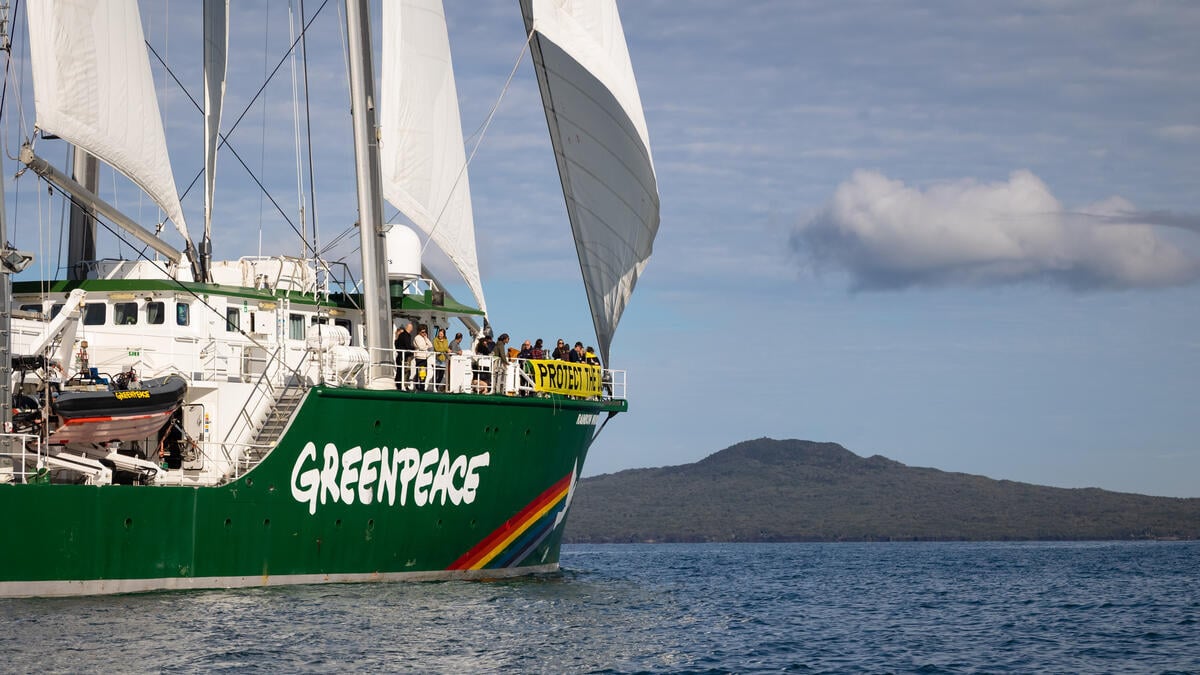
Mads Christensen is the Executive Director at Greenpeace International.