• Skip to Navigation
  • Skip to Content
  • Skip to Footer
Greenpeace
  • Act
  • Explore
    • Transform Energy
    • Protect Nature
    • Live Sustainably
  • Fundraise
Greenpeace
  • English  | 
  • Français  | 
  • Anicinâbemowin  | 
  • Home
  • Act
  • Explore
    • Transform Energy
    • Protect Nature
    • Live Sustainably
  • Fundraise

News & Stories

  • Nature
    Oceans Plastic Consumption

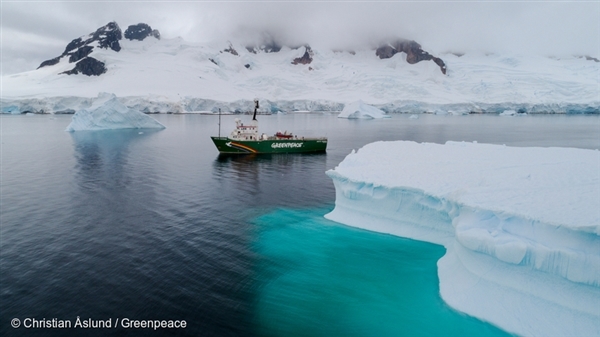
    Plastic pollution reaches the Antarctic

    The Greenpeace ship Arctic Sunrise was in the Antarctic at the beginning of 2018 It’s not what we wanted to find. When Greenpeace set sail to the Antarctic earlier this…

    Sarah King, Head of Oceans & Plastics Campaign
    7 June, 2018
  • Live Sustainably
    Oceans Plastic Consumption

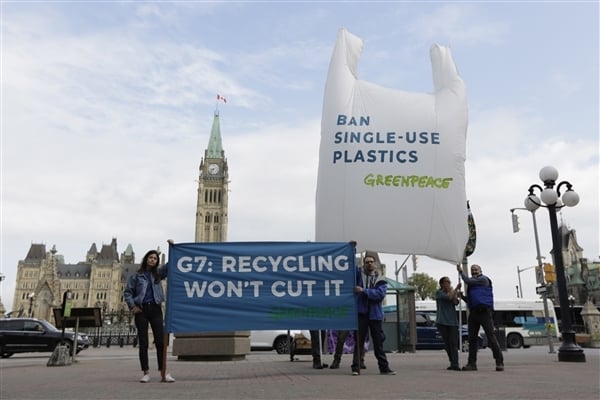
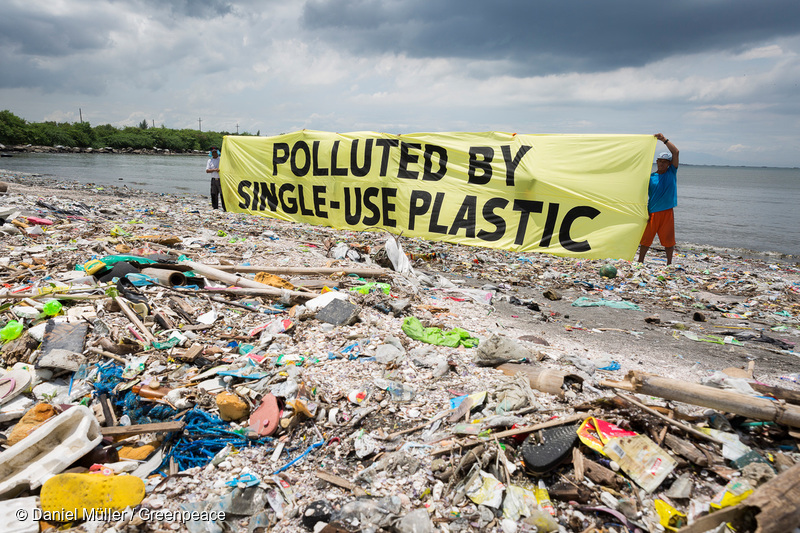
    PRESS RELEASE: Greenpeace sends larger-than-life message to leaders one day before G7 Summit: ‘Recycling won’t cut it: Ban single-use plastics’

    June 7, 2018 (OTTAWA) – One day before the G7 Summit starts in Charlevoix (Québec), Greenpeace Canada sends a hard-to-miss message to its seven leaders by deploying a giant plastic-bag…

    Greenpeace Canada
    7 June, 2018
  • Live Sustainably
    Oceans Plastic Consumption

    PRESS RELEASE: Activists call on G7 and corporations to end plastic pollution crisis

    On World Environment Day June 5, 2018 (TORONTO) – New data collected through cleanups and brand audits confirms that some of the world’s largest corporations — including Coca-Cola, Unilever, Nestlé,…

    Greenpeace Canada
    5 June, 2018
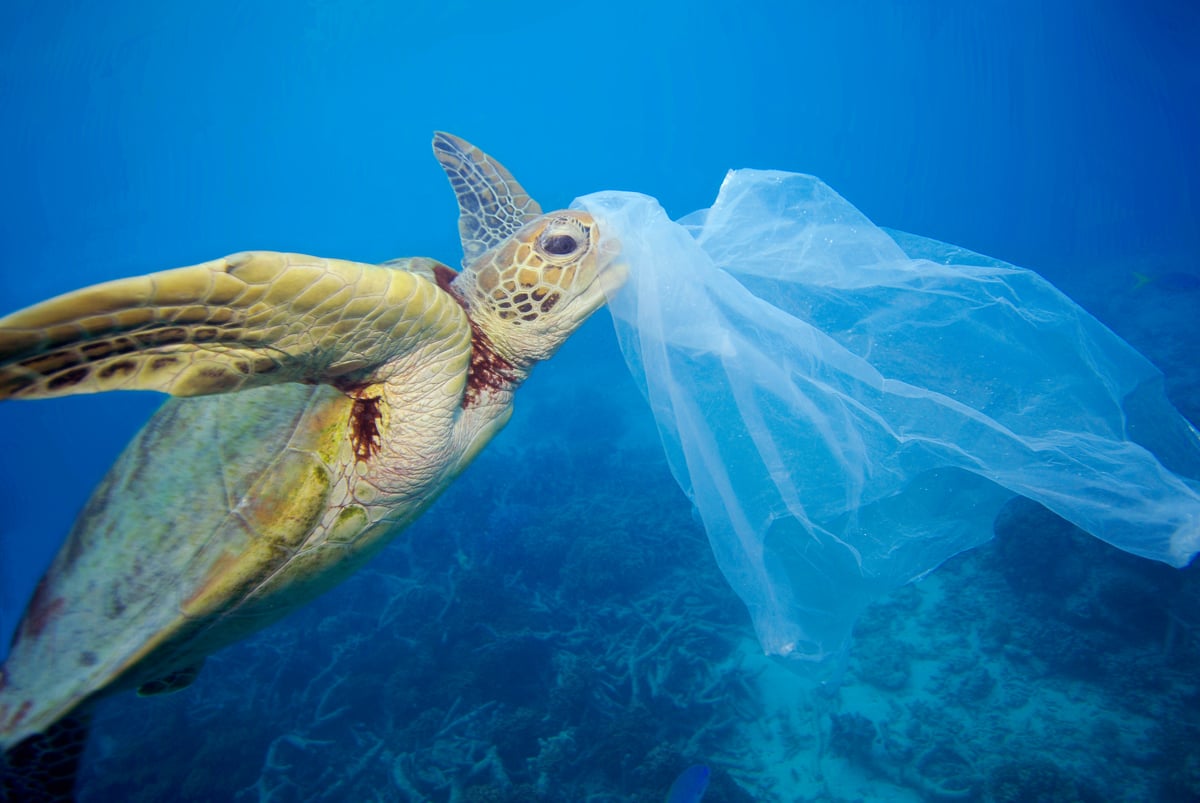
  • Turtle and Plastic in the Ocean
    Live Sustainably
    Oceans Plastic Consumption

    STATEMENT: Canada must use G7 presidency to tackle plastic pollution at the source

    May 11, 2018 (TORONTO) – In response to Minister McKenna’s recent comments comparing the upcoming G7 plastics charter to the Paris Climate Agreement,  Greenpeace Canada plastics campaigner, Farrah Khan, said:…

    Greenpeace Canada
    11 May, 2018
  • Live Sustainably
    Oceans Plastic Consumption

    Guest Blog: Action on plastics shouldn’t make life suck for disabled people

    Greenpeace have been campaigning to raise awareness of the harmful impact plastics have on our oceans for several years: from microbeads to single-use plastics such as bottles, bags and straws. Nonetheless, it’s fair to say that the horrifying scenes captured by Sir David Attenborough’s ‘Blue Planet 2’ showcased the hazards faced by marine life, and…

    Jamie Szymkowiak
    12 April, 2018
  • Nature
    Oceans

    License to krill

    Greenpeace investigations reveal how krill-fishing companies are expanding operations in the fragile Antarctic ocean, putting an entire food web at risk.

    Greenpeace Canada
    12 March, 2018
  • Nature
    Oceans

    Diving to the Antarctic sea floor is a scientist’s dream come true

    Most people would be surprised about how many species of cold-water corals and amazing sponges you’d find on the bottom of the Antarctic Ocean. Even as the scientist who has identified three quarters of the registered seafloor communities designated for special protection in the Antarctic, I’ve never seen them myself either!

    Dr Susanne Lockhart
    29 January, 2018
  • Nature
    Plastic Oceans

    Do ocean sanctuaries really work?

    Our oceans are massive and unlike most places on land, they don’t really have borders. Animals, water (and sadly now plastic) all move freely across the globe.

    Greenpeace Canada
    25 January, 2018
  • Climate
    Ships Plastic Oceans

    Setting Sail to protect the Antarctic

    As I write this the Arctic Sunrise, one of Greenpeace’s ships, is sailing south.  For the next three months its crew will be working alongside a team of campaigners, photographers, film-makers, scientists and journalists from across the globe to build the case for the world’s largest protected area: an Antarctic Ocean Sanctuary.

    Will McCallum
    15 January, 2018
  • Nature
    Oceans

    5 things you (probably) didn’t know about the Antarctic

    In 2017 we launched a campaign to create an Antarctic Ocean Sanctuary – the largest protected area on Earth. But why? Well, apart from being home to amazing animals such…

    Samantha Wockner
    8 January, 2018
Prev
1 … 17 18 19 20 21
Next
  • Greenpeace International
  • A
    • Africa
      • English •
      • Français
    • Aotearoa
    • Argentina
    • Australia
    • Austria
  • B
    • Belgium
      • Français •
      • Nederlands
    • Brazil
    • Bulgaria
  • C
    • Canada
      • English •
      • Français
    • Chile
    • Colombia
    • Croatia
    • Czech Republic
  • D
    • Denmark
  • E
    • East Asia
      • 中文简体 •
      • 繁體 •
      • 正體 •
      • 한국어 •
      • English
    • European Union
  • F
    • Finland
    • France
  • G
    • Germany
    • Greece
  • H
    • Hungary
  • I
    • India
      • English •
      • Hindi
    • Indonesia
    • Israel
    • Italy
  • J
    • Japan
  • L
    • Luxembourg
      • Deutsch •
      • Français
  • M
    • Malaysia
    • Mexico
    • Middle East and North Africa
      • العربية •
      • English •
      • Français
  • N
    • Netherlands
    • Norway
  • P
    • Peru
    • Philippines
    • Poland
    • Portugal
  • R
    • Romania
  • S
    • Slovakia
    • Slovenia
    • South Asia
    • Southeast Asia
    • Spain
      • Español •
      • Català •
      • Euskara •
      • Galego
    • Sweden
    • Switzerland
      • Deutsch •
      • Français
  • T
    • Thailand
    • Turkey
  • U
    • UK
    • Ukraine
    • USA
Follow us
  • Facebook
  • Twitter
  • YouTube
  • Instagram
  • Bluesky
  • About Us
  • Contact Us
  • Volunteer
  • Jobs
  • Press Centre
  • Sitemap
  • Privacy Policy
  • Copyright
  • Terms
  • Community Policy
  • FAQ
  • Archive
Greenpeace Canada 2026 Unless otherwise stated, the text of this website is licensed under the CC-BY International License

Manage your cookies preferences

Please select which cookies you are willing to store.

User-experience cookies Always enabled

These cookies will provide you a better experience of our website. You will be able to hide the cookies acceptance banner and use the website features better. The non-acceptance of these cookies will give you a cookie-free experience.

These cookies help improving the performance of Greenpeace.org. They are set to collect data such as how long users stay on a page or which links are clicked. This helps us make better content based on your experience navigating the website.

We use cookies to enhance your experience. By clicking “Accept all cookies” you agree to our Privacy & Cookies Policy. You can change your cookies settings anytime.