

Aujourd’hui, nous célébrons l’entrée en vigueur du traité mondial sur les océans en inaugurant deux murales sur les deux côtes de l’île de la Tortue.
Ces fresques soulignent les deux décennies de campagne inlassable qui ont rendu cette victoire possible et sensibilisent à l’objectif urgent de protéger 30 % des océans d’ici 2030. Comme les peuples autochtones veillent à la protection des terres et des eaux depuis des temps immémoriaux, la priorisation et le renforcement des initiatives de conservation dirigées par les communautés autochtones seront essentiels pour atteindre cet objectif.
Inspirer l’action par l’art
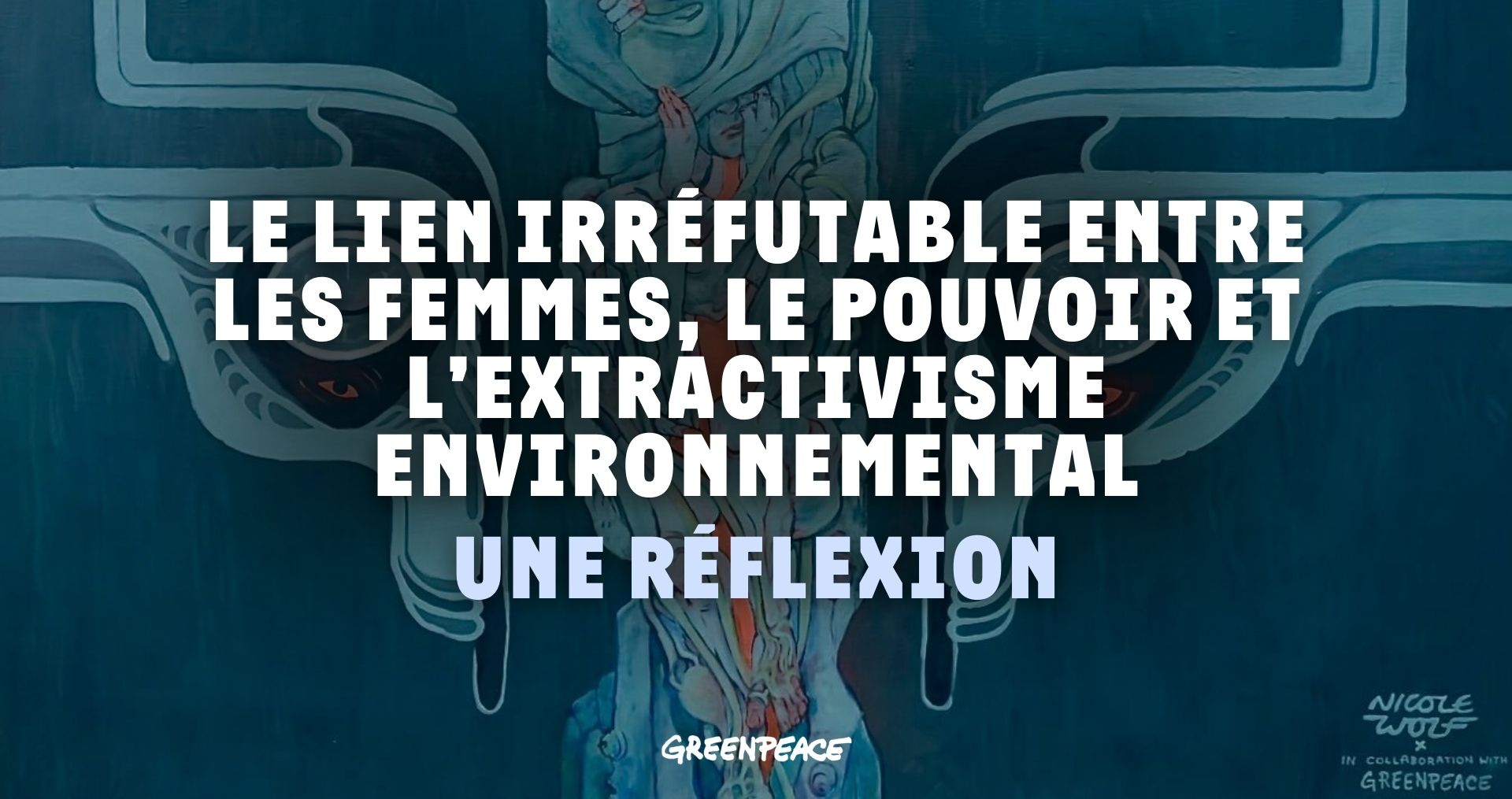
Pour relayer ce message, Greenpeace Canada a demandé à deux artistes talentueuses de créer des murales puissantes et inspirantes. Nous avons invité Jessica Winters, une artiste inuk de Makkovik (Nunatsiavut), à illustrer la façon dont elle conçoit l’intendance autochtone. De l’autre côté du pays, Nicole Wolf, de Calgary (située sur le territoire de la Confédération Blackfoot et des autres peuples du Traité 7), s’est rendue sur l’île Pender, en Colombie-Britannique, où elle a conçu une murale évoquant la menace émergente que représente l’exploitation minière en eaux profondes. Allons découvrir leurs œuvres!
Jessica Winters – Makkovik, NL
« Mes créations puisent leur inspiration dans la mémoire et le vécu, capturant des moments tels que je me les remémore – dynamiques physiques et immersifs. À travers le réalisme, les couleurs vives et les contrastes prononcés, je traduis ces souvenirs en images qui procurent une sensation d’immédiateté et de vitalité.
Les motifs récurrents de mes œuvres, tels que les mains qui travaillent ou le paysage subarctique familier, relèvent d’expériences tranquilles et intimes : regarder quelqu’un coudre, marcher sur un sentier bien connu, cueillir des baies. Ce sont des moments empreints de profondeur, où le temps ralentit et où le monde environnant semble avoir une dimension intime. Mes peintures sont de véritables capsules temporelles de ces expériences, procurant aux personnes qui les regardent une sensation de présence, de nostalgie et de chez-soi.»
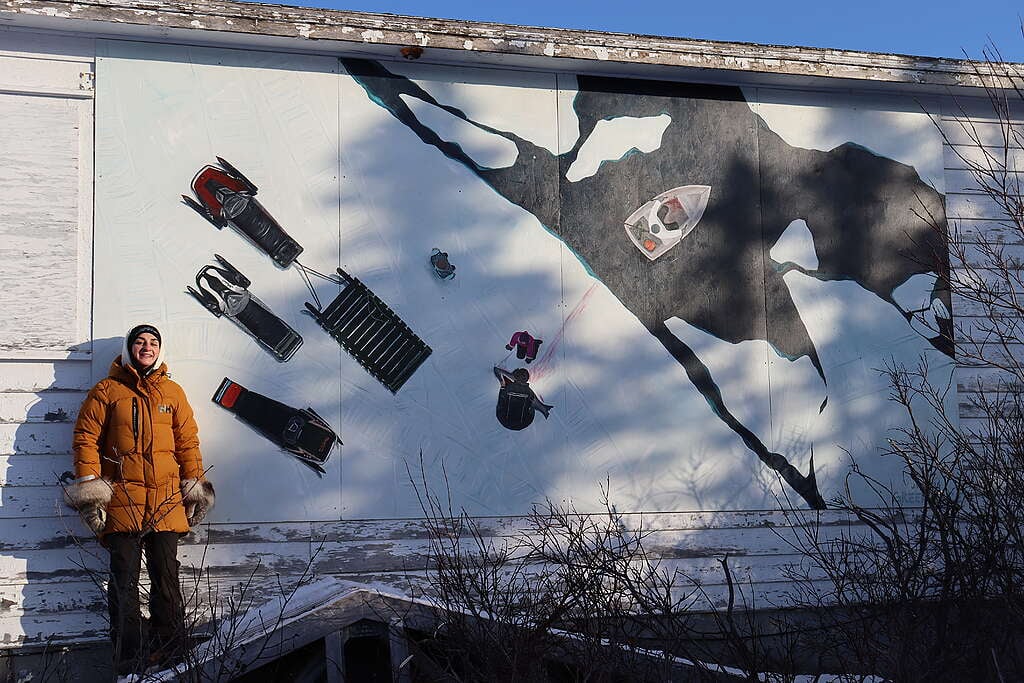
«Cette fresque représente une famille chassant le phoque auprès de la sina (bord de la glace), une scène courante dans ma communauté natale de Makkovik. Lorsque Greenpeace Canada m’a invitée à créer une œuvre d’art honorant l’intendance autochtone des océans, cette image était pour moi la représentation la plus honnête et la plus naturelle de cette relation.
D’où je viens, la gestion des océans est caractérisée par une connaissance intime de l’environnement, une observation constante et une patience immense, le tout sur fond de respect et de réciprocité. Notre présence en ces lieux est possible grâce à des générations de sollicitude, à l’apprentissage des rythmes et des cycles du territoire et des océans, et à tout ce qu’ils nous apportent. Ici, cette relation se manifeste à travers la pratique collective de la chasse aux phoques.
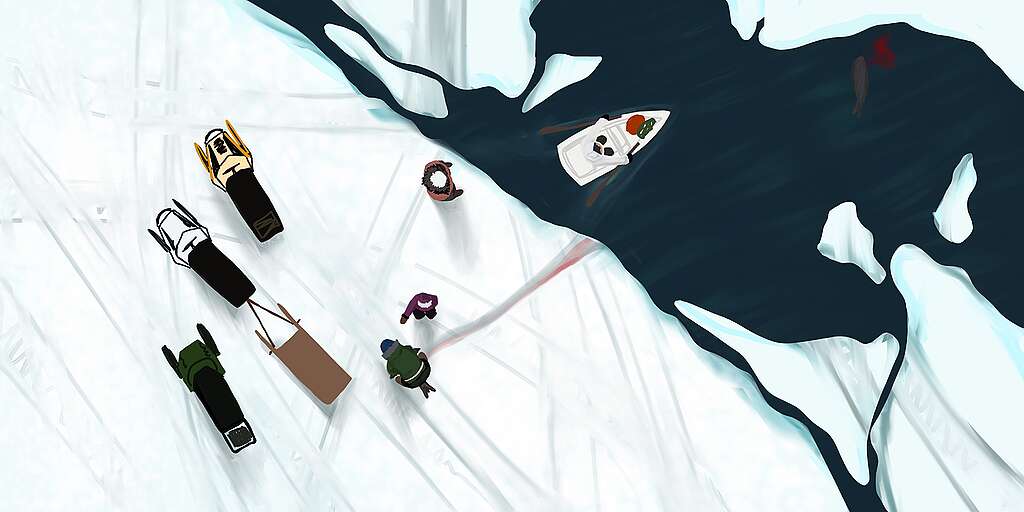
Dans le Nord, la chasse au phoque a longtemps été présentée à tort comme cruelle ou barbare, ce qui a causé des préjudices durables aux communautés inuit. À travers cette murale, j’ai voulu représenter la chasse aux phoques telle qu’elle est réellement : une pratique fondée sur la protection, la responsabilité et la subsistance. J’espère que cette œuvre résonnera auprès de ma communauté et qu’elle incitera les personnes du Sud à repenser leur vision de l’intendance environnementale. »
Nicole Wolf – Pender Island, C-B
« En tant qu’artiste semi-nomade, mon travail explore la relation entre le corps humain et le monde naturel sous le prisme de la mythologie personnelle. En traitant la nature sauvage comme un sujet vivant plutôt que comme une toile de fond, je cherche à personnifier notre réalité telle qu’elle se manifeste dans les relations croisées entre le territoire, les systèmes météorologiques ainsi que la flore et la faune locales. Ma pratique consiste à tisser des récits anciens et modernes pour remettre en question les philosophies habituelles et encourager une réflexion sur nos responsabilités au sein des systèmes écologiques dans lesquels nous évoluons.»
«Je souhaite initier un dialogue autour de l’idée selon laquelle notre traitement des ressources naturelles est le reflet direct de la manière dont nous traitons les corps humains, y compris le nôtre. En installant mes œuvres dans des espaces publics inusités par le biais de murales grand format, je cherche à perturber la banalité, à enchanter le quotidien et à favoriser une méditation sur le lien qui nous unit aux environnements qui soutiennent notre existence.»
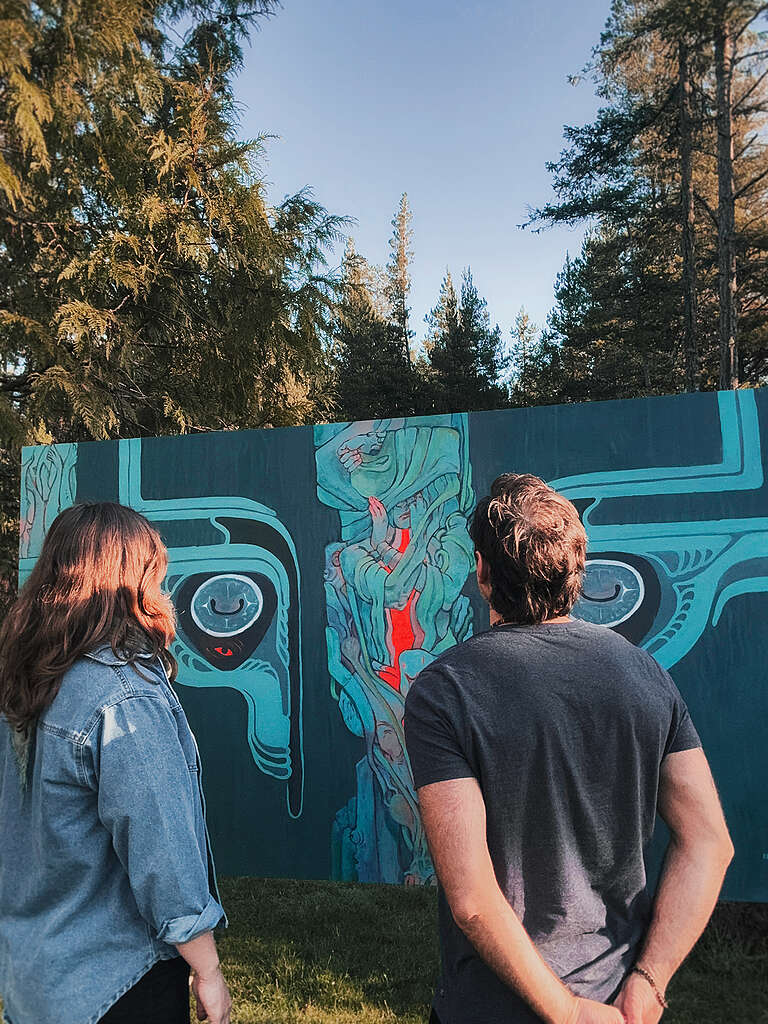
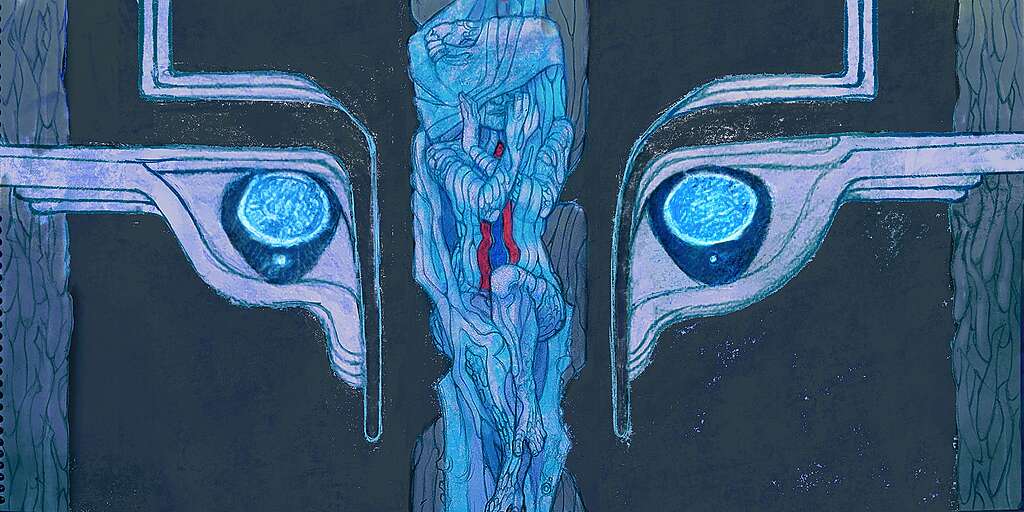
Avec son noyau de feu protégé par des yeux d’orque et recouvert de couches de varech, l’océan est personnifié comme un être autonome enveloppé par le mouvement rythmique du saumon et de la zostère. Cette œuvre a été développée à partir de conversations avec les résident·es, les Premiers Peuples et les groupes environnementaux locaux dans le cadre d’une résidence artistique sur l’île Pender. En représentant la mer sous une forme humaine, la murale cherche à transformer notre perception de l’eau en tant que simple ressource en une entité vivante dotée d’une valeur inhérente, invitant à une réflexion plus profonde sur l’intendance des océans et les conséquences environnementales de l’extraction incontrôlée de minerais en eaux profondes.
«Créée avec de la peinture recyclée, cette “murale nomade” est conçue pour être déplacée d’un lieu à l’autre dans les îles Gulf canadiennes afin de favoriser le dialogue public. Installée sur S,DÁYES – le territoire traditionnel et non cédé des Salish de la côte – la murale évoque la souveraineté et le point de vue des Premiers Peuples selon lequel la santé de nos écosystèmes marins est le reflet direct de notre propre bien-être collectif. »
Il est temps pour le Canada de ratifier le traité
Alors que ces fresques peuvent être admirées dans leurs communautés respectives, nous invitons également les décisionnaires à répondre à l’appel qu’elles lancent. Plus de 80 pays ont désormais ratifié le traité mondial sur les océans, mais le Canada ne leur a toujours pas emboîté le pas.
Bien que le Canada soit signataire du traité, il doit maintenant le ratifier – le consacrant ainsi dans la législation canadienne – afin de s’assurer un siège à la table lors de la première COP sur les océans, qui aura lieu plus tard cette année.
Nous appelons également le gouvernement canadien à promouvoir des initiatives ambitieuses pour la première génération de sanctuaires océaniques, y compris pour assurer la protection de la mer des Sargasses dans l’Atlantique.
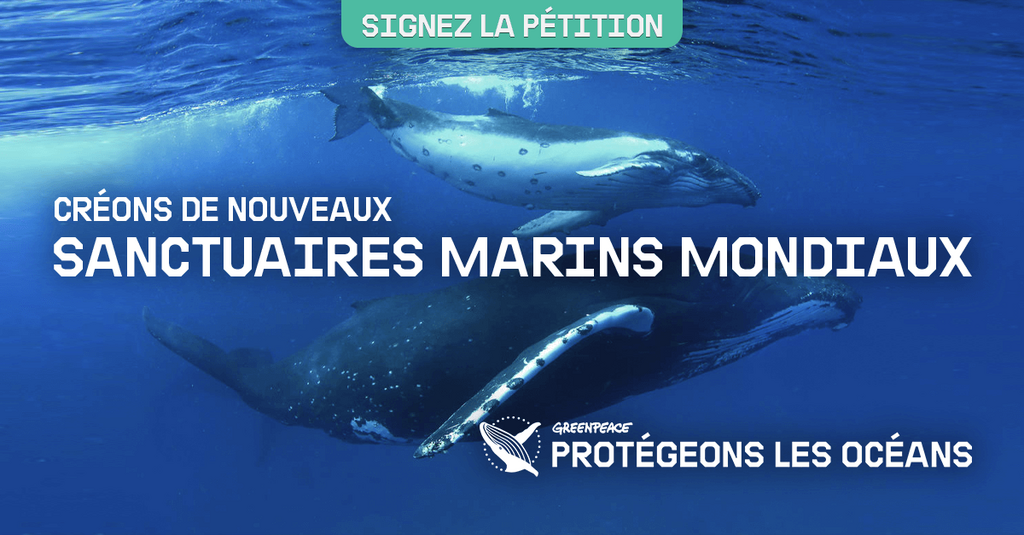
Le Traité mondial sur les océans doit être signé par 60 pays d’ici 2025 pour devenir juridiquement contraignant. Signez la pétition pour que le Canada fasse partie du nombre!
Passer à l'actionUn cadre pour les sanctuaires océaniques
Le traité mondial sur les océans offre aux gouvernements un cadre clair pour la mise en place d’un réseau mondial de sanctuaires océaniques. Il s’agit de vastes aires protégées situées au-delà de la juridiction nationale des pays, où les écosystèmes fragiles peuvent se rétablir et prospérer.
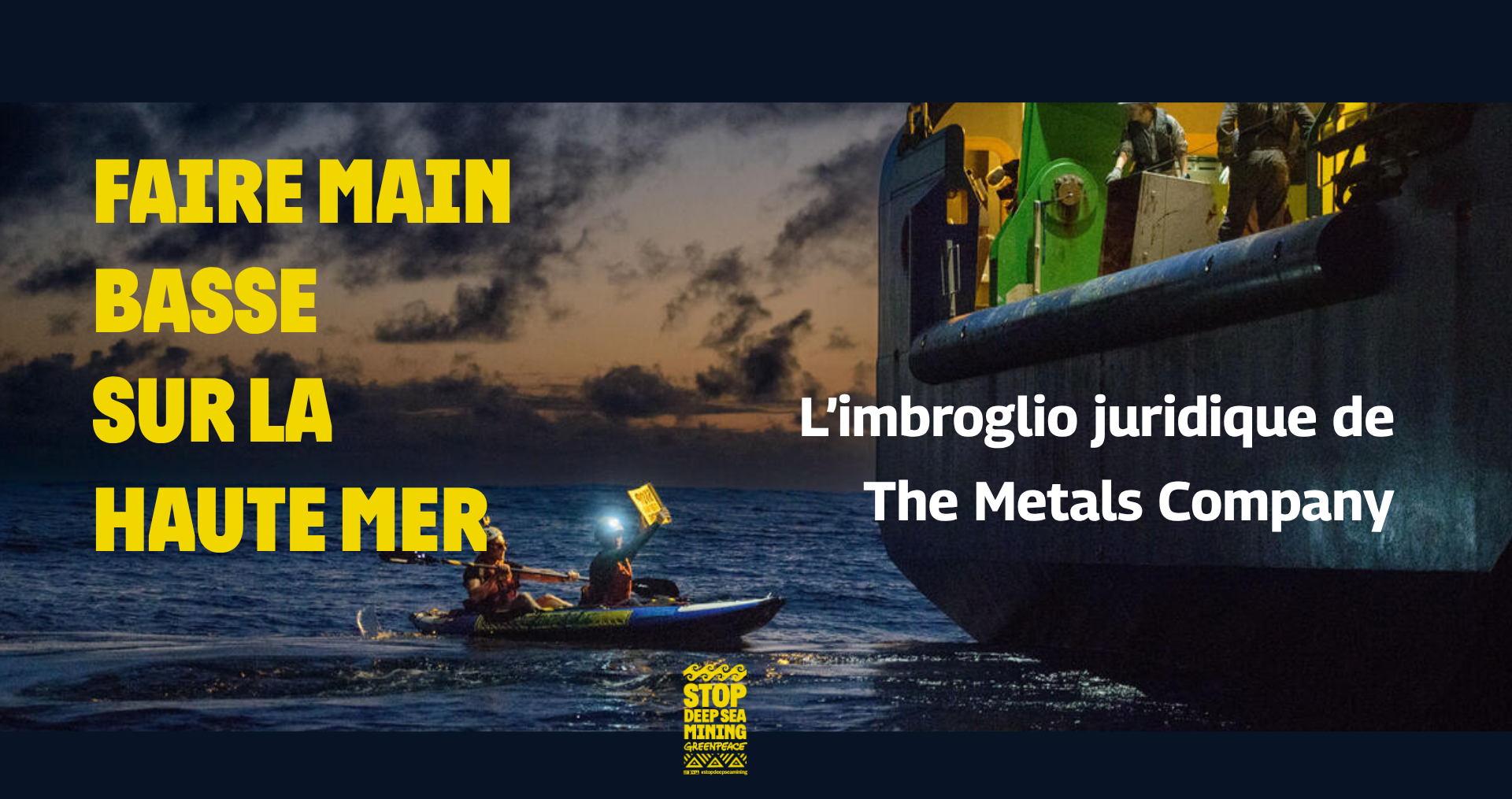
L’entrée en vigueur de ce traité essentiel survient à un moment décisif pour les océans. Moins de 1 % de la haute mer est entièrement ou fortement protégée à l’heure actuelle, ce qui la rend vulnérable à la pêche industrielle, à l’augmentation du trafic maritime, aux projets de forage pétrolier, et peut-être bientôt à l’exploitation minière en eaux profondes.
Discussion
Pour les fresques, oui, elles seraient bien et pour nous sensibiliser aux réalités autochtones intimement liées aux écosystèmes. Il s'agirait bel et bien de simplement vivre avec elles pour s'en nourrir, se gîter, se perpétuer, etc., et non pas les faire disparaître pour tous nous mettre en péril par une régulation désincarnée.
Magnifique, révélateur et vrai