
Decorate the streets with Street Art
Billionaires and corporations are trying to silence us – but we won’t be invisible. Street art is a bold way to spread our message, catch people’s attention and spark conversations in the places we live, work and move through every day.

Where Street Art can go

- Murals on walls
- Chalk messages or pictures on pavements
- Stencils on walls or pavements
- Clean graffiti – this is where you use water to scrub clean a message on a pavement, often using a stencil and jet washer
- Beach art
Where to do street art and how to stay safe
Street art is a bold and creative way to resist – but it’s important to know the risks and stay safe while doing it. In many countries, creating street art in public places without permission is illegal. It can be considered to be vandalism or graffiti. Some communities also face greater risks of being policed or profiled.
If you’re concerned, avoid private property and stick to temporary forms of street art like chalk drawings/messages, beach art, and clean graffiti. Please take care and make the choices that feel right and safe for you.
You’re welcome to create your own stencils or other forms of street art. Creative expression is encouraged but please keep your messaging peaceful and nonviolent – and remember, a picture paints a thousand words. Here are some messaging ideas:
- Time to Resist or #TimeToResist
- Tax the super rich
- We are the 99%. Time to Resist
- Time to Resist billionaire bullies
- Stop corporate intimidation
- Time to resist. Transform the future!
- No justice in a rigged system
- Time to resist fascism
- Time to resist billionaire bullies
- Time to resist fossil fuel companies
Share your photos
Once you’ve created your street art, take a photo of it and post it to social media, if you’re comfortable doing so:
- Use a caption that says look what I saw rather than look what I did e.g. “Spotted in [area] 👀 #TimeToResist”
- Avoid showing your face (or anyone else’s) in the photo
- Use the hashtag #TimeToResist and tag @greenpeace – we’d love to amplify your creativity and solidarity
- Posting a photo of your street art could carry a risk, especially if your face, identifiable location, or the act itself is visible. Please protect your identity if you choose to post.
Want to stay completely anonymous? That’s fine too, you’re still part of something bigger
Build a Movement
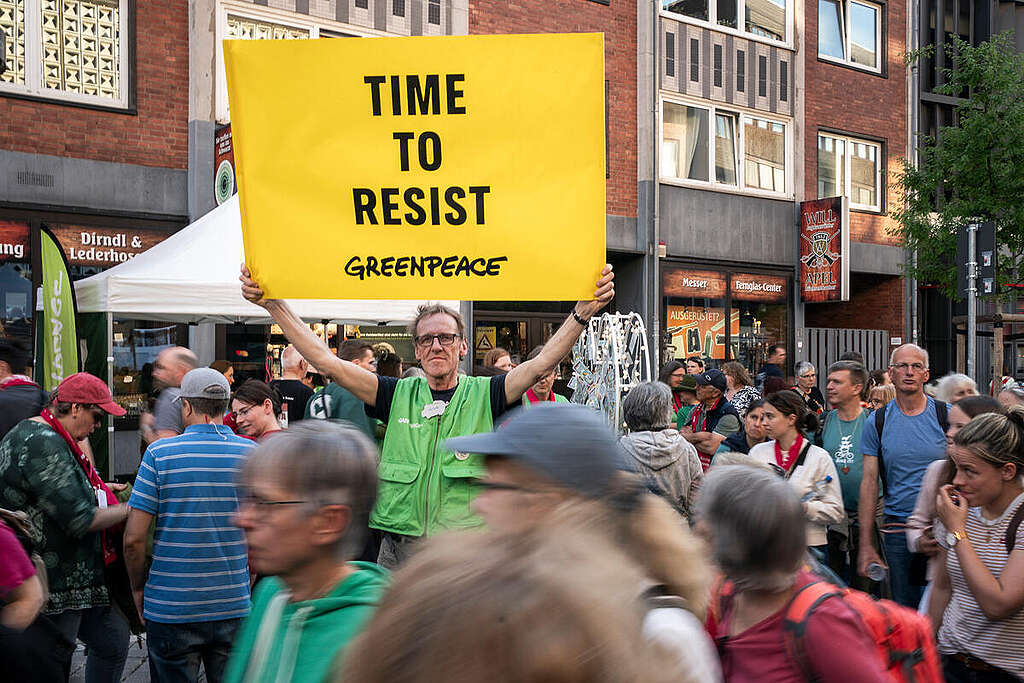
Tell us how your street art activity went and how you’re resisting billionaires and corporate takeover to inspire others and build a global movement.
Share your story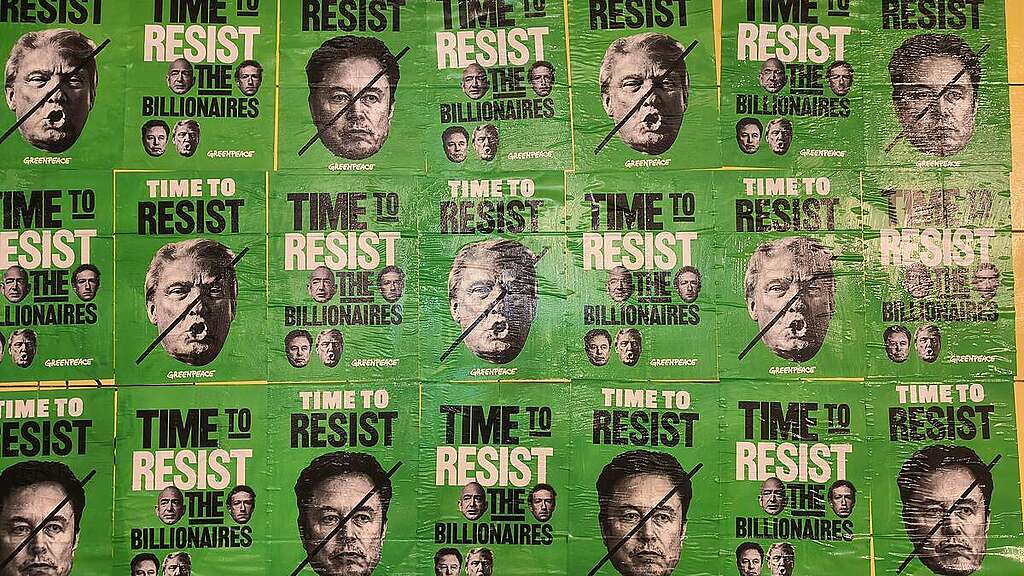
Together we can challenge the billionaires and companies trying to silence us. Find more acts of resistance and get inspired.
Choose your act of resistance