
All articles
-

Arctic Sanctuary
Arctic coastal states are keen to lay claim on the valuable resources found beyond their national boundaries, and they have all submitted applications to extend their polar seabeds. Governments and industry see the opening of the Arctic as yet another business opportunity to extract more fossil fuels and fish, placing this unique region – and…
-
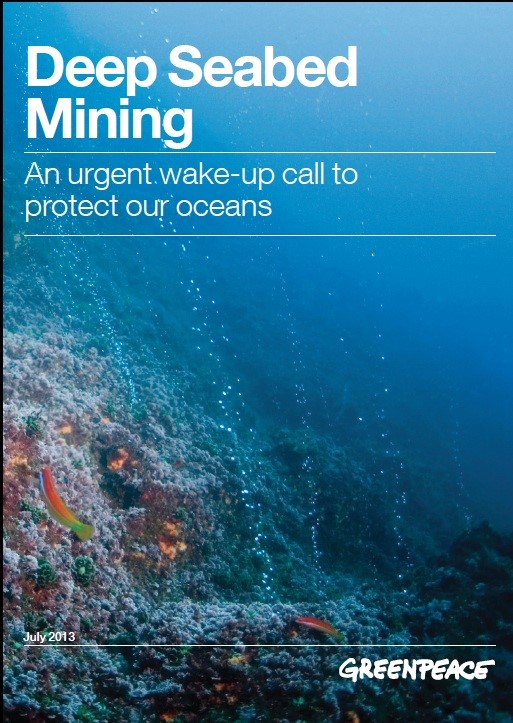
Deep Seabed Mining
The deep sea is a place of myth and mystery, filled with weird and wonderful life forms, and vital to the survival of our planet. But now, this mostly unknown world is facing large-scale industrial exploitation – as mining of the deep seabed for minerals fast becomes reality.
-
Oceans in the Balance
Every second breath we take comes from the ocean. Billions of people rely on our oceans for their food and for employment. In return, we are plundering the oceans of fish, choking them with pollution and altering them forever with the impacts of human-induced climate change.
-
The Need for a High Seas Biodiversity Agreement
The current way of managing the high seas puts short-term corporate interests before the long-term health of our oceans. Unless action is taken to restore and protect the health of our oceans, they will be unable to sustain life on Earth.
-

Protecting Antarctica, the heart of the ocean
For many people the Antarctic is little more than a far-away frozen region, literally at the edge of the world; with sterile glaciers, icebergs and colonies of not-so ‘Happy Feet’ penguins, buffeted for much of their lives in the extreme Antarctic wind.
-
Emergency Oceans Rescue Plan
Our oceans are in crisis. Hardly a week goes by without another major study linking the loss of marine biodiversity with human activity. Scientists repeatedly warn that many ocean ecosystems are fast approaching tipping points whereby they will be changed for ever.
-

Mediterranean Sea – Threats and Solutions
The Mediterranean Sea is the world's largest inland sea,a beautiful,but troubled body of water stretching for 2.5 million km2 between the continents of Europe, Asia and Africa. Threats such as destructive and over fishing, climate change and pollution are all taking their toll, while trade and tourism are adding further pressure on coastal areas and…