

Note: The download link works best in Chrome.
Extreme heat is rapidly becoming one of the most dangerous impacts of the climate crisis, threatening health, livelihoods, food security, and economies around the world. As global temperatures continue to rise, communities across the Global South are bearing disproportionate impacts despite contributing the least to climate change.
In the Philippines, heat stress is an emerging but underexamined climate risk. To help address this gap, Greenpeace Philippines, in partnership with the National Anti-Poverty Commission – Victims of Disasters and Calamities Sectoral Council (NAPC-VDC), conducted a participatory research to document the impacts of extreme heat in climate-sensitive sectors such as fisherfolk communities, whose livelihoods depend on stable weather and healthy marine ecosystems and who are facing challenges brought by declining fish catches, illegal and commercial fishing, reclamation, and pollution.
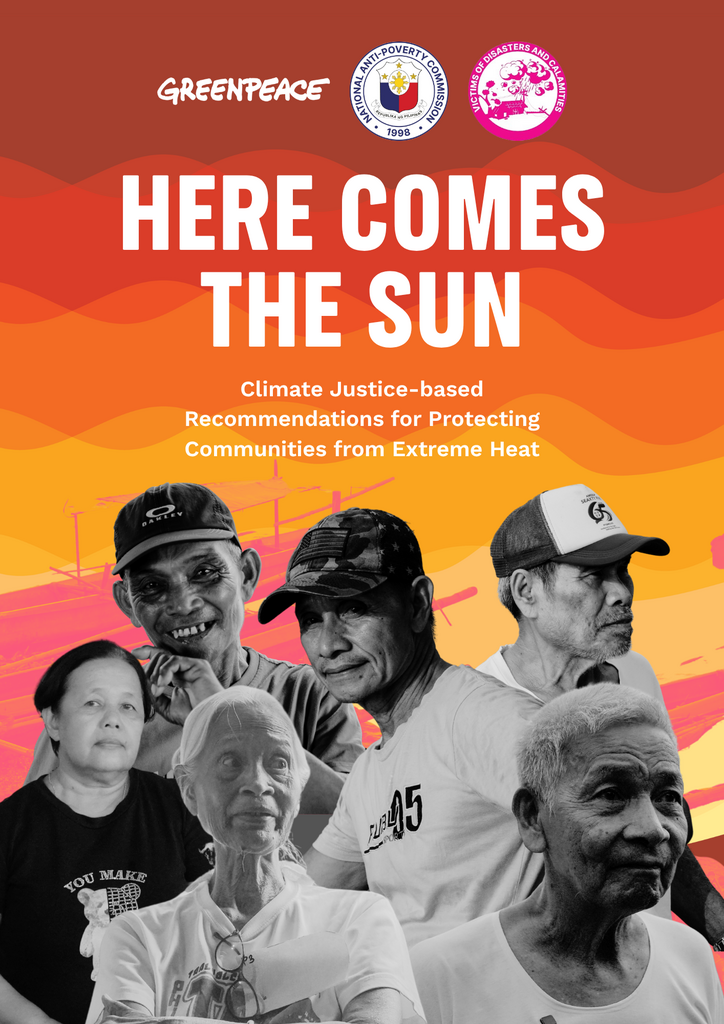
The report Here Comes the Sun: Climate Justice-based Recommendations for Protecting Communities from Extreme Heat gathers lived realities of heat-impacted communities, identifies community-led solutions, and explores policy recommendations to strengthen climate resilience and accountability.
The study also builds on Greenpeace South Asia’s pioneering research on heat impacts among street vendors and contributes to a growing body of evidence from the Global South. Together, these efforts create opportunities for cross-country collaboration, shared learning, and stronger advocacy for climate justice, adaptation, and accountability from the fossil fuel industry