After the deadly storms, floods, and landslips of the last few weeks, made worse by climate change, the Luxon Government has tried to claim that it takes climate change seriously.
But does it really? The proof is not what they say but what they do.
Below I have listed 15 policies the Government has introduced that are either increasing New Zealand’s climate emissions, slowing down emission reductions, or leaving us less prepared for climate disasters.
I’ve also delved into the one thing Prime Minister Chris Luxon says he is doing to make things better – fast tracking – to see whether his claims stack up.
Fifteen policies to make it worse:
- Attempted to restart offshore oil and gas exploration
In 2018 the New Zealand Parliament banned new offshore oil and gas exploration permits. It did for the simple reason that if we are to avoid climate disaster, we can’t burn known fossil fuel reserves, let alone look for more. We have to stop investing in the search for more fossil fuels.
The Luxon Government has overturned this ban and is trying to restart offshore drilling for oil and gas (against strong community resistance).
- Subsidised oil and gas exploration
Subsidising fossil fuels in the middle of a climate emergency is the definition of madness, and many governments and NGOs are trying to stop these subsidies. Even the New Zealand Government has campaigned globally to end these production subsidies!
In the May 2025 Budget, the Luxon Government announced that it is offering $200m to oil and gas companies to subsidise exploration and other activities.
- Pushed Fossil Gas
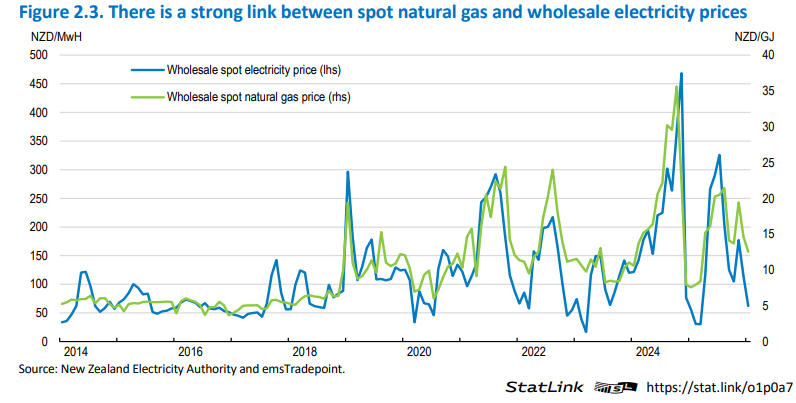
Liquified natural gas (LNG) use is surging globally, undermining efforts to cut emissions. It is likely even worse than coal in its climate impacts.
The Luxon government intends to fast track and possibly subsidise an LNG import facility for New Zealand. Even though it does not solve our dry year energy risk.
- Removed the price signal on dairy emissions
Agricultural emissions are 50% of New Zealand’s entire greenhouse emissions. Currently these emissions do not face a price in New Zealand’s Emission Trading Scheme. They were legislated to come into the ETS in 2030, in order to provide a financial incentive for agribusiness to cut their pollution.
The Luxon Government decided to change the law so that agribusiness emissions are free and there is no financial incentive to reduce them.
- Weakened freshwater rules
Intensive dairying not only produces large amounts of climate pollution, it also produces large amounts of water pollution. Regulations to limit water pollution have the effect of limiting cow numbers and hence climate pollution. Freshwater regulations were starting to bring down cow numbers and hence emissions in 2023.
The Luxon Government has systematically gutted freshwater regulations, with the result that cow numbers and climate pollution are increasing.
- Abolished funding to industry to cut emissions
One of the drivers for industry to cut emissions is for the government to provide some financial assistance to invest in low carbon equipment. The Government Investment in Decarbonising Industry (GIDI) co-funded some large scale decarbonising projects and was expected to drive a quarter of all emissions reductions in 2026-2030.
The Luxon Government abolished the GIDI fund to help pay for tax cuts.
- Weakened the methane reduction target
Methane is a superheating gas which causes 80 times more heating over a 20 year period than a similar quantity of carbon dioxide. It is New Zealand’s main contribution to climate change so far. Dairy agribusiness is the main polluter.
The Luxon Government slashed New Zealand’s methane reduction target, in a move that even the Climate Minister conceded is not consistent with meeting the Paris climate targets. Luxon fought with climate scientists over the impact of methane.
- Slashed spending on public transport and cycling (and increased motorway spending)
Transport emissions make up about 20% of New Zealand’s climate pollution. Reducing vehicle kilometers is one of the most efficient ways to cut transport emissions, and this can be done by increasing the proportion of trips on public transport and cycling (uptake of electric vehicles is a secondary solution – also cut, see below).
The Luxon Government slashed funding to public transport and ended all new funding for cycleways completely. It removed climate change as a priority when making transport funding decisions. It proposed spending up to $50 billion (yes billion) on new motorways with all the extra climate pollution that will bring. It removed subsidies for kids using public transport.
- Abolished the Climate Emergency Response Fund (CERF)
Climate change will result in a series of disasters from more flooding and extreme weather events. In order to ensure there is ongoing funding for recovery, rather than responding in an ad hoc way, previous Parliaments established the CERF to cover costs.
The Luxon Government abolished the CERF as well as other adaptation and climate science funding, to pay for tax cuts
- Blocked offshore wind generation
Large scale offshore wind generation has been an important part of energy decarbonisation overseas due to cost and reliability. New Zealand has excellent offshore wind resources near Taranaki – shallow water, reliable wind, grid connection points from the old gas generators, expertise in offshore work from the end-of-life oil and gas industry.
The Luxon Government has fast tracked seabed mining in exactly the same location, even as offshore wind companies have said that the two activities are incompatible because seabed mining destabilises the ocean floor foundations of wind turbines. A number of offshore wind companies have now left New Zealand as a result.
- Weakened car fuel efficiency standards
Aside from decreasing vehicle kilometers travelled, one of the most efficient ways to reduce transport emissions is to increase fuel efficiency standards on imported vehicles.
The Luxon Government has weakened fuel efficiency standards for imported vehicles. This means more climate pollution.
- Removed the clean car discount
One way to incentivise car buyers to buy the most carbon efficient cars is to provide a financial incentive, which is what the Clean Car Discount did. It led to a big increase in sales of electric and hybrid cars, paid for, in part, by a fee on the most polluting cars.
The Luxon Government removed the clean car discount resulting in a collapse of electric car sales.
- Collapsed the price in the Emission Trading Scheme
The National Party stated that the Emission Trading Scheme was the cornerstone of climate action. Indeed a price on emissions will help drive businesses to change to lower emissions technology (alongside regulation).
Under the Luxon Government the price of ETS carbon credits has dropped to historically low levels. In 2025 there was not a single bid for a single carbon credit at the quarterly ETS auctions run by the EPA. The price collapse is driven by changes they made to the ETS settings, the doubling of free carbon credits given to polluters like Rio Tinto, as well as the broader perception of lack of commitment to carbon reduction.
- Rejected all recommendations of the independent Climate Change Commission on emissions targets
The independent Climate Change Commission provides advice to the government on what level of emissions reductions is practical and desirable. They stated that there was a clear cost effective pathway to strengthen New Zealand’s emission reduction targets.
The Government rejected all their recommendations. And intends to cut the Commission out of developing future emissions reduction plans.
- Adopted an energy policy that is more fossil fuels
The Government’s energy policy could provide guidance to reduce emissions from generation even as the country electrifies transport and industrial processes.
However, the Government’s energy policy released in 2025 had more fossil fuel generation, LNG import, and fossil fuel subsidies. It removed the preference for renewable energy. It was a leap backwards.
The Government’s approach across all sectors has been to introduce policies that will either increase emissions, slow down emission reductions, and/or reduce the nation’s climate resilience.
But what about fast tracking renewable energy projects?
When presented with their terrible record on climate, the Luxon Government points to the fast tracking of some renewable energy projects. This is however not what it seems and here’s why.
- Fast tracking climate pollution
Fast tracking resource consents could help the climate or hinder it, depending on the projects that are fast tracked.
And New Zealand already had a fast track before the current Government came into office. The COVID Fast Track was introduced in 2020 during the COVID crisis to try to stimulate economic activity.
But, and it’s a big but, the 2020 COVID fast track mechanism operated with environmental guardrails – the same environmental protections applied even as the process was accelerated. This meant the COVID fast track couldn’t be used for polluting projects like coal mines and irrigation projects, but it could be used to fast track renewable energy projects, and it was.
In fact the 2020 COVID fast track led to the fast approval of around 15 renewable energy projects. Not all projects were approved but, if you have environmental protections, not every project will be approved.
However, the Luxon Government replaced the COVID fast track with a new fast track mechanism in 2024 without environmental guardrails. This new fast track has been used for irrigation projects for intensive dairy expansion and coal mines, increasing climate pollution.
The Luxon fast track has been used to approve one renewable energy project and there are others in the pipeline. But there is no reason to think that most of these would not have been approved using the normal consenting process or the COVID fast tracking consenting process. The Ruakākā solar to hydrogen farm, for example, went from concept to build in less than 12 months without using any fast track process.
So yes under the Luxon fast tracking consenting process a single renewable project has been approved and others will be approved, but so will climate destructive projects. Whereas under the old process 15 renewable energy projects were approved and no coal mines or irrigation projects, and had it continued more renewable energy projects would have been approved while retaining environmental guardrails.
So the Luxon Government has actually made things worse by fast tracking climate destructive projects, while climate friendly projects were being approved regardless of the Luxon fast track.
We need to be part of the global climate solution
The New Zealand Government is currently part of the problem globally – it is actually worse than I have listed here – see the first two years of the War on Nature.
We need to be part of the solution.
The extreme weather events of the last few weeks are just the beginning, as we enter the age of consequences on climate change. But it’s never too late. Every step we take to cut emissions means it won’t be as bad later. And there is action on climate change all over the world in spite of Trump and Luxon.
New Zealand government officials warned the Luxon Government that their anti-climate policies would undermine global efforts to cut emissions. Luxon ignored them and now stands alongside Trump with his ‘drill baby drill’ infantile nonsense.
New Zealand has done some great things in the past – like the ban on new offshore oil and gas exploration – and we will again. And Luxon will struggle to get oil and gas exploration going again anyway due to civil society opposition. It’s time for us to once again play our part in global efforts to protect the habitability of Planet Earth – for ourselves, for our kids, and for all the living creatures with whom we share this blue globe.