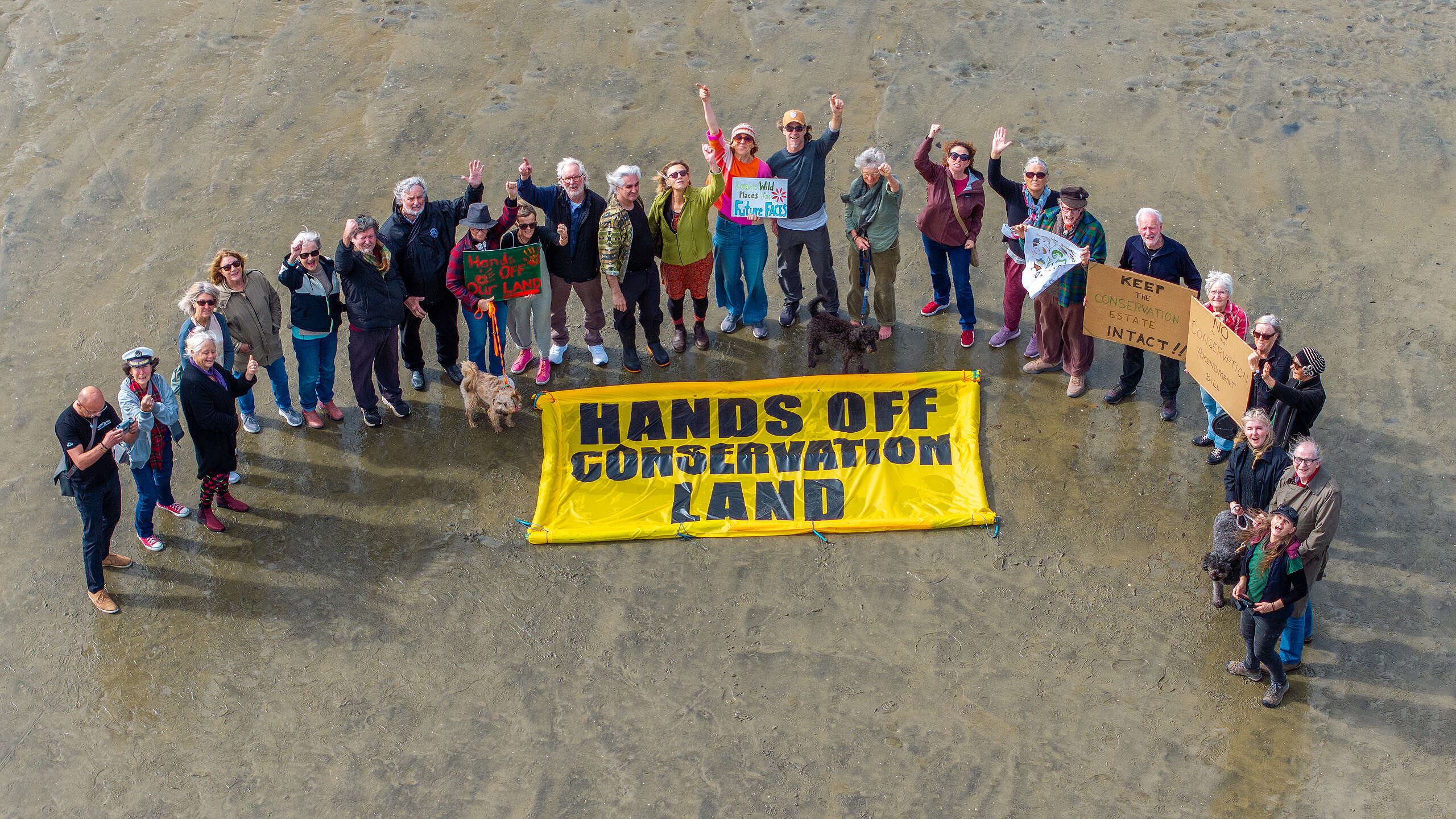
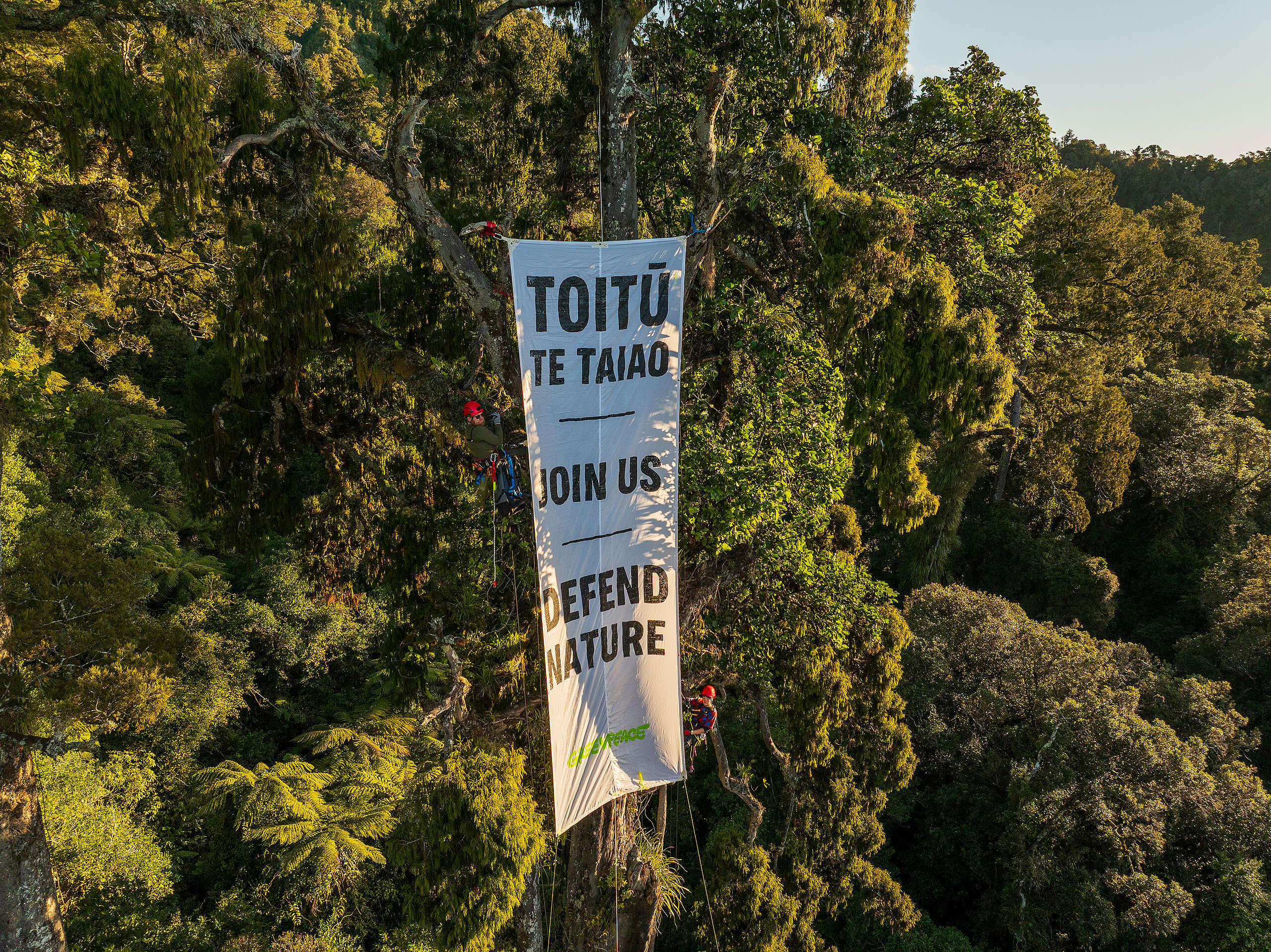
How the Luxon government plans to gut the Conservation Act, open up public conservation land to commercial exploitation and even open the door to selling off a staggering five million hectares – around 60% of all conservation land in Aotearoa.
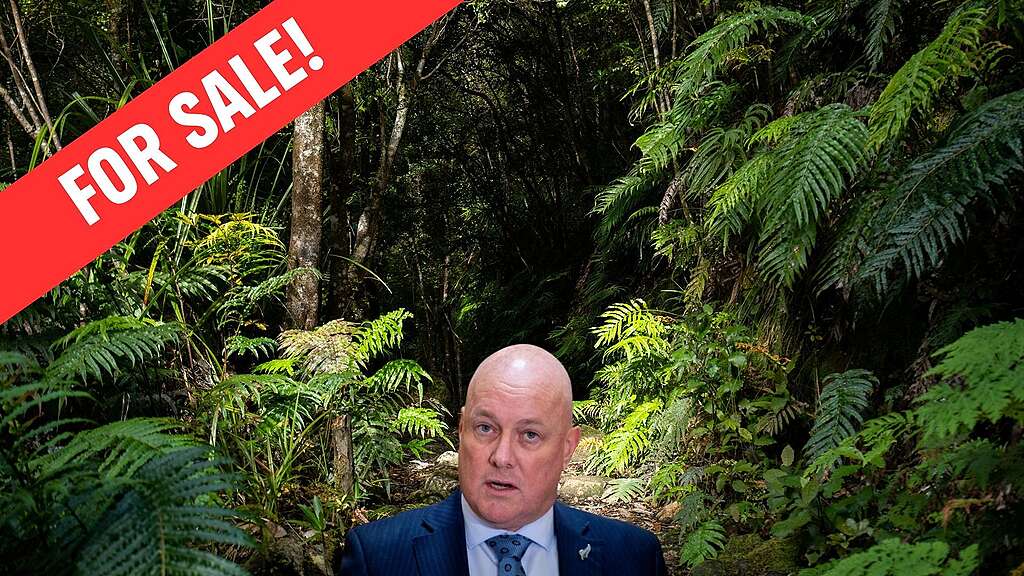
Public conservation land belongs to Aotearoa. Tell the Government: our conservation land is not for sale.
Sign the petitionPublic conservation land is part of who we are. It’s the snow-covered mountains, ancient forests, wild rivers and native birdsong that make Aotearoa unlike anywhere else on Earth. It’s where we go camping, tramping, fishing and hunting.
It’s the last refuge for our endangered native species that are fighting to survive. And it’s one of our greatest defences against climate breakdown because huge tracts of native forests in the conservation estate store vast amounts of carbon.
But the Luxon Government is planning a ram raid on public conservation land.
They are proposing to change the entire purpose of the Conservation Act and the Department of Conservation to open up public conservation land to private commercial exploitation. They have even proposed making it easier to sell off conservation land and put a staggering five million hectares – around 60% of all conservation land in Aotearoa at risk of being sold off.
This is the biggest attack on conservation land in New Zealand’s history. And it is the darkest and most critical moment in the fight to protect Aotearoa from destructive mining.
Once our wild places are sold off, dug up, and mined, we can’t get them back.
Here is a breakdown of what the Government is proposing with its Conservation Amendment Bill.
1. Opening the door to selling off 60% of the Conservation Estate
Right now, our conservation law is incredibly strict on selling off or exchanging parcels of public conservation land. And that is as it should be.
The Department of Conservation (DOC) can only sell land classed as stewardship land and only once it has been thoroughly assessed and found to have no or very low conservation value. Any land swap must actively enhance conservation outcomes.
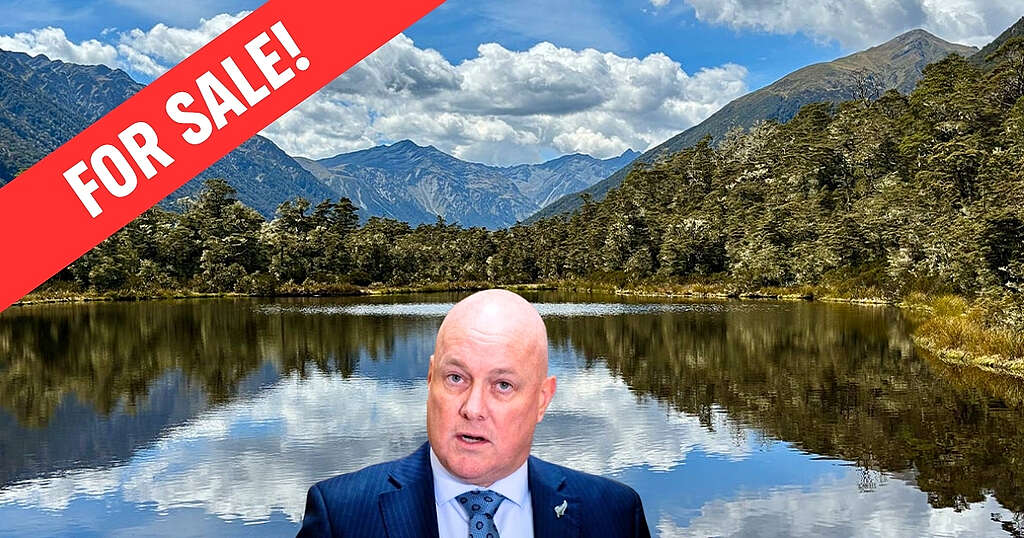
The new Bill guts these protections. It expands the types of conservation land that can be sold or swapped and removes the requirement that land must be of “no or very low” conservation value. It’s not just stewardship land that could be on the auction block anymore, it’s Conservation and Forest Parks – like the Tararua, Whirinaki, and Mount Richmond forest parks. It’s Reserves like Cathedral Cove, Lewis Pass and the reserve home to the infamous Roys Peak in Wānaka.
It is a staggering five million hectares—roughly 60% of all public conservation land—that could become eligible for sale or exchange. According to DOC’s own analysis, under these new rules, the government could sell off:
- Pristine beech forest in Lewis Pass
- Ancient podocarp forest on the West Coast
- High-country tussock lands
This is part of the Luxon Government’s coordinated agenda to hand the keys to Aotearoa over to foreign mining giants.
They have already brought in the Fast-track Act, opened up precious wetlands for extraction, courted a war minerals deal with the United States, invited mining lobbyists into the halls of power, and let them rewrite the rules in their favour.
Now, they want to turn some of our most sacred wild places into toxic open-cast mines.
Selling off public conservation land to be bulldozed by foreign mining giants would be disastrous for our native wildlife that are already on the brink of extinction. And the climate damage would be enormous. As floods, storms and fires intensify across Aotearoa, razing forests for coal mines would push us further into climate chaos.
And while National Parks and other highly protected areas are excluded from sale, the Government still plans to open these places up for commercial exploitation.
2. Rewriting the law: from conservation to commercial exploitation
Since 1987, DOC’s primary job has been to protect nature. But this Billrewrites DOC’s core mandate, forcing the Department to enable commercial exploitation of public conservation land.
If the bill passes, DOC will be forced to enable commercial development “to the greatest extent practicable.” That same commercial exploitation mandate will be hardwired into the purpose of the Conservation Act itself, and forced into the new National Conservation Policy Statement (NCPS) and all regional planning documents.
Instead of acting as nature’s defense shield, DOC would be legally repurposed into a commercial exploitation agency. And the entire purpose of the conservation act itself would be shifted away from protection and conservation to commercial exploitation.
3. ‘Unleashing’ commercial exploitation of protected lands
Tourism and other companies can already operate on conservation land as long as they get permission from DOC, which means that the impacts on wildlife and nature can be minimised. But that’s not enough for the Luxon Government and their war on nature.
The government has explicitly stated its intention with this Bill is to “unleash a fresh wave” of commercial permissions (concessions). This could lead to faster approvals for mining and facilitate more intensive development within public conservation land.
To make this as easy as possible for corporate interests, the Bill:
- Creates “Exempt” Activities: The Minister of Conservation can unilaterally decide that certain commercial activities are “exempt” or “pre-approved,” from needing a concession, bypassing standard environmental safeguards entirely.
- Establishes Commercial Exploitation Zones: No one wants to see a Trump Tower on Tongariro or a Macdonalds on Mount Taranaki. But we soon might because under this bill the Minister can create what they call “visitor amenity areas” (AKA commercial exploitation zones) on conservation land – where private hotels, shops, restaurants, gondolas, roads and monorails can be built even in the heart of our most protected wildernesses like National Parks.
Shockingly, the Bill allows the Minister to push these zones through even if they completely violate the conservation principles the park was created to protect. - Concentrates power with the Government of the day and strips the public voice: Conservation land is held in trust for the public, so key decisions about it are not always by politicians, but by the Conservation Authority and Conservation Boards which have a wide range of community and iwi members and independent experts.
The bill strips decision-making powers from these community bodies and hands it to the Minister. It also strips away automatic public hearings. If you want to object to a commercial permission, your right to be heard is gone.
We saved our wild places before. We can do it again.
Public conservation land has been kept safe by generations of New Zealanders who stood up to defend it, and it is now our turn to guard it for those that come after us. We cannot let one Government carve up these historic wild places and sell them off to mining giants so they can turn ancient forests into toxic, open-cast mines.
Luckily, we know how to fight this—because we’ve already won this battle before.
Fifteen years ago, when the previous National Government tried to hand over high-value conservation land to mining interests, they thought we would let them. They were wrong.
Tens of thousands of regular New Zealanders stood shoulder-to-shoulder to defend public conservation land. We signed petitions, we lobbied MPs, and we marched by the thousands through the streets until the government was forced to back down.
History shows that when enough of us stand together, politicians have no choice but to listen. With an election on the horizon, the government is acutely aware of the power of public backlash.
We stopped them then, and by rising up together, we will stop them now.
Sign the petition and tell the Government to keep its hands off our conservation land.
Public conservation land belongs to Aotearoa. Tell the Government: our conservation land is not for sale.
Sign the petition