Almost exactly one year after the Glenavy water supply exceeded the government’s legal health limits for nitrate, the town’s water supply nitrate levels are rising – and fast.
The Canterbury town’s water supply reached 8.8 mg/L of nitrate (N03-N) in drinking water on Friday afternoon (or 39 mg/L of nitrate). New Zealand’s current legal limit for nitrate in drinking water is 11.3 mg/L of nitrate-nitrogen.
Greenpeace spokesperson Will Appelbe says “It’s been just over a year since Glenavy was put under a ‘do not drink’ notice for exceeding the Government’s legal limit for nitrate, and there’s a very real possibility that this could happen again.
“This level is already putting pregnant people in the area at risk, and if it continues this community will be unable to drink the water from their kitchen taps.”
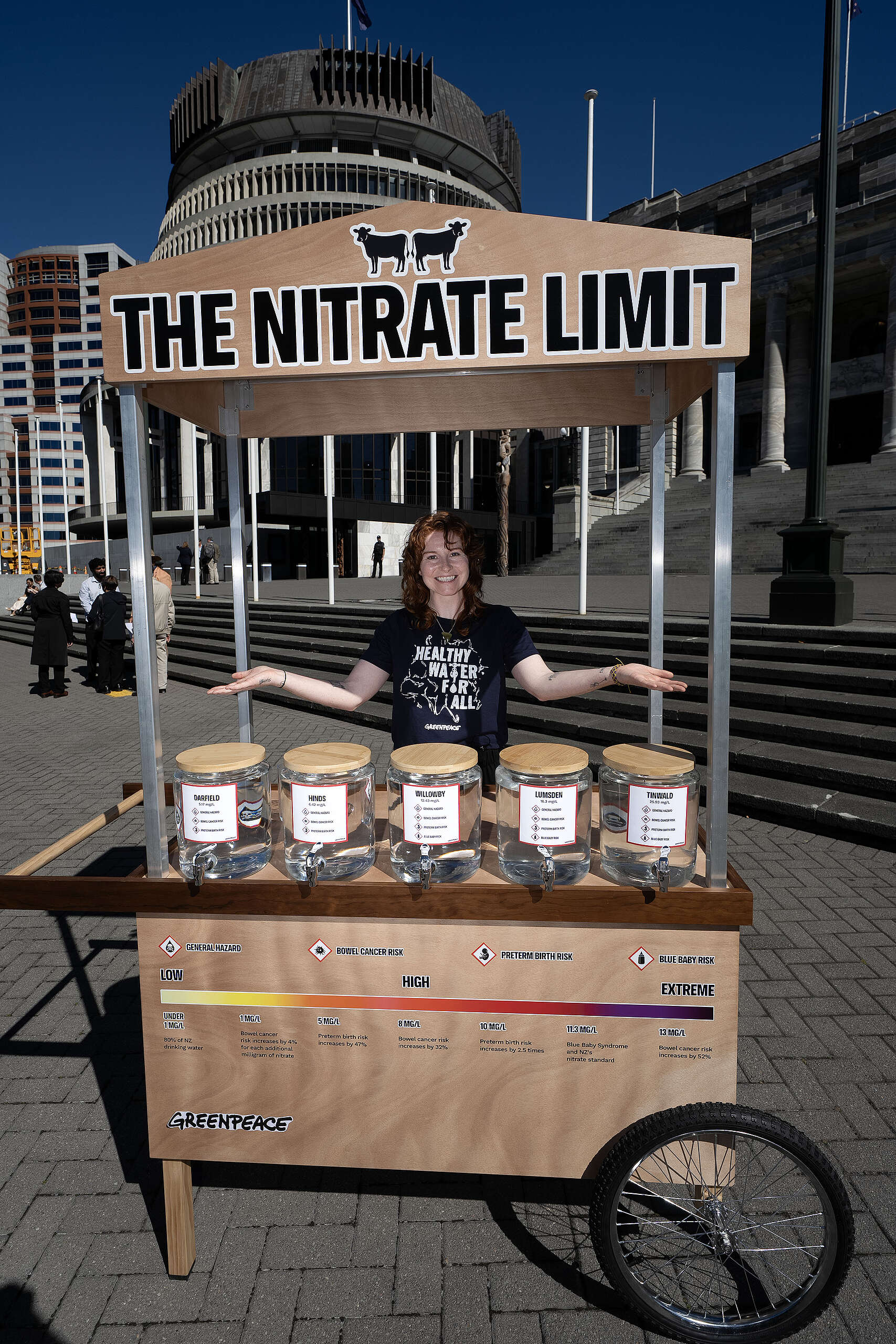
Two weeks ago, Greenpeace water testing in Waimate found Glenavy town supply was at 6.07mg/L of nitrate. Waimate District Council’s own testing on 20 November found the supply was 6.35 mg/L. Since then, nitrate levels have skyrocketed.
Nitrate contamination in drinking water above 5mg/L has been linked to an increased risk in preterm birth, if pregnant people consume that water during pregnancy. The New Zealand College of Midwives advises pregnant people to consider an alternative water source if their primary water source is above this level for nitrate.
“The Lower Waihao Scheme has consistently tested around 5 mg/L since April, but nitrate levels have shot up in the space of less than a month,” says Appelbe.
“The council has done what they can in an attempt to reduce the contamination, but this is the ambulance at the bottom of the cliff. The only way to permanently improve nitrate contamination is to address the source of the pollution: the intensive dairy industry.
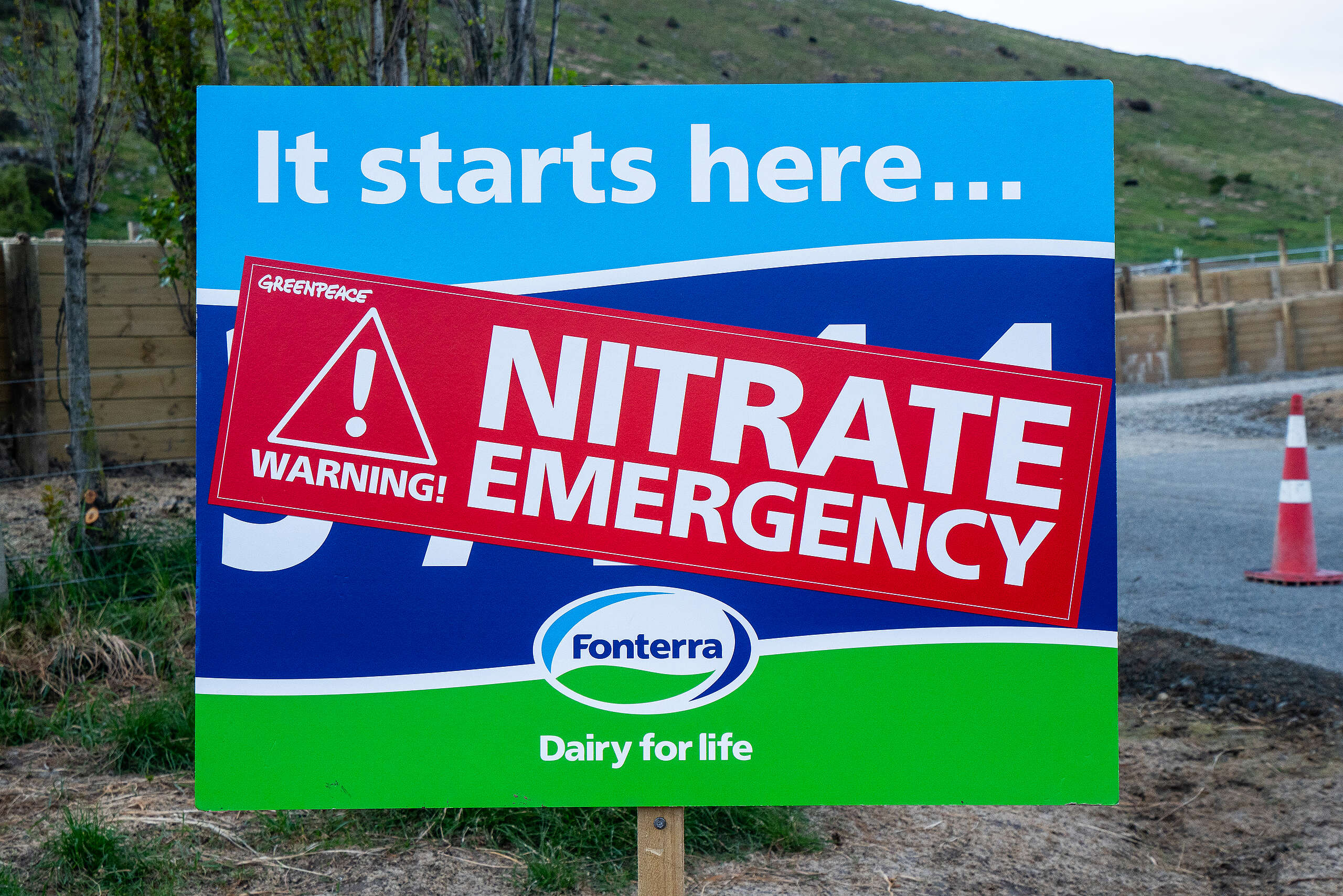
“Nitrate contamination is the result of an oversized dairy herd and too much synthetic nitrogen fertiliser. To stop nitrate from getting into groundwater – and into rural communities’ drinking water – we need to change the way New Zealand does farming.
“Fonterra and the Government must support farmers to transition to ecological farming that works with nature instead of against it. That means ending the use of synthetic nitrogen fertiliser and reducing herd sizes.”