Greenpeace says that the Government has forsaken rural New Zealanders, as new maps of nitrate contamination from Environment Canterbury reconfirm that people living in regions like Ashburton are exposed to unsafe levels of nitrate in their drinking water.
Greenpeace Programme Director Niamh O’Flynn says, “A year ago, Environment Canterbury declared a nitrate emergency – becoming the first regional council to recognise the dramatic, escalating crisis threatening rural drinking water in Aotearoa. Now, new maps produced by the council again confirm what we’ve known for a while: this crisis isn’t going away.”
Strikingly, the map shows that a significant number of locations around the Ashburton District have tested above the New Zealand legal limit for nitrate contamination in drinking water.
“It is the responsibility of local and central government to protect the health of people in rural communities,” says O’Flynn.
“But the coalition Government has blocked regional councils like Environment Canterbury from regulating the dairy industry to stop it poisoning the drinking water of many people in Canterbury. They’ve prioritised corporate profits over the safety of rural New Zealanders and their right to safe drinking water.
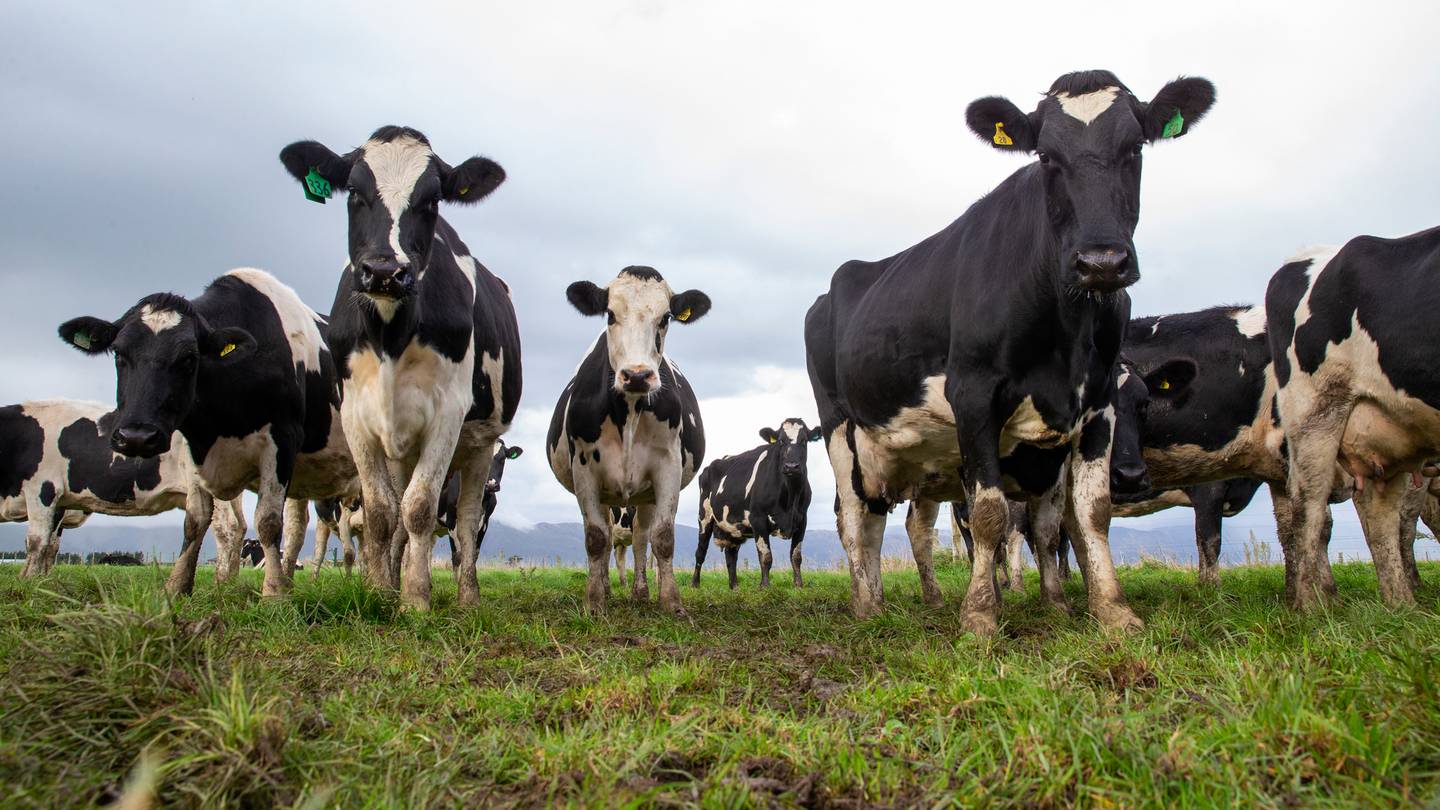
“Nitrate contamination, caused by the oversized dairy herd and the overuse of synthetic nitrogen fertiliser, is putting the health of rural families at risk. At levels lower than New Zealand’s current health limit, it’s been linked to an increased risk of cancer and preterm birth, and at the current health limit of 11.3mg/L, it can cause Blue Baby Syndrome.
“Thirty years ago, New Zealanders could take the kids down to the river for a swim, and safely drink the water coming out of their kitchen tap. But over the last few decades, dairy farming has rapidly industrialised, becoming New Zealand’s biggest polluter, and now many people can no longer safely do those things.”
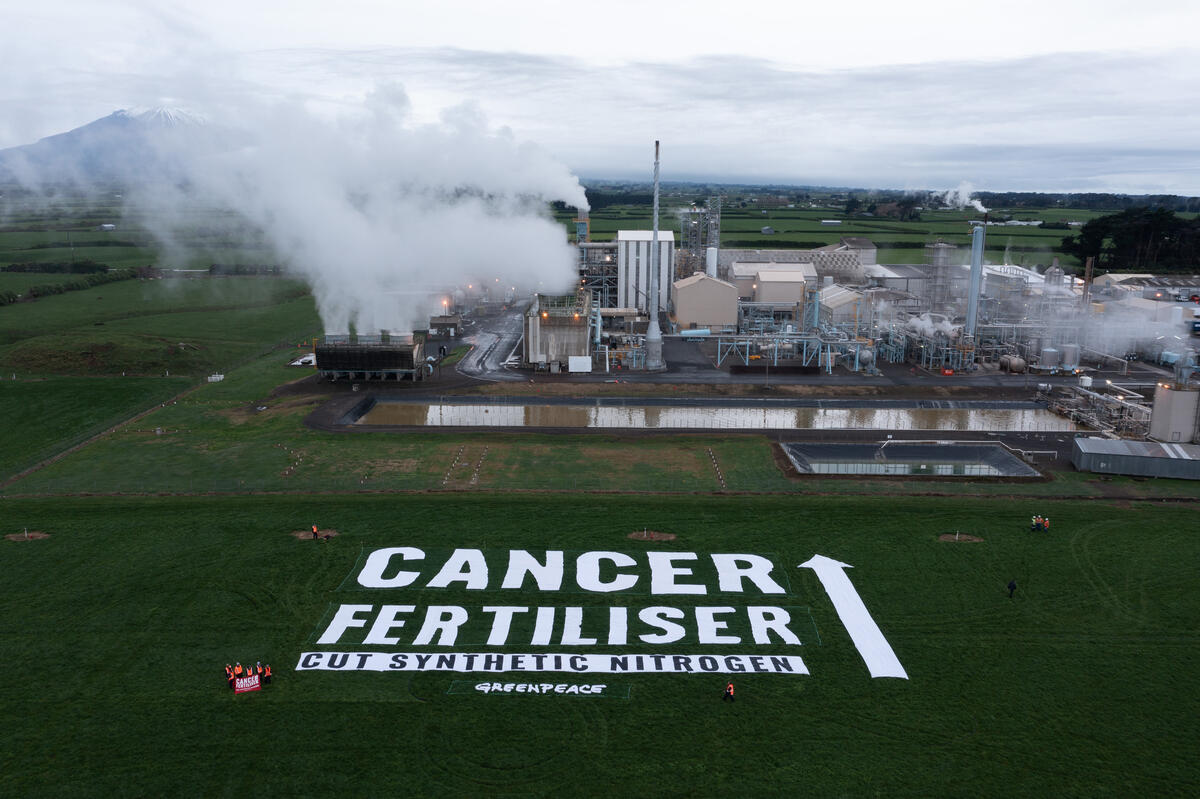
O’Flynn says, “Any Government that is serious about protecting rural people needs to stop nitrate pollution at the source. That means phasing out the use of synthetic nitrogen fertiliser on farms, and reducing stocking rates, to limit the amount of nitrate ending up in groundwater.”
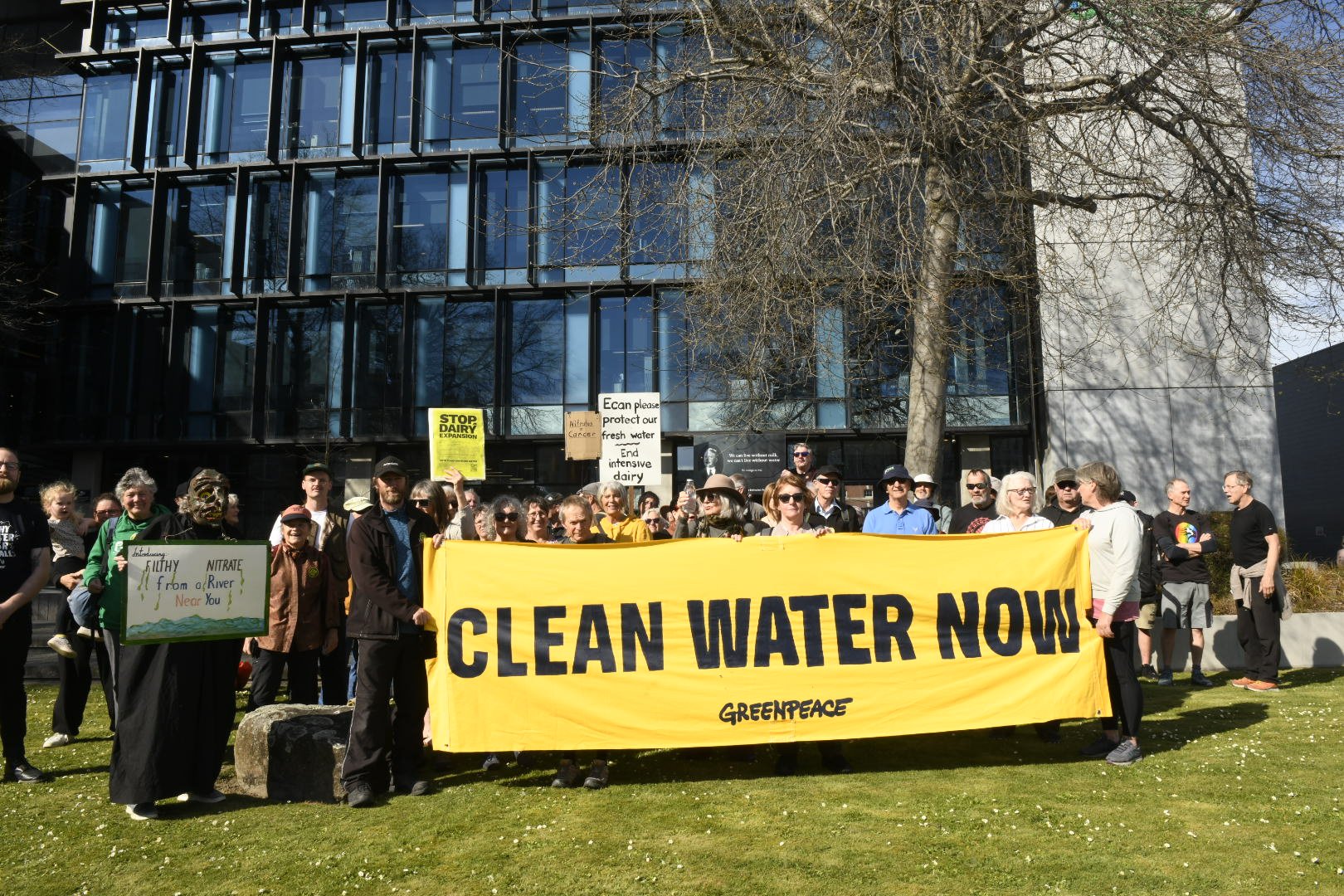
In June, the Danish Government announced that it would change the law and reduce the legal limit for nitrate in drinking water to 1.3mg/L, following an independent scientific review into the health risks of nitrate. Greenpeace is calling for New Zealand to do the same, with almost 30,000 people adding their names to a petition in support of a lower nitrate limit.
Call on the Government to lower the limit for nitrates in drinking water to safe levels.
Take Action