Pesticides are dangerous. They are dangerous for the farm workers applying them, they are destructive of the natural world, and they harm the people who eat the food. But agribusiness has a financial incentive to use them to maximise profit.
Hence, over many decades campaigners have worked to place restrictions on the use of pesticides. These restrictions have become embedded in government monitoring and regulations. We have achieved a lot but still the use of more dangerous pesticides is actually increasing globally, and hence there is more to do.
One thing we can do is eat organically produced food and support organic farmers, who have standards that block the use of dangerous agrichemicals. We support the organics sector for this reason.
But we also want to make sure that conventionally produced food production is safe, or at least make it safer over time. We all eat at least some conventionally produced food and this production method has huge impacts on nature.
While civil society has successfully campaigned for greater controls on agrichemicals, we rely on the government to enforce the controls on the use of agrichemicals. Agribusiness is incentivised to overuse chemicals to maximise profits and it is hard to catch them doing it because it is not visible.
Hence we need constant vigilance from the government to detect illegal pesticide use, and when they find it, we need to make the consequences financially painful so that companies think twice about doing it again.
NZFS – New Zealand Food Safety
The primary government agency responsible for monitoring our food to ensure it is safe from agrichemicals is New Zealand Food Safety – NZFS.
NZFS is located within the Ministry of Primary Industries. MPI has a dual role of both promoting exports and regulating agriculture. This creates tensions, because if MPI finds serious wrongdoing it can damage the ‘clean green’ export brand. MPI is chronically exposed to industry capture and the temptation to downplay or hide bad news.
Having the food safety agency located within a government megaministry committed to promoting agribusiness exports is a particularly problematic conflict of interest. Finding dangerous levels of pesticides in consumers’ food is not a story that would help food exporting companies.
In spite of this obvious structural problem, we are told it’s all fine. But is it?
NZFS: Testing a tiny sample of food and pretending it is large
The way that NZFS monitors food to check for pesticides is that it runs a small annual program of food testing – the Food Residues Testing Programme. It tests only 300 food samples each year, out of the billions that are sold and eaten.
The small sample size means the risk of detection is very small for any particular agribusiness that is overusing chemicals.
However NZFS try to make it sound bigger by saying they do 150,000 tests, which sounds like a lot. It’s not a lie – they run 500 tests on each food sample. It’s good they run multiple tests on each food sample, but the reality remains: they only test 300 food samples per year out of the billions we eat.
NZFS tests for pesticide residues above the MRL – Maximum Residue Limit – which is the legally binding level above which it is unlawful to sell the food. The setting of the MRLs is a whole different story that I can’t cover here.
NZFS: Finds 1 in 11 food samples has illegally high pesticide residues, but says it’s insignificant
NZFS finds that anywhere from 2% to 9% of all these food samples have illegally high levels of pesticides. It is unlawful to sell food which has pesticide residues over the MRL, but they find that up to 9% of the food they sample does have these high levels (2022-23 food survey).
That seems a lot to me as a food eater and parent. Up to one in eleven fresh foods in my shopping trolley has illegally high levels of pesticides.
NZFS work hard to downplay these results. They say that only a tiny percentage of tests, 0.02%, are non compliant. But that’s because they do a lot of tests on each food sample and most of these pesticide residues are below the MRL or not even used on that food.
Instead of talking about how many food samples are non-compliant, they talk about how many test results are non-compliant. Of course most people hearing that only 0.02% of tests are non-compliant will think that only 0.02% of food was non-compliant. Which maybe sounds OK.
At no point do they ever state that 9% of food samples have illegally high levels of pesticide residues, even though it is true and would give consumers more clarity. And raise people’s hackles.
The fact that the silverbeet on my kid’s plate passed 499 tests for chemicals is no reassurance if it failed one test on a dangerous pesticide. What eaters care about is how much of their food is contaminated with high levels of pesticides – and the answer is up to 9% of all food according to NZFS food survey results, even if that is not how they report it.
To summarise the two points above: NZFS gives the impression they test more food than they actually do; and they give the impression that a tiny amount of food has illegally high residues of pesticides, when it is actually quite significant. But it doesn’t end there.
NZFS: We did 30 formal investigations – but where are the investigation reports?
NZFS has found many illegally high levels of pesticide residues over the years but they say that in only 30 cases did it justify a formal investigation and risk assessment.
That doesn’t seem like a lot of investigations to me but, nonetheless I wanted to see these reports, so I sought a copy of them under the Official Information Act, in July 2025.
After a long delay, in October 2025 NZFS got back to me and said it would not provide the formal investigation reports and it would not provide the risk assessments. This was because it would take too much work to collate them. They were refused under section 18(f) of the OIA as “the information requested cannot be made available without substantial collation or research”.
This seemed odd to me. Surely if they had done proper investigations and risk assessments these would all be on file. But apparently not.
I appealed to the Ombudsman in November 2025 but NZFS said it was just too hard. There was a bit of back and forth but the Ombudsman in their final decision in April 2026 said they accepted NZFS’ argument that it was just too hard and suggested I ask for a smaller number of reports.
Anticipating this outcome, in March 2026 I asked for the investigation reports and risk assessments of just three MRL breaches: glyphosate in 2015-16; acephate in 2017-19; and methamidophos in 2022-23. And finally in July 2026, a year after my initial request, I got a reply from NZFS.
This time they refused my request for formal investigation reports into glyphosate and acephate on different grounds of the OIA – section 18(e). Section 18(e) says they can refuse it because “the document alleged to contain the information requested does not exist or, despite reasonable efforts to locate it, cannot be found.” So these two formal investigation reports, which previously were refused to be released because they were so big that they were too hard to collate, were now refused on the grounds that they did not exist.
Sounds like they’re trying to hide something right?
Of course if I had given up after the first attempt I would never have found out that the investigation reports simply did not exist, I would have walked away thinking the investigation reports were too big and complicated to be collated. But now NZFS says they can’t provide formal investigation reports into the glyphosate and acephate residues they found because the reports don’t exist.
They did do a formal risk assessment of glyphosate, which they found at 59 times the lawful maximum residue limit, but it was just one page long. They have never tested for glyphosate again in the Food Residue programme. Ever.
The formal investigation and risk assessment of methamidophos was more significant and I will circle back to them later.
So to restate: NZFS gives the impression they test more food than they actually do; they give the impression that a tiny amount of food has illegally high residues of pesticides, when it is actually quite significant; and they tell us they do full investigations but cannot provide the reports, probably because they don’t do the formal investigations.
Wait, there’s more.
NZFS: A zero enforcement policy
But what happens when they find illegally high levels of pesticides in the small number of samples they analyze? You’d think, given that agribusiness knows that their chance of being caught by such a tiny sample is vanishingly small, NZFS would want to use strong enforcement tools that send a message: “the chances of being caught are tiny but the consequences are serious, so you’d better follow the rules”.
If you thought that you’d think wrong.
NZFS does zero enforcement. None. There has never been a single fine nor a single prosecution for food found to have illegally high levels of pesticides. Zip. Nada. They do sometimes call up a producer and talk to them about the residues, but mostly they do nothing.
In fact, even companies that are caught breaching the legal limits for pesticide residues two or three times are not prosecuted. Never ever.
Do you feel comfortable knowing the food safety agency never ever prosecutes illegally high levels of pesticides in food?
And get this: when NZFS found glyphosate at illegally high levels in their 2015 sampling, they simply stopped testing for it in future annual residue testing. They never included glyphosate in the annual food testing again, which guaranteed that they would never find it again. Problem solved.
So for agribusiness, the chances of being caught for having illegally high levels of pesticide on the food you sell to people is close to zero. And the chance of being prosecuted and fined is actually zero, no matter how often you are caught.
NZFS: No food safety risks – really?
When you challenge NZFS about this, as I have in face to face meetings and elsewhere, they say it doesn’t matter because the food is still safe.
But can you believe them?
It is hard to know because they won’t or can’t provide the investigation reports and the risk assessments because it would be too much work, or alternatively they can’t provide them because they can’t seem to find them (because they probably never did them).
But through the relentless OIA battles, I’ve turned up some evidence that proves that even when they know the food is not safe, they tell consumers that it is safe.
Methamidophos – “no food safety concerns”
In 2022 NZFS found the organophosphate pesticide methamidophos in silverbeet at 360 times the Maximum Residue Limit (MRL). Methamidophos is a dangerous pesticide that has subsequently been banned by the NZ EPA.
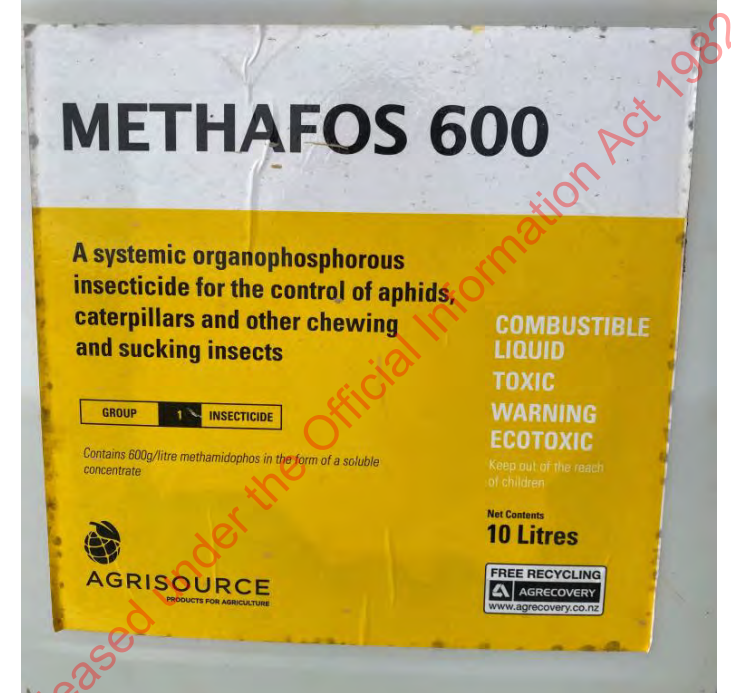
The US EPA calls methamidophos “one of the most acutely toxic organophosphate pesticides.” It causes nausea, dizziness, confusion and respiratory problems in humans and is highly toxic to birds and insects. And it’s hard to wash off your food because it is absorbed into the food – if you wash your vegetables in water for an hour you can cut the methamidophos levels by 65%, but obviously nobody does this.
NZFS reassured the public that “New Zealand Food Safety assessed all non-compliant test results and found no food safety concerns with the food samples tested (p.5).”
However, after a year-long struggle to get NZFS to release the risk assessment through the Official Information Act, and the Ombudsmen, I found that was not true.
The internal risk assessment (p.16) states that the “Dietary exposure assessment of methamidophos residue detected in silverbeet sample identifies that the concentration is above the ARfD.” The ARfD is the Acute Reference Dose, the amount a person can eat in a 24 hour period without appreciable health risk.
The pesticide residue was 106% of the ARfD for adults and 232% of the ARfD for children.
Disturbingly the internal risk assessment prepared for the NZFS concluded: “This means that a human health food safety risk for children cannot be excluded”. The risk assessment found that just 64 grams of this silverbeet would be dangerous for a 23kg child eaten over a 24 hour period
For the record this is what 64 grams of silverboot looks like raw and cooked. It’s not much.
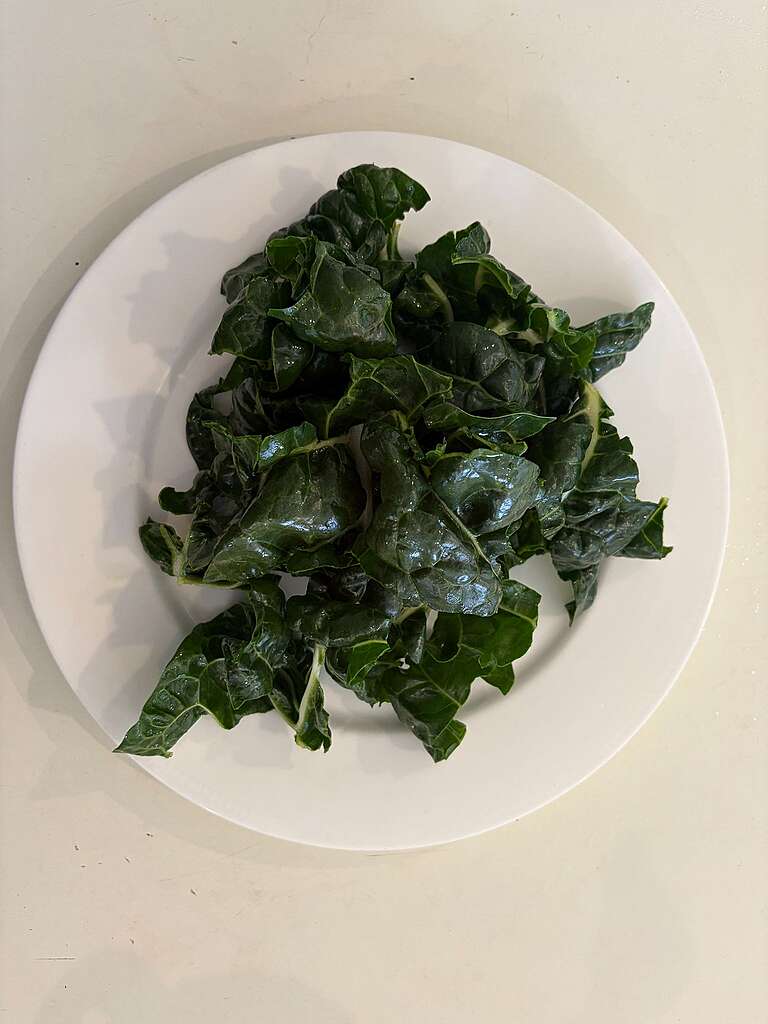
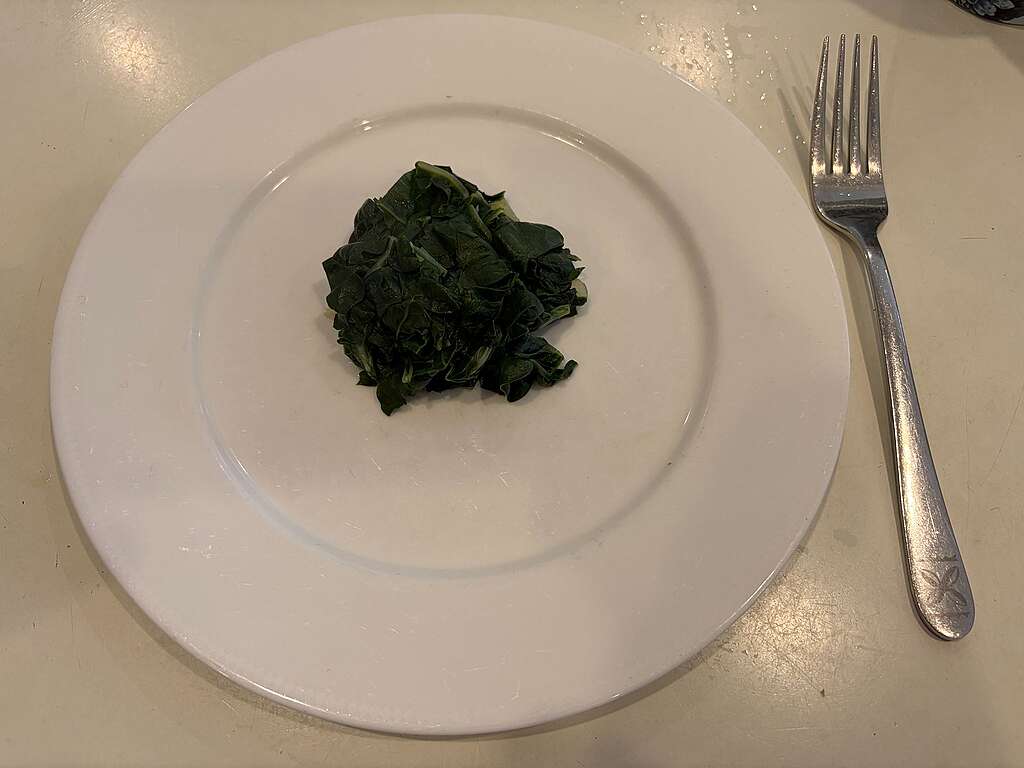
So while NZFS was telling the public it was safe, they knew it was not. And it wasn’t just that regular (or chronic) exposure would be bad for you, the residue was so high that a single meal serving was dangerous.
The same pattern occurred earlier, in 2017, where the NZFS discovered multiple organophosphates on endives breaching the MRLs – acephate and methamidophos.
NZFS told the public that “food safety risk assessments did not find any food safety risk from dietary exposure of these non-compliant organophosphate residues.”
The internal risk assessment told a different story and concluded that “dietary exposure assessment of acephate and methamidophos detected in the endive, witloof and chicory samples identifies that concentrations are above the level at which a dietary risk would be present for New Zealand adults or children.”
Once again NZFS told the public it was safe when their own internal report said the opposite.
So here’s the summary of what I know:
- NZFS tests only 300 food samples per year, but tells the public they do hundreds of thousands of tests;
- NZFS finds illegally high residues of pesticides in food samples, up to 9%, but tells the public it is only a tiny number of tests that are non-compliant, about 0.02%;
- NZFS says they do full investigations but cannot provide the reports;
- NZFS never prosecute or fine for breaches of MRLs even when the same company is caught multiple times; and
- NZFS tell the public that there are no food safety concerns when their own internal risk assessments state the opposite.
This is not a system designed to protect consumers, it is a system designed to protect agribusiness by giving the impression that all is fine. But it is not.
Disestablishing the NZFS and rebuilding it in Ministry of Health
The NZFS should be disbanded. It was never intended to protect consumers and it has not. It was established inside what was then the Ministry of Agriculture and Forestry, and now exists as a business unit in the Ministry of Primary Industries. This is a captured regulator.
This is not to say that we don’t need a food safety agency, we desperately do, given the flood of poisoned food. But if it is to be effective it needs to be built inside the Ministry of Health with a mandate to protect consumers not agribusiness.