The crisis in the Strait of Hormuz is sending shockwaves through the global economy. For New Zealand, the impact will be swift and deeply felt. With a third of the world’s fertiliser supply passing through this chokepoint, prices are skyrocketing and supply lines are being interrupted. Simultaneously, the dwindling gas supplies in Taranaki have placed the future of domestic urea production on a knife-edge.
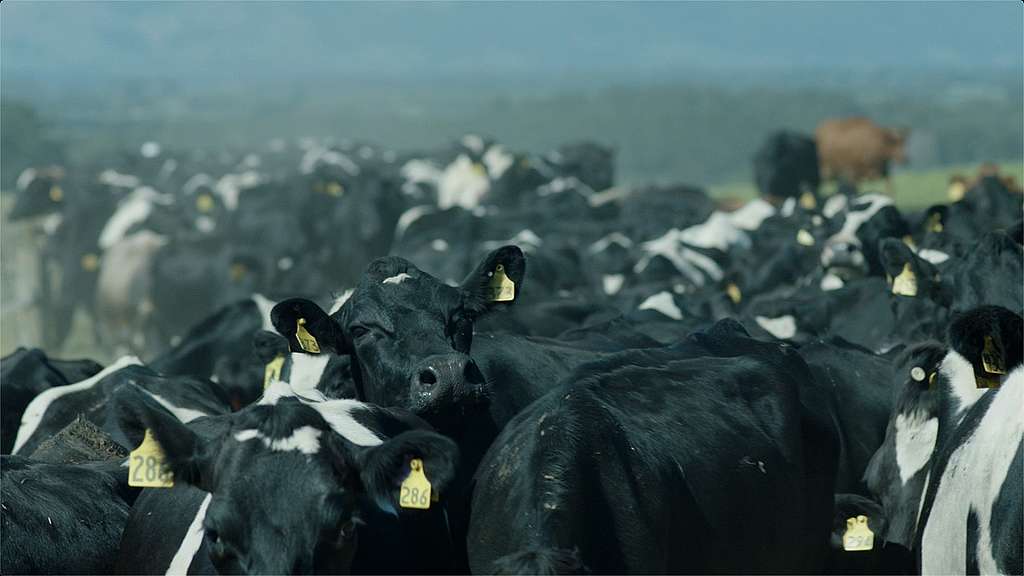
When the most critical enabler of New Zealand’s dairy sector is this fragile, it exposes a glaring question—what is the political response to the future of farming? National’s position is obvious – carry on with the status quo as if there is nothing to see here. But what about Labour?
They have a legacy of hesitation
To date, the Labour Party has been remarkably reticent to contemplate a future in which New Zealand is anything other than a mine for milk powder.
Despite being written into its coalition agreement with NZ First, Labour backed down on bringing agriculture into the Emissions Trading Scheme (ETS) under the Ardern government. Labour’s alternative—the voluntary industry partnership known as He Waka Eke Noa – collapsed as soon as the Government changed.
Consequently, our most polluting industry still doesn’t pay a cent for its climate impact—more than 20 years after the idea was first floated by Helen Clark.
While it is easy for environmentalists to point fingers at the National Party, Labour is also to blame. They had six years under the Ardern Government to act, with a strong mandate from the public, and chose to keep the status quo.
David Parker’s freshwater reforms—including the fertiliser cap—did begin to make a demonstrable impact by reducing herd numbers. But Parker had to fight an almost religious dedication to dairy that permeates the very institutions of government, including his own advisors at MfE.
Tellingly, axing those reforms was the first item on Federated Farmers’ wishlist when its former President entered Parliament via the ACT ticket.
The urea paradox
Ardern’s boldest environmental move was the ban on offshore oil and gas exploration—a stance that Labour have, to their credit, stood by. They won’t reverse it to save the fertiliser industry, nor would it matter if they did.
The oil and gas industry has largely moved on. Despite the current coalition government’s morally and fiscally questionable efforts to lure them back with subsidies, New Zealand is no longer seen as a viable place to do business.
Now, a truly bonkers proposal has emerged—turning coal into urea via an Australian-backed plant in Southland. Will Labour remain silent, or will they rule out using the dirtiest fossil fuel available to produce an agrichemical that poisons rivers and rural people’s drinking water?
It is hard to imagine them backing such an obviously unpalatable project. It certainly wouldn’t pass Labour’s own fast-track approval conditions.
But if they rule out coal, the question remains: What does the future of New Zealand farming look like when urea becomes too expensive or runs out?
The technology trap
You cannot maintain industrial-scale dairy production—exporting massive quantities of milk powder so global giants like Nestlé and Mars can make chocolate bars—without urea. It is a fossil-fuel-derived “growth drug” for grass.
But it’s not just the fertiliser supply that’s crumbling. It’s the market itself. Precision fermentation is approaching commercialisation. When it becomes cheaper for Nestlé to brew bio-identical dairy proteins in a lab than to buy low-value milk powder from the South Pacific, New Zealand’s current model collapses like the house of cards it is. Why would a global corporation buy a product that is expensive to produce, environmentally damaging, and fraught with animal welfare concerns when a cleaner, cheaper alternative exists?
A better vision for Aotearoa
It is alarming that no political party in this election race is front-footing a credible plan for the future of farming. We need a vision that moves beyond the fossil-fuel-fed dairy monoculture.
What this could look like:
- Regenerative transition: A massive switch toward low-input, high-value regenerative, organic agriculture that uses on-farm diversity—not synthetic urea—to fix nutrients in the soil. Greenpeace created the road map years ago —politicians should take a moment to read it.
- Diversification into bio-manufacturing: Instead of being disrupted by precision fermentation, New Zealand should lead it. We could become a hub for high-value, lab-derived proteins.
- Horticultural and cropping expansion: Shifting land use away from intensive dairying to high-value horticulture and plant-based protein crops. Instead of growing grass to feed a cow to get protein, we start to grow protein directly at far less cost to nature.
- Direct-to-consumer branding: Moving away from being a “commodity mine” for global corporations and focusing on premium, ethical food and fiber products that domestic and global consumers actually want to pay for.
It’s worth remembering that this wouldn’t be the first time agriculture has undergone a systemic transformation in New Zealand. In little more than a decade, vast swathes of our landscape pivoted from producing sheep and arables to manufacturing milk powder. We have proven we can make a shift of this scale. We can do it again, and this time, the transition can bring positive ripple effects for our water quality, our wildlife, our climate, and the health of our rural communities.
The era of “cheap” fertiliser and guaranteed dairy dominance is over. It’s time for politicians of all stripes to stop managing the decline and start designing the future.