Right now, the attacks on Iran by the US and Israel have sparked a major shipping crisis in the Strait of Hormuz. You might be hearing that this “shipping jam” is the unavoidable reason that your grocery bills might be about to skyrocket again. But there’s another reason – and it’s all to do with Iran’s role in the global fertiliser trade.
The shipping delay is just the symptom of a much more systemic problem. What we are really seeing is the effect of a rigged food system functioning exactly as Big Ag designed it: protecting corporate profits while squeezing everyday families.
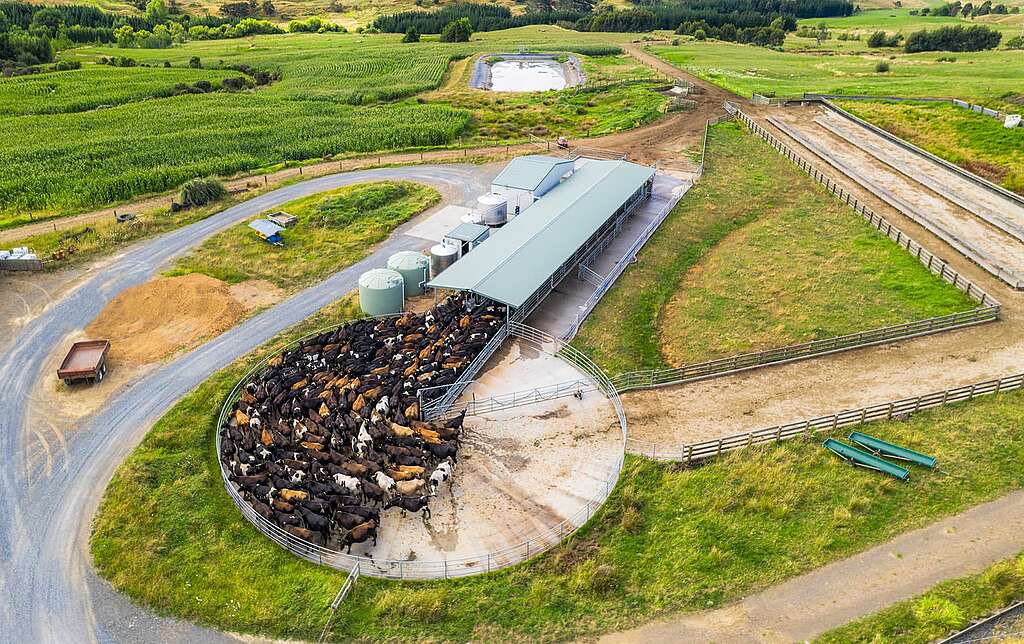
Help us transform the way we farm for the future!
Add your name now!Here is how a geopolitical shock thousands of miles away can make your food more expensive, and why we need to change the system fast.
Fossil fuels repackaged as food
Behind the current crisis is a truth the agro-chemical industry doesn’t want you to know. Our global food system is dangerously addicted to chemical fertilisers, which are essentially fossil fuels repackaged for the soil.
Fossil fuel and Big Ag giants use massive amounts of energy to turn gas and oil into synthetic nitrogen. Then, they ship these chemical fertilisers across the globe on massive vessels, relying heavily on fragile chokepoints like the Strait of Hormuz, where the US and Israeli attack on Iran is already causing massive disruption.
This is a setup by Big Ag and fossil fuel billionaires. The industrialised, monoculture-based agricultural system they have imposed on the world depletes the soil and reduces biodiversity, forcing farmers to depend on fossil fuel-based fertilisers while corporate giants pocket the profits. Now, at the peak of the spring planting season in the Northern Hemisphere, the supply chain has snapped.
Farmers are trapped in a volatile global market they cannot control, facing difficult choices such as paying drastically higher prices for fertilisers, reducing application rates, or switching crops. Any of these decisions leads to the same outcome: likely decline in crop production. The consequences then ripple through global supply chains and ultimately retail food prices, leaving families to foot the bill for corporate greed. Again.
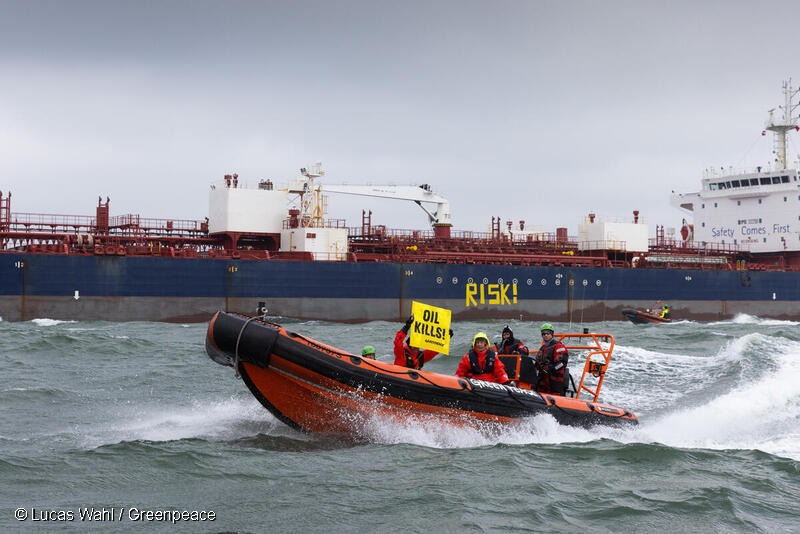
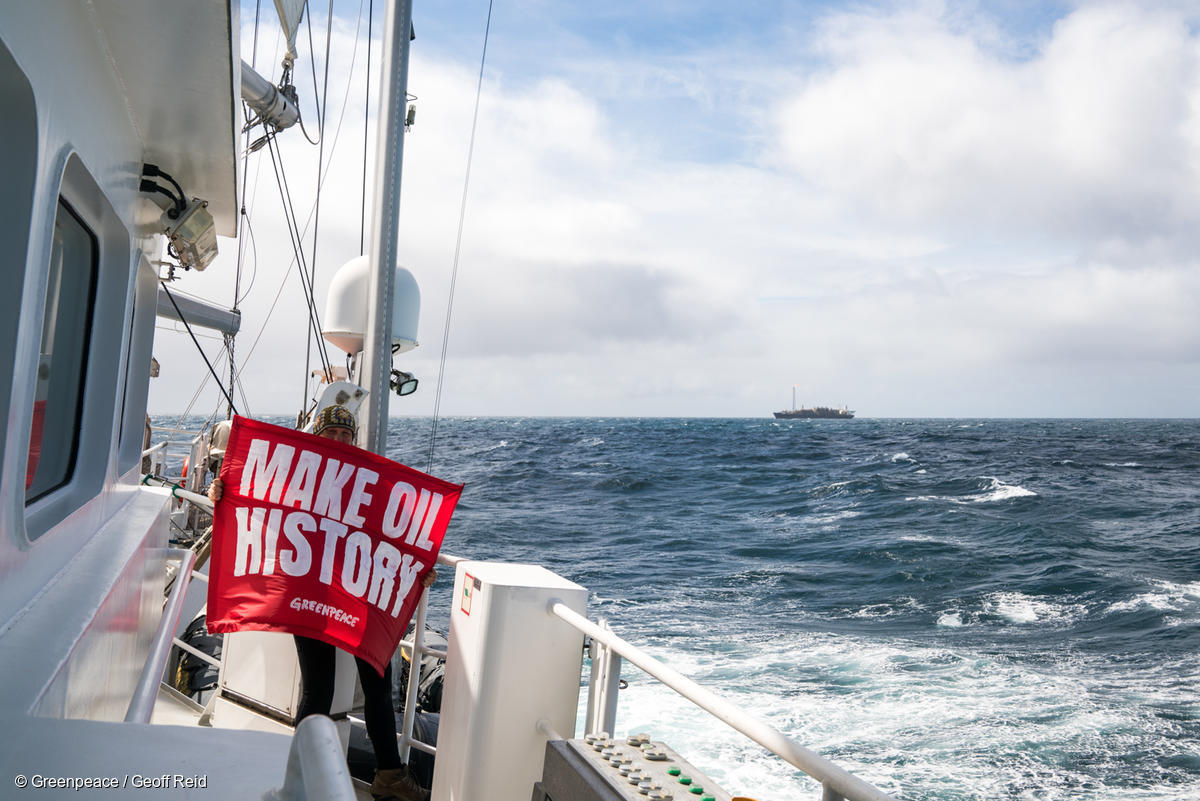
Greenpeace activists on a boat confront an oil tanker at sea, holding a sign that says “Oil Kills”.
Growing feed instead of food
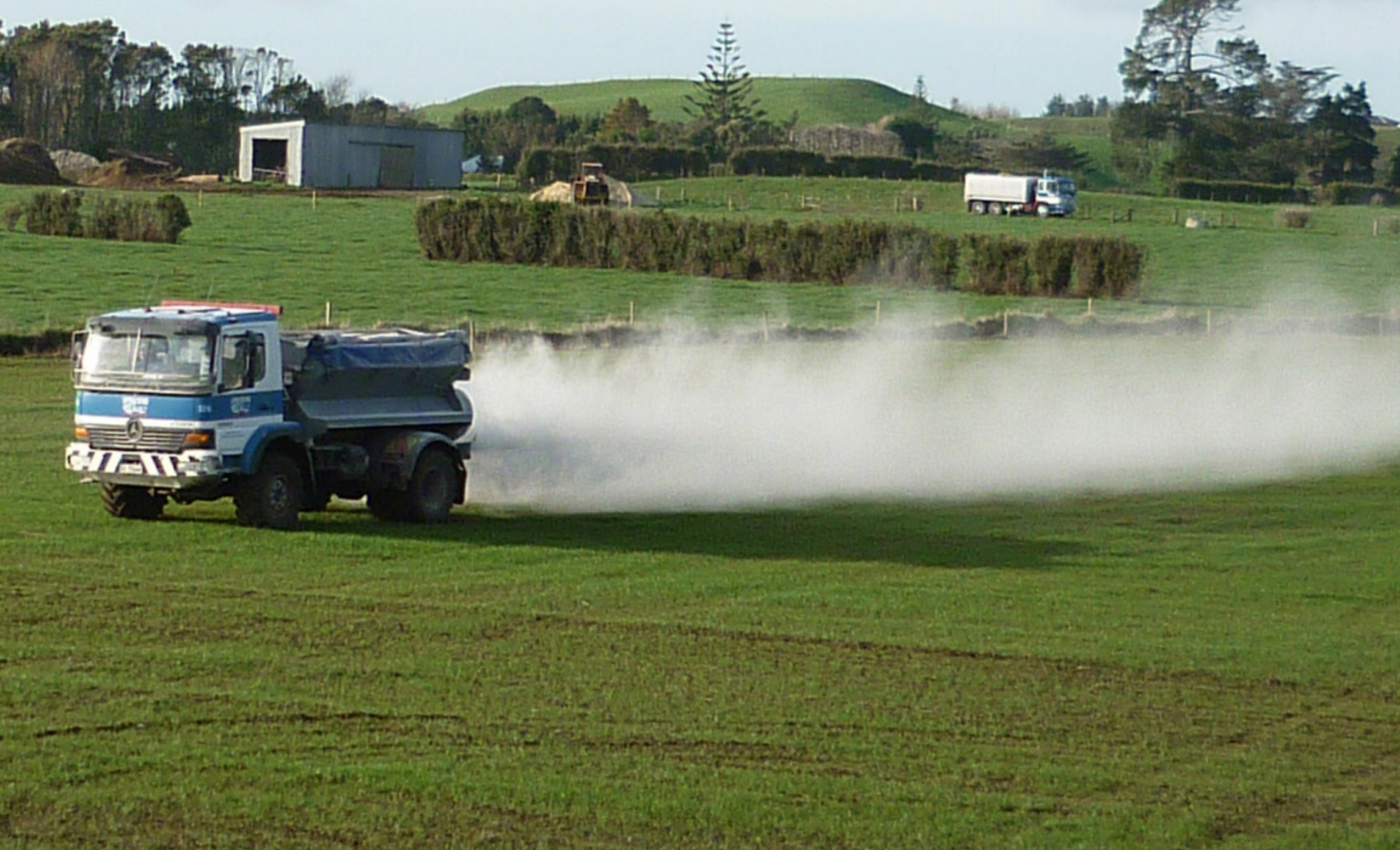
To make matters worse, the vast majority of these expensive, imported chemicals aren’t even used to grow food for humans. They are dumped onto endless fields to grow feed for factory-farmed animals.
The sheer, unsustainable scale of global industrial meat and dairy production supercharges this fragility. If we shifted away from resource-heavy, large-scale livestock operations and instead prioritised growing plants directly for human consumption, we wouldn’t be held hostage by these vulnerable supply chains.
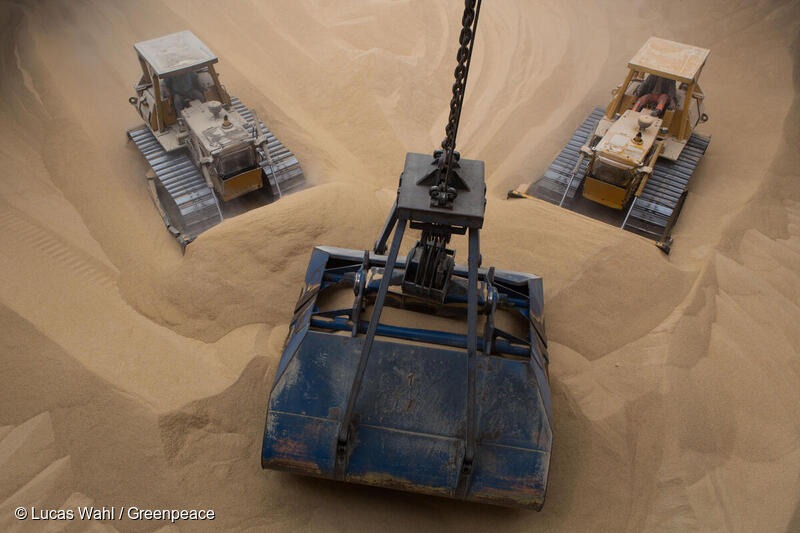
Description: A cargo of soy feed in the process of being unloaded at port.
The emergency exit: ecological farming
The good news? We have an emergency exit from this mess: ecological farming. It is the only real path to food sovereignty, independence, and local resilience.
Instead of buying expensive chemical fertiliser pellets from a factory halfway around the world, farmers can work with nature instead of against it. By planting diverse types of crops, plants can naturally “fix” nutrients into the soil. This breaks the cycle of chemical dependence and does five amazing things at once:
- It saves money. Farmers slash their costs by eliminating expensive chemicals, which protects your food prices from global shocks.
- It cleans the water. Ecological farming stops toxic chemical run-off from polluting the rivers and drinking water.
- It protects wildlife – restoring space for bees, birds, and vital biodiversity to thrive.
- It fights climate change. Transforming the way we farm is critical to reducing the massive greenhouse gas emissions produced by the industrial food system.
- It increases food security. Regenerative, ecological farming practices reduce our dependence on imported food that is vulnerable to external shocks.
Growing a safer future from the ground up
We can’t buy food security from a chemical factory in another country. It is something we grow right at home, starting with healthy soil and local communities.
But to get there, we need to force our governments to stop propping up this fragile, billionaire-serving model. Right now, billions in public subsidies keep the industrial meat and chemical fertiliser pipeline flowing – and that money must be redirected.
The crisis in Iran’s Strait of Hormuz is a warning we cannot ignore: this dependence on fertiliser and intensive livestock farming has made global food systems vulnerable. Sign the petition today to stop Big Ag and build a food future that is affordable and resilient.
Help us transform the way we farm for the future!
Add your name now!