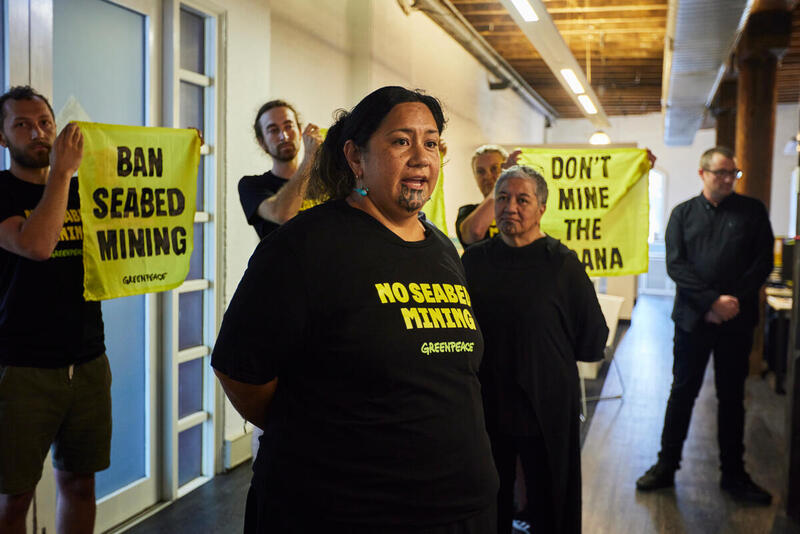
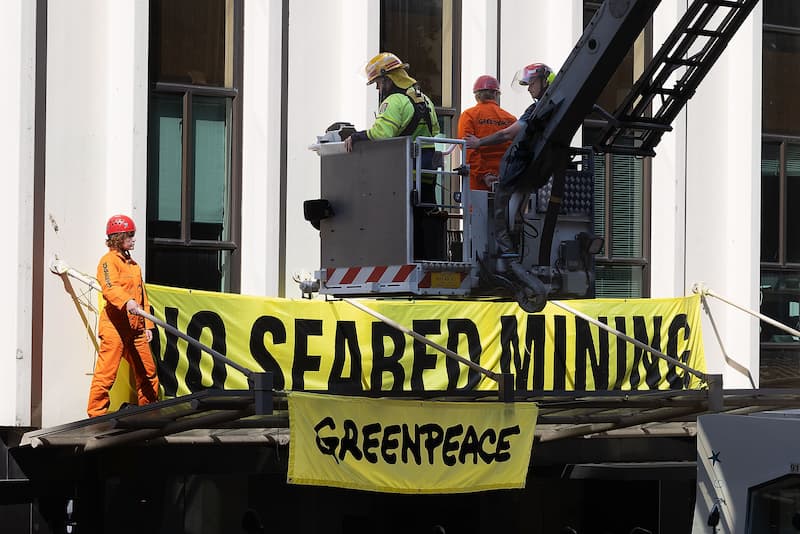
Wannabe seabed mining company, Australian-owned Trans-Tasman Resources (TTR), has withdrawn its Fast Track application to extract 50 million tonnes of seabed every year for 20 years off the Taranaki coast. This comes after the Fast Track panel declined the companies application in a draft decision.
TTR rejects decision, despite evidence of harm
TTR says it rejected the “assumptions and conclusions” of the Fast Track Expert Panel’s draft decision. But the panel criticised TTR’s evidence on the potential impacts of seabed mining as “uncertain, incomplete or inadequate”.
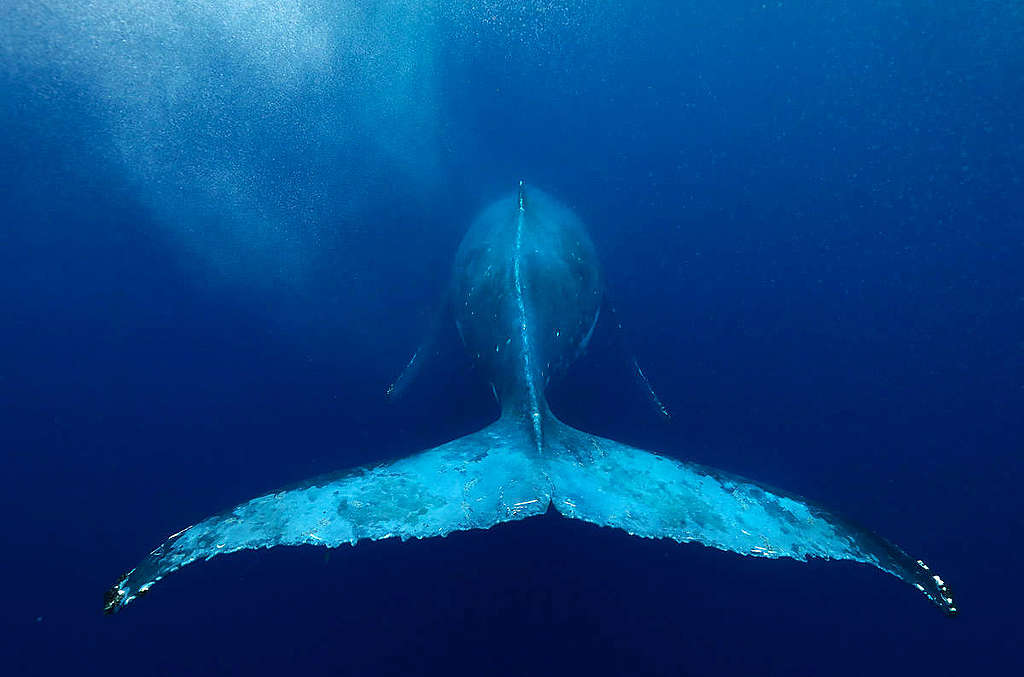
The panel declined consent, finding it would harm threatened species like pygmy blue whales and penguins, and could not be safely managed.
Greenpeace and Kiwis Against Seabed Mining (KASM), with a legal team and seven experts, made a strong submission to the panel showing the impact seabed mining would have.
Read the expert evidence here
You can read the expert evidence here. They were submitted to the Fast Track Panel on 6 October 2025:
- Marine mammals
- Dr Leigh Torres, Associate Professor at Oregon State University
- Seabirds
- Dr John Cockrem, Ornithologist
- Benthic ecology & Appendices
- Dr Tara Anderson, Marine Ecology Scientist
- Sediment plume
- Dougal Greer, Oceanographer
- Sediment & Flocculation
- Prof John Luick
- Feasibility and Mining Operations
- Jill Cooper
- Economics
- Prof Christopher Fleming & Andrew Buckwell
A reminder of what TTR wants to do. It had planned to extract 50 million tonnes of seabed every year for 20 years. After removing five million tonnes of iron ore annually, TTR planned to dump the remaining 45 million tonnes of sediment back into the ocean.
Unlike the Fast Track panel, Trans-Tasman Resources is ignoring the weight of expert evidence presented to the panel by Greenpeace and our allies.
Seabed mining is a new threat to the oceans. Now is our chance to prevent the destruction before it’s too late.
Add my name