We all know that New Zealand’s lakes, rivers, and drinking water are in a dire state. But did you know that one of the few freshwater protections we have left is under threat? The fertiliser cap is a little-known rule, but it’s important – and now, Luxon’s government wants to take it away.
In 2025, the Luxon Government announced a plan to strip away and undo many of New Zealand’s (already weak) freshwater protections, allowing polluting industries to continue contaminating drinking water, making lakes and rivers unswimmable with no consequences.
New Zealand’s worst environmental polluter is the intensive dairy industry, led by Fonterra. Cow effluent and synthetic nitrogen fertiliser runoff are the biggest source of rural community drinking water contamination and river pollution.
That’s why the fertiliser cap was put in place – to limit this pollution before it ever gets into the water. The cap exists to look out for communities’ health, and protect lakes and rivers. And now, Luxon wants to get rid of it.
But what is the fertiliser cap anyway?
In 2020, the Government introduced the fertiliser cap, restricting synthetic nitrogen fertiliser use on farms. The cap limits the amount of fertiliser that farmers are allowed to apply per hectare of land.
It was put in place in an attempt to limit the freshwater pollution caused by the overuse of synthetic nitrogen fertiliser on farms in Aotearoa, after tens of thousands of New Zealanders called on the Government to take action to protect fresh water.
What’s the problem with synthetic nitrogen fertiliser?
The intensive dairy industry uses synthetic nitrogen fertiliser to grow more grass quicker, in order to feed the oversized dairy herd. Simply put, the land cannot sustain so many cows on its own.
Because we have too many cows in New Zealand, nitrate contamination from cow urine and fertiliser is contaminating lakes, rivers, and drinking water with unsafe levels of nitrate – putting people and the planet at risk.
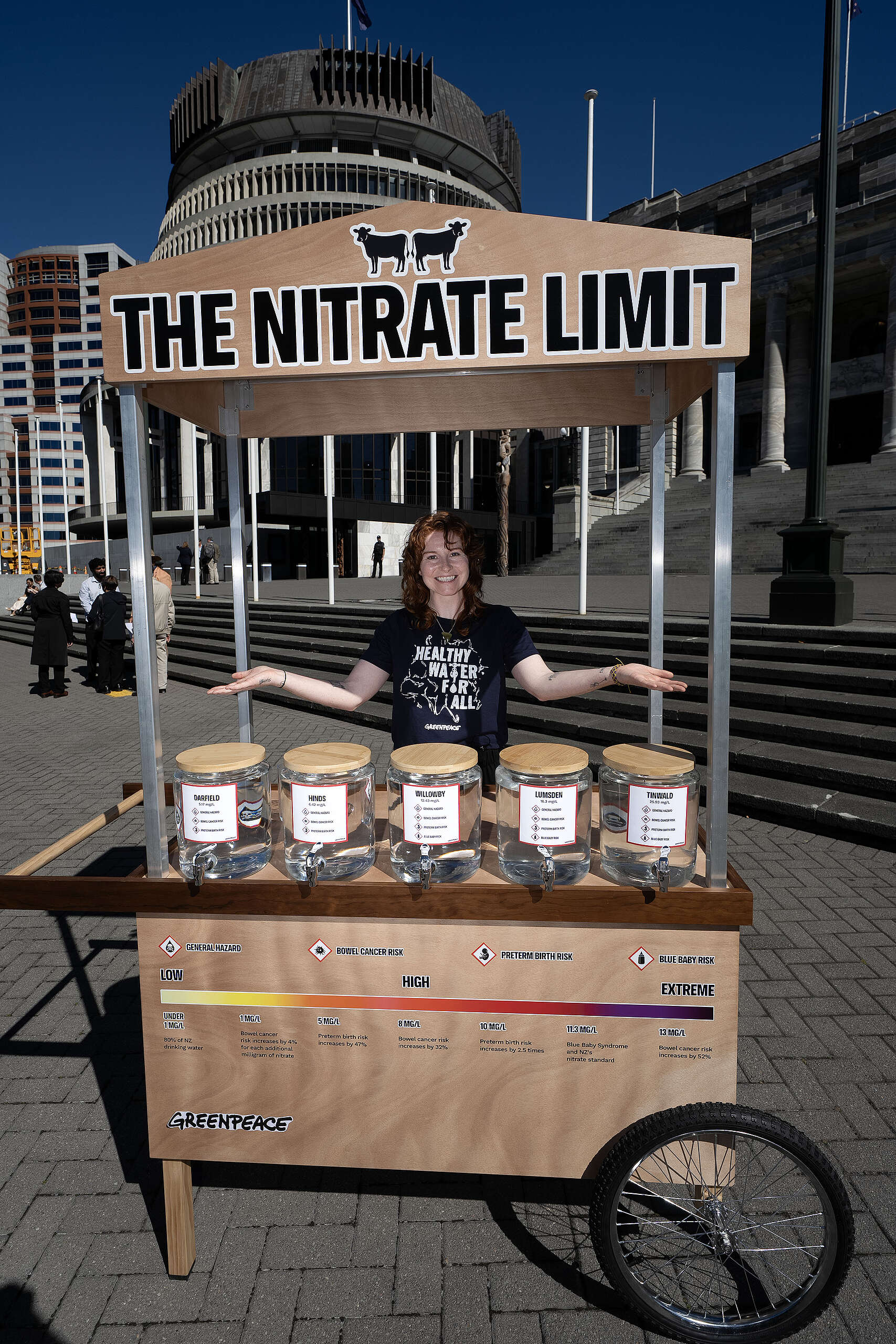
A growing body of international science has linked elevated levels of nitrate in drinking water to several health risks including bowel cancer, preterm birth, and blue baby syndrome. Currently, approximately 20% of New Zealanders could be drinking water contaminated with unsafe levels of nitrate. What’s worse is that number will grow as our use of synthetic nitrogen fertiliser does.
How does the fertiliser cap actually protect fresh water?
The best way to protect fresh water is to stop pollution before it gets into the water in the first place, and that’s exactly what the fertiliser cap does.
Dairy runoff due to heavy rain or irrigation can flush polluted water from farms into streams and rivers. Nitrate from cow urine can also seep through the soil, poisoning underground water supplies. Limiting a known freshwater contaminant at the source just makes ecological sense, and that’s what the fertiliser cap does.
It also ensures that intensive dairy farms aren’t able to continue cramming more and more cows onto the same amount of land by increasing the grass growth with fertiliser. That less nitrate-rich cow urine seeping through the soil and ending up in the groundwater.
Already in just five years since it was implemented, the fertiliser cap has led to less fertiliser being used. Not only that, but regional councils are using the monitoring infrastructure for fertiliser use as an important reporting and compliance tool.
This is a freshwater protection with proven results. It is a direct regulatory control on a significant source of freshwater pollution in New Zealand. And right now, the Luxon Government wants to scrap it – which will mean more undrinkable water, more unswimmable rivers, and more contaminated lakes.
Why does New Zealand need limits on synthetic nitrogen fertiliser?
The intensive dairy industry is New Zealand’s worst environmental polluter. In the last thirty years, intensive dairying has expanded massively, blowing past ecological limits. Because there are now so many cows, intensive dairy farms use synthetic nitrogen fertiliser and irrigation. Without it, they can’t grow enough grass to feed the dairy herd.
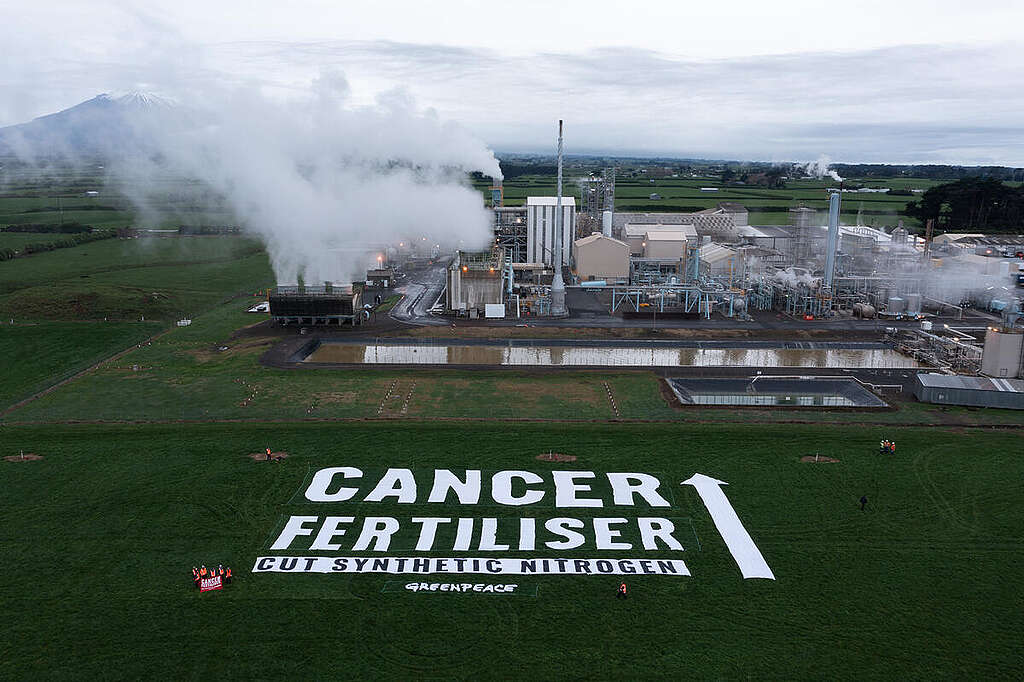
Not only is synthetic nitrogen fertiliser a major source of nitrate contamination on its own, it also enables the dairy industry to operate at a massive industrial scale. That’s important, because we know that more cows means more pollution ending up in lakes, rivers, and drinking water.
Limiting the use of synthetic nitrogen fertiliser will prevent the dairy industry from continuing to operate at this industrial scale. It will also support us to transition to more ecological forms of agriculture, which don’t make us sick.
It’s also a way to hold the line against the industry’s risky and polluting practices. Setting legal limits on fertiliser use means that efforts made by farmers who want to improve their practices and use less fertiliser aren’t undermined by overuse elsewhere.
Isn’t a fertiliser cap just more unnecessary red tape?
No, a fertiliser cap isn’t ‘just more red tape’. There’s a very real reason why we have a fertiliser cap in place – and it’s because of people’s health.
Nitrate contamination from the overuse of synthetic nitrogen fertiliser is impacting the health of rural communities in New Zealand. In 2021 scientists found nitrate contamination of drinking water could cause up to 100 cases of bowel cancer in New Zealand every year, leading to 40 deaths.
And nitrate contamination is getting worse. In 2024, the Waimate District in Canterbury experienced its second ‘do not drink’ notice, when the Glenavy rural town water supply exceeded legal limits for nitrate contamination. Those legal health limits are much, much higher than nitrate levels associated with health risks like bowel cancer and preterm birth. In 2025, the same happened to the Gore town water supply in Southland.
This really puts things into perspective whenever the dairy industry complains about “red tape”. Put simply, their backlash against freshwater protections like the fertiliser cap is putting rural communities’ health at risk. That is unacceptable.
New Zealand is on the brink of a health crisis because of nitrate contamination. The fertiliser cap is one of several tools that the Government put in place to reduce the damage. It isn’t perfect – and in fact, we’d argue that it needs to be much, much lower. But the fertiliser cap has made a real impact. And that’s why it needs to remain in place.
What can we do to keep the cap in place?
We’re calling on Minister Chris Bishop – who gets to make the decision on whether the fertiliser cap stays – to keep it in place. Send him an email now!
Call on the government to protect drinking water and keep the fertiliser cap in place.
Send an email now!A fight to keep the cap is a fight for safe drinking water and swimmable rivers. It’s a fight against Fonterra and their intensive dairy expansion which will be enabled by lifting the cap. And it’s a fight for communities like Gore, Glenavy, Darfield and Oxford whose water is unsafe.