With the political landscape generating so much uncertainty, and our digital devices offering us instant access to every development, it’s easy to feel (and feed) a constant sense of tension and urgency. There are so many challenges that we need to tackle, but that’s also why it’s so important to take the time to celebrate everything that we accomplish. Good news reminds us how much we’re capable of when we work together—of all the people who are coming together with care, creativity, and love to make the world a better place.
In that spirit, scroll to learn about some of the ways that Greenpeace and its partners have been working to effect change in the past few weeks!
Campaign Updates
COURT VICTORY PROTECTS THE REGULATION OF PLASTIC POLLUTION
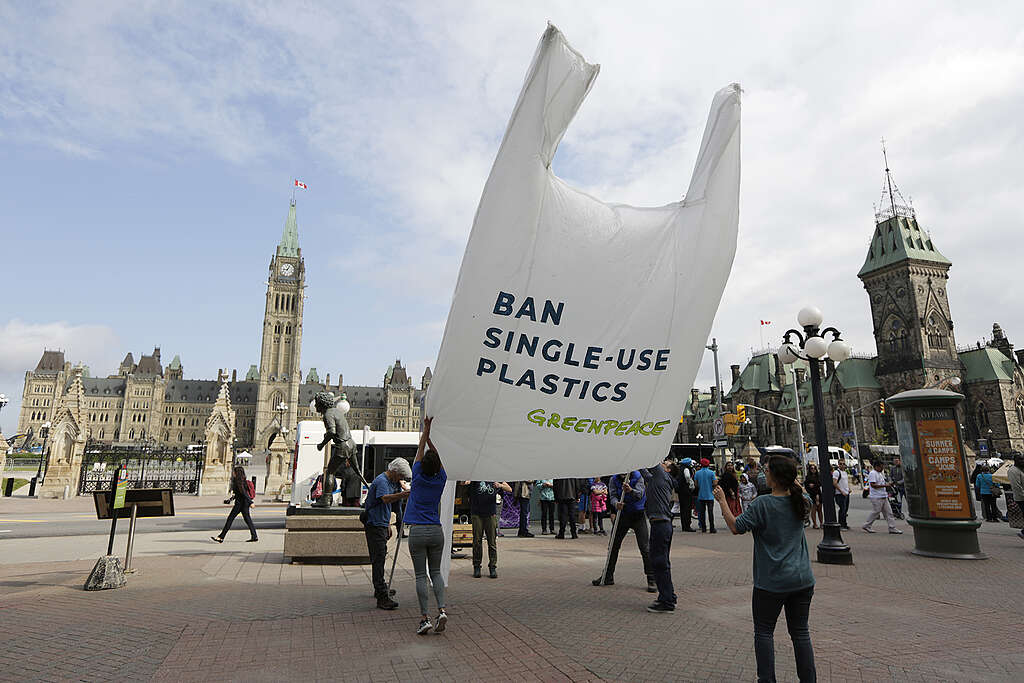
We’re happy to report a HUGE win for plastics-related activism in Canada! On January 30, 2026, the Federal Court of Appeal ruled that the federal government has the authority to label plastics as “toxic.”
Why does it matter? Because it protects the federal government’s power to regulate plastic pollution, and years of work from being rolled back.
In 2021, the Canadian government recommended that plastic manufactured items be added to the List of Toxic Substances under the Canadian Environmental Protection Act (CEPA). The listing was a crucial step towards banning harmful single-use plastics, like checkout bags and styrofoam.
But an industry group challenged the decision, arguing that plastic isn’t toxic and that science doesn’t justify such a broad designation. In 2023, the Federal Court sided with the industry, ruling that the listing went too far.
When the federal government appealed the decision to the Federal Court of Appeal, we joined the case! Alongside the Canadian Association of Physicians for the Environment, David Suzuki Foundation, Environmental Defence Canada, and Oceana Canada, we intervened to defend the government’s authority to regulate plastics.
In late January, the Federal Court of Appeal struck down the previous court ruling, and determined that the government acted lawfully when it designated plastic manufactured items as toxic under CEPA. This CEPA listing now gives the federal government the tools that it needs to prevent and control plastic pollution at every stage of the substance’s life cycle, from research and manufacturing to final disposal and recycling. In other words, the ruling restores the legal basis for federal bans on various single-use plastics.
Our work isn’t over: now that the legal basis exists, we need the government to use it and implement effective policies that help curb plastic production and pollution.
The journey continues!
A TURNING POINT FOR CLIMATE JUSTICE
From the desks of Eefje de Kroon, Martin Zavan & Maria Alejandra Serra:
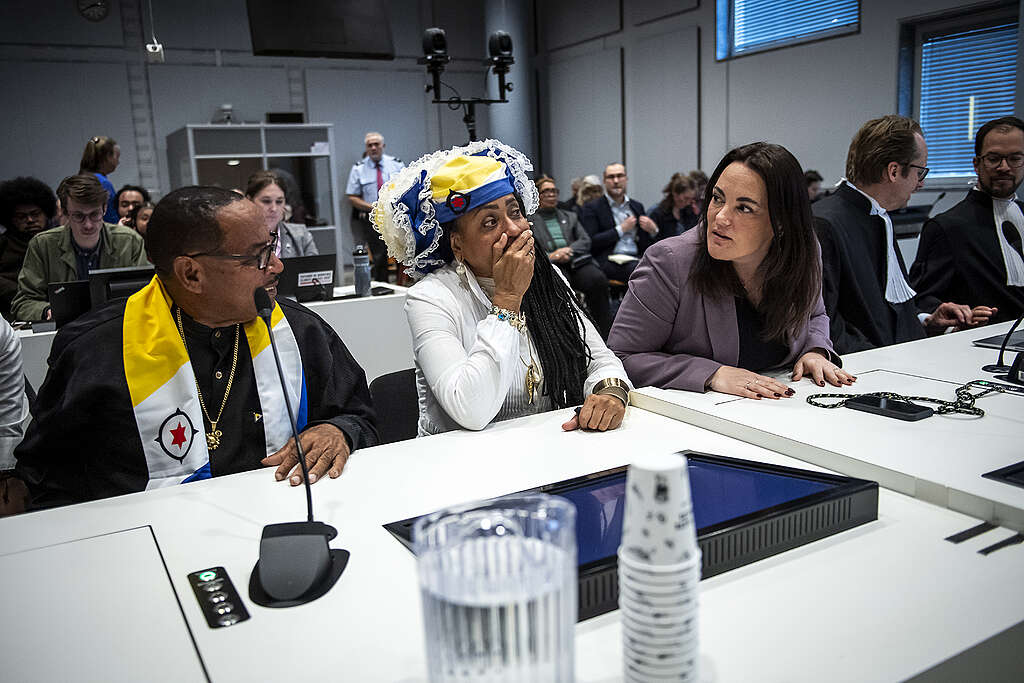
In a landmark ruling, the District Court of The Hague found that the Netherlands is violating Bonaire residents’ human rights by failing to protect them from the climate crisis.
The judgment makes clear that the Dutch state cannot treat residents of Bonaire, a Caribbean island with 25,000 inhabitants, as second-class citizens and, therefore, must protect them from the impacts of climate change.
Bonaire is already on the frontline of the climate crisis. Extreme heat, disappearing corals, and rising sea levels are affecting daily life on the island. While the Dutch government has been proactive about protecting people living on continental Europe, it has failed to offer the same level of protection to the people of Bonaire.
In January 2024, eight residents of Bonaire, supported by Greenpeace Netherlands, went to court to challenge this injustice. They argued that the state’s climate policies fell short of its human rights obligations, and that people living on Bonaire were paying the price.
The court agreed.
As a result, the Dutch state must comply fully with its obligations. That means stronger climate action, faster emissions cuts, and an adaptation plan that protects people in Bonaire from the worsening impacts of the climate crisis.
Legal victories like these are valuable because they frame climate action as a legal and moral obligation. In doing so, they also set legal precedents that help fight systemic injustice and hold powerful actors, like politicians and corporations, accountable for environmental damage. In other words, they help us build momentum.
Action Hub
FILM-MAKING AS A MEANS TO TAKE ACTION AGAINST DEFORESTATION
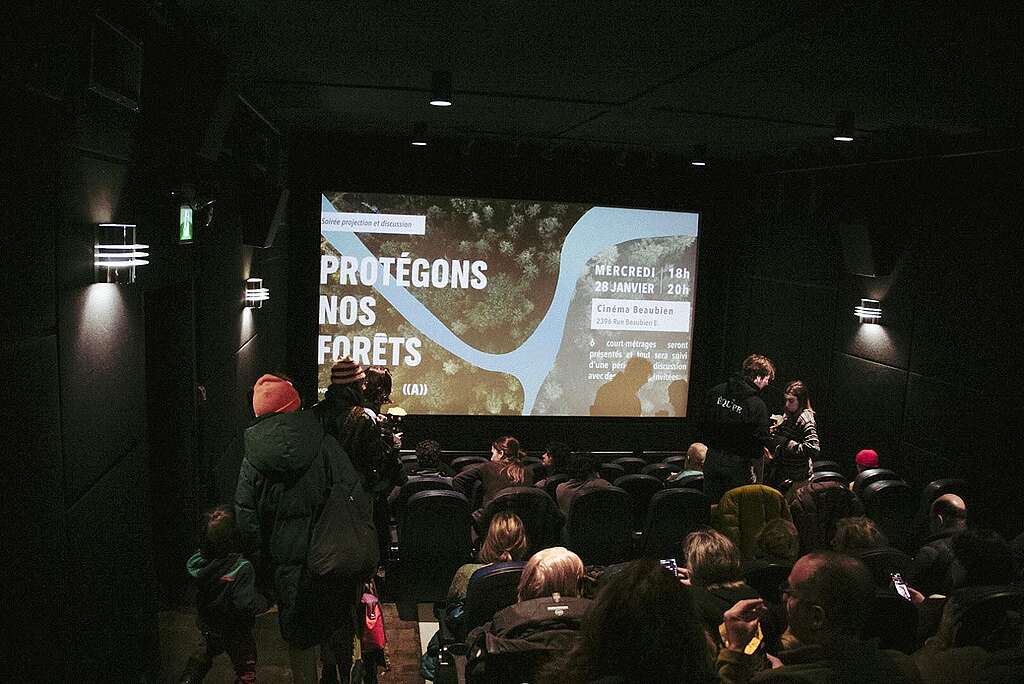
On January 28, Greenpeace hosted a film screening in support of Atikamekw Land Defenders and local activists taking action against illegal deforestation in Québec. The event, held in Montreal, was the product of a collaboration with Wapikoni Mobile, a non-profit that supports Indigenous film-makers, and Amplifier Films, an activist organization that has been documenting illegal deforestation. Six films were presented at the screening, which denounced extractive industries and projects—including those marketed as being in the “national interest.” Their projects are a powerful reminder that Canada’s forests are not abstract assets on a balance sheet; they are sources of clean air, homes to wildlife, and places of cultural importance.
NO CANADIAN ARMS FOR ICE
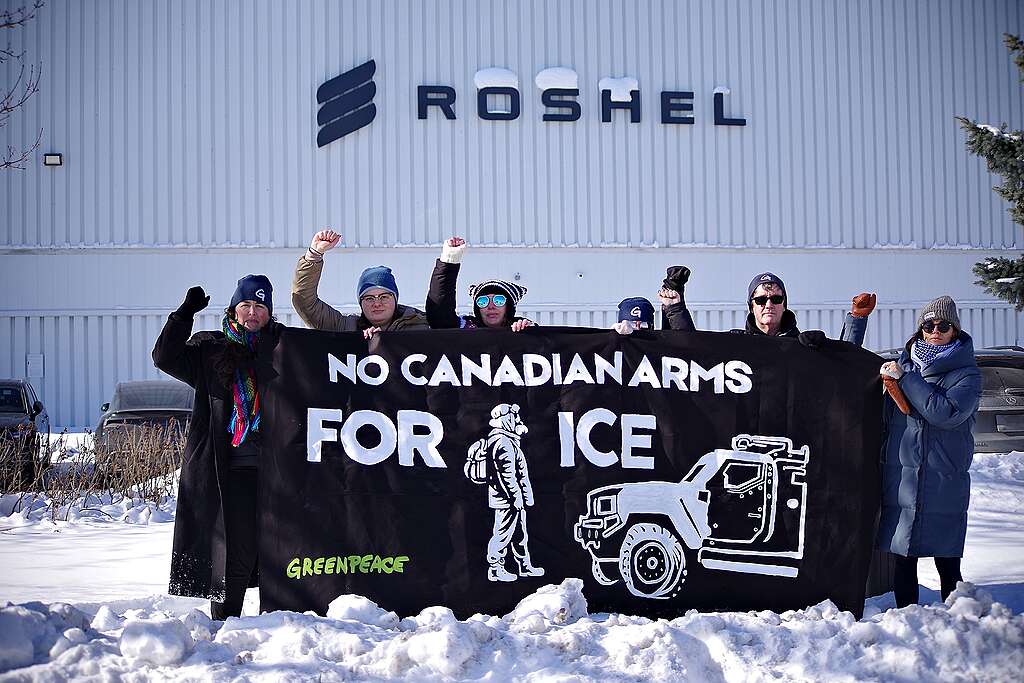
As communities across the United States reel from ongoing violence, militarized raids, and human rights abuses linked to U.S. Immigration and Customs Enforcement (ICE), new revelations show that Canada is complicit in this violence. A Canadian company, Roshel, has been contracted to deliver 20 armoured vehicles to ICE.
On February 2, Greenpeace Canada activists unveiled a banner that read “No Canadian Arms for ICE” at Roshel’s headquarters in Brampton, Ontario, as they called on all federal Members of Parliament to support legislation that would tighten restrictions on arms exports. And on February 19, activists also joined the Arms Embargo Coalition’s “phone zap” action, which flooded Members of Parliament’s voicemails to make sure they couldn’t ignore the demand for action.
After all, we know that public pressure works: in February, Jim Pattison Developments, a commercial real estate and development company based in British Columbia, announced that they will no longer sell a U.S. warehouse that was set to become an ICE detention centre.
So, now that we’ve got the ball rolling, let’s keep the momentum going.
Picture of the Month
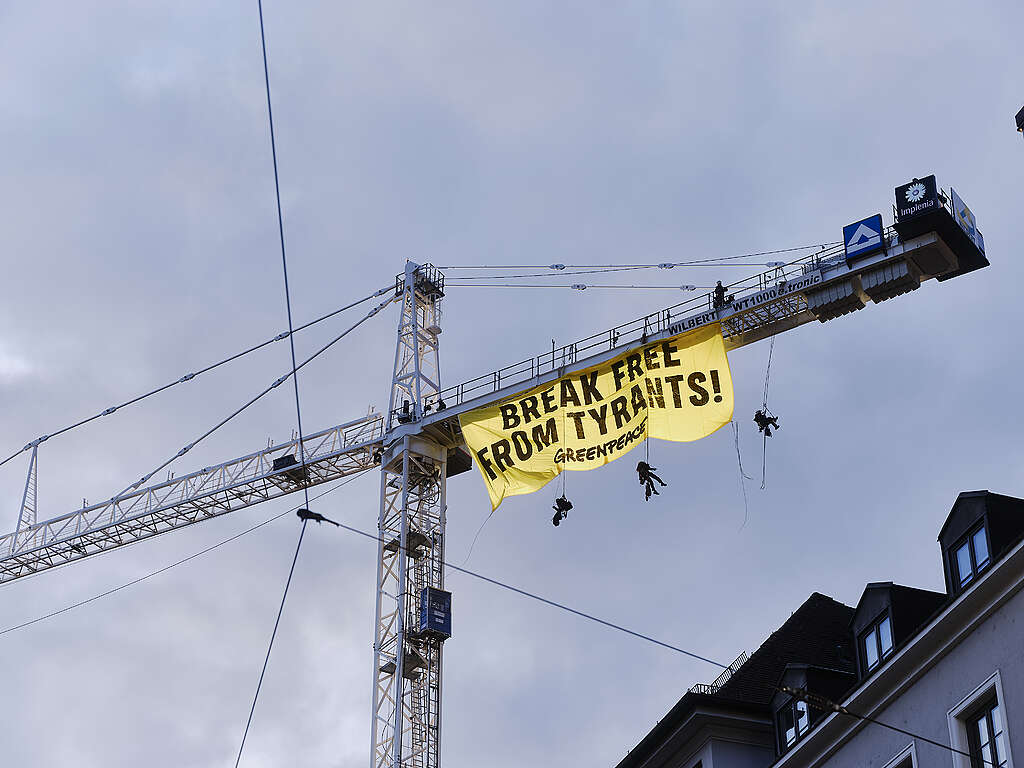
Here, Greenpeace activists can be seen protesting on a crane near the Munich Security Conference. They hung a 90-square metre banner, with the message “Break Free from Tyrants,” to denounce Europe’s dependence on liquefied natural gas supplies from Russia and the United States. Both the U.S. and Russian administrations are using energy supplies as a means of wielding and exerting pressure.