
The Trump administration wants to invade the deep sea – but you can tell them not to
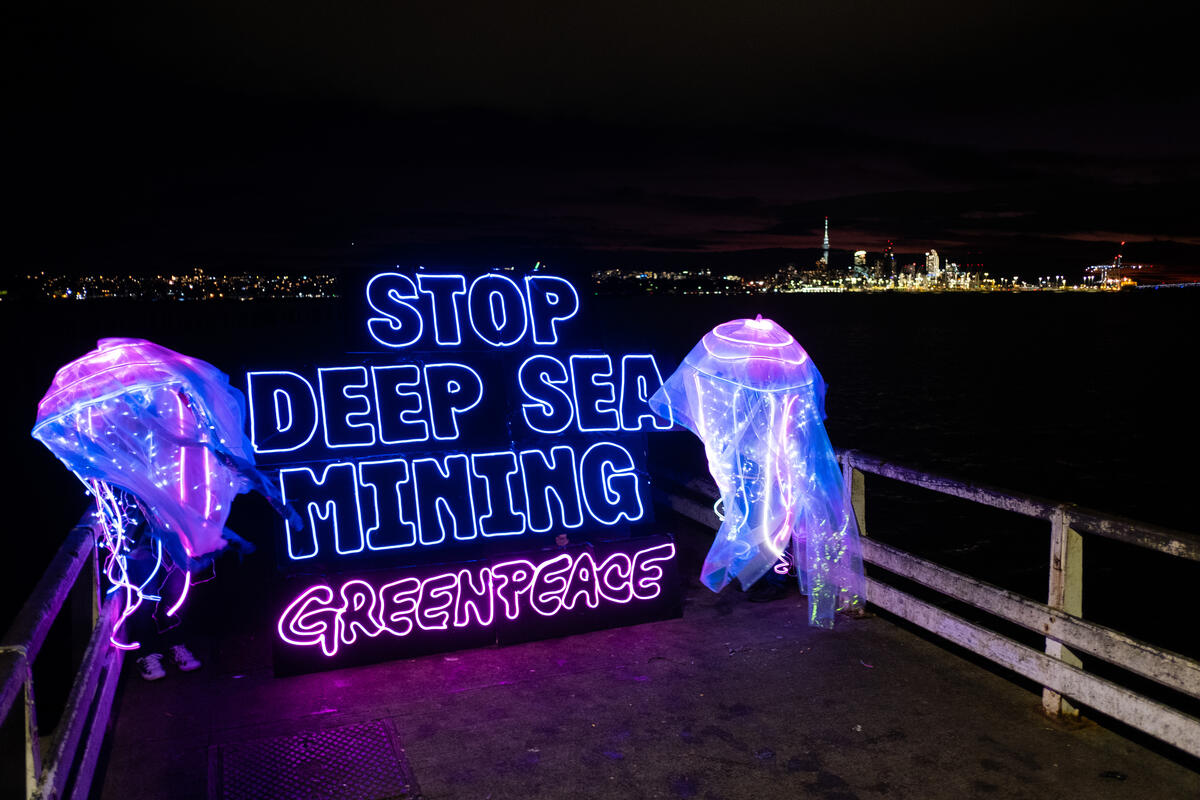
The threat of deep sea mining is becoming increasingly urgent. The Metals Company USA (TMC USA) has submitted the first-ever application to commercially mine the international seabed, seeking permission from the Trump administration to mine an area of ocean that belongs to all of us. But deep sea mining hasn’t started yet, and we can still stop it. The National Oceanic and Atmospheric Administration (NOAA), the US agency reviewing TMC USA’s application, has opened a public comment period. No matter where you live in the world, your voice counts.
This is the moment to speak up. The deep sea is not there for one country or company to exploit for profit. Sign on to the submission and make sure NOAA hears your voice.
THE DEEP OCEAN IS NOT FOR SALE
Deep sea mining risks unavoidable and irreversible harm to ocean life and habitats. The plans in this application would mean sending tank-sized excavators four kilometres below the waves to scrape up the bottom of the ocean – one of our planet’s last remaining wildernesses.
These are our most ancient ecosystems, undisturbed since the dawn of time, and they are thriving with fascinating creatures found nowhere else on our planet. Scientists estimate there are thousands more species to be discovered in the Clarion-Clipperton Zone. But deep sea miners want to rip up the parts of the habitat that life centres around, which means if we allow mining to go ahead, we could lose species we don’t even know exist.
What happens in the deep ocean is crucial to the planet’s functioning. The more we disrupt it, the more we could also put ourselves at risk. Deep sea mining also threatens ocean life far above the seafloor, risking disruption to global fisheries, whale reproduction and climate-critical processes.

This single application covers over 65,000 km2 – that’s an area twice the size of Belgium.
The international seabed is the global commons – it falls outside any single nation’s territory and belongs to all of humanity, and the decisions governments make about it should benefit humankind and future generations. A government acting alone to permit deep sea mining would be considered acting contrary to international law. This would undermine decades of global cooperation, could ignite legal conflicts, inflame geopolitical tensions, and inflict irreversible damage on ocean ecosystems. All for a speculative industry that faces major logistical, legal, and financial hurdles and is increasingly rejected by banks, insurers, the fishing industry, and major battery and automotive brands worldwide.
Over 170 governments have legal obligations to prevent their companies from any involvement in unilateral deep sea mining. The Metals Company USA’s plans assume multiple governments will violate international law for its plans for mining machinery, shipping, processing, and refining to work.
Pacific peoples still bear the impacts of colonisation, militarisation, and are on the frontlines of the climate crisis. These proposed mining areas are not in the middle of nowhere — they hold deep cultural, religious, and emotional ties for Pacific communities that have been historically excluded from decision-making processes. The Pacific is not a sacrifice zone.
Everywhere governments and corporations have tried to start seabed mining, from Norway to New Zealand, they have faced significant opposition, legal hurdles, delays, and have ultimately been unsuccessful. The opposition to deep sea mining is not going away; it is increasing.
Granting the first deep sea mining licence for the international seabed not only gravely threatens the ocean, but would be an act of total disregard for international law, scientific warnings and the concerns raised by millions of people worldwide who oppose the start of deep sea mining.
The last thing the world needs right now is deep sea mining.