
Chornobyl
In the early morning of 26 April 1986, a major nuclear accident occurred in reactor number 4 at the Chornobyl nuclear power station in Ukraine. The reactor’s explosion and subsequent burning went down in history as the world’s worst civilian nuclear accident to date.
The consequences were felt across Europe – and persist even today.
-
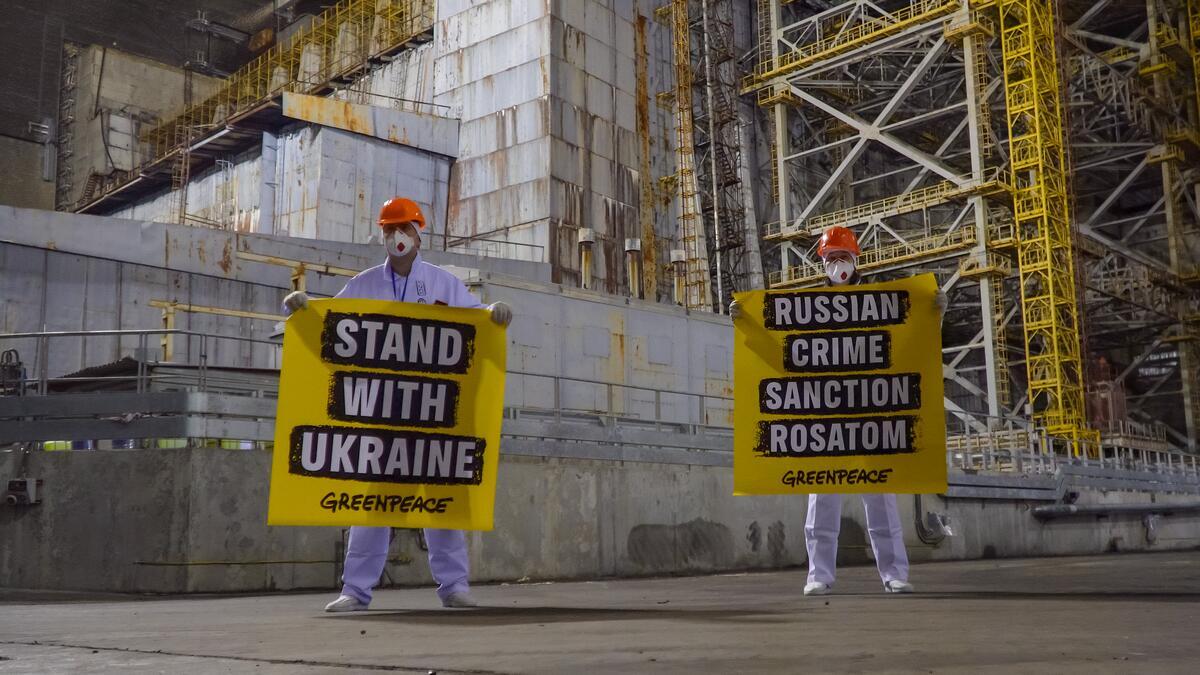
Greenpeace warns: 40 years after Chornobyl accident, war exposes ongoing risks of nuclear power
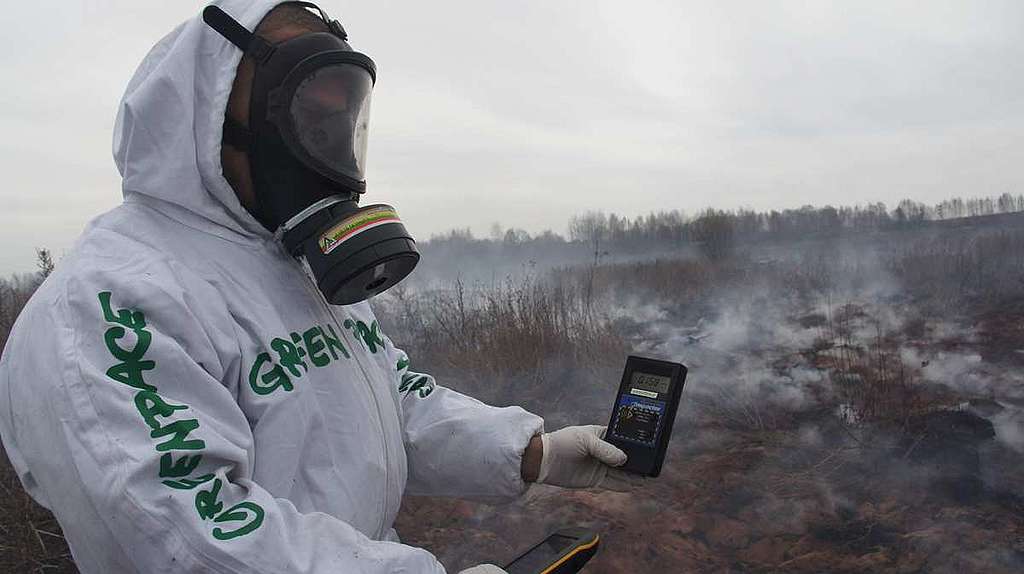
40 years after the Chornobyl disaster spread radioactive contamination across Europe, the risks it exposed have evolved in a world shaped by war, geopolitical tension and more frequent extreme weather.
-
Forty years on, the Chornobyl disaster remains an ongoing and evolving crisis
This is not simply a commemoration of a past event. 40 years later, this is an ongoing nuclear emergency.
Mapping the Russian military threat to Ukraine’s nuclear reactors and facilities
This interactive, regularly updating map displays the locations of Ukraine’s nuclear power plants as well as their proximity to Russian military forces at fixed time intervals since Russian forces entered Ukraine on 24 February 2022. Using publicly-sourced information to track the movement of Russian military forces, the map makes clear the vulnerabilities to Ukraine’s nuclear plants as a consequence of the Kremlin’s illegal invasion.
Do we really need a new Chornobyl
In the 1990s, when Ukraine became independent from the former Soviet Union, the Ukrainian government set out to re-establish its own language and the original spellings of its cities, regions and names. Two of the most notable changes are Chornobyl (Ukrainian spelling) and Chernobyl (Russian spelling); and Kyiv (Ukrainian spelling) and Kiev (Russian spelling). While you may be more accustomed to seeing the Russian spelling, Greenpeace International uses the Ukrainian spellings.