It was seven in the morning on Thursday when we started getting ready to fly over the Munduruku and Kayapó Indigenous Lands.
I was very anxious. It was my first overflight to see Indigenous Territories with illegal mining. When I was a child in the Truaru Indigenous community, in the state of Roraima, in Brazil, I heard about mining. But it seemed to me a very distant subject: there, we had no problems with the criminal activity. But we had a warning: if there was even a law to open Indigenous Lands to mining, all of us would be affected. Years passed when I heard about it again, within the Indigenous movement, that several relatives from other regions were being hit hard by this illegal practice.
In several mobilizations in which I participated, the problem of mining was raised. Several leaders spoke about how much mining was increasing in their Territories, bringing destruction and social problems. But I myself still did not have a clear idea of the size of the damage.
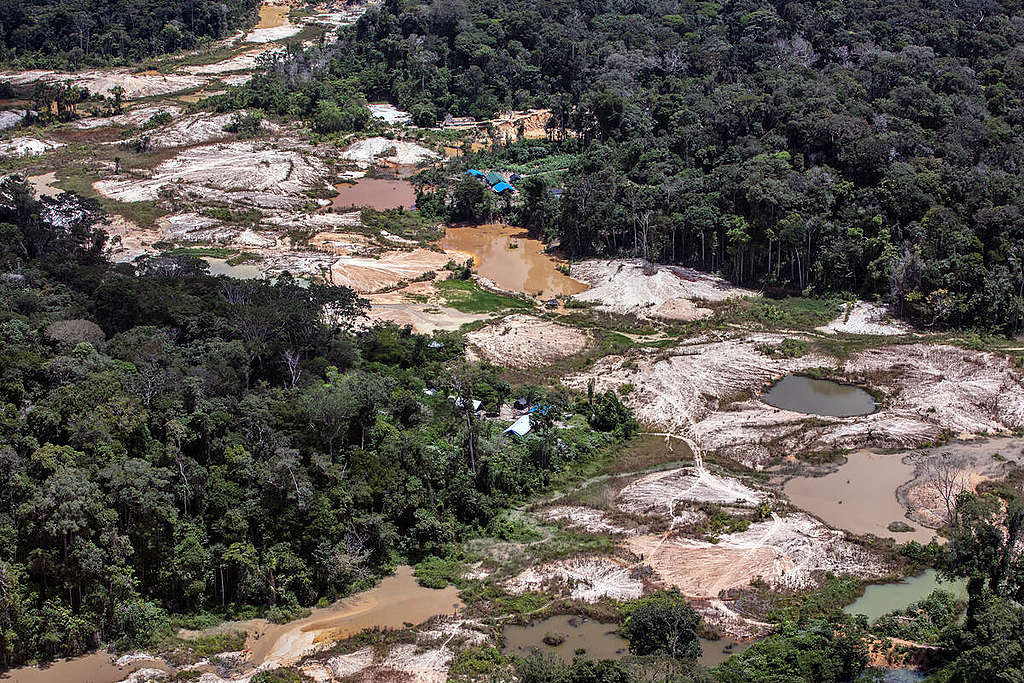
We left Manaus, the capital of the state of Amazonas, and headed to the Munduruku Territory. Around 11 am, we started to fly over the first open illegal mining pits. As I looked down at the damage below, I could only reflect on the lives that were being affected in that place. At that moment, I began to remember what my leaders said: “the non-Indigenous man, they come and destroy everything for money”. My father used to say that gold only brings destruction wherever it goes.
I started to remember another conversation I had at the Free Land Camp (Acampamento Terra Livre) in 2022, with Dário Kopenawa – one of the greatest Indigenous leaders in Brazil. He said that his People, the Yanomami, didn’t know what else to do. They had already gone to all levels of government. However, their Territory continued to be invaded and the search for gold only increased. What was left behind, he said, was just devastation, disease and the contamination of rivers. For us, Indigenous Peoples, the Land is sacred: there are visible and invisible beings living in that space, through an ancestral connection.
At first, when flying over the Munduruku Territory, I couldn’t react much. But the next day, when we flew over the Kayapó Indigenous Land, my eyes filled with tears. The sight was devastating. What I saw looked like a city made of mud and debris. At that moment I asked myself: “Is it still possible to do something?”
As we advanced, hope was gone. However, I remembered the leaders, who always told those of my generation: “Die if necessary, but never give up! Land is our mother! No one sells, hurts or destroys our mother!” But I also remembered that, alone, we will not be able to put an end to illegal mining, such is the proportion that this problem has taken within our Territories.
I was in shock for hours. There I was able to understand the pain of my relatives: how to fight against an entire system backed by really powerful people? The fight is very uneven. In the places where it takes place, illegal mining is affecting the lives of many people and causing great damage to people and biodiversity. Society needs to understand what is happening today within Indigenous Territories. The shining jewels and precious gems that people wear come out of a mud swamp that swallows and consumes the souls of thousands of Indigenous People.
Gold is bathed in Indigenous blood. Brazil was born from the genocide of our ancestors; and the gold market is also sustained by the same logic. Every second that passes, more lives are being lost to illegal mining: how many grams of gold is an Indigenous life worth?
As I flew over the two Territories, my feeling was one of profound sadness. From what I’ve seen and heard on the subject, there is no way to defend mining under any circumstances. There is no way we can promote development based on the practice of such a wicked crime. We might even think that it might work for a while, but it doesn’t. There is no way to exchange the lives of Indigenous Peoples for gold. The standing forest is more valuable than the felled one. We need to think about other economic models, especially models that take care of and preserve life.”
Ariene Susuí, a campaigner for Greenpeace Brazil, is from the Wapishana People, from the state of Roraima. Ariene was born in the community of Truarú da Cabeceira, and for years she has been actively participating in social movements for the rights of Indigenous Peoples. She recently flew over the Kayapó and Munduruku Indigenous Lands to monitor and document illegal mining in the region.
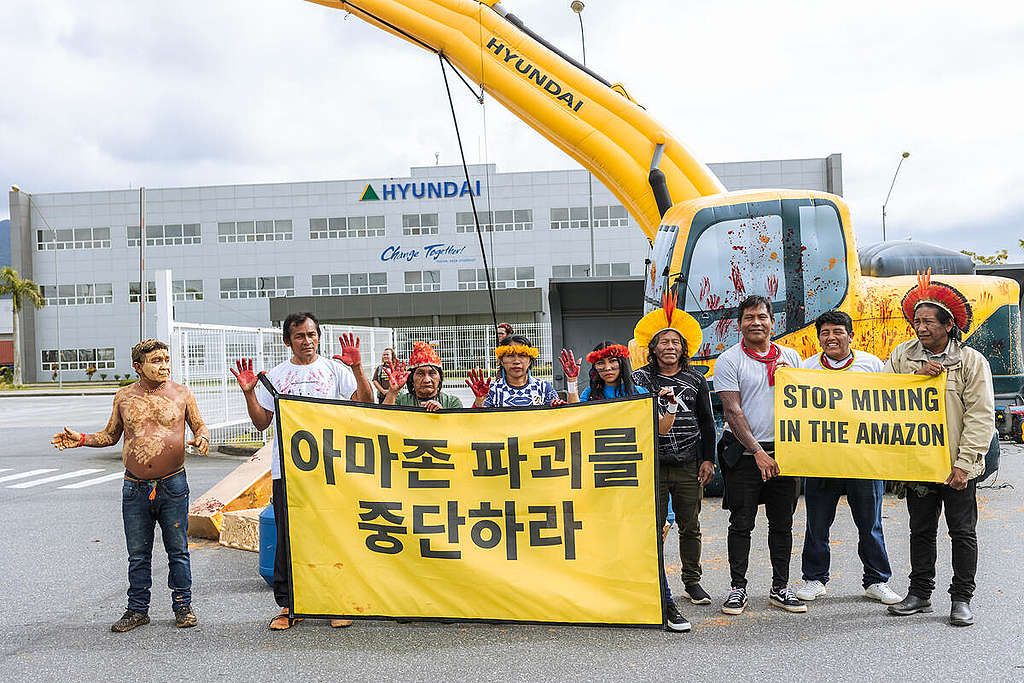
Illegal mining has exploded in the Amazon in recent years, and the introduction of heavy machinery has been a key element in the expansion of the activity. Hyundai’s excavators are being used by illegal miners to expand their business at the expense of the forest and Indigenous Peoples’ lives.
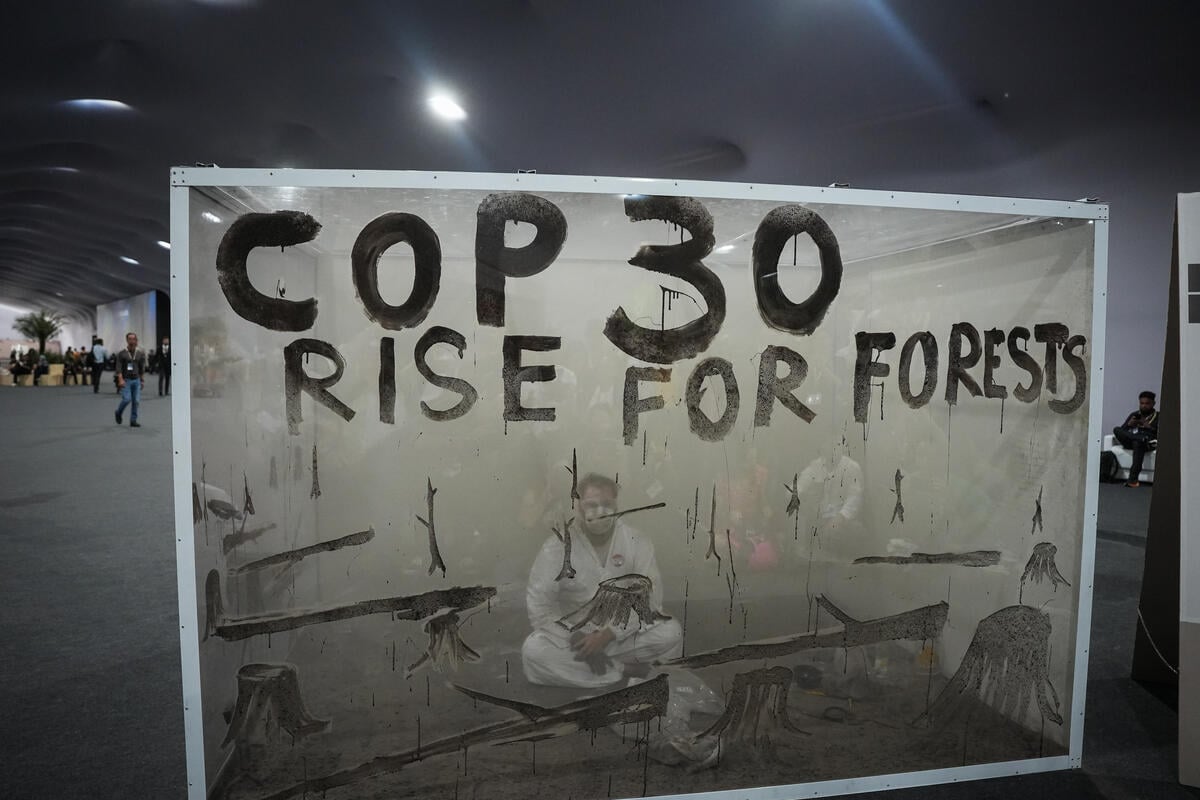
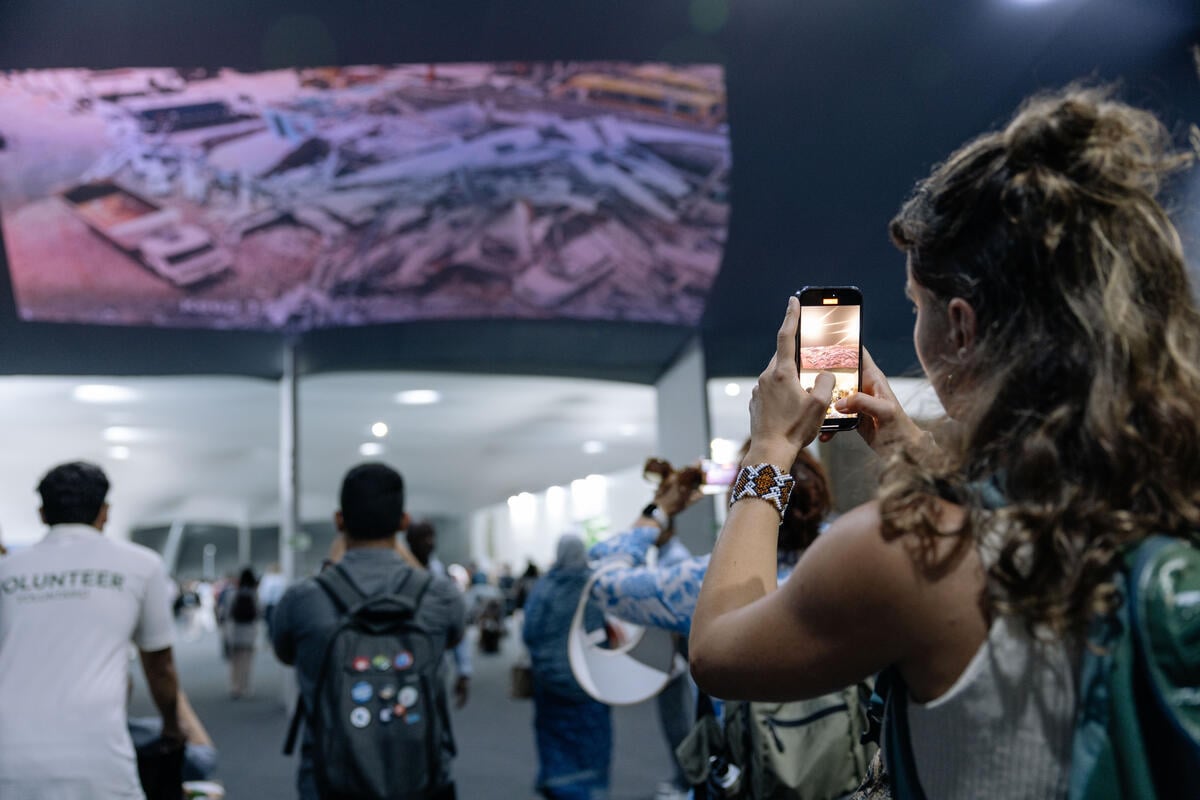
Brazilian artivist Mundano delivered, in partnership with Greenpeace a striking art installation to demand world leaders take bold action for forests at COP30.
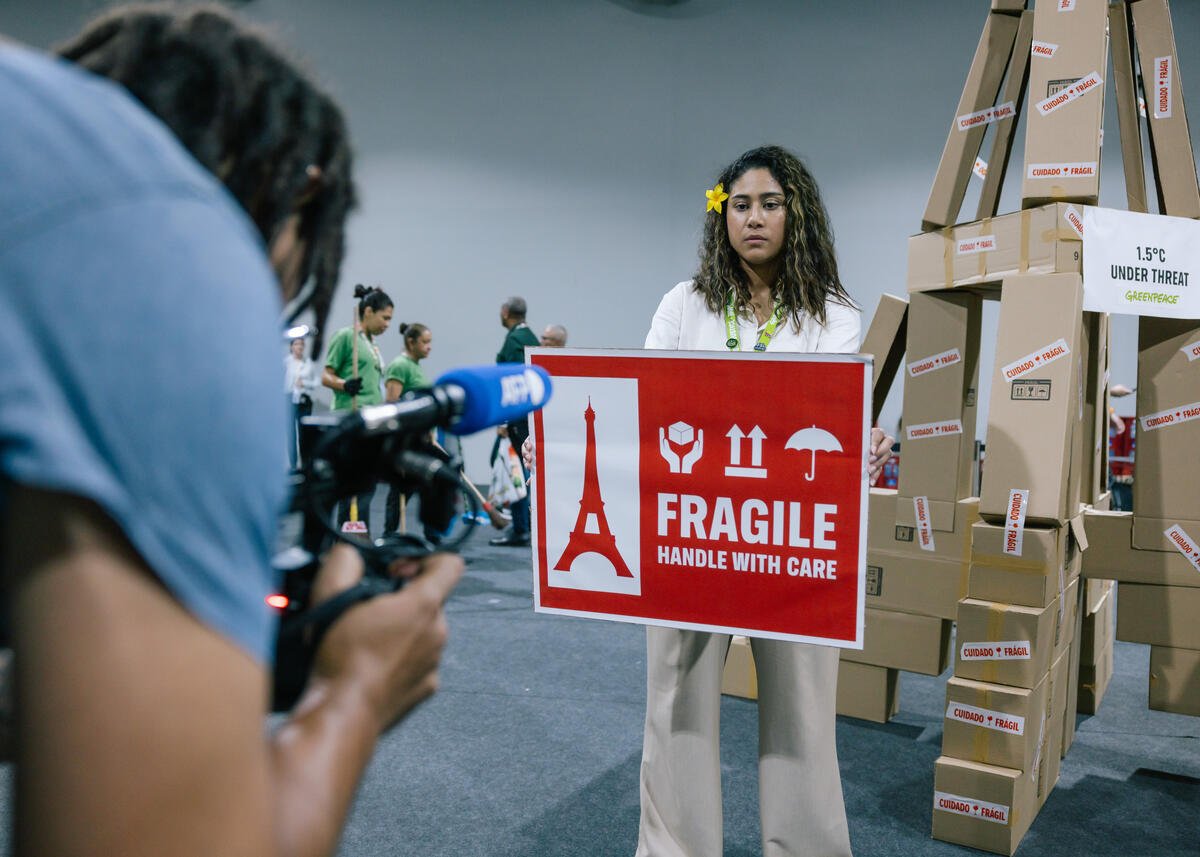
The world’s shared promise to limit global warming to 1.5°C above pre-industrial levels is hanging by a thread. This is not the moment to surrender. It is the moment to act.
Please select which cookies you are willing to store.
Necessary Cookies (required) Always enabled
These cookies are required for technical reasons so that you can visit our website and use the functions we offer. These cookies are used to recognise you between successive visits and thus provide you with a better experience, storing your consent preferences and the last Greenpeace.org website visited.
We use tracking and analysis tools to ensure continuous optimisation and demand-oriented design of our website. These cookies will allow us to collect statistical and anonymised data, such as how visitors use our website or which pages are accessed most frequently, to ultimately improve Greenpeace.org and provide you with a better experience of our website.
In addition to the Performance cookies mentioned above, we may also place in your browser cookies from third-party services (e.g. Facebook or Google) to track the effectiveness of our online marketing strategies and to deliver adverts more relevant to you and your interests. These cookies may also be used to serve advertising to you after you have left our site (retargeting cookies).

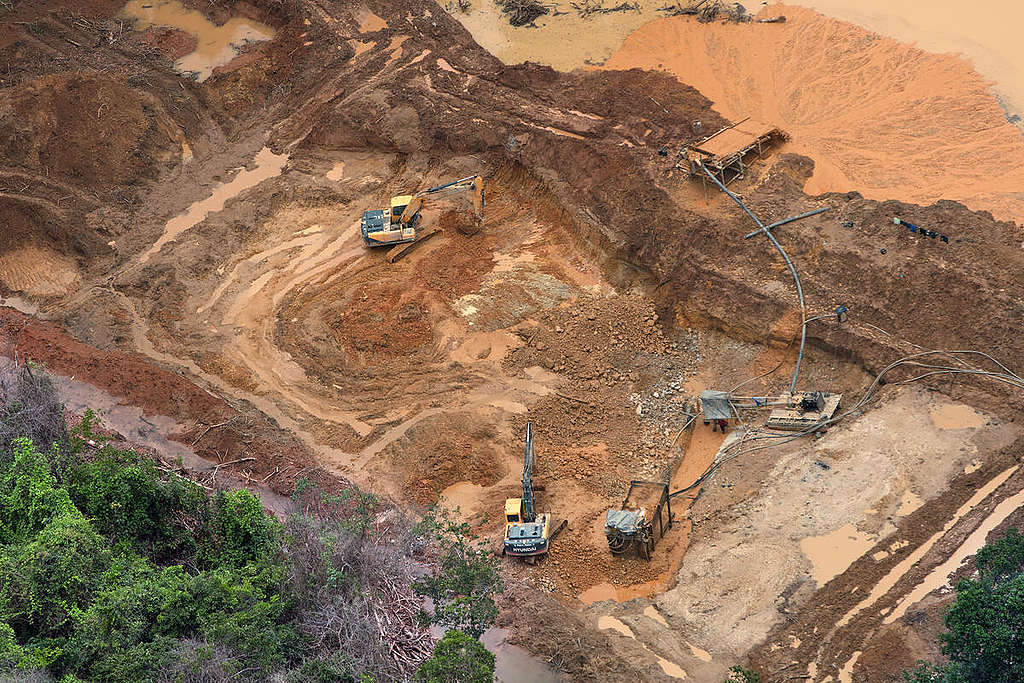 © Marizilda Cruppe / Greenpeace
 © Marizilda Cruppe / Greenpeace
 © Tuane Fernandes / Greenpeace” class=”wp-image-59200″/>