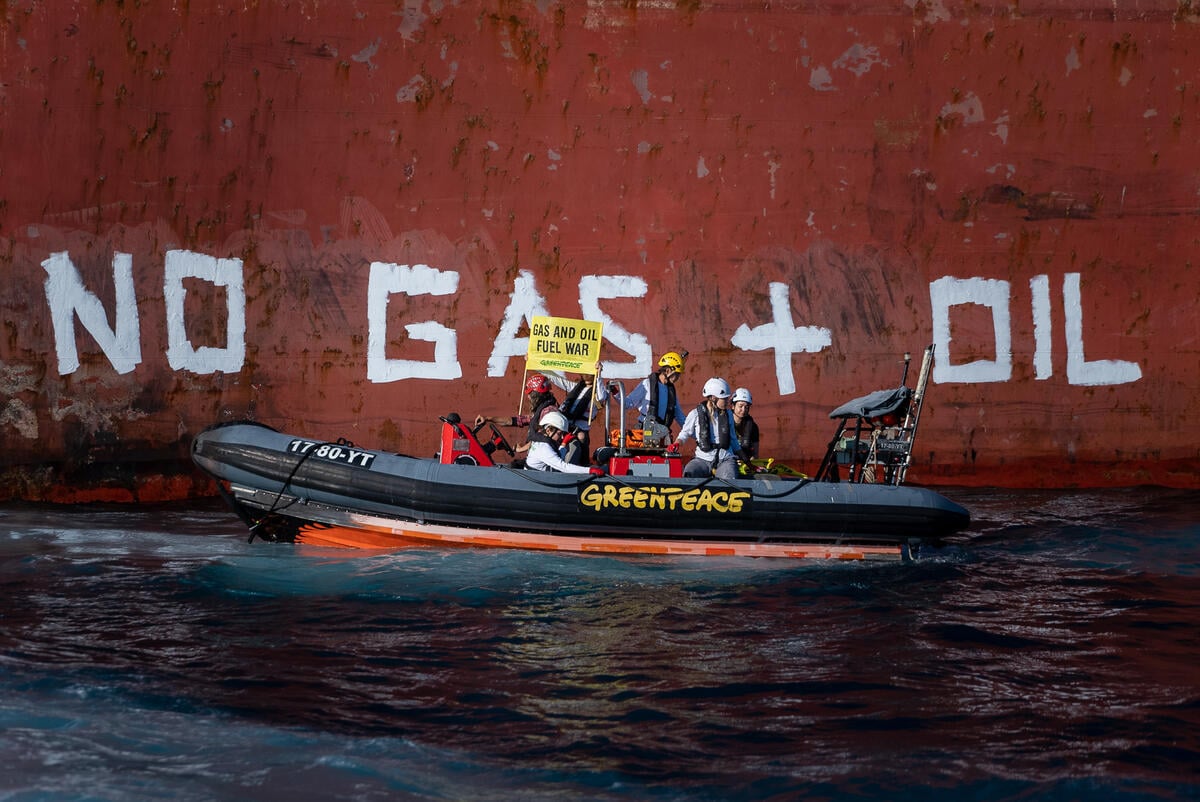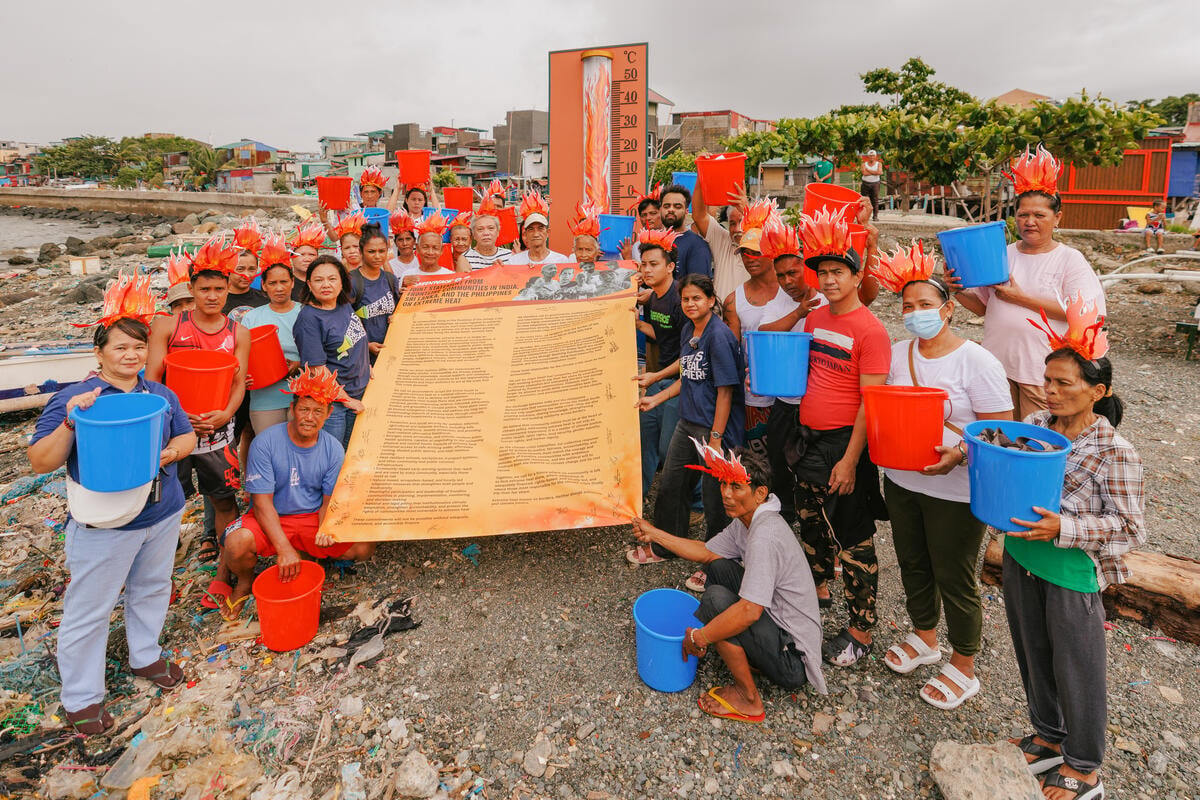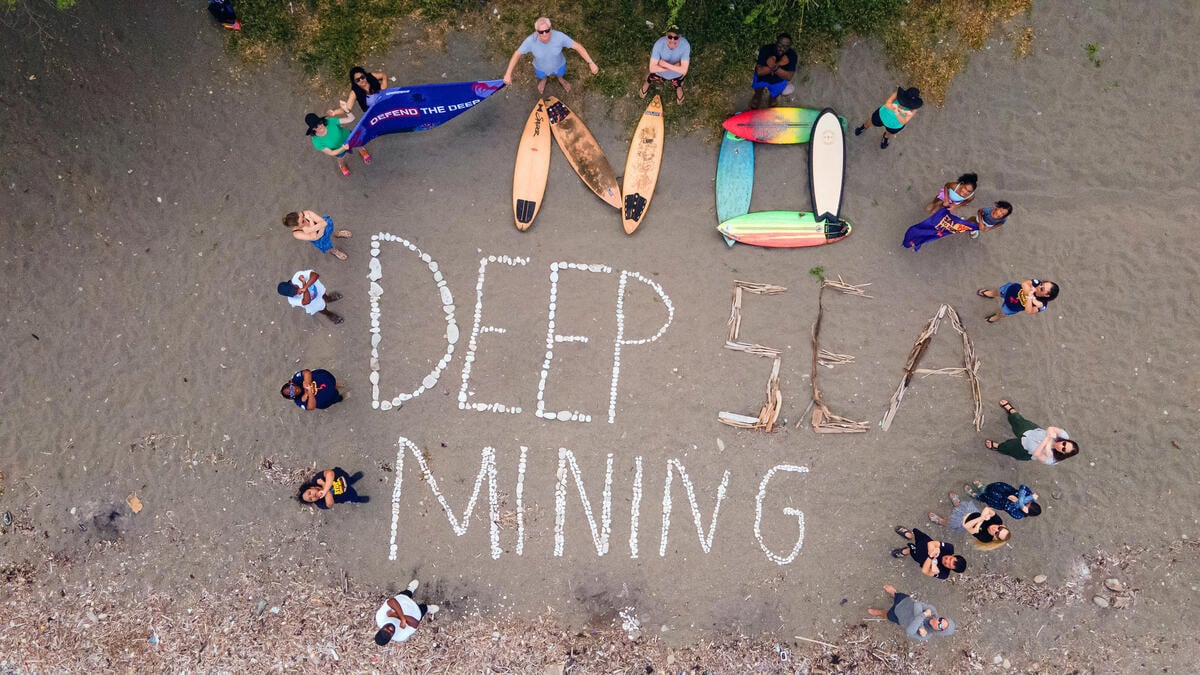
Greenpeace has been a pioneer of photo activism for more than 50 years, and remains committed to its core values of bearing witness and exposing environmental injustice through the images we capture.

Here are a few recent pictures from Greenpeace photographers around the world.

To see more Greenpeace Photo and Video, please visit our Media Library
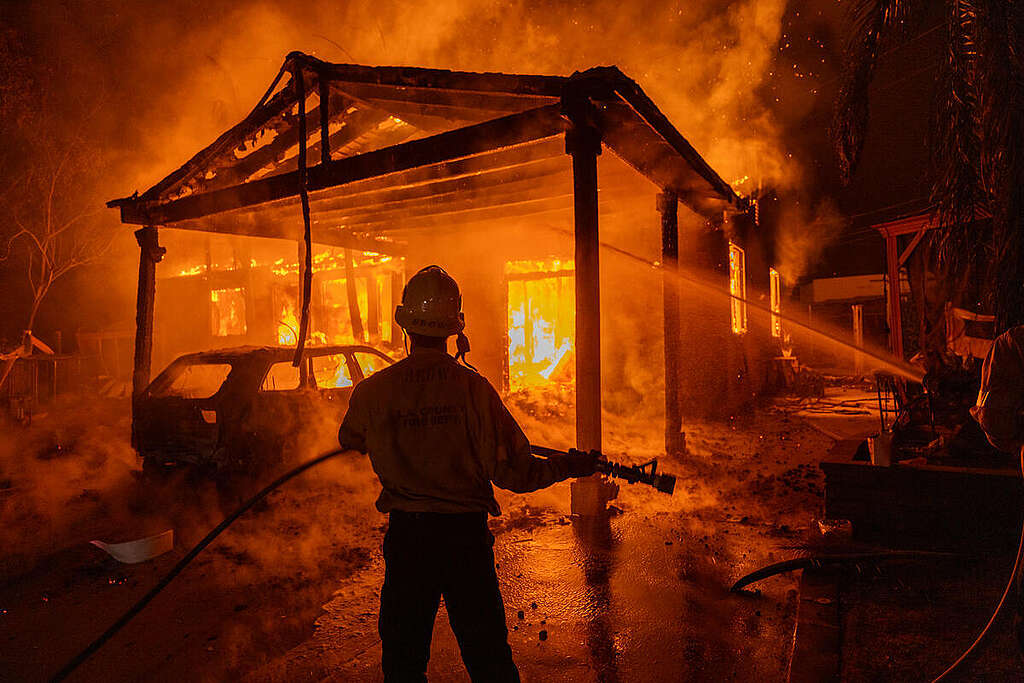

Firefighters battle the Eaton Fire on January 8, 2025 in Altadena, California.. Powerful Santa Ana winds pushed the fire across more than 10,000 acres in less than 24 hours, destroying potentially hundreds of homes and killing five people so far. At least 1,000 structures have burned and 70,000 people are forced from their homes in the Los Angeles area as multiple dangerous wildfires continue to erupt., 8.25.02.LA Wildfires.4123
© David McNew / Greenpeace

Firefighters battle the Eaton Fire on January 8, 2025 in Altadena, California. Powerful Santa Ana winds pushed the fire across more than 10,000 acres in less than 24 hours. At least 1,000 structures have burned and 70,000 people are forced from their homes in the Los Angeles area as multiple dangerous wildfires continue to erupt.
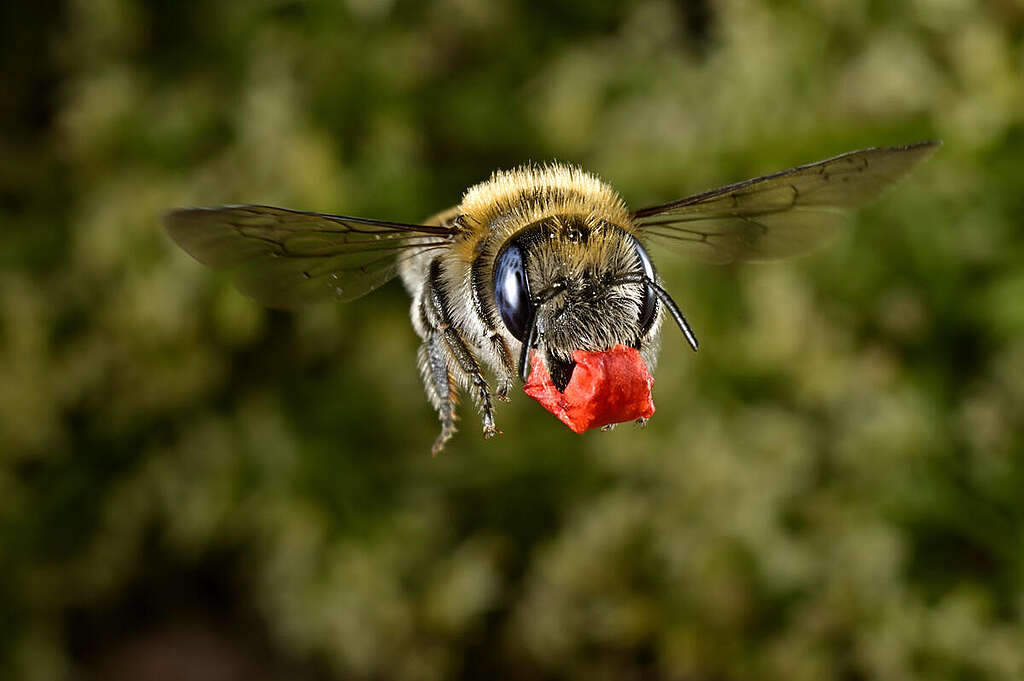

Images of several different species of wild bees in the German countryside. The poppy bee (Osmia papveris or Hoplitis Papaveris) is a wild solitary leaf-cutting bee that lines its nest with pieces petals from the common poppy (Palaver rheas). Bundledinto small packages these pieces are brought to the nest and unfolded carefully to line its sandy walls.
© Solvin Zankl / Greenpeace

The poppy bee (Osmia papveris or Hoplitis Papaveris) is a wild solitary leaf-cutting bee that lines its nest with pieces petals from the common poppy (Palaver rheas). Bundledinto small packages these pieces are brought to the nest and unfolded carefully to line its sandy walls.


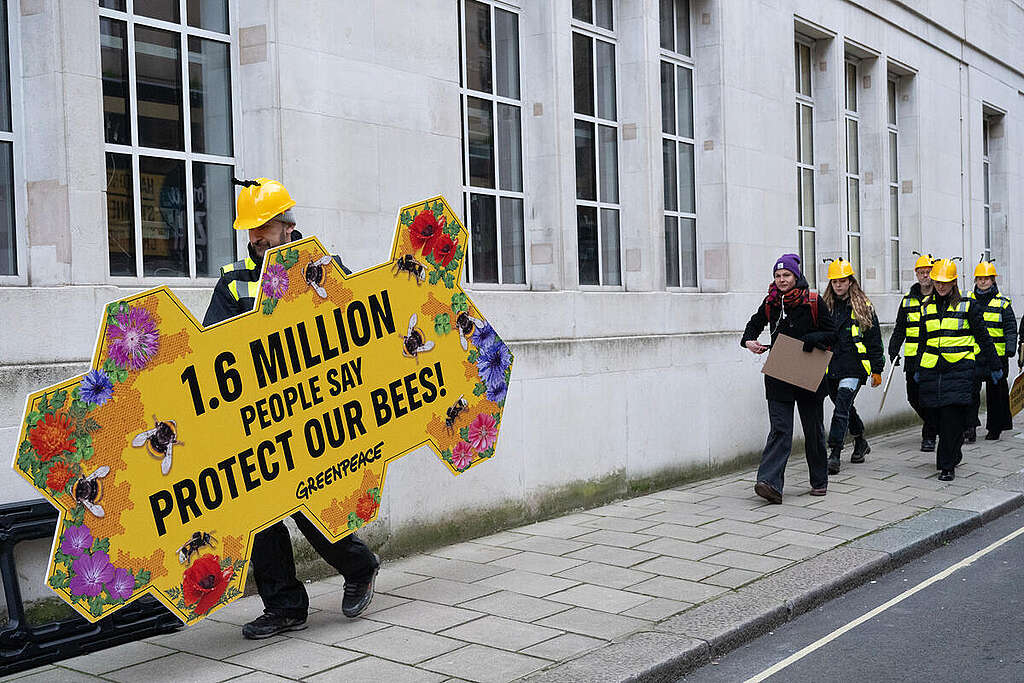
A petition that has been signed by more than 1,640,108 people is handed in at the Department for Environment, Food & Rural Affairs asking Steve Reed, Secretary of State for Environment, to enforce a total ban on bee killing pesticides.
© David Mirzoeff / Greenpeace

A petition that has been signed by more than 1,640,108 people is handed in at the UK Department for Environment, Food & Rural Affairs in London, asking Steve Reed, Secretary of State for Environment, to enforce a total ban on bee killing pesticides.


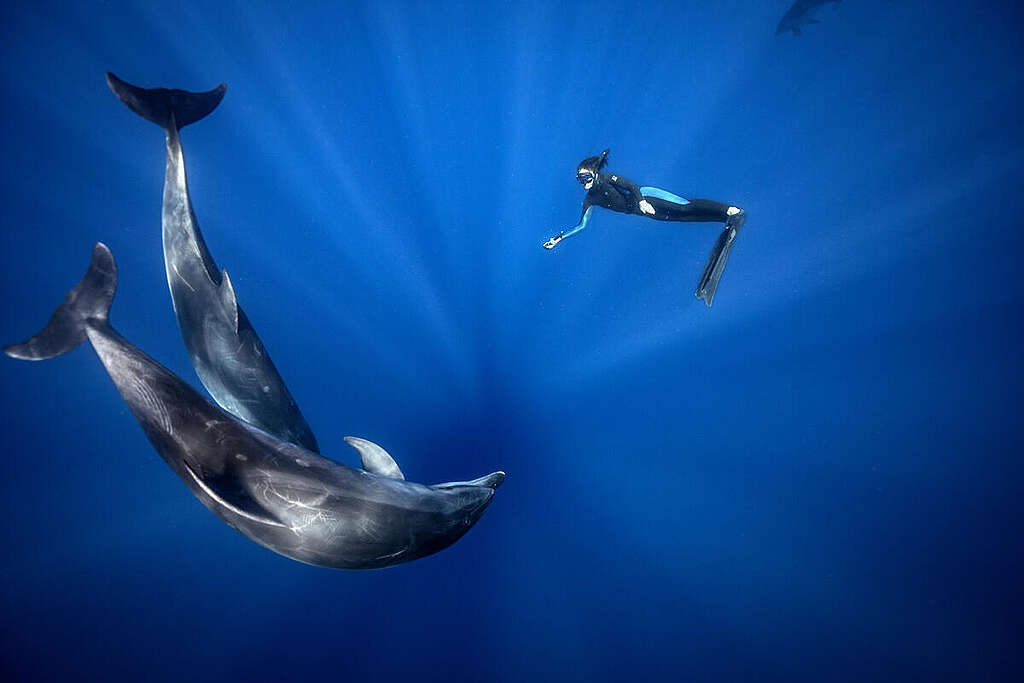
Amber Bourke swimming gracefully with bottlenose dolphins (Tursiops) in the deep blue waters, 600 metres deep and located 15 kilometres off Lord Howe Island.

Amber Bourke, Australia's deepest female freediver, joined Greenpeace Australia Pacific on Lord Howe Island as a creative partner. At the 2023 Vertical Blue freediving competition, she reached a depth of 81 metres on a single breath, setting a new all-time Australian freediving record.

In 2024, Greenpeace Australia Pacific is ramping up our global oceans campaigning, and joining the fight to protect our common heritage on the high seas.

We have a historic opportunity to protect 30% of the High Seas by 2030, but if countries like Australia don’t ratify the Global Oceans Treaty by mid-2025 and rapidly establish marine sanctuaries, this could become a historic failure. 

The South Tasman Sea and Lord Howe Rise are two linked sites in the South Pacific between Australia and Aotearoa’s exclusive economic zones which form one of Greenpeace’s priority areas for the first high seas ocean sanctuaries under the new Global Ocean Treaty. The area comprises a complex chain of seamounts (underwater mountains) leading to a vast plateau in the north.
© Greenpeace / Bridget Ferguson

Australia’s deepest female freediver, Amber Bourke, swimming gracefully with bottlenose dolphins (Tursiops) in the deep blue waters, 600 metres deep and located 15 kilometres off Lord Howe Island, Australia.
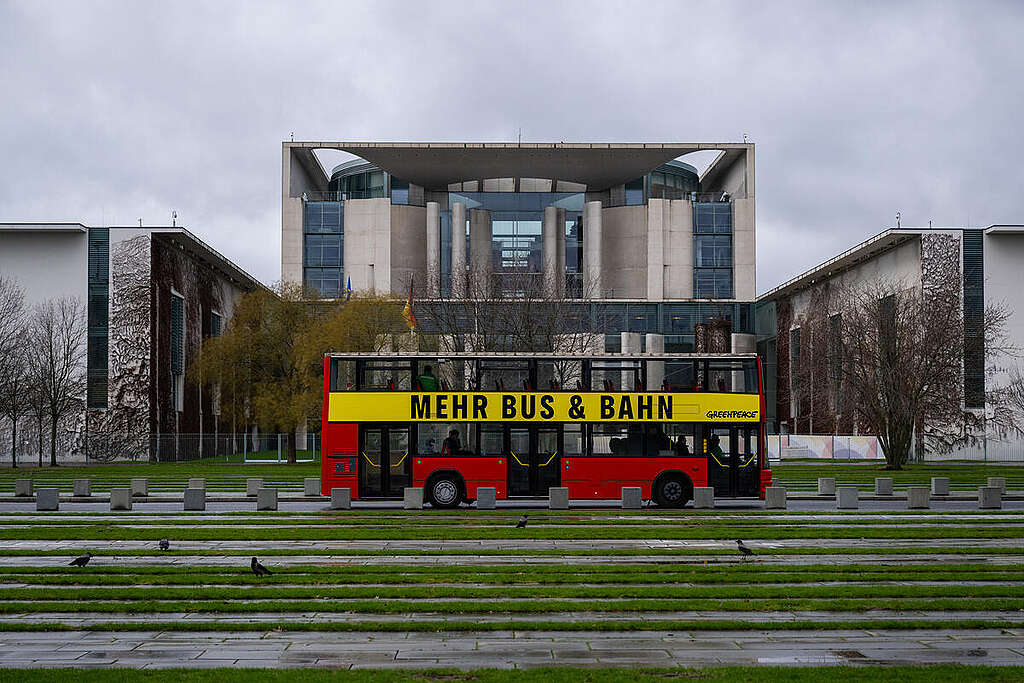

While parliament clears the way for new elections, Greenpeace is organising a demonstration bus to call on the incoming government to secure the Deutschlandticket in the long term.
One side of the red double-decker bus reads: ‘Save the Deutschlandticket!’, the other: ‘More buses and trains’, while the back of the bus features stylised public transport vehicles on a green heart and the words: ‘A heart for public transport’. The digital display at the front of the bus shows: ‘1A Klimaschutz’.
© Christophe Gateau / Greenpeace

Greenpeace Germany organises a demonstration bus to call on the incoming government to secure the ‘Deutschlandticket’ – an affordable annual ticket to all public transport in Germany. The side of the red double-decker bus reads ‘More buses and trains’
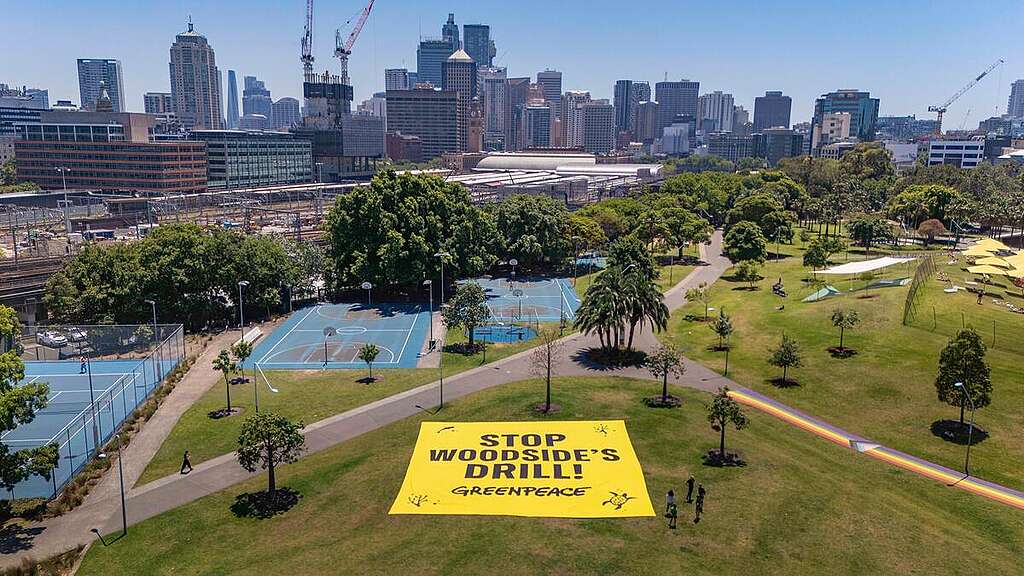

Large banner that reads 'Stop Woodside's Drill' in Sydney CBD, outside of Tanya Plibersek's office.

Last week the Western Australian Government approved Woodside’s North West Shelf project extension—a part of its monstrous Burrup Hub. 

The Burrup Hub is incompatible with a safe future for us and our kids. And their plans to drill up to 50 gas wells at Scott Reef, home to endangered species, including pygmy blue whales and endangered dusky sea snakes, are a risk we can’t afford.
Woodside still needs Federal approval before it can proceed with its climate and nature-wrecking plans. The WA Government’s decision has set the clock ticking on a 30-business-day window for Environment Minister, Tanya Plibersek to make a final decision on Woodside’s Burrup Hub proposals. 

This is a critical window for action. So Greenpeace Australia Pacific made a snap action outside of Tanya Plibersek's office in Sydney to show that there is still time to stop this monstrous plan.
© Bianca Vitale / Greenpeace

Large banner that reads ‘Stop Woodside’s Drill’ in Sydney CBD, Australia, outside of Tanya Plibersek’s office.

Last week the Western Australian Government approved Woodside’s North West Shelf project extension—a part of its monstrous Burrup Hub. Woodside has plans to drill up to 50 gas wells at Scott Reef, home to endangered species, including pygmy blue whales and endangered dusky sea snakes.
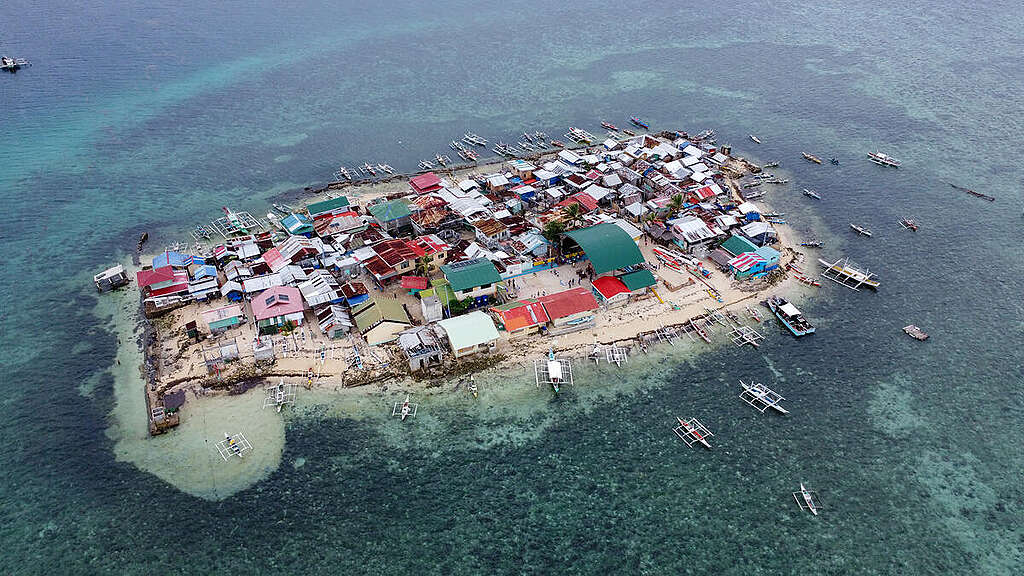

Residents of Bilangbilangan and Batasan Islands, with support of local government units and Greenpeace have installed solar panels and charging stations to strengthen their climate response capabilities and transition away from fossil fuel dependence.

Bohol was among the areas worst hit by Super Typhoon Odette (International name “Rai”) in 2021, suffering 41.6 billion pesos in damages to infrastructure, the economy, and other critical sectors including development administration, social, environment, and private sector. For months, the province was without electricity, crippling water supply, communication, mobility, and economic activity.

To this day, the islands have not fully recovered. Power supply remains intermittent, leaving the communities vulnerable to extreme heat during summer and at risk of isolation should a tropical cyclone cut off energy for days.
© Ivan Joeseff Guiwanon / Greenpeace

Residents of Bilangbilangan and Batasan Islands in the Philippines, with support of local government units and Greenpeace have installed solar panels and charging stations to strengthen their climate response capabilities and transition away from fossil fuel dependence.


Greenpeace has been a pioneer of photo activism for more than 50 years, and remains committed to bearing witness and exposing environmental injustice through the images we capture.

To see more Greenpeace Photo and Video, please visit our Media Library.