More than 68 loaded oil tankers are currently trapped in the Persian Gulf. The reason: following attacks launched on Iran by Israel and the United States on 28 February, Iran has restricted access to the strategically important Hormuz Strait. Ongoing hostilities and disrupted vessel position signals dramatically increase the risk of oil spills.
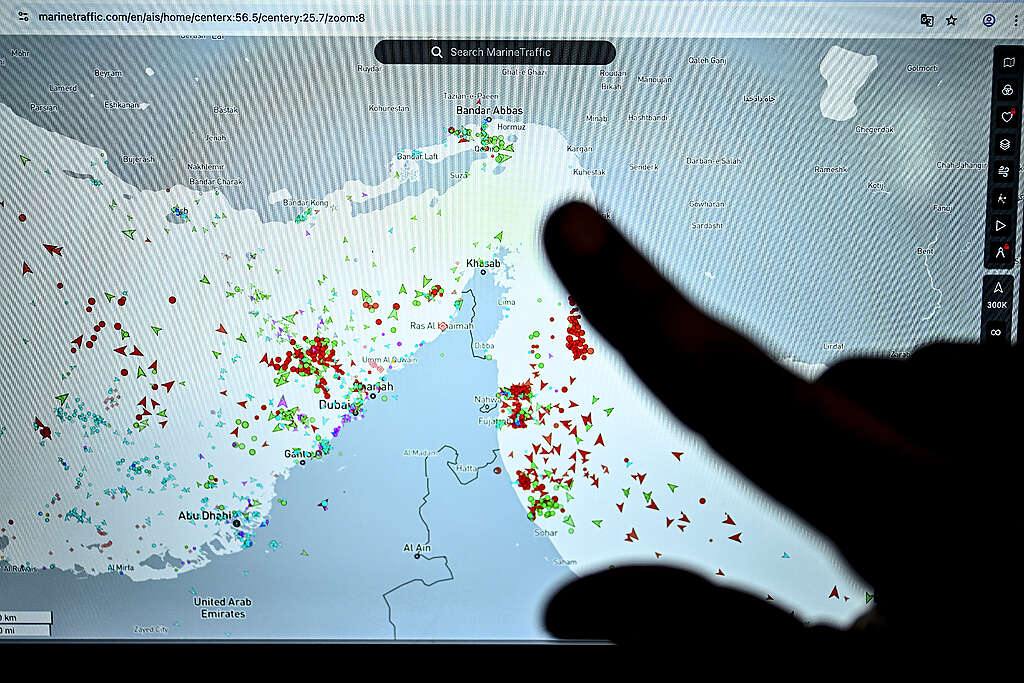
Since the beginning of the conflict, several ships have already been attacked, including a crude oil tanker off the coast of Kuwait. In total, the tankers currently blocked in the Persian Gulf are carrying around 16 billion litres of oil, an amount equivalent to Greece’s annual crude oil consumption.
New research: the risk of oil spills in the Hormuz Strait is serious
An alarming investigation by Greenpeace Germany has analysed the blocked Strait of Hormuz using ship movement data and satellite imagery and simulated the potential consequences of an oil spill in the Persian Gulf.
In the event of a tanker leaking, it’s clear that local communities would pay this additional, long-term price for unlawful aggression and fossil fuel interests. An oil spill could destroy these unique ecosystems and the livelihoods that depend on them for decades.
Our simulations show an ecological ticking time bomb: over 68 blocked tankers in the Strait of Hormuz represent an enormous risk that further increases instability in the region.
Sensitive ecosystems at risk
The ecosystem of the Persian Gulf is unique. The Strait of Hormuz and the adjacent waters of the Persian Gulf and the Gulf of Oman are home to sensitive ecosystems such as coral reefs, mangrove forests, and seagrass meadows that provide vital habitats for numerous species. The Strait of Hormuz is the only maritime connection between the Persian Gulf and the Arabian Sea and plays a crucial role in the exchange of water and nutrients as well as serving as a migration route for marine mammals.
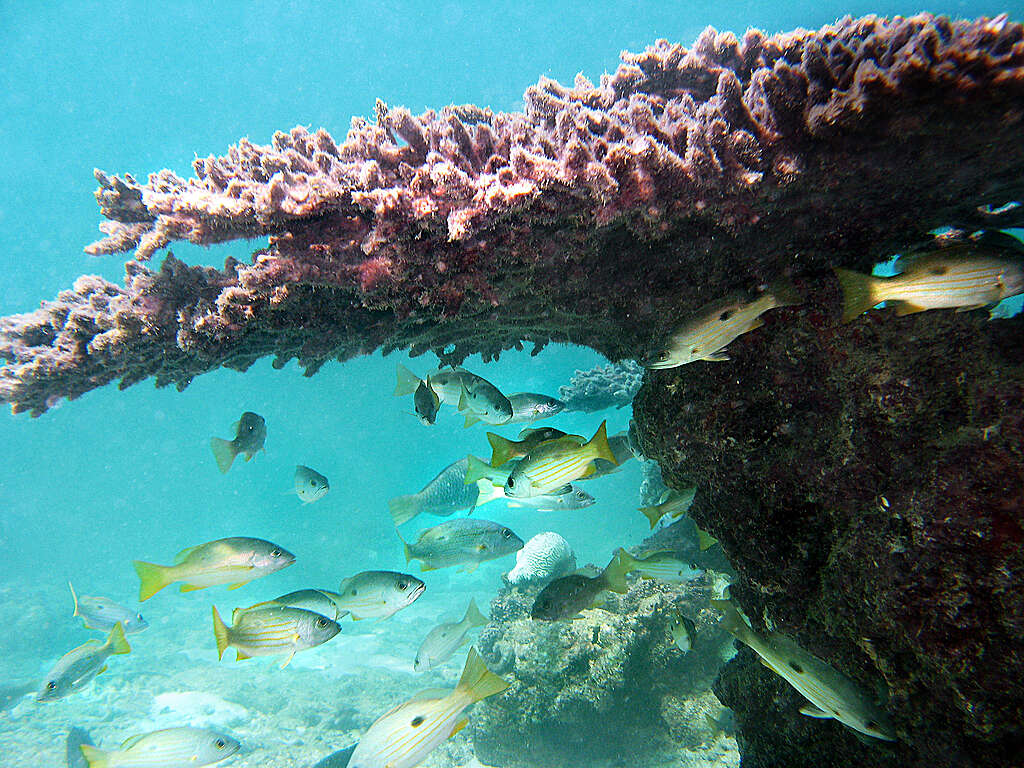
Even in peacetime, these ecosystems are exposed to extreme natural conditions and significant human pressures from shipping, oil extraction, seawater desalination, and coastal development.
Greenpeace data experts used software from the Norwegian Meteorological Institute to calculate which regions of the Persian Gulf would be particularly threatened by an oil spill. The simulations assumed a spill of 50,000 tonnes of oil, as in tanker accidents often only part of the cargo enters the water. The locations of the simulated oil spills were based on the current positions of five tankers as well as historical weather and current data.
Peace, not war
An oil spill would have devastating consequences for people, animals, and plants in the region. Our simulations show how an oil slick could spread if one of the stranded tankers were damaged in an attack.
Everyone deserves to live in peace. Nobody wants war. At a time when the world must urgently unite, further violence only divides and destroys. Together we must rise up for peace.
We must also ramp up pressure on our governments to urgently shift away from fossil fuels towards distributed renewable energy systems where the risks of conflict are reduced rather than amplified.
Nina Noelle is a crisis communications and international relations manager for Greenpeace Germany