
Greenpeace live blog coverage of COP31
The world’s governments are gathering in Antalya, Türkiye for the annual UN climate change conference COP31, coming at a time of profound geopolitical challenges and climate instability, but also opportunities for change in a just transition away from fossil fuels.
COP31 will be held from 9-20 November 2026 and Greenpeace will be covering the conference with a live blog, bringing you regular updates and insights. Check back here for rolling updates throughout the coming two weeks.
This live blog is now closed. Read all the updates below:
COP31 paralysis ends with no deal as fossil fuels, finance fight highlight divisions
November 22, 2026
The UN climate summit COP31 has ended without a hoped-for final deal to inject the required urgency to phase-out fossil fuels, just months after the UN declared the world will overshoot 1.5°C.
As COP31 ran deep into overtime, a third draft cover decision text was presented to parties acknowledging 1.5°C overshoot would occur, but failed to name fossil fuels as the culprit of climate change. Instead, dangerous smokescreens such as gigatonne capacity carbon capture utilisation and storage (CCUS) were added to the text that would only prolong the lifeline of the fossil fuel industry.
Several negotiating blocs and parties, such as the EU, Panama, the Marshall Islands and Norway formally rejected the COP31 cover decision text during the closing plenary and the cover decision text was not adopted due to a lack of consensus.
Jasper Inventor, Head of COP31 Greenpeace delegation said: “We came to COP31 to end fossil fuels, not promote them and extend their lifeline. It’s bitterly disappointing to leave without a clear outcome or a credible pathway to end fossil fuels. We stopped a bad deal that favours fossil fuels, but leaving without a deal is still a failure for communities on the climate frontlines. As always, it is the world’s most vulnerable communities who bear the consequences of this failure. We’ve run out of time to avoid overshoot, but we can still keep 1.5°C alive.
We’ll continue to fight for a just transition for a renewable future, both here at COP and beyond. But if COPs can’t deliver action, then perhaps it’s time to change the process.
“This is a battle for our future and there is hope. We saw some governments fighting for ambition and launching roadmaps away from fossil fuels. But we also saw the fossil fuel producers try to dilute ambition and scrub fossil fuels from the final outcome. That obstruction is unacceptable. We’ll continue to fight for a just transition for a renewable future, both here at COP and beyond. But if COPs can’t deliver action, then perhaps it’s time to change the process.
“Declaring climate finance ‘dead in the water’ before COP31 even began, the EU poisoned the trust needed for a stronger outcome. The final stand-off over fossil fuels should not paper over the monumental breach of faith that kickstarted it all. Developed countries need to look in the mirror, honour their climate finance obligations and hold the oil and gas companies to account. It is time to make polluters pay for the climate damages they cause,” he added.
Read the press release for more reactions from the Greenpeace delegation.
History is watching: COP31 must deliver on ending fossil fuels to keep humanity and 1.5°C alive
November 20, 2026
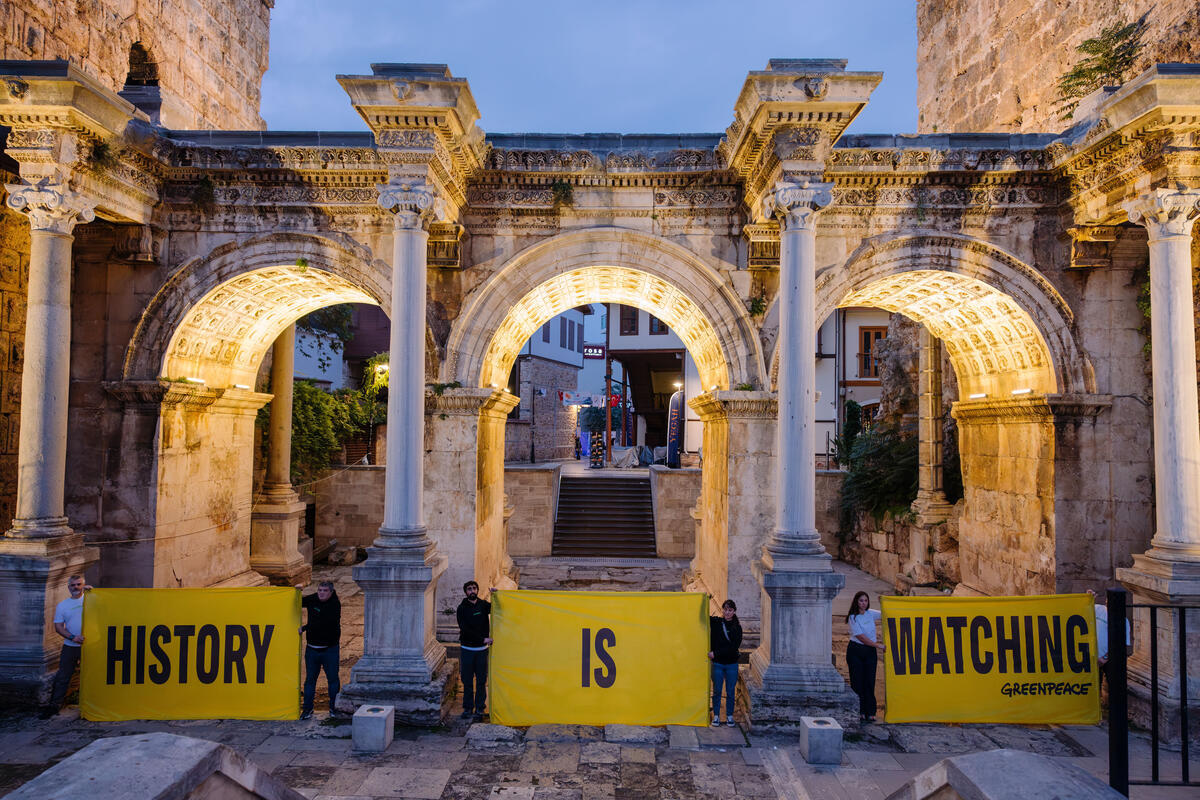
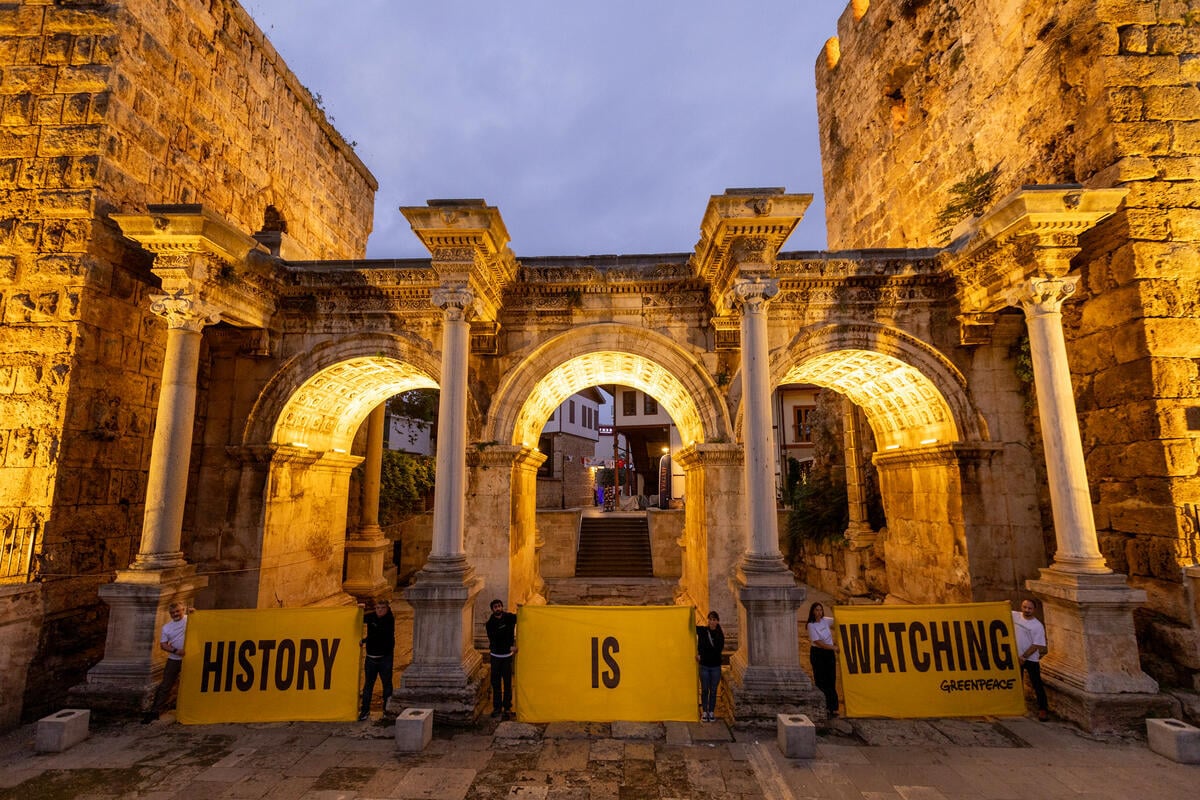
Greenpeace Türkiye activists displayed three banners under the arches of the 1,900- year-old Hadrian’s Gate, one of Antalya’s iconic historical sites, urging COP31 to take action to end fossil fuels. The banners read: ‘History Is Watching’ as COP31 will be judged by the actions taken to keep 1.5°C alive.
Built in 130 CE, the gate acts as the primary and only remaining historical entrance into Kaleiçi, Antalya’s historic old town, bridging the ancient Mediterranean world with the modern city.
The activity took place as COP31 entered its official final day and as Greenpeace urged delegates at COP31 to work towards a final outcome of the UN conference that accelerates the transition away from fossil fuels and provides hope that climate finance will start to flow to developing nations.
Berk Butan, Social and Economic Systems Campaigner, Greenpeace Türkiye said: “In the final days of COP31, we cannot settle for weak compromises that dodge a fossil fuel phase-out, sneak in false solutions like carbon capture and reduce climate finance to empty promises. Antalya must deliver a fair, ambitious outcome that keeps 1.5°C alive, backed by real, debt free funding where polluters pay for the crisis they’ve caused.
“Our action calls on leaders to take historic action today! Future generations and historians will look back at the decisions made in Antalya: it could be a lasting legacy, or a cautionary tale. To leave a credible legacy, the Turkish Presidency must prioritise climate justice and help bridge the divide between wealthy and developing countries. That means putting real climate finance and a just transition at the heart of the final deal. The people are watching, the world is watching, history is watching.”
Beacon of Hope – a symbolic wind turbine at COP31 showcases the renewable energy transition happening on the ground
November 19, 2026
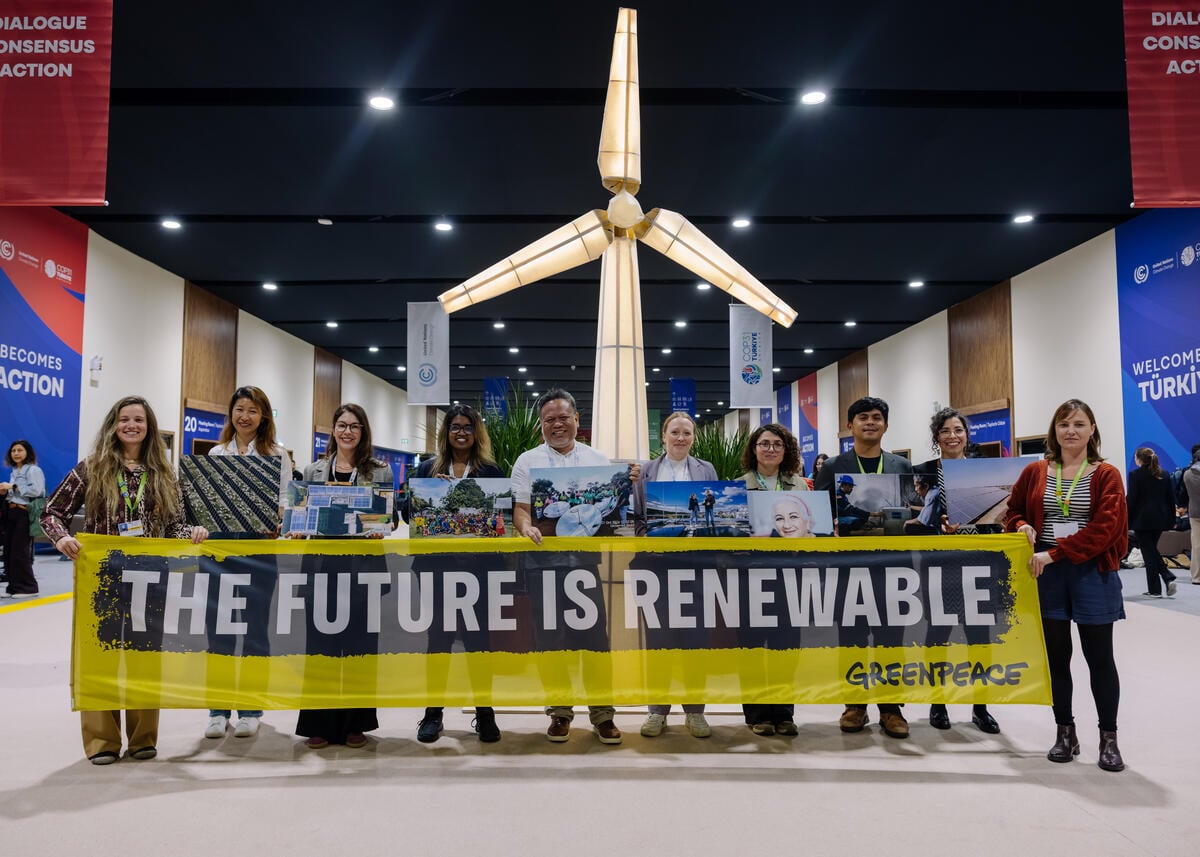
As COP31 approaches an end and negotiations start to heat up, delegates and journalists stopped to watch Greenpeace install a symbolic windmill and present inspiring stories of people-powered renewables from around the world in the official UN ‘Blue Zone’.
To showcase how the renewable energy transition is already happening beyond COP31, after the windmill was constructed and the blades installed, the windmill was lit up with lights and members of Greenpeace’s COP31 delegation stepped forward to share inspiring snapshots of the green energy transition from across the globe.
From geothermal energy used for district heating in Europe, to villagers in Türkiye stopping coal expansion to champion community-owned renewable energy, the momentum is clear. The stories highlighted women-led solar cookers and community Just Transition Centres in South Africa, solar irrigation farms in Egypt, island mini-grids with homegrown solar powering schools and freshwater pumps in Fiji, community rooftop solar in North Jakarta, Indonesia, rooftop panels cutting bills by 75 percent in São Paulo, Brazil and massive desert solar arrays in China restoring grass for grazing sheep.
As speakers lined up beneath the turbine and rolled out a banner that read: ‘The Future is Renewable’, the demand to leaders inside the negotiating halls was crystal clear: it’s time to end fossil fuels and keep 1.5°C alive with renewable energy.
As the COP enters its final days, Greenpeace is calling on governments to ensure the ‘35 x 35’ electrification goal is powered by renewables to displace fossil fuels and limit the extent and duration of the 1.5°C overshoot.
Jasper Inventor, Head of the COP31 Greenpeace Delegation, said: “The hope and inspiration we see on the ground with these people-powered renewable stories should guide negotiators to live up to the responsibility they carry. That means ensuring a COP31 outcome works to accelerate the transition away from fossil fuels, anchored in electrification that ensures renewables displace coal, oil and gas. But negotiators must also bridge the climate finance gap to developing countries to help power the just transition. Either way, the future is renewable!”
Over 100 civil society groups and rights holders at COP31 demand urgent action to save forests by 2030
November 19, 2026
With just four years left to meet the 2030 global forest goals, more than 100 civil society organisations, Indigenous Peoples, local communities and research institutions are warning governments that the window to halt and reverse forest loss is closing fast. Between 2015 and 2025, the world lost an average of 10.9 million hectares of forest every single year, with millions more damaged by degradation.
Earlier in the COP31 summit, Brazil released the COP30 Presidency Forest Roadmap, laying out pathways for national action, international cooperation and finance. Now, rights holders and campaigners are pressing leaders to turn that political momentum into real delivery on the ground.
Signatories of the joint letter say: “Time is running out. With less than four years remaining, the international community is still far from achieving its forest goals”.
In the letter, they urge governments to build an inclusive, multi-stakeholder process through to 2030, anchored by a major international convening in 2027 to drive concrete solutions.
They also stress that any path forward must respect the distinct rights and self-determined representation of Indigenous Peoples, while guaranteeing equal participation for local communities and people of African descent. Protecting forests is central to keeping our climate safe and COP31 cannot afford to let existing promises stall. The political momentum achieved under Brazil’s COP30 Presidency must be sustained and translated into action over the coming years.
Beyond private capital: reclaiming public climate finance on the road to COP32 in Addis
November 17, 2026
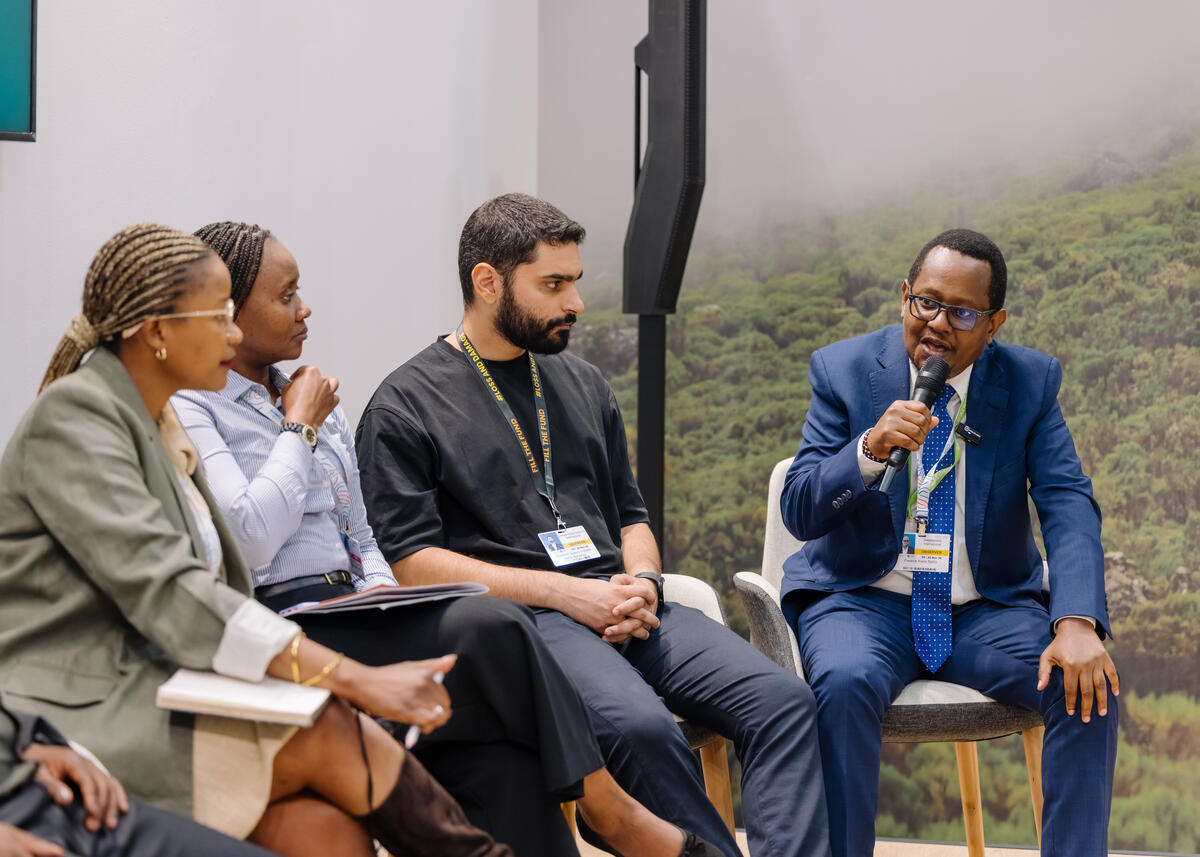
Speakers at the Ethiopian COP32 Pavilion side event hosted by Greenpeace Africa, Power Shift Africa, Tax Justice Network – Africa and CARE International emphasized that international public climate finance is a legally binding obligation under Article 9.1 of the Paris Agreement and a vital tool for social and economic justice.
Because adaptation is a public good centered on human survival rather than commercial profit, essential resilience measures like early-warning systems, coastal defences and rural water infrastructure cannot be outsourced to private markets.
When delivered as predictable grants directly to national institutions and frontline communities, public climate finance yields an estimated US $12 in broader economic and social benefits for every dollar invested, strengthening healthcare, food systems, and decent green jobs.
Despite these proven returns, funding falls drastically short of global needs. Referencing the UNEP Adaptation Gap Report 2026, speakers noted that international public adaptation finance rose by just $1 billion to roughly US $28–32 billion annually, covering less than a tenth of the US $305 billion developing countries will need each year by 2035.
Smallholder farmers, who produce roughly 35 % of the world’s food, receive a mere 0.8 % of tracked climate finance. Attempting to bridge this shortfall by privatising adaptation through commercial loans or market-rate insurance unfairly shifts financial risk onto those least responsible for the climate crisis, turning a basic human right into a debt trap.
Meanwhile, an unfair global economic and tax order forces African countries to self-finance their adaptation, mitigation and loss and damage by diverting scarce funds away from schools, hospitals, and public infrastructure, with adaptation accounting for just 21 % of tracked finance on the continent.
Tax dodging and profit shifting continue to strip governments of vital domestic revenue, an injustice currently driving negotiations for a UN Framework Convention on International Tax Cooperation, while predatory sovereign debt servicing, inflated borrowing costs, and unilateral trade barriers further drain national wealth.
Reforming the international financial, tax, monetary, and trade architecture through debt cancellation, equitable global tax governance, reallocated Special Drawing Rights, and fair trade rules is essential to course-correcting these systemic inequities and restoring African nations’ fiscal sovereignty.
In straightforward terms, vulnerability and profit cannot be in the same sentence. For Africa, achieving climate finance remains a survival issue and not an investment for profits and losses. When we prioritise debt-based finance over grants in the current regime, profit prevails over people. We call on leaders to reclaim the spirit of Article 9.1 and provide financial relief to the communities that need it most, without punishing repayment obligations that further injustice.
The realities of 1.5°C for Pacific nations: Greenpeace photo exhibition launch
November 17, 2026
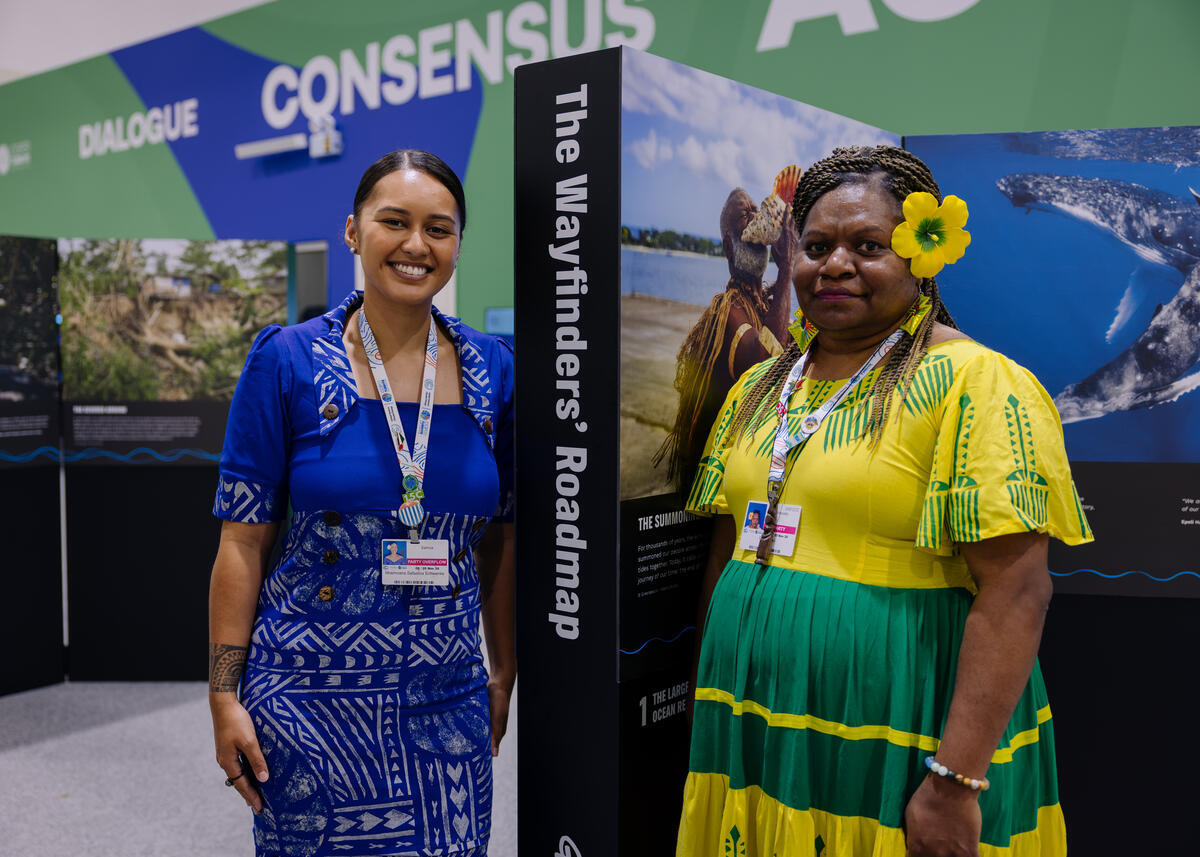
Greenpeace Australia Pacific launched our Pacific photo exhibition, The Wayfinders’ Roadmap — a walk through the Pacific as a living community on the frontlines of the climate crisis.
Given the heated talks taking place in Week 2 of COP31 over the science of 1.5°C (the temperature limit agreed under the landmark Paris climate agreement in 2015) and the urgent need for clear, concrete roadmaps away from fossil fuels, the exhibition is a timely call to action for leaders and negotiators here in Antalya – and a reminder of why we must fight to keep 1.5°C alive and limit any overshoot.
The grey rooms of COP talks can often feel completely disconnected from the realities facing communities around the world experiencing accelerating climate disasters like floods and heatwaves and skyrocketing cost of living or ‘fossilflation’ driven by the war on Iran and resulting global energy shock.
But for Pacific communities every fraction of a degree of warming means more irreversible harm, coastlines and cultures eroded, and ecosystems that have sustained communities for generations being lost. 1.5°C is not just a number; it’s a non-negotiable survival line for Pacific people and climate-vulnerable communities all around the world.
Speaking at the opening, Moemoana Schwenke, Climate Campaigner at Greenpeace Australia Pacific said: “Our Wayfinders Roadmap exhibition shows not only images of climate impacts, but also the ancestral stories, the love, the history and the importance of protecting our homelands. The greatest threat we face in the Pacific is climate change. We hope these photos are not just showing what’s at stake and what is lost from the climate crisis, but also Pacific resilience and leadership on the global stage.”
Also at the opening, Flora Vano, Country Manager at ActionAid Vanuatu, said: “In the Pacific, identity is something we cherish and our culture is what we pass onto our younger generations. The climate crisis is threatening our identities, destroying livelihoods, increasing food insecurity, and making it harder to access clean and safe water – especially for women. 1.5°C means survival. The more the temperature goes up, it deepens inequality in our homes and our communities. 1.5°C has to be the red line.”
From impacts to global leadership and resilience, the exhibition shows why we must work collectively and with courage to transition away from fossil fuels and keep 1.5°C as the guiding star.
At COP31 and need a break from the chaos? Visit the Wayfinders Roadmap exhibition in the Blue Zone, Area C2
Greenpeace MENA challenges the economics of fossil fuel expansion at COP31
November 17, 2026

Can countries that have built their economies on oil and gas secure their financial future without expanding fossil fuel production? At a COP31 press conference, Dr. Hanen Keskes, Lead Political Campaigner at Greenpeace Middle East and North Africa (MENA) presented new research that challenges the assumption that fossil fuel expansion remains the safest path to economic prosperity.
For decades, oil and gas revenues have funded public services, infrastructure and development in countries such as Saudi Arabia and the United Arab Emirates. Moving away from this dependence raises concerns about economic stability and the right to development.
The new report, Rethinking Long-Term Economic Development: Comparative Pathways for Saudi Arabia and the United Arab Emirates, finds that by 2040, a faster energy transition delivers a stronger annual fiscal balance than continued fossil fuel expansion in six of seven scenarios tested in both countries. By 2050, that advantage extends to all seven scenarios.
These findings are based on economic modelling, not predictions, and their outcomes depend on early investment in renewables and infrastructure, meaningful diversification of government revenues, and careful management of public spending.
The findings reinforce the importance of a just transition grounded in common but differentiated responsibilities (CBDR). Developed countries, bearing the greatest historical responsibility for emissions, must lead in transitioning away from fossil fuels and fulfil their climate finance commitments.
Greenpeace to COP31 delegates: Don’t fall for fossil fuels
November 16, 2026
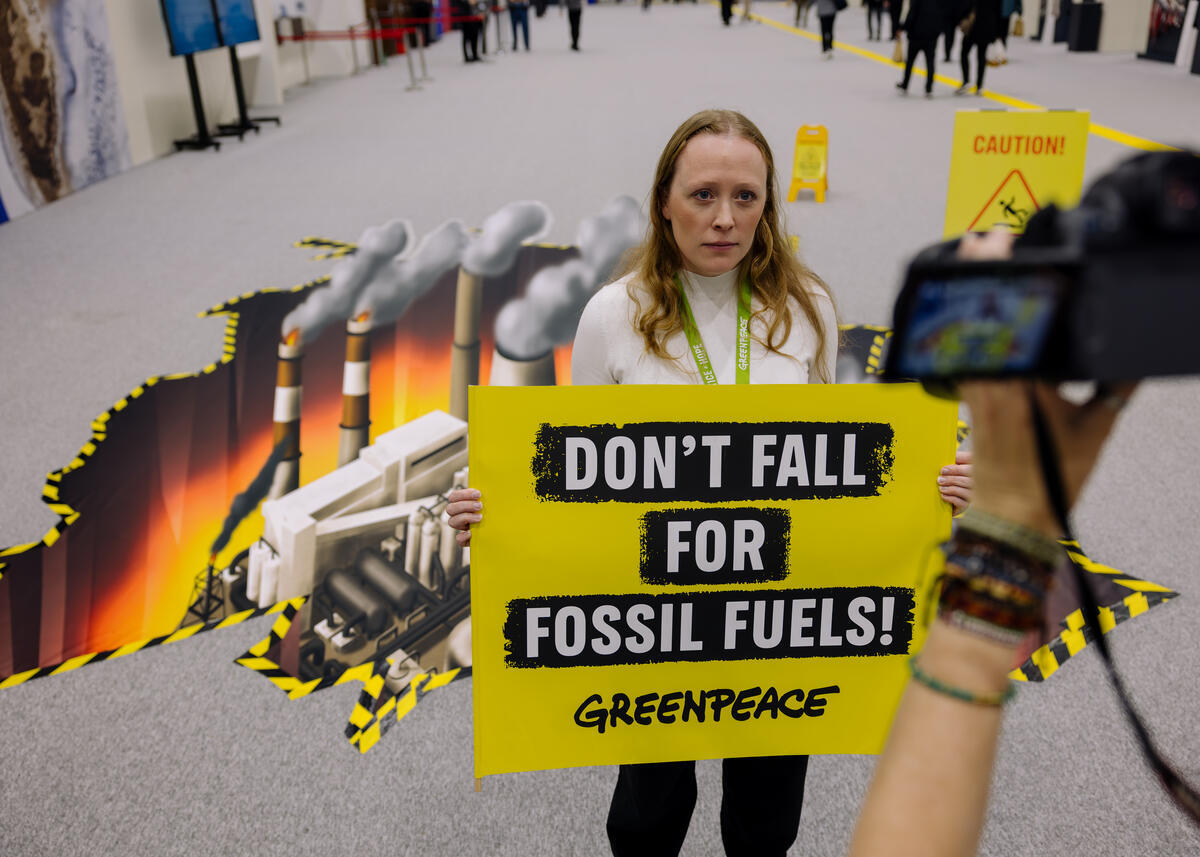
Walking through the COP31 venue in Antalya today, delegates and ministers had to watch their step as Greenpeace International rolled out a giant 3D floor graphic across one of the main walkways, creating an optical illusion of a deep, cracked pit with a fossil fuel power plant at the bottom.
Passers-by instinctively had to step around the edge to avoid falling in. That physical reaction is the core message to governments about the need to stop falling into the trap of expensive, volatile oil, gas and coal, and instead back a fast, fair and funded shift to homegrown renewables.
Jasmin Dureggel, Political Lead for Global Gas at Greenpeace International, said: “When delegates physically step around this installation, we want to remind them to stop falling for fossil fuels. Continuing the fossil fuel industry is a trap that allows oil and gas companies to keep cashing in on huge profits while billions of people suffer.
“Across the world, 76% of people are worried about energy costs, over half of households are struggling to pay their bills, and millions are suffering from worsening extreme weather impacts caused by climate change. Governments at COP31 must stop rewarding crises, establish permanent polluter taxes and invest in cheap, decentralised renewables.”
Despite record growth in renewable energy, global fossil fuel production and consumption are still rising, pushing emissions to dangerous new highs. Relying on fossil fuels locks us into volatility and insecurity, harms public health and fuels deadly extreme weather as global temperatures continue to rise.
Thousands of people march for climate justice at COP31 in Antalya
November 14, 2026
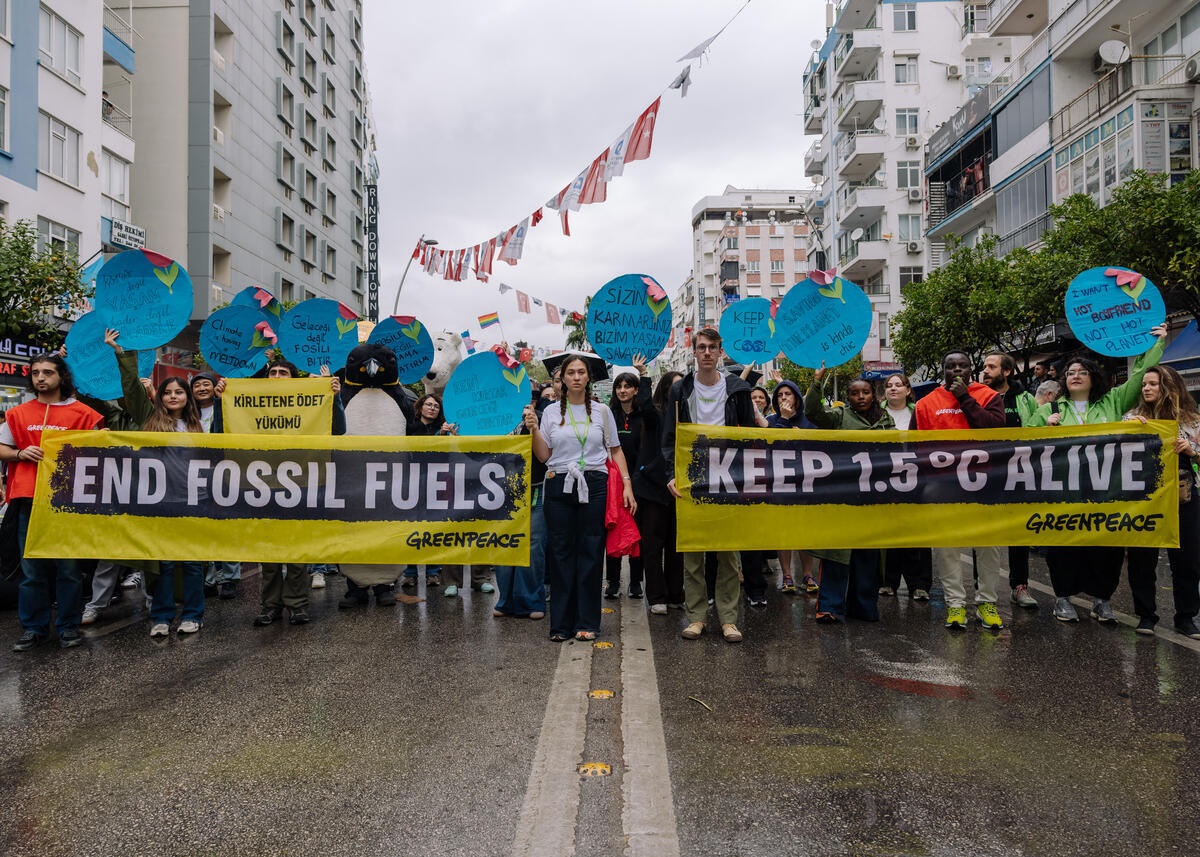
As the first week of COP31 came to a close, the People’s Climate Summit opened with a public rally in Antalya on the November 14 Global Day of Action.
At the ‘We Defend Life’ rally held in Antalya, an estimated 10,000 people made up of civil society organisations and activists from Türkiye and around the world raised their voices for climate justice.
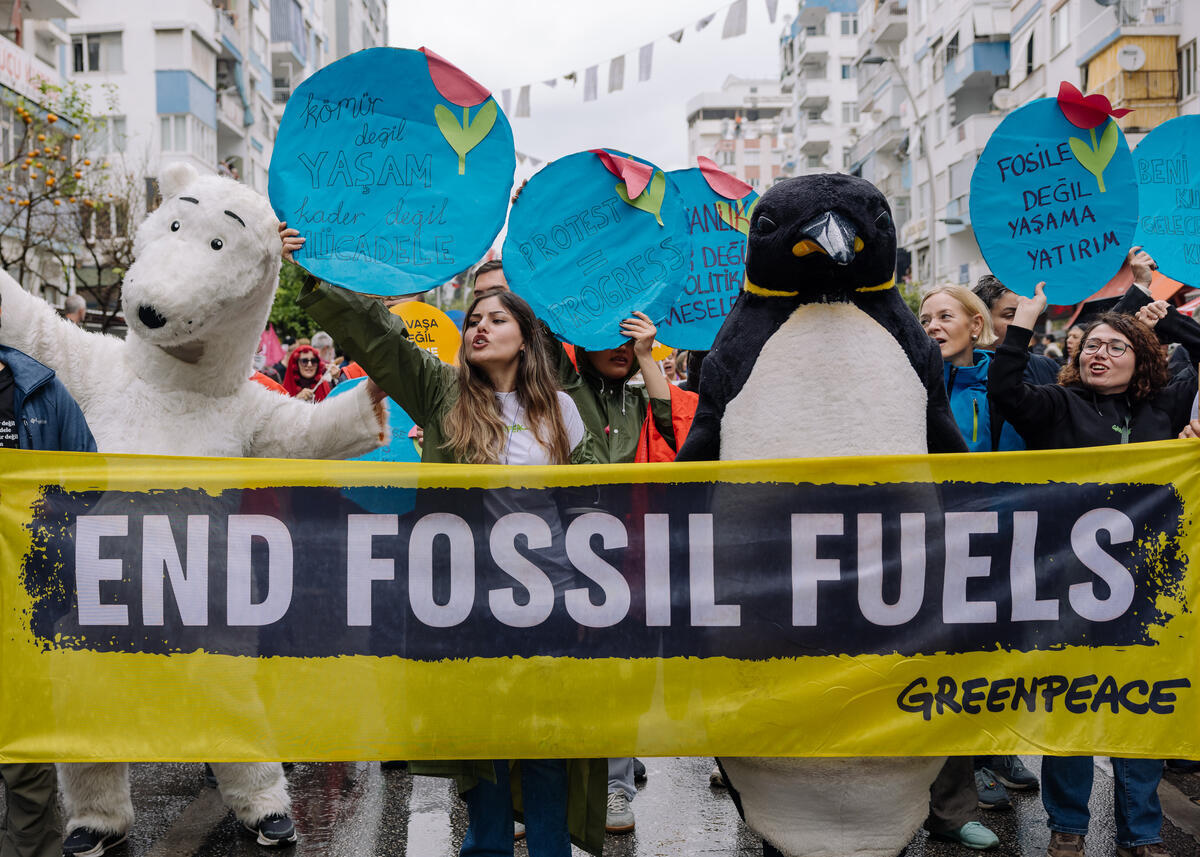
Greenpeace also joined the demonstration with a banner reading ‘End fossil fuels’ and ‘Keep 1.5°C alive’. Alongside activists in polar bear and penguin costumes, there was an impressive thermometer model decorated with tulips to urge COP31 to protect the Paris Agreement climate warming limit.
Messages such as ‘Saving the planet is kinda chic’, ‘End fossils, not the future,’ ‘I want a hot boyfriend, not a hot planet’ and ‘Invest in life, not fossil fuels’ were seen throughout the march. Slogans such as ‘People, power’ and ‘What do we want? Climate justice! When do we want it? Now!’ were repeatedly chanted.
The People’s Climate Summit will bring together activists and communities affected by the climate crisis on November 15-18.
Greenpeace Türkiye’s exhibition ‘Not Fate but Resistance, Not Coal but Life, made up of works produced in embroidering photographs workshops with women in regions affected by coal power plants, along with a video work on its coal-water research, will also be featured at the summit.
Climate movement honours UN Secretary-General António Guterres at his final COP
November 14, 2026
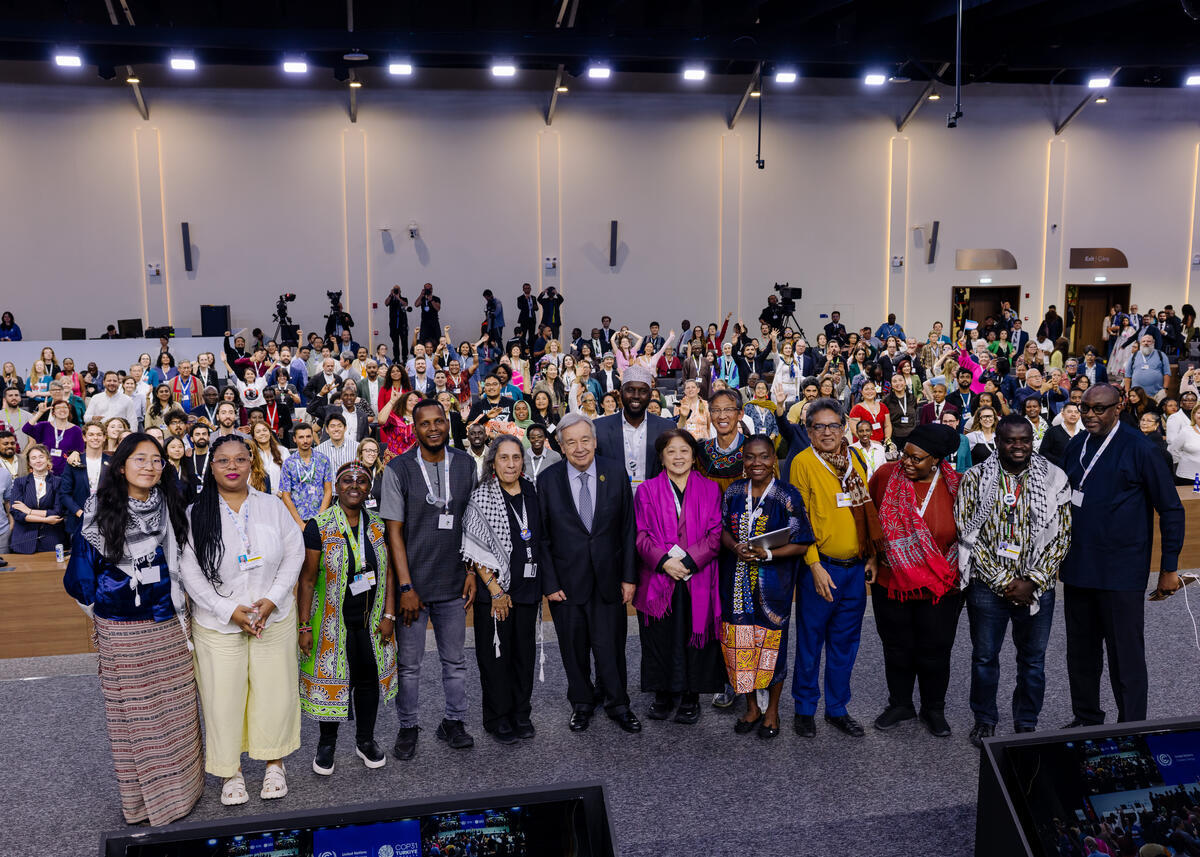
Around 800 civil society and climate activists joined the UN Secretary-General António Guterres in Antalya at his final UN climate summit in office. The event gathered a vast group of civil society advocates to honour Guterres’ long-standing support for climate justice, civil society participation and urgent action on fossil fuels and to look at how movements can carry that work forward after he soon leaves office.
Convened by the civil society and rights-holder constituencies in the UNFCCC, the event brought together Indigenous Peoples, youth, women and gender groups, trade unions, environmental organisations, small farmers and fisherfolks, Afro-descendant communities and disability rights groups.
During the event, the Make Polluters Pay coalition, including Greenpeace International, presented Guterres with a symbolic trophy to thank him for his strong leadership on the climate crisis and his continuous efforts to hold polluters accountable.
Jasper Inventor, Head of Greenpeace COP31 Delegation said: “COP after COP, António Guterres has stood before world leaders to deliver the unvarnished truth – not just on the scale of the climate emergency, but on how to solve it. If governments had listened to him from the start, we would have avoided years of devastating delay. The tribute that matters now is for leaders to stop applauding his speeches and start acting on them, by making polluters pay and ending fossil fuels.”
‘Not fate, but resistance; not coal, but life’: women stitch a different future beyond coal
November 13, 2026
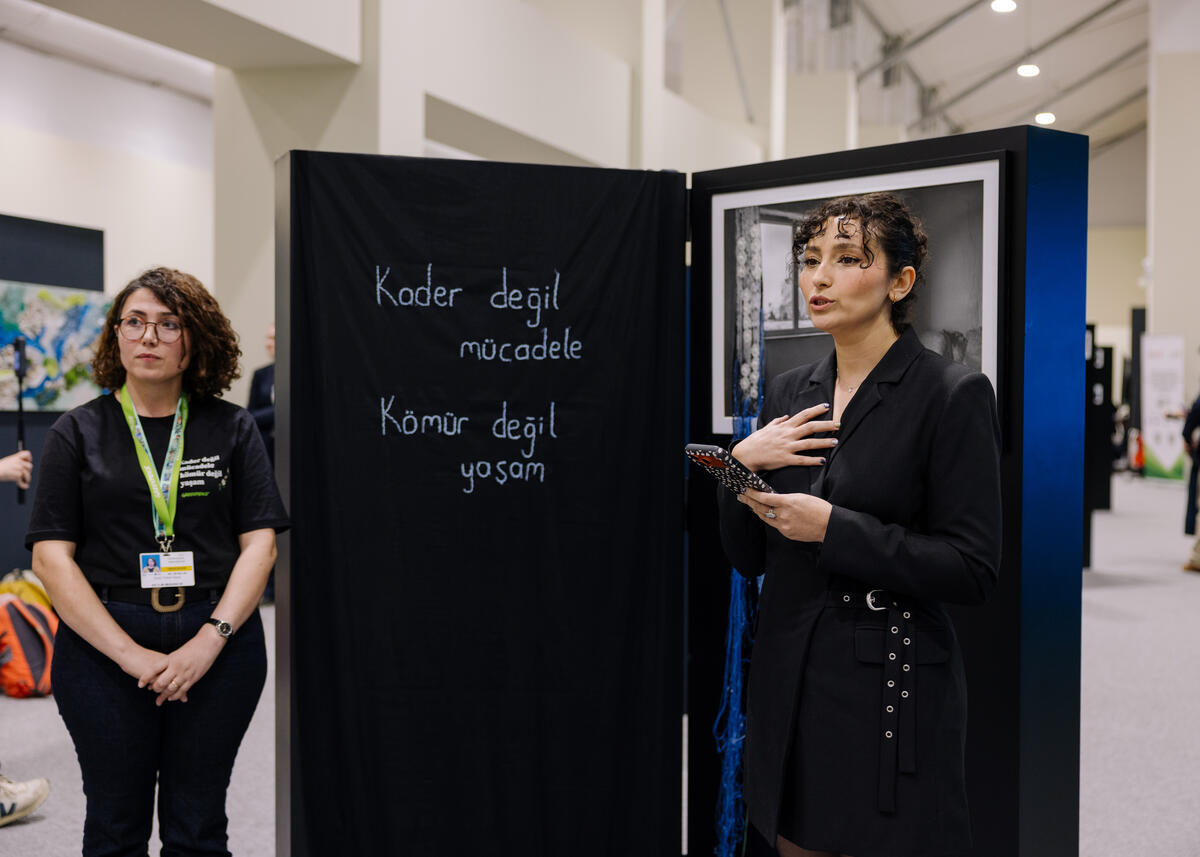
Tales of resistance to fossil fuels from women from communities affected by coal-fired power plants in Türkiye have been brought to life with an exhibition featuring embroidered photos and personal stories from women from communities affected by coal-fired power plants in Türkiye.
Titled ‘Not Fate, but Resistance; Not Coal, but Life’, the exhibition brings together works created during a series of workshops led by artist Damla Sandal, in collaboration with Greenpeace Türkiye, with women from Çanakkale, Zonguldak and Elbistan.
Emel Türker Alpay, Climate and Energy Campaigner at Greenpeace Türkiye, said that women’s resistance to coal continues across every aspect of life in communities affected by coal-fired power plants:
“When we talk about coal, we are often told it is ‘fate’. The failure to put forward plans for a just transition away from coal risks turning it into a legacy passed down from one generation to the next. But women are challenging that narrative. The traditional saying ‘A mother’s fate is passed on to her daughter’ is being rewritten: it is not fate, but resistance that passed from mother to daughter.
“With the world’s eyes on the climate summit, we wanted to bring these stories and demands to COP31. We came together with women and girls in Çanakkale and Elbistan, where plans to expand existing coal-fired power plants are ongoing and in Zonguldak, a city long associated with coal.
During the workshops, participants used embroidery to rework photographs from their personal archives and the Greenpeace archive. As they stitched, they reflected on memories of the past, their struggles today and the future they want to see. The exhibition brings some of these stories into the public eye.
Emel added: “The journey from Çanakkale to Zonguldak, from Elbistan to Antalya, carries a clear demand: a just transition away from coal. Women have embroidered the traces of coal out of these photographs. Now it is COP31’s turn. COP31 must deliver a just transition away from fossil fuels and help erase the traces of coal from our lives.”
Artist Damla Sandal said: “For centuries, women have woven their stories, struggles and experiences through embroidery. Through these workshops, we are transforming this practice into a collective form of public expression. Together with Greenpeace, in Çanakkale, Zonguldak and Elbistan, we shared not only the impacts of coal on everyday life, but also the resistance and victories of these communities. I hope the demands carried from the workshops into this exhibition will be heard and acted upon.”
The exhibition will be on display until the evening of November 16, and will then be shown at the People’s Climate Summit at the Mimar Sinan Congress Center on November 17–19.
Plastic: the Trojan Horse of the fossil fuel industry
November 13, 2026
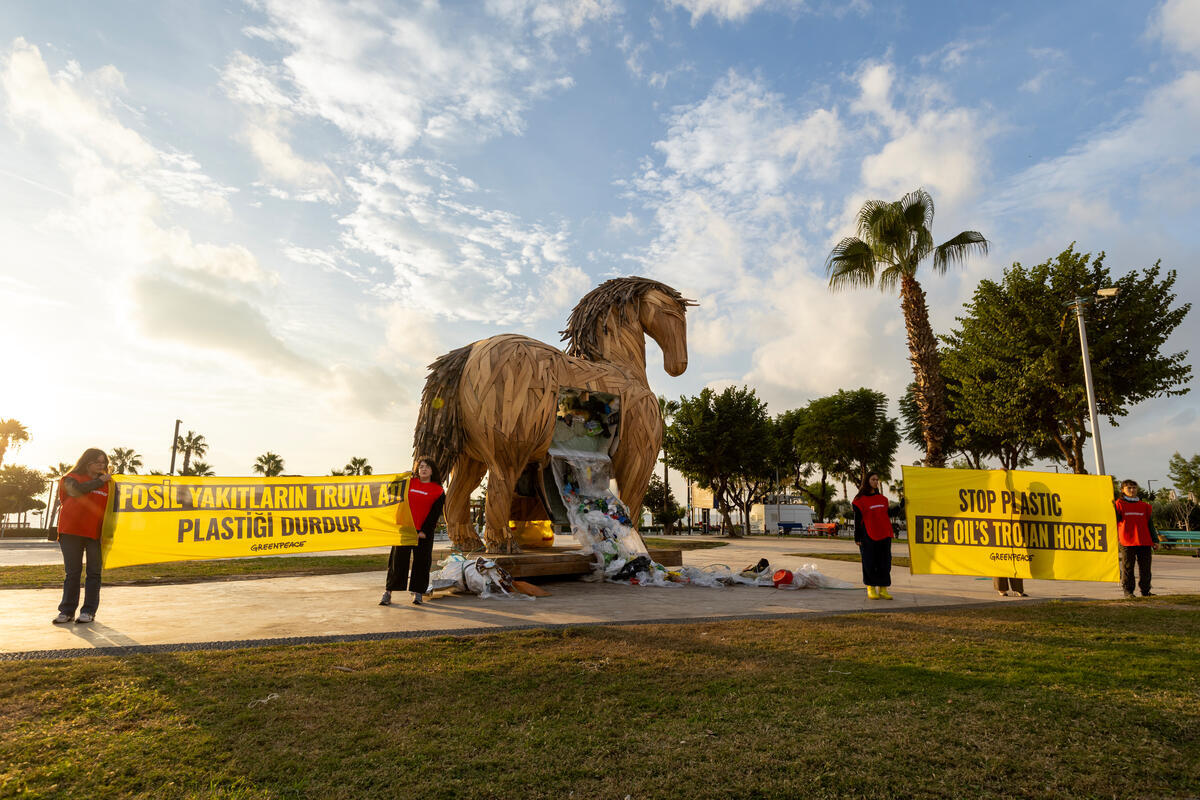
Greenpeace International unveiled a giant Trojan Horse in Konyaalti Municipality, in the heart of host city Antalya, during COP31 to expose how the fossil fuel and petrochemical industries are using plastic production to prolong dependence on oil and gas and protect their profits.
Created in collaboration with Danish artist Thomas Dambo for Greenpeace’s plastics campaign, the installation stands six metres high and four metres wide and poured out plastic when the trapdoor in its belly opened. It carried a message to world leaders gathering for climate negotiations: plastic is the big oil’s Trojan Horse.
The plastics crisis and the climate crisis are two sides of the same coin. Plastic is 99% oil and gas, and the industry wants to produce more to pad and protect their profit. A meaningful climate action must include cutting plastic production, otherwise, a loophole will be available for the oil and gas industries to keep extracting and producing more plastic.
Jacob Kean-Hammerson, Global Plastics Policy Lead at Greenpeace USA, said: “Plastic is Big Oil’s Trojan Horse – a way to keep profiting from fossil fuels and continued climate emissions and pollution. Governments cannot tackle the climate crisis while allowing unchecked plastic production to threaten our communities, our health and our future. At COP31 and the next Global Plastics Treaty negotiations, leaders must stand up to fossil fuel interests and commit to a just transition away from fossil fuels and cutting plastic production.”
Ahead of the Global Plastics Treaty negotiations in March 2027, Greenpeace challenged leaders at COP31 to confront the fossil fuel interests behind plastic through the Trojan Horse installation. A healthy climate depends on cutting plastic production and putting people and the planet before polluters’ profits.
COP31: Stop holding public climate finance hostage. Start delivering ambition
November 13, 2026
At COP31, developing countries have sent a clear message: climate ambition requires climate finance. It’s a clear and simple request but within the UNFCCC negotiations, climate finance has become embroiled in procedural delays and roadblocks.
Although developed countries have obligations to provide public finance under Article 9.1 of the Paris Agreement, they are trying to dilute this responsibility as they instead focus on creating so-called ‘enabling environments’ for investment in developing countries. But this will only create more bureaucratic and debt burdens for developing countries.
What developed countries should do instead is deliver predictable, significantly scaled-up public finance, primarily through grants, to not increase the debts of developing countries and to meet their escalating needs in the face of growing climate change impacts . Currently, developed countries are trying to dodge their responsibilities by using private investors to provide the money they’re obligated to pay.
What this means is that developed countries are holding finance hostage and undermining trust while holding back the ambitious global response the climate crisis demands, including on advancing a just and equitable transition away from fossil fuels. Climate plans cannot protect communities, strengthen food and water security or deliver a just energy transition without resources. Across the Middle East and North Africa, this is a question of people’s lives and livelihoods.
Greenpeace MENA stands with developing countries calling for a climate finance work programme centred on Article 9.1, tripling adaptation finance, and reinforcing developed countries’ requirements to provide high quality, grant-based public finance for mitigation, adaptation and loss and damage to meet, at a minimum, the US $300 billion a year goal by 2035 under the New Collective Quantified Goal for climate finance.
Dr. Hanen Keskes, Political Campaigns Lead at Greenpeace MENA, said:“The provision of public climate finance by developed countries is a commitment under the Paris Agreement, not charity. At COP29, a US $300 billion climate finance goal was agreed and at COP30, countries agreed to triple adaptation finance. But we still have no assurances that developed countries will actually provide grant-based public finance for either of these, or that adaptation finance will meet the scale of needs.
“Developed countries must stop shifting responsibility onto countries already carrying the costs of a crisis they did least to cause. They must deliver the resources they owe, and despite arguments about fiscal space constraints, they can easily unlock new public funds through progressively taxing international fossil fuel corporations. Trust in this process will be rebuilt through money reaching communities, not empty promises and distraction tactics in negotiating rooms.”
Methane is in the spotlight – but livestock remains on the sideline
12 November, 2026
Methane, the second-largest driver of global warming after carbon dioxide and responsible for roughly 0.5°C of the warming experienced today, has flared up in discussions here in Antalya.
The Global Methane Pledge (GMP) Ministerial closed on Wednesday with a new declaration reaffirming the Pledge’s headline goal of cutting emissions 30% by 2030 (compared to a 2020 baseline). That momentum carried into Thursday’s Leaders-level Non-CO₂ GHG Summit, where countries unveiled fresh commitments and financing to slash super-pollutants.
Yet the single largest human-caused source of methane – livestock – is still being sidestepped. Despite vague nods to food and agriculture in the Ministerial Declaration, major agricultural emitters are backing away; so far, the declaration has garnered just seven signatories.
Case in point: COP31 co-host Australia. Bowing to pressure from its domestic farm lobby, the Australian government clarified that it has not endorsed the new declaration, reaffirming that its participation in the broader Global Methane Pledge “is voluntary and non-binding and does not impose a domestic methane target or obligations on Australian farmers.”
It is a textbook example of what Barbados Prime Minister Mia Mottley warned against in the Non-CO₂ GHG Summit, calling on governments to stop treating agricultural methane as a “historic hot potato”.
Sophie Nodzenski, Senior Campaign Strategist at Greenpeace International, said: “It’s time for the UN climate process – following the lead of the UN Secretary-General – to acknowledge the full potential of methane mitigation. Expectations are running high that methane will land in the COP31 cover decision, and rightly so, given how critical cutting it is to limiting temperature overshoot. If leaders are serious about keeping 1.5°C within reach, that final decision must explicitly address all sources of methane – including agriculture.
Hot-take: What makes a good just transition roadmap?
November 11, 2026
Today, Finland launched a roadmap to transition away from fossil fuels. This is the first such plan released at COP31 and we look forward to others following suit, putting even more steam into phasing out oil, gas and coal following France, the Netherlands and Germany, which launched their respective roadmaps earlier this year.
Jehki Härkönen, Campaigner with Greenpeace Finland, reacted to the launch: “Finland’s roadmap has a lot to its credit: in a cold northern country, coal has already left energy production, power is almost entirely fossil-free and most district heating is too. But the roadmap sets a phase out date only for coal in energy production. It has no commitment to end oil or gas use and coal in steelmaking falls outside the ban.
“Meanwhile, heavy logging, including for wood energy, has turned Finland’s land sector from a carbon sink into a net source of emissions. Finland should turn this roadmap into a real plan, with dates to end gas use by 2035 and all fossil fuel use by 2040 while also taking action to reduce logging to a sustainable level.
Beyond the good signal these efforts send to other governments to ramp up their actions to reduce emissions, we should look in detail at what makes a good just transition roadmap to prevent them falling short and miss the opportunity we have. The COP30 Presidency roadmaps initiative presented an alternative last week from Brasilia.
For Greenpeace, good roadmaps have to show a clear plan for national governments to phase in renewables and phase out fossil fuels across all economic sectors, aligning with the country’s fair share of action to keep global heating below 1.5°C and anchored on social justice and accountability. To help guide governments in this journey, Greenpeace will present its technical guidance to assess TAFF roadmaps this week.
Rodrigo Estrada, Greenpeace International focal point for TAFF roadmaps said: “We see just transition roadmaps as navigation charts, showing us which ports we can reach, how to get there, what we will find in the way, and, more importantly, who has to be part of that journey: communities, Indigenous Peoples, workers and all of us struggling to pay our bills today. I trust our technical guidance can allow Greenpeace to move governments from principles in documents into badly needed action to cut emissions.”
Greenpeace Türkiye paragliders say ‘sun and wind are enough for us’
November 9, 2026
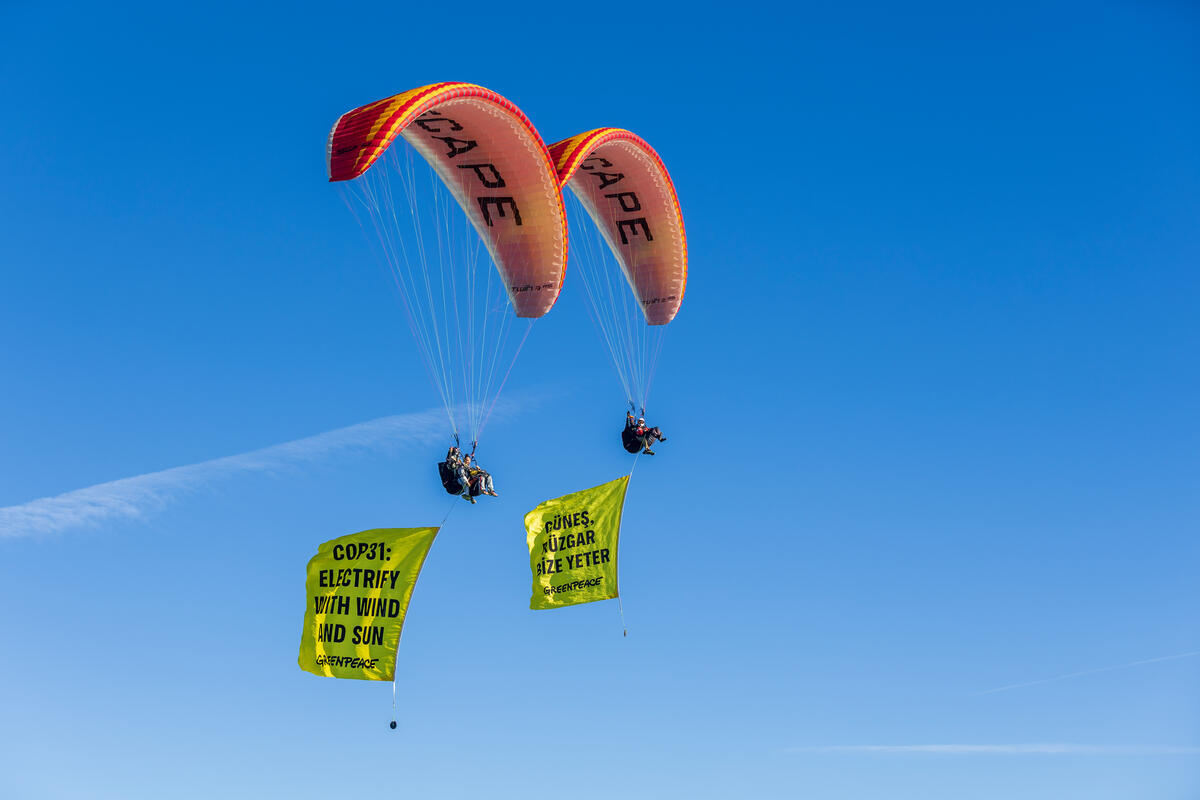
It was a busy first day at the UN climate summit COP31, especially for Greenpeace Türkiye, as it unfurled a banner while paragliding from Lycian mount Olympus over the Antalya coastline. The banner read in Turkish: ‘Sun and wind are enough for us’.
In its role as the COP31 Presidency, Türkiye has launched an electrification pledge aiming to secure an agreement at the UN climate summit to increase electricity’s share of global final energy consumption needs to 35 % by 2035.
But electrification by itself is not the end itself. As Emel Türker Alpay, a Climate and Energy Campaigner at Greenpeace Türkiye says: “If Türkiye wants to really secure a lasting legacy, it needs to ensure that the electrification goal is used to displace fossil fuels with renewable energy”.
This is why the Greenpeace Türkiye paragliders also displayed an English banner saying: COP31: Electricity with Wind and Sun. To keep the 1.5°C global warming limit alive, the only way forward is to end fossil fuels and rapidly expand renewable energy!
‘Choked’: Greenpeace shows how fossil fuels are suffocating our future
November 9, 2026
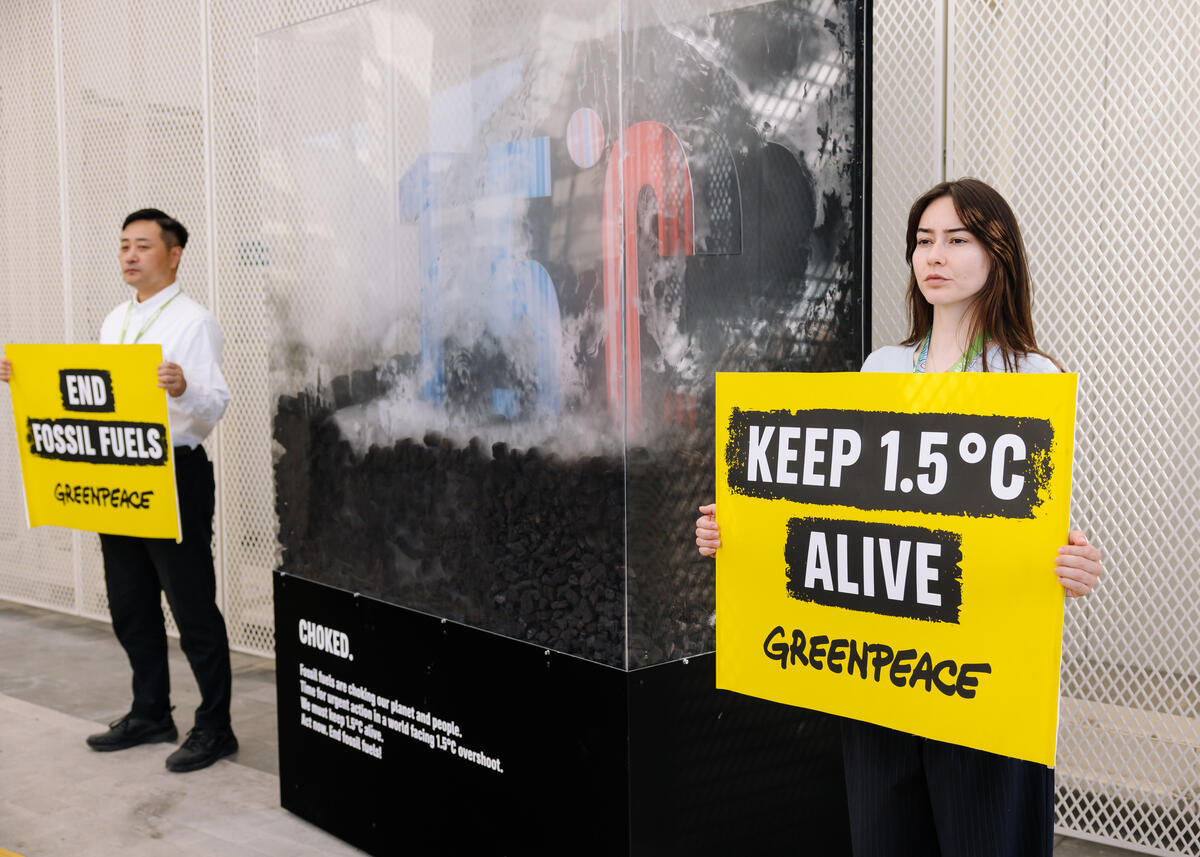
Also on the opening day at COP31, Greenpeace International displayed a 3D visual installation titled ‘Choked’, calling on world leaders to act now and defend the 1.5°C warming limit!
Situated inside the entrance to the UN’s ‘Blue Zone’ – which is the official area of the climate negotiations – the large 3D sculpture showed how 1.5°C (depicted in climate warming stripes) was increasingly being engulfed by fossil fuels.
The display was a talking point at the climate summit and was widely photographed by media and passing delegates as speakers from Greenpeace Türkiye and Greenpeace Australia Pacific spoke of the urgency of action.
They were also joined by Trixy Elle, a co-claimant in the Odette climate change lawsuit against Shell, who spoke about her experiences in the Philippines ahead of the 5th anniversary of Super Typhoon Odette:
“Our political leaders need to be bolder and stronger in standing up to the fossil fuel industry and fighting to prevent every fraction of a degree of global warming. Even 1.5°C is too much. Our lives, livelihoods, cultures and futures depend on action now.”
A call from the Pacific: ‘stop putting our future at risk’
November 9, 2026
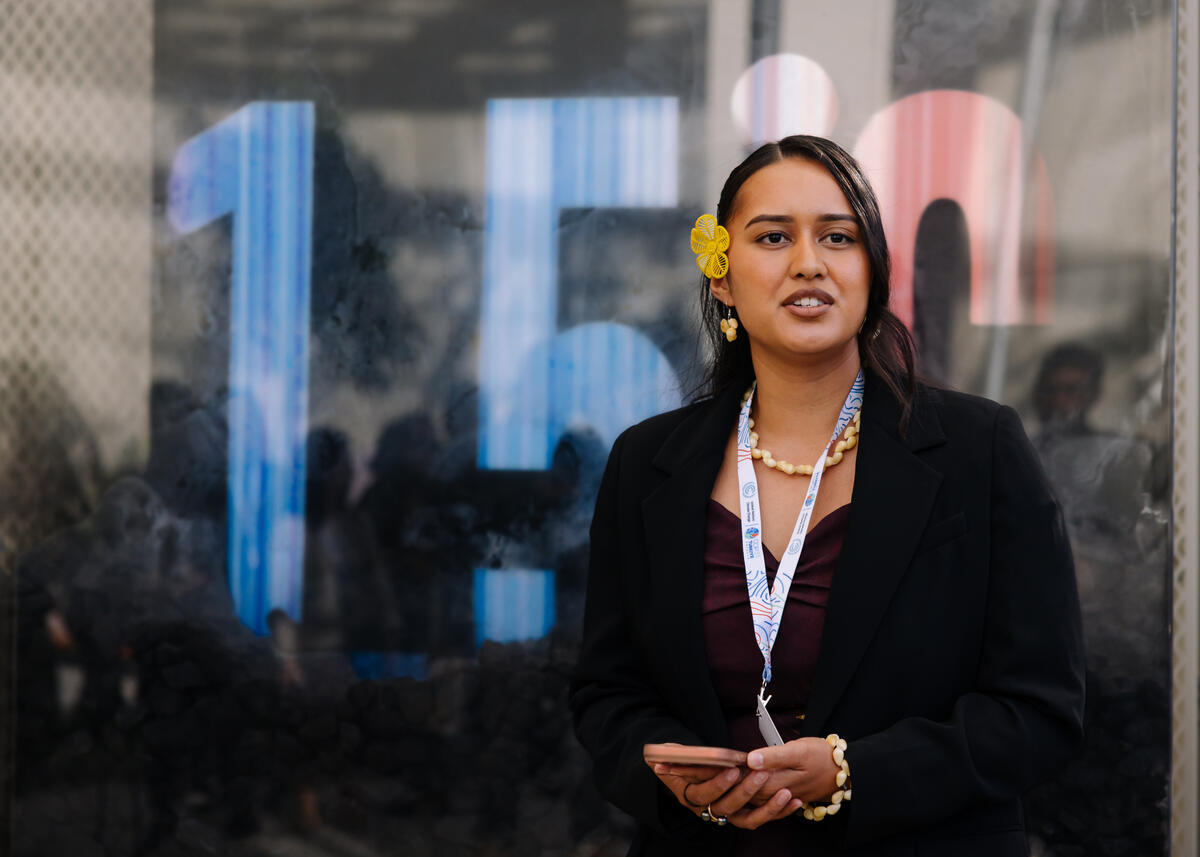
“Talofa lava. My name is Moemoana Schwenke. I am a daughter of Samoa, a Pacific woman, and someone who carries the stories, hopes and responsibilities of our people wherever I go.
“For the Pacific, 1.5°C is quite literally, our survival line. It is about whether our children can grow up knowing the same coastlines their grandparents knew. Whether our families can continue to fish, farm, gather food and practise the traditions and cultures that have sustained us for generations. The very wellbeing of our lands and oceans are connected to the wellbeing of us, our children, our elders.
“It is about our homes, our languages, our sacred places, our graves that hold the bones of our ancestors, our stories and our connection to the ocean. Because when land disappears beneath the sea, we are not simply losing territory. We are losing places that hold our genealogy, our identity and our belonging.
“And some of these losses cannot be measured in dollars. They cannot be rebuilt with a seawall. They cannot be compensated for by relocating a community and calling it adaptation. This is what loss and damage means to Pacific people. It is not a distant possibility. It is already part of our reality.
“The failure to limit warming to 1.5°C is not a failure of Pacific ambition. It is a failure of global responsibility. Every fraction of a degree we allow the world to warm increases the scale of loss and damage our communities will face. And for some of those losses, there is no going back.
“We cannot keep expanding the very industry driving the crisis and expect our communities to carry the consequences. So when you look at 1.5°C, I ask you not to see a target on a page. See our people. See our children. See our ancestors. See everything that makes the Pacific home. We are asking the world to stop putting our future at risk.”
Australia and Türkiye civil society groups keep the heat on COP31 Presidency
November 9, 2026
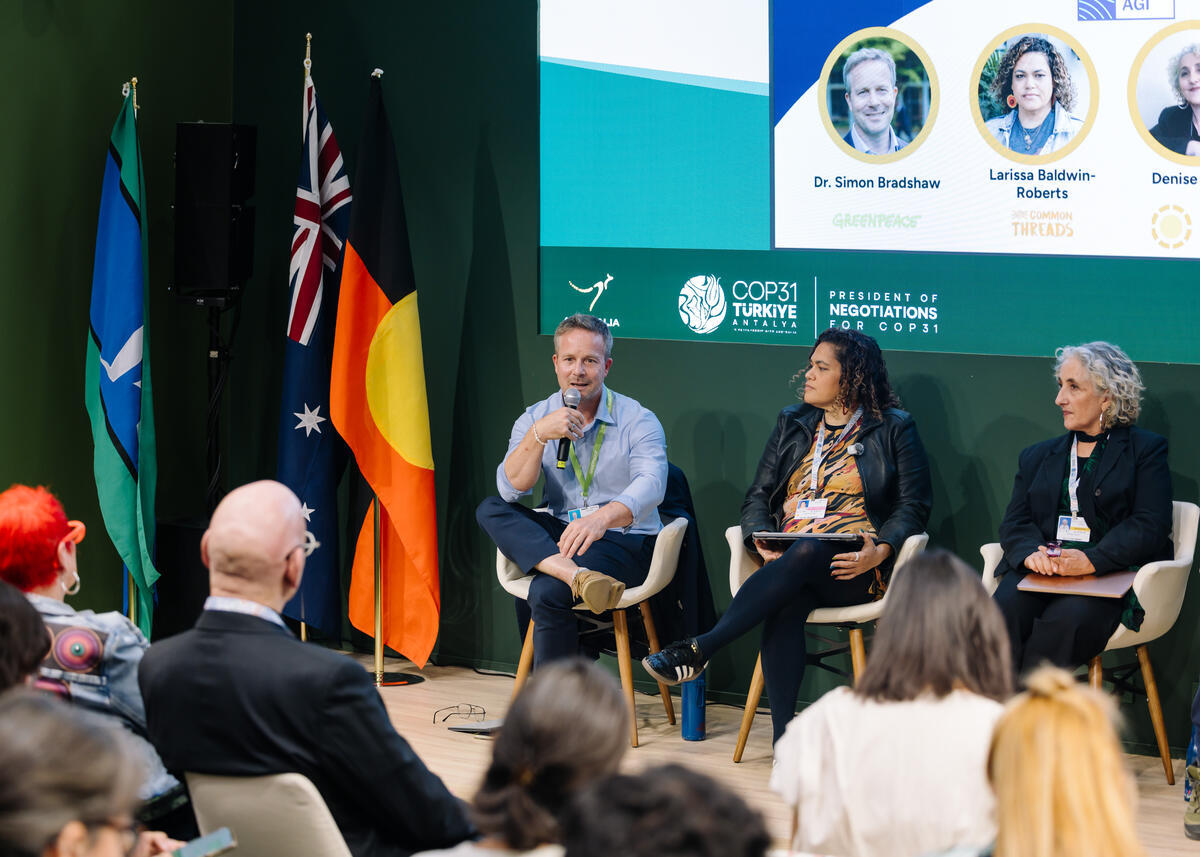
In a joint initiative on day 1 at the UN climate summit COP31, civil society organisations from both Türkiye and Australia came together to launch an urgent call for a global transition away from fossil fuels. The groups urged both countries to demonstrate climate leadership through concrete action at home.
The event at the Australian Pavilion in Antalya was a packed house as civil society outlined their demands in a joint letter signed by almost 100 civil society organisations from Türkiye and Australia addressed to Türkiye’s COP31 President, Murat Kurum, and Australia’s President of Negotiations Chris Bowen.
Speaking at the event, Dr Simon Bradshaw, COP31 lead at Greenpeace Australia Pacific said:
“As a major coal and gas exporter, Australia plays an outsized role in fuelling the climate crisis and has approved 38 new, extended or expanded fossil fuel projects since first elected in 2022. More than half the world’s coal export project pipeline is in Australia, and the Albanese Government is poised to make decisions on massive new gas projects. Australia must reckon with this reality.
“In Türkiye, the Australian government must rise to the occasion and show what true climate leadership looks like — but we can not move the world towards a clean energy future while expanding the industry we need to leave behind.
“Australia can lead by example and help build global momentum through developing a national roadmap away from fossil fuels. It must get fully behind Pacific calls to hold the line on 1.5°C and accelerate the transition away from fossil fuels. With its abundant renewable energy potential, Australia can move beyond fossil fuel exports and play a major role in supporting the energy transition throughout Asia.”
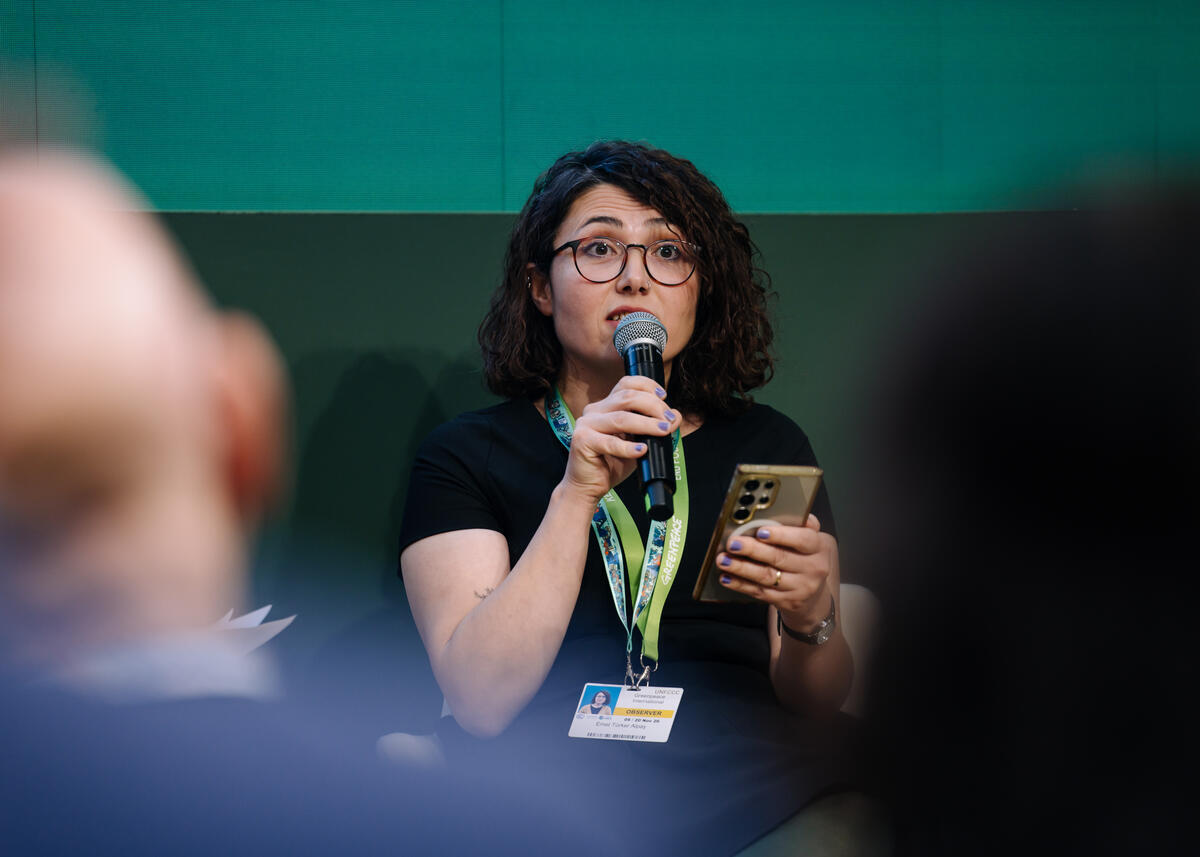
At the same event, Emel Türker Alpay, Climate and Energy Campaigner, Greenpeace Türkiye said: “The question is no longer whether we leave fossil fuels, it is how. And the how has to be addressed for real. That is why we are concerned. Neither Presidency has yet said how it will build on the COP28 and COP30 legacies on moving away from fossil fuels. Instead, the Turkish Presidency has put electrification at the centre: 35 percent by 2035, a voluntary pledge under its Action Agenda, which Australia has signed and is promoting with Türkiye.
“Electrification is necessary. But if it is not tied to moving away from fossil fuels, new demand can simply be met with more coal and more gas. Electrification without a fossil fuel transition and based on renewable energies is half a plan.
“The momentum for change is here. It comes from the doers of Santa Marta, from the COP30 roadmap processes, and from communities all over the world demanding climate justice. COP31 must name the number one cause of this crisis, the burning of coal, oil and gas. It must speed up the COP28 commitment to a just, orderly and equitable transition. And it must deliver real progress on halting and reversing deforestation and ecosystem degradation by 2030.
“What we want from the COP31 Presidencies is political courage: the courage to stop this crisis at its source. We want Türkiye and Australia to act as honest brokers and to say openly that holding warming to 1.5°C cannot go together with new fossil fuel expansion.”
Greenpeace Türkiye displays giant banner calling for 1.5°C action
November 6, 2026
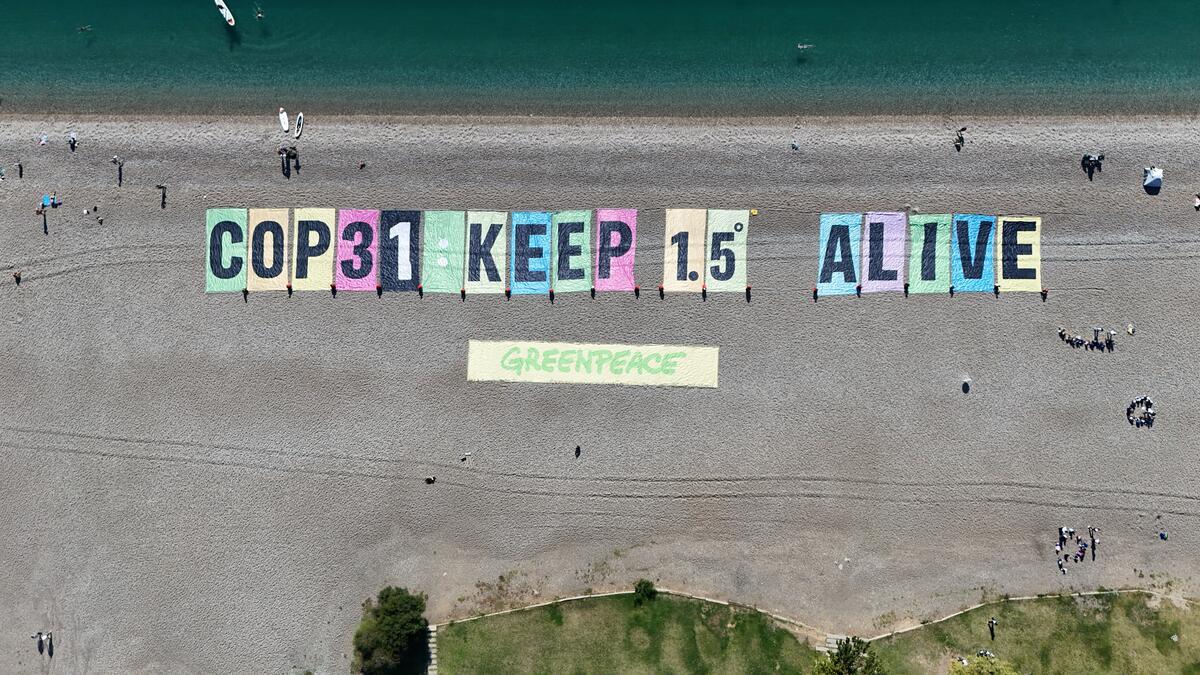
On the eve of COP31, Greenpeace Türkiye activists unveiled a massive banner on the Konyaalti Beach in Antalya, calling on countries to use this year’s climate summit as a moment to make real progress in global efforts to address the escalating climate crisis.
This year’s annual climate summit will be the first since the United Nations Environment Programme (UNEP) declared in a landmark report in September that the world will overshoot the 1.5°C global warming limit set out in the Paris Agreement, likely within the next few years.
It was a heartbreaking moment, the type of news that must finally spark governments into action. Greenpeace is calling on countries meeting in Antalya to respond with the urgency that has been absent for too long. That means ensuring progress towards a fair, fast and funded transition away from fossil fuels and ending forest destruction by 2030, as agreed at COP28.
The Greenpeace Türkiye banner said COP31: KEEP 1.5°C ALIVE and was large enough to be photographed by a passing satellite as a symbol of our planetary plight. It was the first time Greenpeace had used a satellite to take an image of a banner.
The giant banner was photographed by a passing Planet Labs PBC Pelican satellite at 1205 (TRT). The satellite imagery was obtained and processed by Earth observation experts from the Greenpeace International Global Mapping Hub.