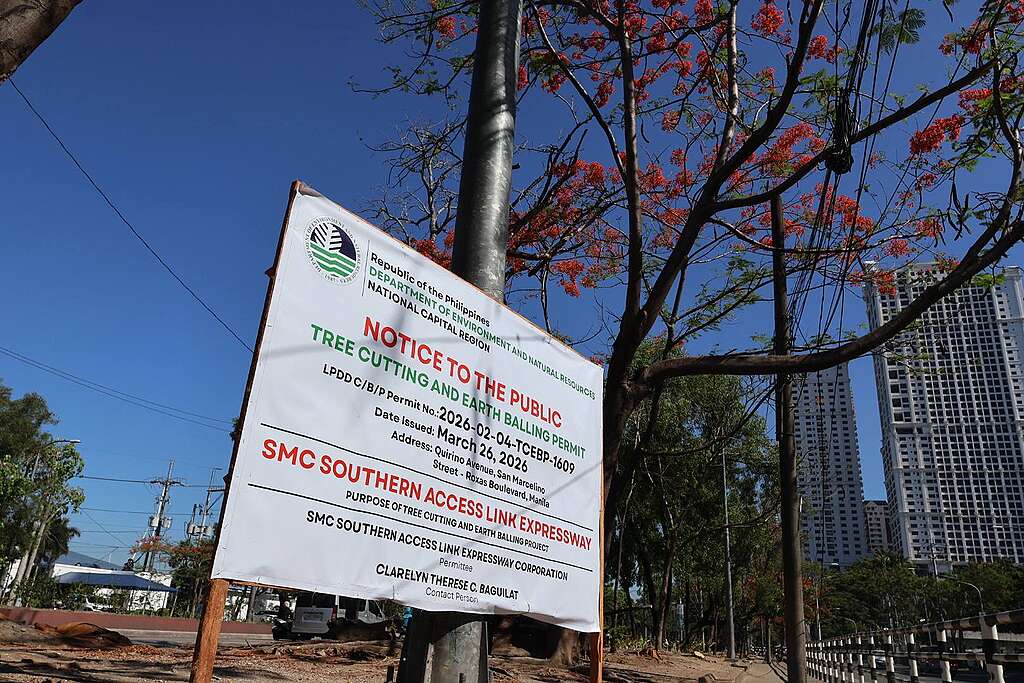
The cutting of mature trees in Manila to give way to the Southern Access Link Expressway (SALEx) forces us to ask a basic but often avoided question: development for whom?
For a long time, development has been shaped by a modernist imagination. Progress is measured by what is new, large, fast, and concrete. A new road becomes a sign of advancement. A new expressway becomes proof that the city is “moving forward.” In this view, trees are seen as obstacles. Old neighborhoods as inefficient spaces. Public resistance as something that delays progress. The future is imagined as something built over the present, even when the present already carries the memory and protection that people need.
This modernist imagination also carries a colonial logic. It treats land as something to be cleared, nature as something to be controlled, and local ways of living as things that must adjust to projects designed in the language of growth. The city is made to look modern by becoming more hostile to the people who actually live in it. What is rooted and familiar is treated as disposable because it does not fit the image of progress inherited from Western and colonial models of development.
The problem with this framework is that it treats economic movement as the main measure of success. If a project promises faster travel, greater connectivity, or higher returns, other concerns are pushed aside. The loss of trees becomes tolerable. The loss of public space becomes acceptable. Cultural memory becomes easy to ignore because it does not fit neatly into cost-benefit calculations. Meanwhile, the everyday lives of people who walk, commute, or work under the sun are treated as secondary to the movement of cars and capital.
But development cannot be reduced to infrastructure. A city does not become developed just because it has more elevated roads. A city becomes livable when people can move safely, breathe clean air, find shade, gather in public spaces, remember their histories, and survive worsening climate impacts. When mature trees are cut in a city already suffering from extreme heat, flooding, air pollution, and shrinking green spaces, the issue, in fact, becomes a development failure.
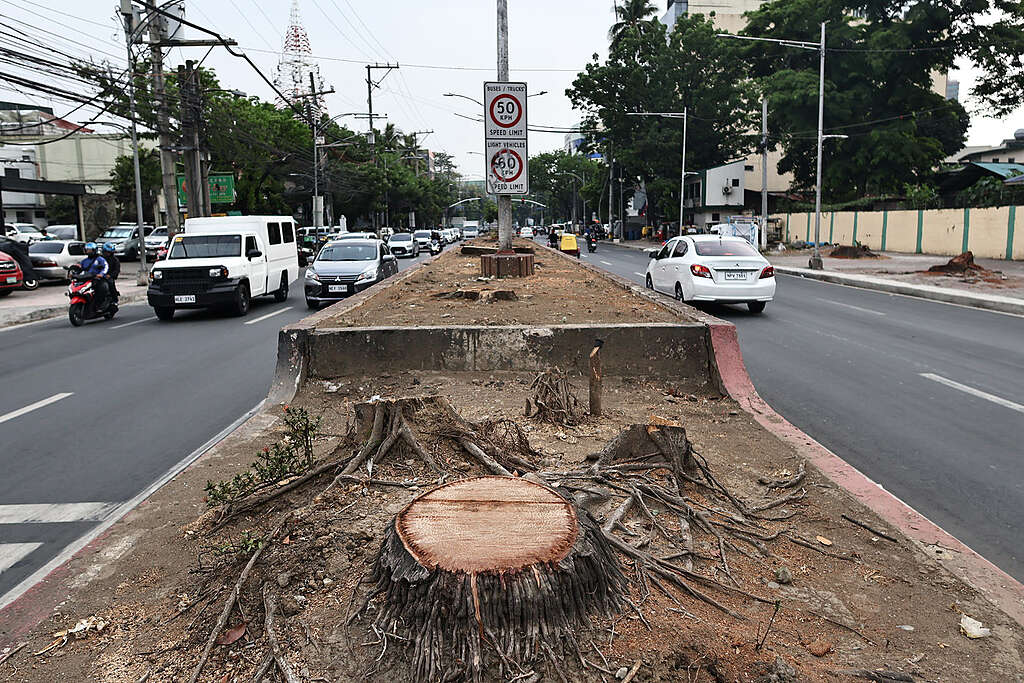
The tree-cutting in Manila also shows how unequal power shapes the meaning of progress. Corporate-led infrastructure can be framed as a public benefit, while its costs are quietly transferred to ordinary Filipinos. Billionaire corporations get to expand their infrastructure footprint. Government agencies get to claim procedural compliance. The city, meanwhile, loses part of its environmental and cultural landscape. Future generations inherit a hotter and less resilient Manila.
Social, cultural, and environmental costs cannot be treated as side notes to economic growth. They are central to whether a project truly serves people. A project that makes a city more vulnerable to heat and flooding should not be celebrated as progress. A project that erases spaces of memory and deepens inequality should be questioned.
The rage over the Quirino Avenue trees is not mere nostalgia. It is a demand to question who benefits when mature trees are sacrificed in the name of development and who is left to live with the consequences. Filipinos know that a city stripped of memory and ecological protection is not moving forward. It is being pushed hundreds of steps back—617 steps back to be exact—in making Manila less livable.
Real development should protect life. Anything less is just destruction with a project name.
###
Eunille Santos is part of the communications team of Greenpeace Philippines. He is currently finishing his master’s degree in development communication at the University of the Philippines Los Baños.