

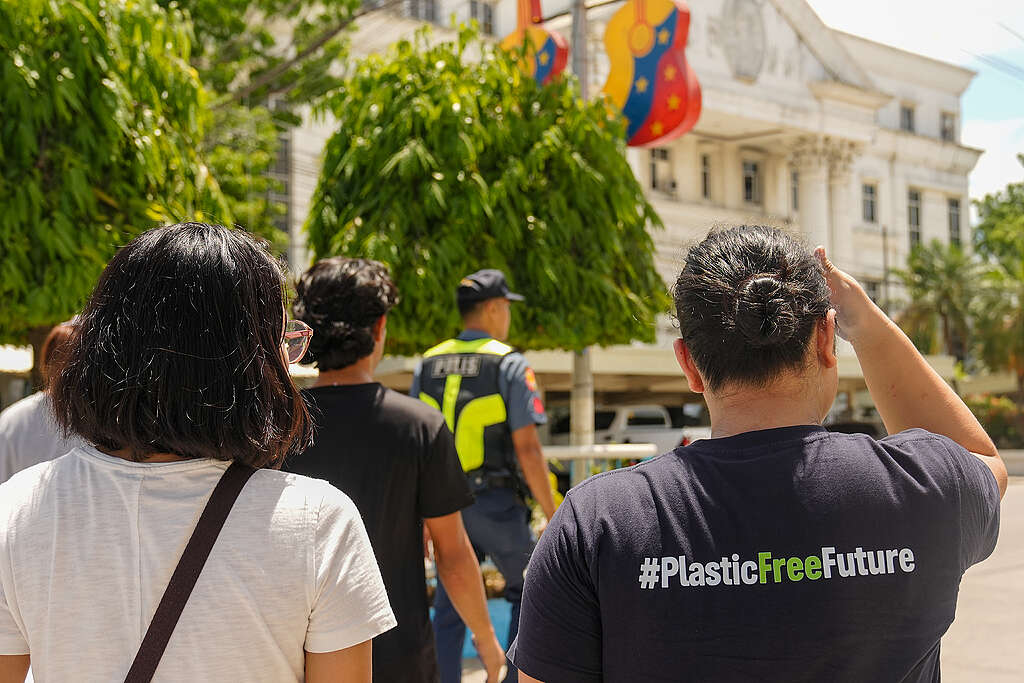
9 May 2026, Lapu-Lapu City, Cebu, Philippines — While ASEAN leaders spoke of sustainability and regional resilience at opening day of the summit, peaceful Greenpeace activists outside the venue calling for solutions and urgent action—hoping to contribute to those same goals—were taken into police custody. The summit is taking place in Cebu, just months after the deadly Binaliw landfill collapse in the province in January underscored the worsening human cost of the region’s waste and plastic pollution crisis.
The four activists have since been informed that criminal charges will be filed against them for allegedly violating Batas Pambansa Blg. 880[1], despite the protest being peaceful and nonviolent. As of this writing, they have just been released on bail.
Reacting to the arrest and detention of activists and President Marcos Jr.’s remarks at the 48th ASEAN Summit, Greenpeace Campaigner Marian Ledesma said:
“While ASEAN leaders spoke of resilience, sustainability, and regional cooperation inside the summit, peaceful activists calling out the root causes of the climate and plastic crises were detained outside it.
The arrests expose the widening gap between ASEAN leaders’ rhetoric and the realities facing communities across Southeast Asia, who continue to bear the brunt of worsening plastic pollution, climate disasters, toxic pollution, and fossil fuel dependence.
Activism is not a crime, and peaceful protest is not a threat to democracy. Demanding accountability from governments and corporate polluters is not a crime. President Marcos Jr. himself has repeatedly spoken about a ‘whole-of-society’ approach in addressing crises. A truly people-centered approach means listening to those calling attention to the serious problems facing our country today, instead of responding to them with criminal charges. Governments should not fear young people, communities, and environmental defenders speaking out.
ASEAN leaders likewise cannot claim to be serious about sustainability while refusing to confront the central role of fossil fuel and petrochemical corporations in driving both the climate and plastic crises. The continued expansion of fossil fuels and single-use plastic production while communities pay with their health, livelihoods, homes, and even their lives, raises serious questions on whose interests are being prioritized.
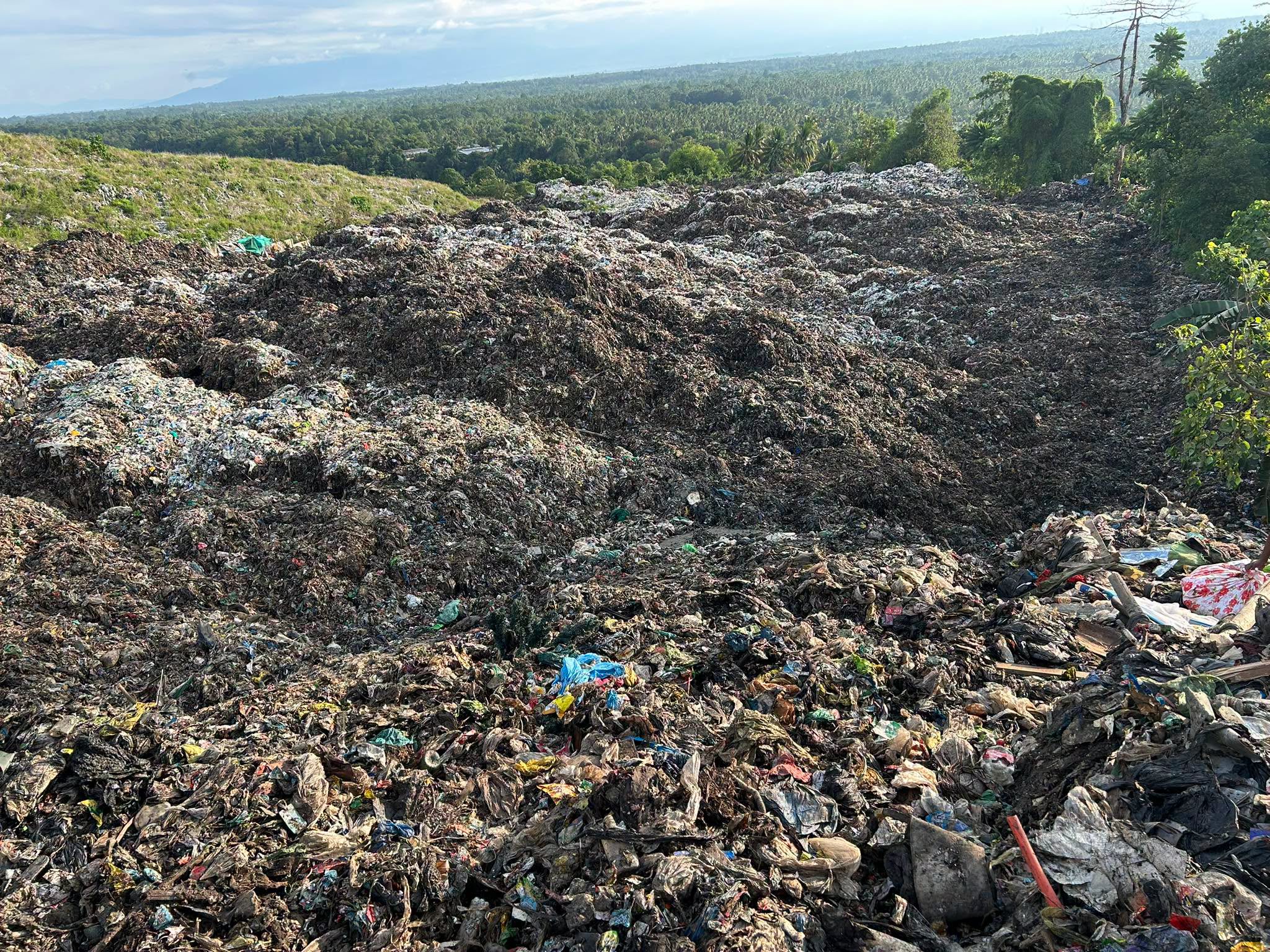
An even more alarming contradiction is that this summit is taking place in Cebu. Just months after the deadly Binaliw landfill tragedy exposed the devastating human cost of the region’s plastic waste crisis, the role of corporate polluters in driving it were still rendered invisible in discussions on sustainability and resilience.
President Marcos Jr. spoke of reducing dependence on imported fossil fuels, yet these words ring hollow while governments across the region continue enabling fossil fuel expansion and petrochemical production. Communities across Southeast Asia do not need speeches that avoid the root causes of these crises. Instead, what they need is urgent action to move away from fossil fuels, cut plastic production at source, hold corporate polluters accountable, and accelerate a just transition toward renewable energy and reuse-based systems.
We call for the immediate dropping of charges against the activists and urge Philippine authorities to uphold the rights to free expression and peaceful protest. The real threat to Southeast Asia is not activism, but the continued failure of leaders to confront the corporations, systems, and injustices driving climate destruction, plastic pollution, and deepening social inequality across the region.”
###
PHOTOS WILL BE UPLOADED TO THIS LINK
Credit photos to © Miguel Louie de Guzman / Greenpeace
NOTES TO THE EDITOR:
[1] Batas Pambansa Blg. 880 (BP 880), known as the Public Assembly Act of 1985, is a Philippine law regulating public assemblies, rallies, and demonstrations in public spaces to ensure they are peaceful. It requires a written permit from local authorities for public gatherings, mandates “maximum tolerance” from law enforcement, and protects the right to protest. – Supreme Court E-Library
[3] Position Paper: Addressing the Systemic Plastic Crisis in Southeast Asia
For more information and interview requests, please contact:
Karl Orit
Communications Campaigner
Greenpeace Southeast Asia – Philippines
[email protected] | +63 919 457 1064 (Viber & WhatsApp)
Discussion
I understand why this is concerning.