It’s time to end dairy expansions. That’s Greenpeace’s message following the announcement of a Government report showing that emissions from intensive dairy farming increased in 2024.
Greenpeace Aotearoa climate campaigner Sinéad Deighton-O’Flynn says, “This is a ‘fork in the road’ moment for our planet, and instead of working to reduce their emissions, Fonterra and the intensive dairy industry are pouring fuel on the fire by expanding the dairy industry.”
The agriculture industry is New Zealand’s biggest source of greenhouse gas emissions, making up more than half of the country’s total emissions. Pollution from the intensive dairy industry accounts for 26% of New Zealand’s emissions, more than any other industry.
The Greenhouse Gas Inventory points to increases in milk production and synthetic nitrogen fertiliser use as drivers of emissions increases, and shows that while agricultural emissions overall have decreased, emissions from intensive dairying have increased.
“The increase in emissions from the dairy industry is the equivalent of adding an extra 100,000 cars on roads for a whole year,” says Deighton-O’Flynn.
“For decades, intensive dairy farming has been New Zealand’s main source of climate pollution. And while communities here and around the world are reeling from climate disasters, we’re seeing the industry expanding, and its emissions increasing.
“We all should be able to live in thriving communities where our children have a safe and stable future, but Fonterra and the intensive dairy industry’s pursuit of profit puts this at risk.
“The short-term profits of a handful of milk powder millionaires shouldn’t come at the cost of life on this planet.”
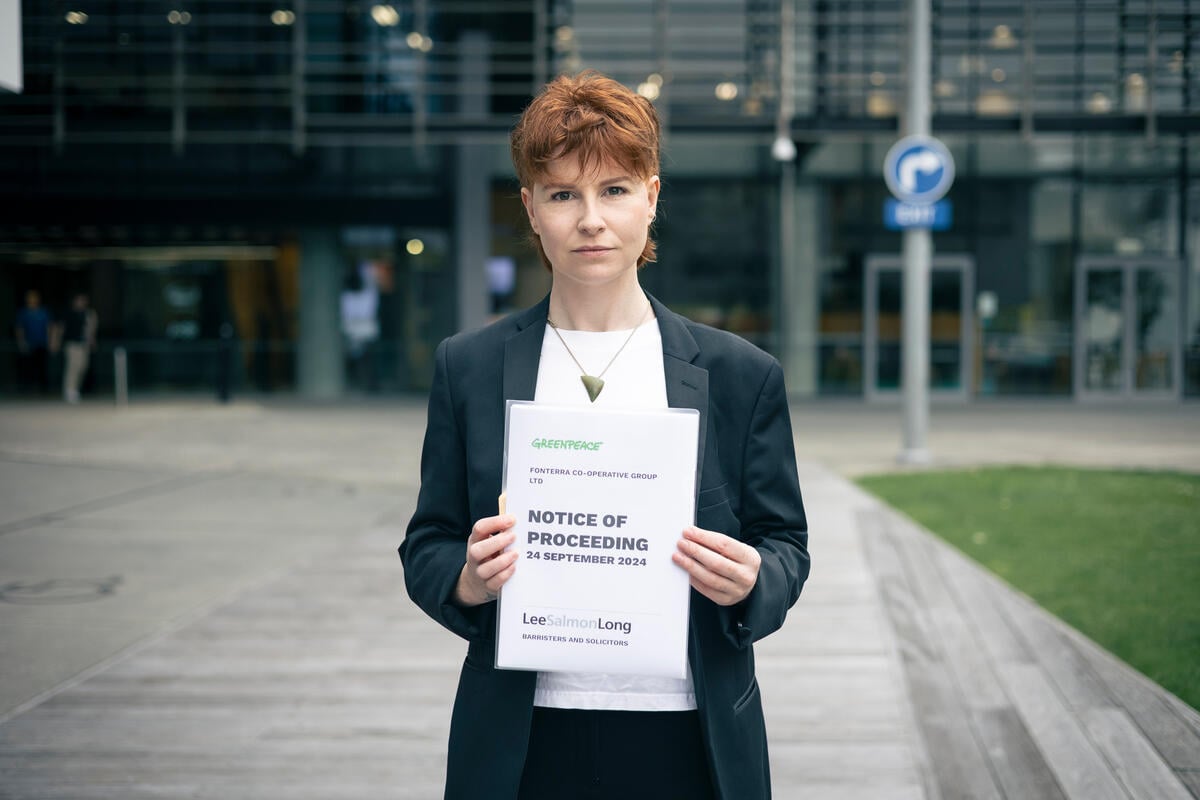
Dairy giant Fonterra has been labelled New Zealand’s worst climate polluter for at least the last four years, with emissions that far exceed those of fossil fuel companies. It was reported that in 2025, Fonterra’s climate emissions increased by 2.2%.
The report shows that while overall emissions from agriculture have slightly decreased, methane emissions from intensive dairy farming have increased, as well as emissions from synthetic nitrogen fertiliser use. This has been offset by a reduction in sheep numbers and an increase in forestry – something Greenpeace says is not sustainable.
Deighton-O’Flynn says, “We can see that efforts to reduce emissions from other sectors are working, but those emissions reductions are eclipsed by the expansion of New Zealand’s already oversized dairy herd.”
The report only covers emissions from 2024 – but in 2025, dairy expansions began again after Government policy changes. In Canterbury, 30,000 cows are set to be added to the dairy herd. Deighton-O’Flynn says we can expect dairy emissions to continue to increase as a result.
“The only long-term solution to cutting New Zealand’s climate pollution is to reduce the size of the dairy herd and support farmers to transition to regenerative, ecological farming practices. We have no time to waste.”