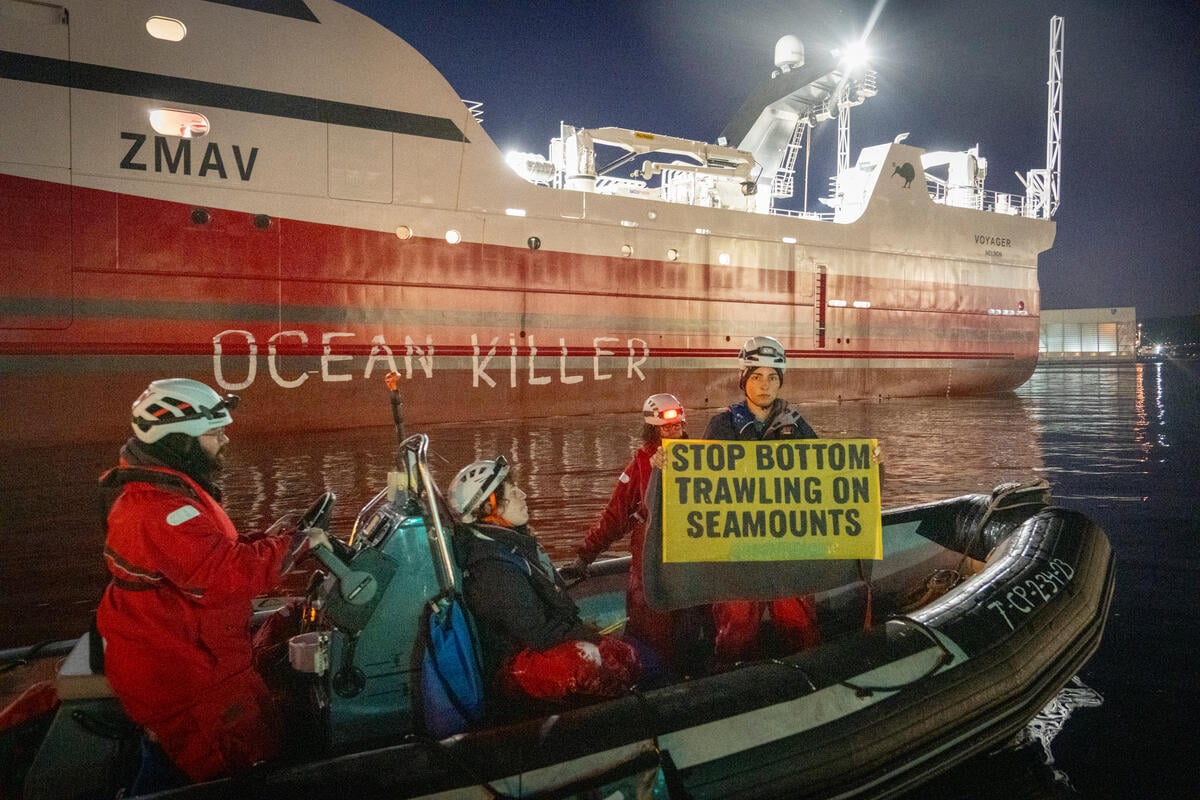
Environmental groups are urging political leaders to follow through on their promises and protect seamounts from bottom trawling, as parties decide negotiation bottom lines and the fishing industry goes on a PR offensive.
Bottom trawling is a key election issue, with all political parties taking a stance on the fishing method due to growing public pressure and a clear scientific case.
Environmental groups are now renewing their call to implement seamount protections in the first year of the political term, saying it’s a no-brainer for ocean protection.
Karli Thomas, of the DSCC says: “Right now is a critical moment to end bottom trawling on our precious seamounts, and most New Zealanders wish it had already been done. Despite the trawl sector claiming that any restriction on bottom trawling would spell the end of the fishing industry, it’s simply not true. Protecting all seamounts won’t make your fish’n’chips more expensive, but it will save coral ecosystems from being turned to rubble.”
A ministerial briefing released under the OIA provides data showing that closing all the seamounts at risk from bottom trawling would result in only a 3.5% impact on the deep sea fish catch. (1) (2) In the same briefing, government officials emphasise that the fish could be caught elsewhere.
“We urge the political parties who are holding a line on this crucial issue to stand strong and commit to the ocean protection that their voters demand,” says Thomas.
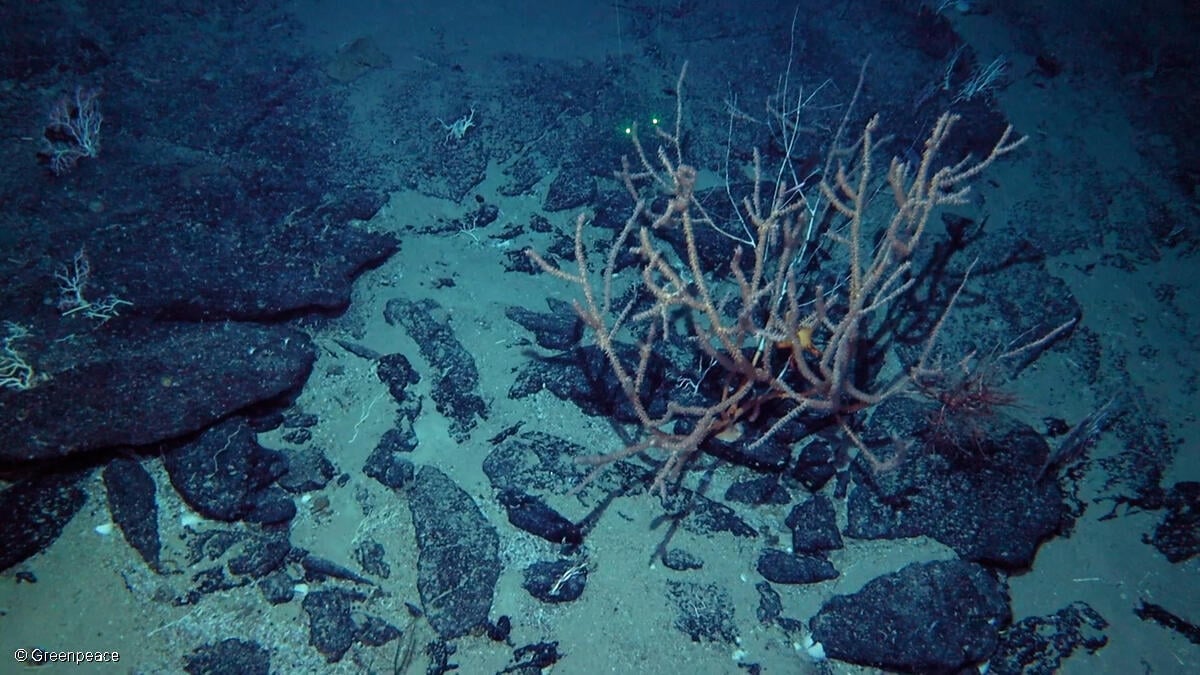
Seamounts are biodiversity hotspots, home to corals and sponges that can live for hundreds of years, and support an array of ocean life, including breeding fish like orange roughy. International resolutions call on states to protect seamounts from bottom trawling. Data shows that banning trawling on these seamounts wouldn’t impact fisheries significantly, and environmentalists argue the benefits to ocean health, and fish numbers, would be huge.
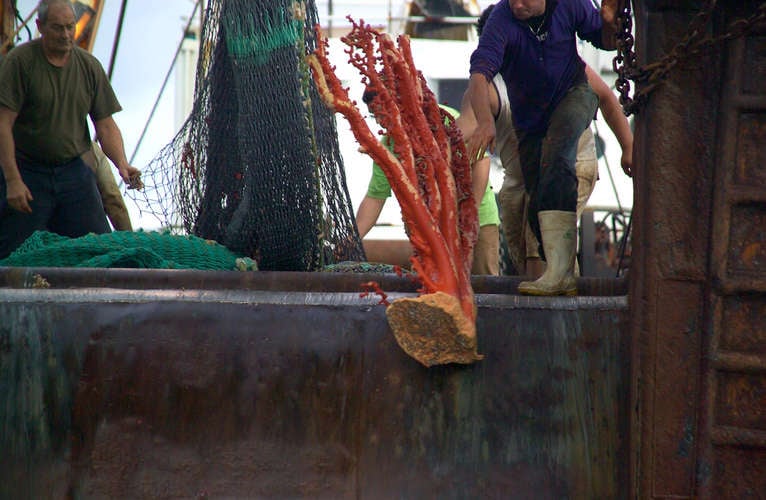
In the absence of protection, catch numbers for a key species trawled on seamounts – orange roughy – are down significantly. In the past five years Orange Roughy catch has dropped by 49%. Bottom trawlers target these fish on seamounts while they are breeding, in the process also destroying their habitat and catching large amounts of coral in nets.
The only seamount that saw an increase in Orange Roughy numbers was one that has been closed to trawling for over twenty years.
Barry Weeber of ECO, who has worked on fisheries issues for over 30 years, says: “It’s clear that protecting seamounts works – in the few places where that has been done we see proof of that. What’s galling, given the commercial fishing industry’s current hysteria around profit and job loss, is that without protections for most seamounts – their catches are down anyway. This is because this type of fishing, on these sensitive ecosystems, is not sustainable.”
Seamounts are vital ocean habitats that support a wide array of ocean life from coral to fish and migrating whales. Bottom trawling is the biggest threat to these habitats, where recovery from trawling is likely to take centuries.
“What the fishing industry is doing right now is from a classic playbook. When an industry knows change is needed, due to clear scientific evidence and loss of social licence, they fight tooth and nail to make any change to the status quo seem catastrophic,” says Greenpeace’s Ellie Hooper.
“Many industries have used these tactics before – from car makers campaigning against seatbelts, to tobacco companies trying to cast doubt on the health risks of smoking.
“The thing is – bottom trawling’s impacts on these incredible habitats is no longer up for debate, and the industry is desperately making claims about the consequences of any ocean protection in a bid to block progress that is long overdue.
“The fishing industry has done this for decades, and as such ocean protection in Aotearoa is drastically behind, and ocean health seriously in decline. We need politicians to hold the line, do what is right, what is backed up by scientific evidence and the public mandate. Anything less is caving to industry pressure.”
Environmental groups point to work completed under the last Labour government, in 2022, that shows how protecting seamounts in Aotearoa could be done and the minimal impact it would have on fisheries.
“Do not delay,” says Hooper. “This is the moment to protect seamounts from bottom trawling. Politicians must take up that mantle and do it by the end of 2027, or they risk years of further inaction and ocean decline.”
Notes:
1. Seamounts “at risk” from trawling refers to all 366 seamounts and features of 100m or more height, within trawl depths (above 1,600m) inside the EEZ trawl footprint and open to trawling.
2. “The analysis [by FNZ-MPI] found that 3.5% of the total volume of all deep-water fisheries (hake, hoki, jack mackerel, ling, oreo, orange roughy, southern blue whiting, scampi and arrow squid) is caught on all of the UTFs [seamounts, knolls and hills] over 100m in elevation, based on the average of the 12-year period (2007 – 2019) (table 1).” 23 June 2022 FNZ-MPI.
3. There are alternatives to bottom trawling in many fisheries, for example: ling is caught on bottom longlines and by potting; hoki, southern blue whiting, jack mackerel and squid can be caught by mid-water trawling which doesn’t touch the bottom; snapper is caught by bottom longlines.
Join the call to demand that the NZ Govt bans bottom trawling on seamounts and similar deep sea features, and stop issuing permits for bottom trawling in international waters.
Take Action