In Aotearoa we have more ocean than most, and the vast majority of us feel insanely lucky to share it with the diversity of life that we do. Half the species found in New Zealand waters are found nowhere else on Earth, and we’re a hotspot for cetaceans, seabirds and vibrant cold water corals.
On a personal basis, I’ve had some of my favourite experiences in the ocean, swimming through kelp forests or encountering eagle rays, or floating in the middle of the Tasman Sea hundreds of miles from land. These moments will be front of mind for me when I head to the ballot box this election, as well as the feeling of responsibility to future generations to get the next three years right.
Because as election day approaches, I can’t stop thinking about where we were three years ago.
Lessons from 2023
I remember 2023 starting with such hope. Nations agreed to the historic Global Oceans Treaty in March, and with it, committed to protecting our blue planet better for the future. New Zealand was an early signer of this historic agreement, signaling their intention to work with other countries and make ocean protection a reality. Co-operation and conservation had prevailed.
But just a few months later, the coalition government took the helm in New Zealand, and ever since Luxon, Seymour and Peters have been steering us drastically off course, and against the wishes of the public who care deeply about the ocean.
While more New Zealanders than ever have been calling for an end to bottom-trawling, increased ocean protection and better outcomes for threatened marine species, the coalition government has been working to do the exact opposite.
The coalition has overseen an onslaught on ocean protection
It’s been an onslaught for the ocean, a combination of the government ignoring scientific evidence, and writing new laws when they find the existing ones inconvenient for their industry-led agenda.
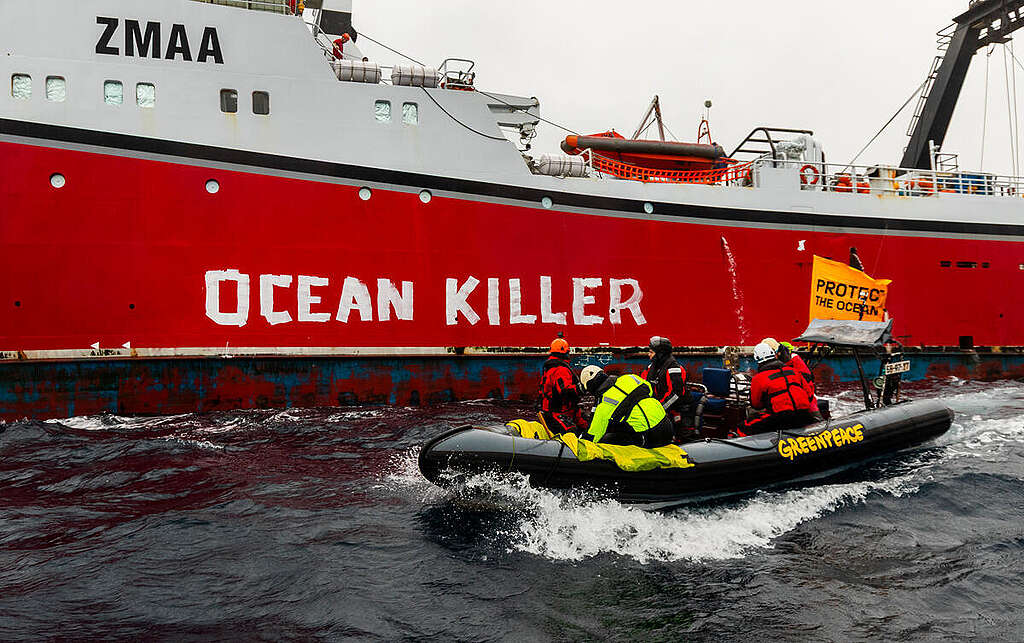
When the fishing industry wanted to trawl a known fragile coral hotspot, this government advocated for their right to do so on the international stage. When seabed miners wanted to plunder a blue whale habitat, the Luxon-led government built a fast-track consent system for it. When iwi and hapū customary rights got in the way, the government raised the bar so high it’ll be impossible to reach. And when local communities started implementing drastically needed marine protections, the government rewrote the law to strip their ability to do so.
In this government’s view, the rights of iwi and hapū, the beliefs of local communities and environmental protections are inconveniences to the fishing, mining and polluting industries who stand to pocket more profit.
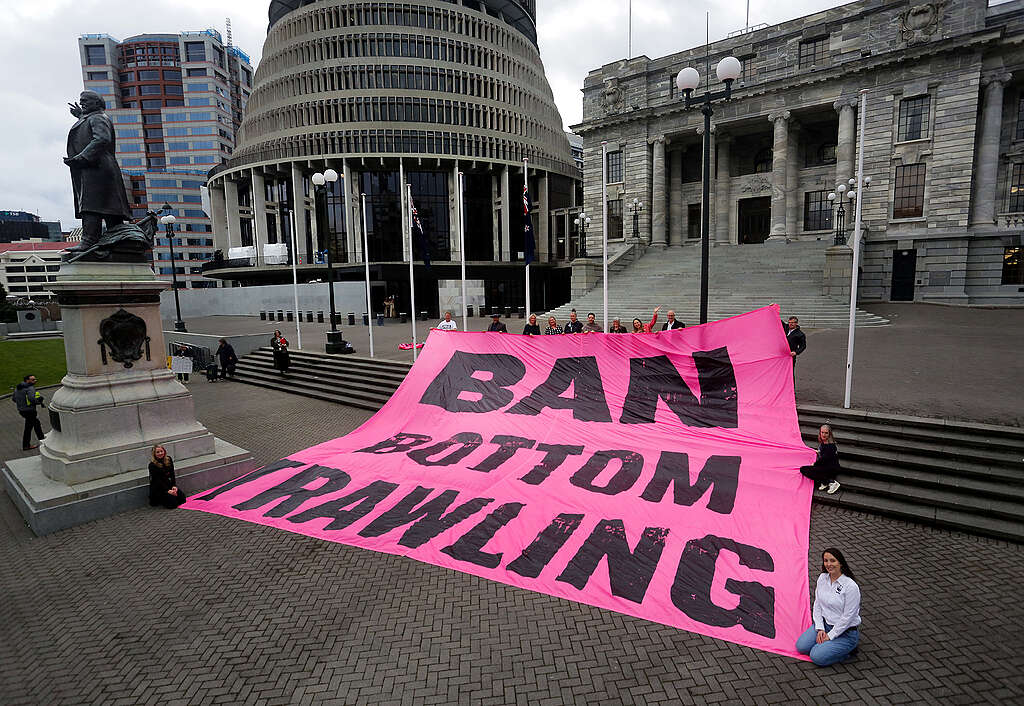
Here’s a run-down of the government’s most egregious assaults on the ocean this term:
Attempted rollbacks of cameras on boats programme: Shortly after taking the Oceans and Fisheries portfolio, Shane Jones, who sees himself as a champion of the fishing industry, took aim at the hard-won cameras on boats programme. The initial camera rollouts exposed inconvenient truths, revealing the commercial fishing industry had been underreporting what they catch, including how many endangered dolphins, albatrosses, and penguins were caught in their nets. And while pushback saved the cameras already promised, the government’s legislative assault on the ocean was just getting started.
Gutting customary rights: Amendments to the Marine and Coastal Area (MACA) Act passed in late 2025, deliberately raised the threshold for iwi and hapū to secure Customary Marine Title. The Waitangi Tribunal found this to be a severe breach of Te Tiriti o Waitangi, and it also removed one of the most effective defences against commercial exploitation. Some iwi and hapū who had already achieved CMT, are now being forced to defend them.
Championing destructive fishing: The Fisheries Amendment Bill sought to block onboard camera footage from public view while incentivising destructive bottom trawling, and limiting the ability for organisations and the public to launch legal challenges on bad fisheries decision-making. The Bill was delayed following a nationwide backlash from recreational fishers and environmentalists, but it could still return.
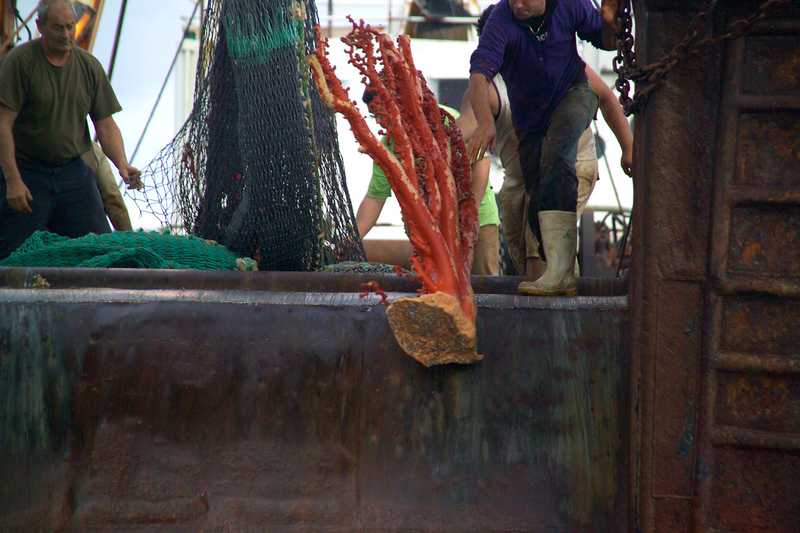
Promoting trawling in vulnerable areas: On the international stage, the New Zealand government proposed that commercial trawlers should be allowed to keep trashing a biodiverse seamount on the Lord Howe Rise – despite fresh scientific evidence proving the ancient, fragile coral living there. The government was presented with this evidence, but still chose to push for reopening the seamount to the country’s bottom trawlers. While the proposal did not go through, it sends a clear signal that even when presented with the proof of what’s at stake, this government will still choose destruction over ocean protection.
Stripping local powers: In the final dying days of their political term, the Luxon-led government dismantled the Resource Management Act (RMA), our key environmental law. For years, local communities and regional councils – like those in Northland and the Bay of Plenty – had used the RMA to fill the vacuum left by central government, banning destructive practices locally to enable ocean recovery. The government ripped those local powers to shreds, re-centralizing control back to a Fisheries ministry that has failed to protect the oceans.
The ocean is already under pressure – use your vote
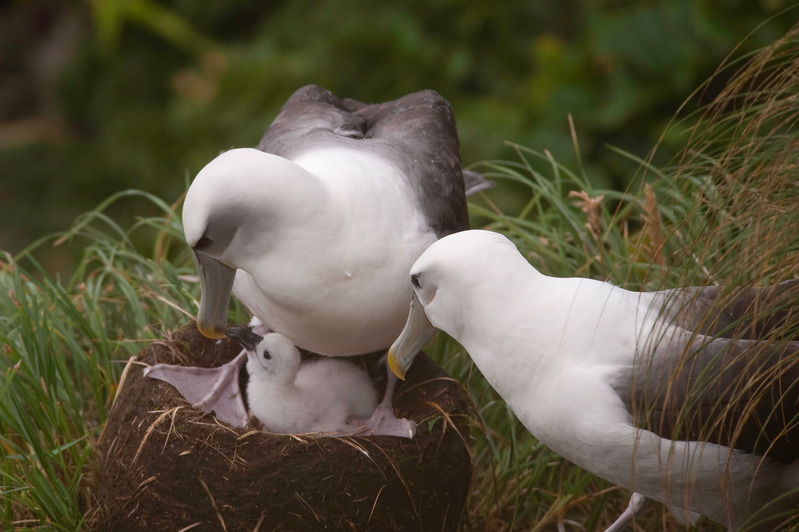
All of this comes in the context that our marine environment is in trouble. Over 90% of native seabirds and 22% of marine mammal species in Aotearoa are now classified as threatened or at risk of extinction. Hoiho and Maui dolphins are on the brink. Parts of the Hauraki Gulf are strewn with sea urchin barrens, and key fish populations such as tarakihi and orange roughy have collapsed elsewhere.
These are all signs of an ocean that is already under too much pressure, and needs urgent action to protect it for the future. The ocean cannot take another three years of assault from weakening protections. We need political leaders who have a vision for the ocean and the courage to carry through with it.
You can see how all political parties score on ocean issues here.
Ocean asks this election
For us that means committing to banning bottom trawling from seamounts and other places where it does the most harm, and working with other countries around the world who are trying to establish ocean sanctuaries on the high seas.
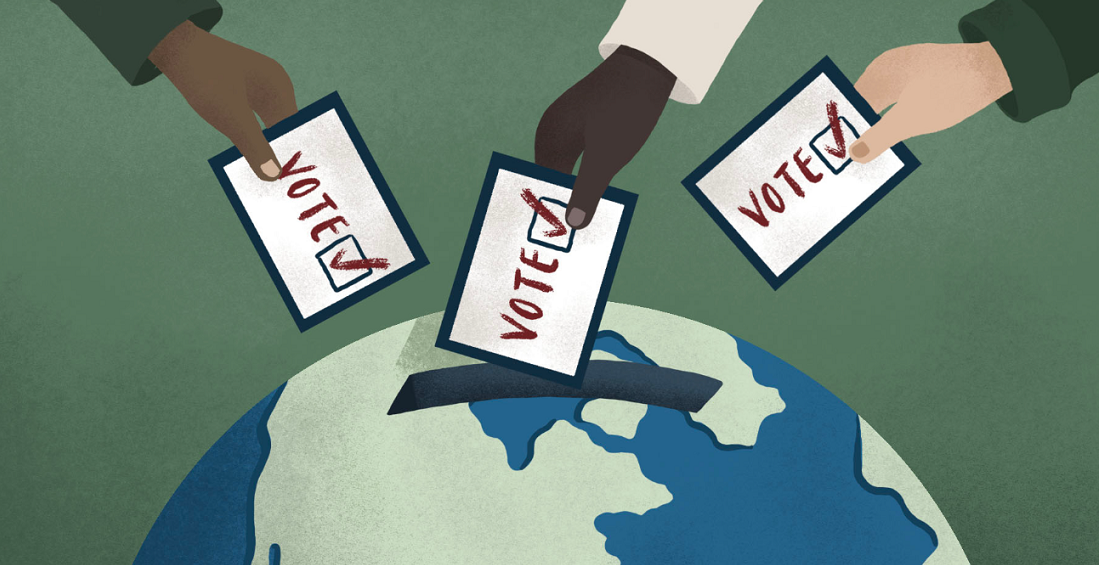
Come November 7 we all have a chance to vote for ocean health and a future where our blue planet is thriving. I’m going to take that thought to the ballot – and I hope you will too.
Oceans policy scorecard for political parties
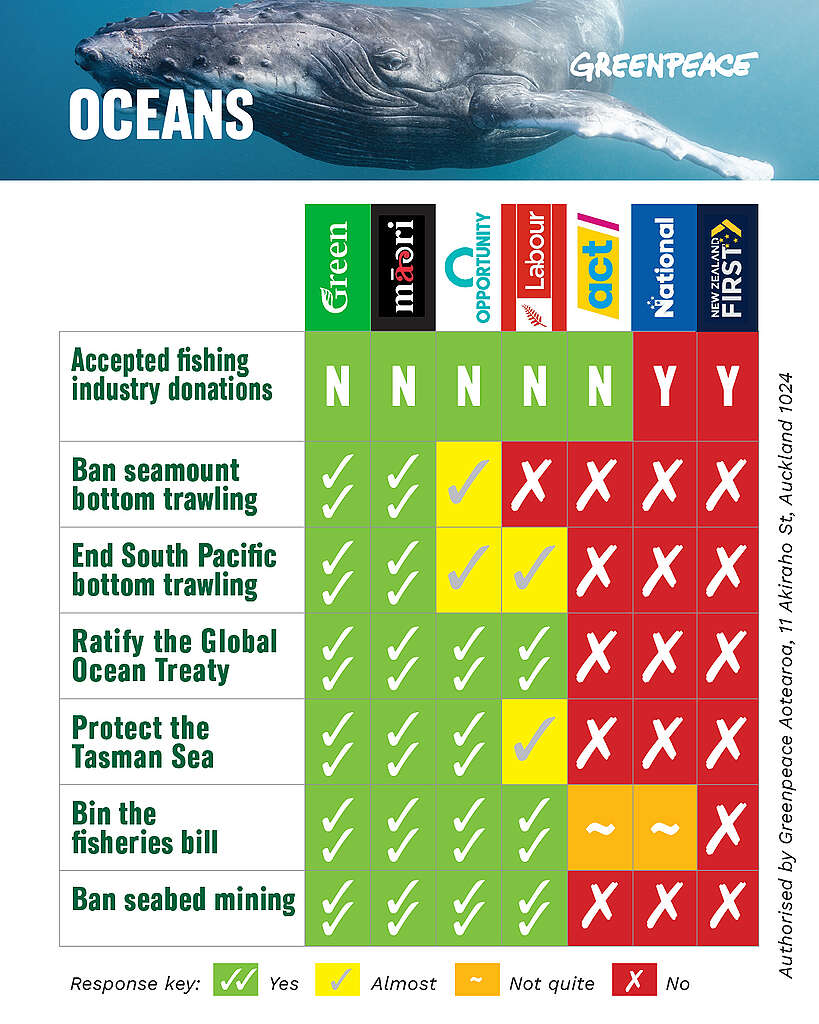

Use Greenpeace’s election scorecards to compare where political parties stand on the biggest environmental issues facing Aotearoa.
ELECTION SCORECARDS