
Towards a Tasman Sea ocean sanctuary
Between the shores of Aotearoa and Australia, is one of the most biologically rich places on Earth. We’re calling for one of the world’s first global ocean sanctuaries to be created here in the Tasman Sea.
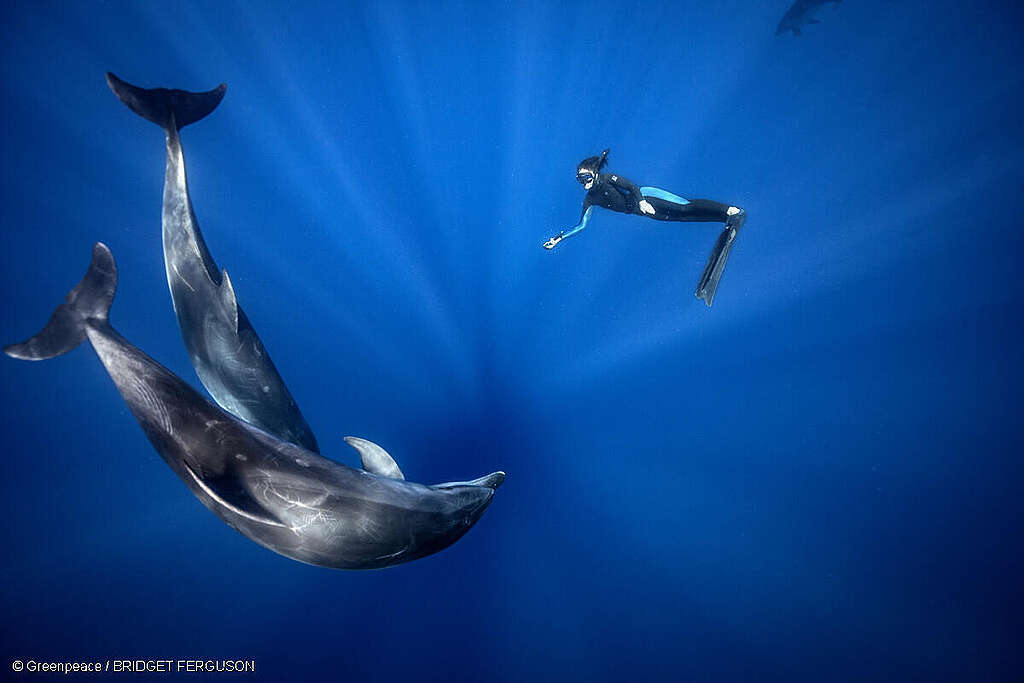
The Tasman Sea needs to be protected
The rich waters of the Tasman Sea between Aotearoa and Australia are brimming with life, home to ancient deep sea corals, rare sharks, seabirds and migrating whales.

Here a chain of colossal underwater volcanoes rise from the deep and warm and cool currents collide, creating the perfect conditions for life to flourish. This area in the South Pacific is known for its seamounts, diverse fish populations, deep sea corals and internationally significant seabird populations.
But the Tasman Sea is at risk from industrial fishing.
Bottom trawling is especially destructive and shockingly New Zealand is the only country still using this method in these South Pacific High Seas.
The unique and abundant life of the Tasman Sea needs urgent protection.
An underwater paradise under threat
The rich biodiversity of the South Tasman Sea and Lord Howe Rise makes it a priority for protection.
Unfortunately its this biodiversity that also attracts the attention of industrial fishers such as longliners and bottom trawlers. These waters are also under serious threat from climate change. New Zealand bottom trawlers drag heavy nets across the seafloor in these high seas tearing up ancient corals on seamounts.
A trawler can destroy a fragile marine habitat in mere moments – decimating ecosystems that have taken centuries or even millennia to form.
We witnessed the destruction wrought on seamounts by bottom trawling on our expedition to the Tasman Sea in 2025. We followed known trawl tracks and filmed hours of coral rubble. We saw a coral graveyard in the deep.
Without protections in place, these destructive practices will continue, causing devastation to these oases in the deep and all the ocean life that depends on them.

Join the call for ocean protection
Together, we can protect ocean life, great and small, in the Tasman Sea.
-
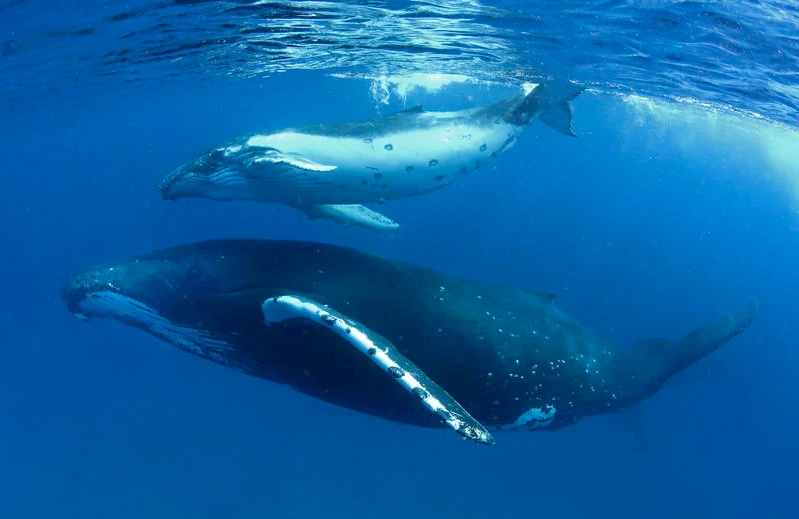
PETITION: Support the creation of global ocean sanctuaries
From destructive fishing and mining, to climate change – the threats facing our oceans are growing greater by the day. We urgently need a network of ocean sanctuaries across the globe to protect them.
-
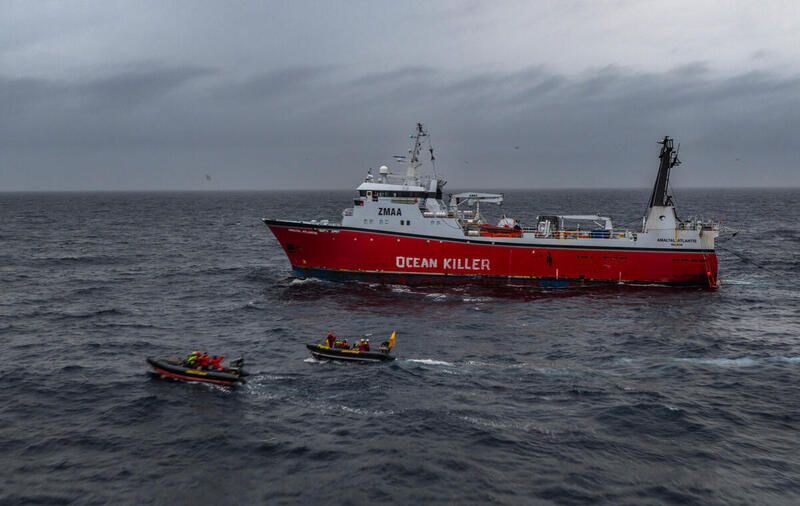
SEND A MESSAGE: Tell political leaders to ban bottom trawling
Tell political leaders to commit to a ban on bottom trawling in sensitive habitats before the 2026 election.
-
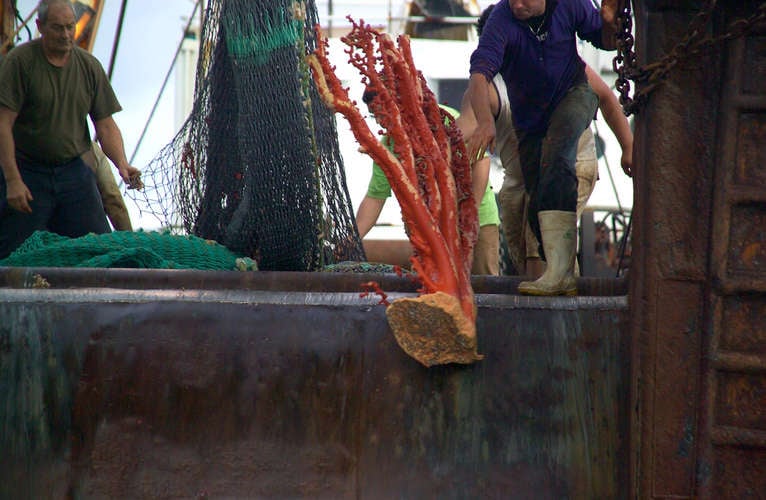
PETITION: Ban bottom trawling on seamounts
Join the call to demand that the NZ Govt bans bottom trawling on seamounts and similar deep sea features, and stop issuing permits for bottom trawling in international waters.
A network of ocean sanctuaries
Imagine a network of protected waters across the globe.
These areas would create safe, thriving spaces for marine life – from the coral of the deep, to the whales voyaging above them and seabirds diving at the surface. Ocean species could live without the threat of industrial fishing, mining and pollution. The whole ecosystem would have a chance to recover and thrive.
The Global Ocean Treaty provides the legal framework to make this possible.
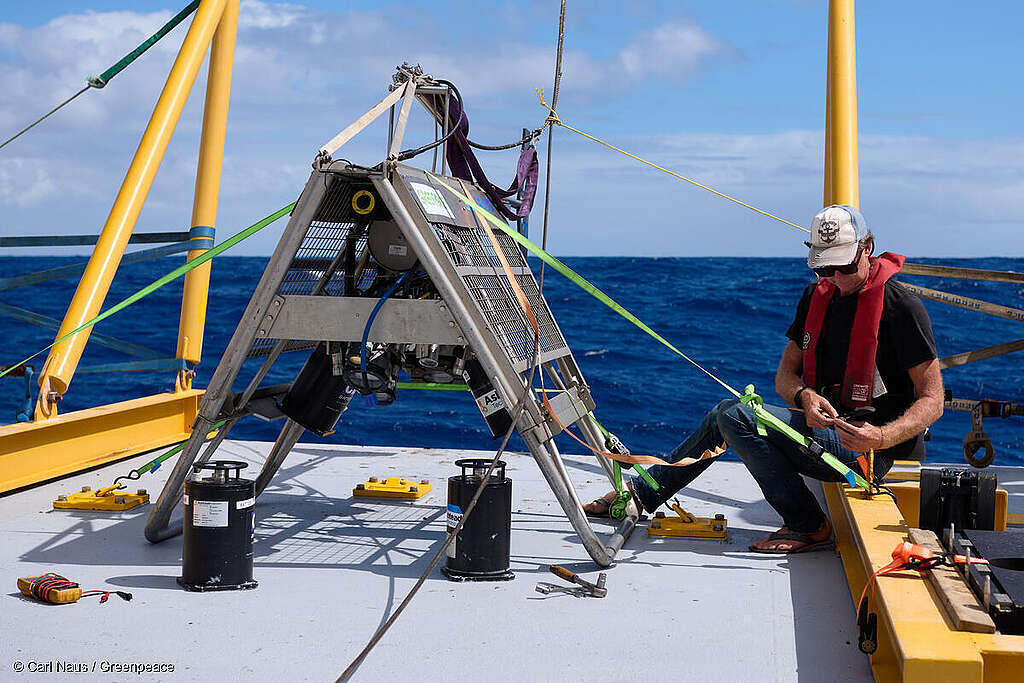
Making a case for an ocean sanctuary in the Tasman Sea
Greenpeace is actively campaigning for the creation of vast ocean sanctuaries in these international waters to help protect our blue planet for the future.
The Tasman Sea is earmarked to be one of the first global ocean sanctuaries. This ocean paradise will be crucial to safeguarding our big blue backyard well into the future.
Last year, Greenpeace Aotearoa led an expedition to document seamounts far out in the Tasman Sea, in order to help build a strong case for the protection of this place.
Seamount expedition findings
In 2025, Greenpeace set out with a team of scientists to explore the secrets of the deep, using cameras up to 1.2 kilometres under the waves to survey previously unstudied seamounts in the Tasman Sea.
We witnessed the destruction caused by bottom trawling, filming hours of coral rubble along known trawl tracks, a coral graveyard in the deep. We also documented the beauty and life in this deep volcanic lost world. There is so much here worth protecting.
On one seamount on the Lord Howe Rise, scientists catalogued 350 corals, sponges and other life forms in just a fraction of the area. Many of these are 100+ years old and some reach almost 2 metres in height.
Slow-growing and fragile, the corals we observed include bamboo, golden, precious, stony, hydro and black, in addition to sponges, sea lilies and anemones.
These findings will be presented to the international bodies that govern the South Pacific High Seas and used as evidence for why they must be protected.
The threat from fishing
The main threat to these ecosystems is industrial fishing, and in particular, bottom trawling and longlining. Both are destructive, exploitative and indiscriminate – resulting in huge amounts of damage to life in the Tasman Sea.
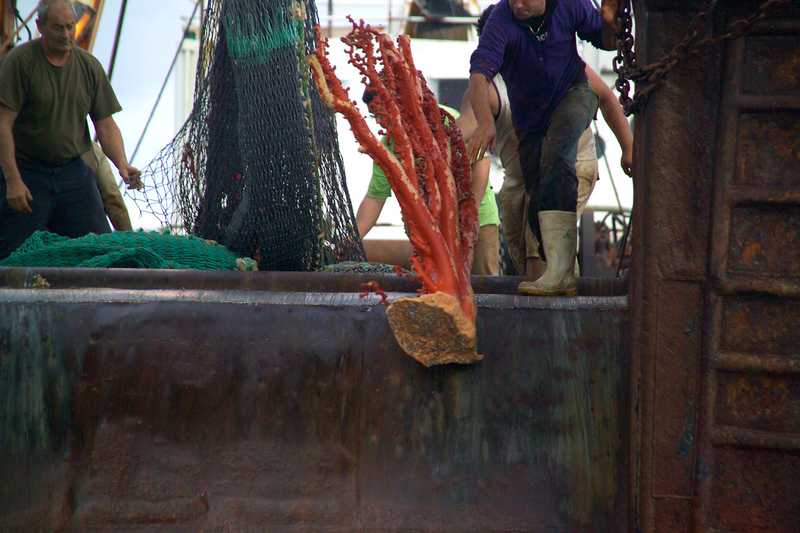
Bottom trawling
Bottom trawling is a hugely destructive method of fishing that involves dragging heavy, weighted nets across the sea floor in an effort to catch fish.
Bottom trawling is highly indiscriminate in what it catches. The nets haul up any ocean life in the way of the nets, including ancient coral on the seabed.
This method also damages the seafloor, either damaging coral or releasing carbon from the sediment on the seabed into the water.
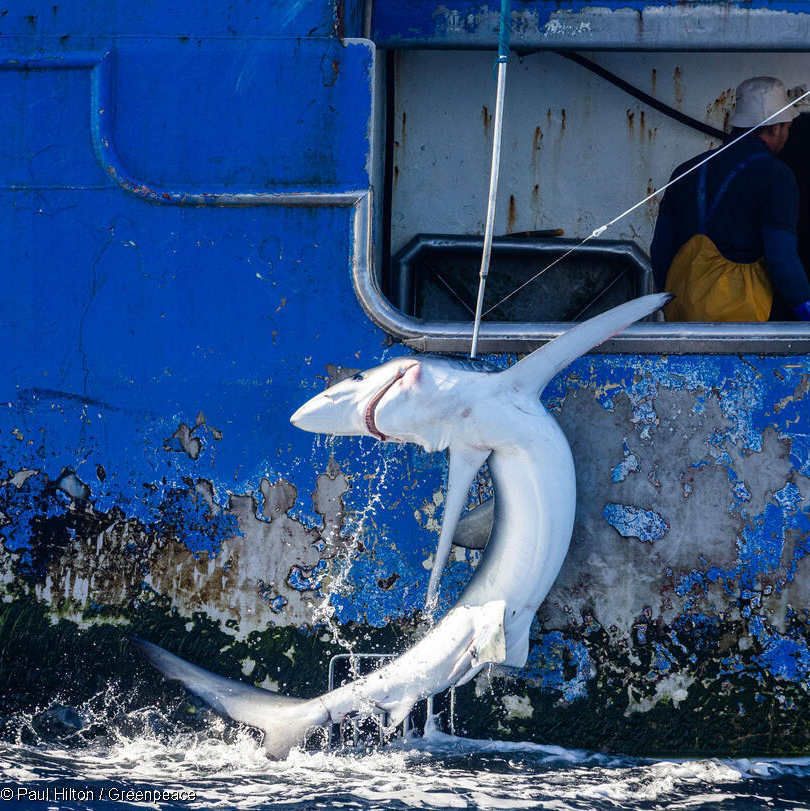
Longlining
Longliners are a kind of industrial killing machine. Fishing vessels lay out lines up to 100 kilometres long, covered in thousands of baited hooks.
These lines don’t just catch targeted species — they also catch and kill sharks, turtles, seabirds and other animals.
Currently extinction threatens more than one third of all shark species.
Yet in June 2025 the Rainbow Warrior found longliners in the Tasman Sea hauling in shark after shark.
New Zealand: blocking ocean protection
As a nation with one of the largest marine areas in the world, New Zealand has a bigger responsibility than most to be a champion for the ocean. With many species found within our waters, or travelling through the south pacific high seas, New Zealand should be stepping up and acting in the best interests of the ocean and all of us and getting behind protection.
But while other nations are progressing with protecting the high seas from harm, New Zealand is dragging behind.
When it comes to destructive bottom trawling, New Zealand is one of the bad guys. We’re the only country still bottom trawling in the South Pacific high seas.
And it’s because of this that in international forums, New Zealand has constantly blocked efforts that would have provided more protection for seamounts in these international waters.
We must urgently ban bottom trawling on seamounts and stop issuing high seas fishing permits to New Zealand trawlers, which would essentially end this practice for this high seas region.
Discover the incredible Lord Howe Island with Greenpeace
Within the Tasman Sea is the Lord Howe Rise, a huge underwater plateau that includes a chain of seamounts rising from the deep.
These underwater mountains create vibrant habitats that sustain coral forests and unique species, making this area biologically significant on a global scale.
Greenpeace visited Lord Howe Rise island in 2024 together with scientists and divers. The aim was to document the abundant marine life around the island, a small exposed portion of this larger, hugely biodiverse underwater plateau.
The goal: 30% protection of the world’s oceans by 2030
Creating global ocean sanctuaries on the high seas will help protect all the life that lives in these abundant waters.
Scientists agree that protecting 30% of the world’s wild places by 2030 will help limit the worst effects of climate change and biodiversity loss. Global ocean sanctuaries will help achieve this goal for the oceans that cover 70% of our planet.
A major Greenpeace report maps out a clear political pathway to protecting 30% of the oceans by 2030. It identifies three key priority sites to be among the first set of ocean sanctuaries – including the South Tasman Sea and Lord Howe Rise area between Australia and New Zealand.
Read the Greenpeace report: 30×30: From Global Ocean Treaty to Protection at Sea
FAQs about the Tasman Sea Ocean Sanctuary
The high seas are international waters outside of national jurisdictions – so the waters that do not fall within the governance of any individual country.
The responsibility for protecting the high seas is outside any single state’s jurisdiction, but the Global Ocean Treaty, brought into force in early 2026, will allow for areas of the high seas like the Lord Howe Rise and South Tasman Sea region to be protected – if governments act with the future in mind, and not the short term profits of a few powerful industries.
To create a large-scale ocean sanctuary in the Tasman Sea, countries must create a proposal and submit this to the future Ocean Treaty Conference of Parties (CoP).
The areas we are looking to protect under the high seas treaty are in international waters, parts of the Lord Howe Rise and Tasman Sea are already recognised as ‘Ecologically and Biologically Significant Areas’ (EBSAs), demonstrating just how important this region is for wildlife.
A marine protected area is a tool for protecting parts of the ocean. It can take many forms depending on how the legislation is written. Until the Global Ocean Treaty entered into force, there was no global mechanism for creating MPAs in international waters (which cover the vast majority of the ocean). Greenpeace is campaigning for marine sanctuaries with the highest protection in these high seas areas.
There are four Levels of Protection in the MPA Guide which Greenpeace aligns with:
Fully Protected: No impact from extractive or destructive activities is allowed, and all abatable impacts are minimized.
Highly Protected: Only light extractive activities are allowed that have low total impact, and all other abatable impacts are minimized.
Lightly Protected: Some protection of biodiversity exists, but extractive or destructive activities that can have moderate to significant impact are allowed.
Minimally Protected: Extensive extraction and other activities with high total impact are allowed, but the site can still be considered an MPA under the IUCN protected area definition and provides some conservation benefit.
Seamounts are underwater knolls, hills or mountains that rise hundreds or even thousands of feet from the ocean floor. Primarily formed by volcanic activity, they can be found in ocean basins around the world. In the South Pacific, we have more than most.
These mountains rising from the deep create the perfect habitats for coral and sponge gardens to grow and thrive, which are then relied upon by a huge array of ocean life including crustaceans, fish, and marine mammals.
Seamounts attract many migratory species such as tuna, sharks, sea turtles, and whales. Humpbacks are known to use seamounts in the South Pacific as way points on long journeys. Despite their global presence, less than 0.1% of the world’s seamounts have been studied.
The South Tasman Sea and Lord Howe Rise are two linked sites in the South Pacific, located between Aotearoa and Australia.
The South Tasman Sea consists of a deep abyssal plain with steep-sided seamounts that reach almost to the surface, and Lord Howe Rise is another complex chain of seamounts leading to a vast plateau to the north.
Lord Howe Rise is an underwater plateau and part of the submerged continent of Zealandia, a volcanic lost world running through parts of the Coral Sea, down to the Tasman Sea.
The South Tasman Sea is to the south west of Lord Howe Rise and is characterized by very high densities of seabirds, and foraging areas for numerous breeding and non-breeding birds. It also has seven seamounts within it which create thriving hotspots for marine life.
This site is an Ecologically and Biologically Sensitive Marine Areas as defined under the United Nations’ Convention on Biological Diversity. It is also among the High Seas Alliance’s recommendations for the first protected areas under the new Treaty.
The Lord Howe Rise and South Tasman Sea section in the report “30×30: From Global Ocean Treaty to Protection at Sea” has more information on the importance of the region.
There are many creatures, great and small, that call these regions home including:
• Acorn worms
• Sea pens
• Shrimp
• Tuna, including bigeye tuna and Southern bluefin tuna
• Swordfish
• Sharks
• Humpback whales
• Southern right whales
• A high diversity of fish species, including orange roughy, oreos, alfonsino and bluenose
• Some of the highest density of seabirds in the world, including 14 albatross and 6 petrel species
In 2023, Greenpeace published the report 30×30: From Global Ocean Treaty to Protection at Sea which outlines three key sites which are strong candidates for protection under the Global Ocean Treaty: Emperor Seamounts of the North Pacific, Sargasso Sea in the North Atlantic, and Lord Howe Rise/South Tasman Sea in the South Pacific.
These sites all are Ecologically and Biologically Sensitive Marine Areas (EBSAs) as defined under the United Nations’ Convention on Biological Diversity. They also are among the High Seas Alliance’s recommendations for the first protected areas under the new Treaty, because of how biodiverse they are, and progress towards protection in each is politically mature enough to make them prime contenders to be among the first ocean sanctuaries created using the Treaty.
These are not the only potential ocean sanctuary sites we will work on in the coming years, but we use them as case studies in this report to help illustrate the pathway to protection for ecologically important marine areas that could realistically be protected soon after the Treaty has been ratified.
We are calling on the New Zealand Government to ratify the Global Ocean Treaty and back the creation of an ocean sanctuary in the Tasman Sea.

Your donation can help fund ocean protection
Greenpeace is 100% independent. Our work is funded by people like you, people who care about protecting the planet. Please donate today to help power our work on building a green and peaceful future for all.
-
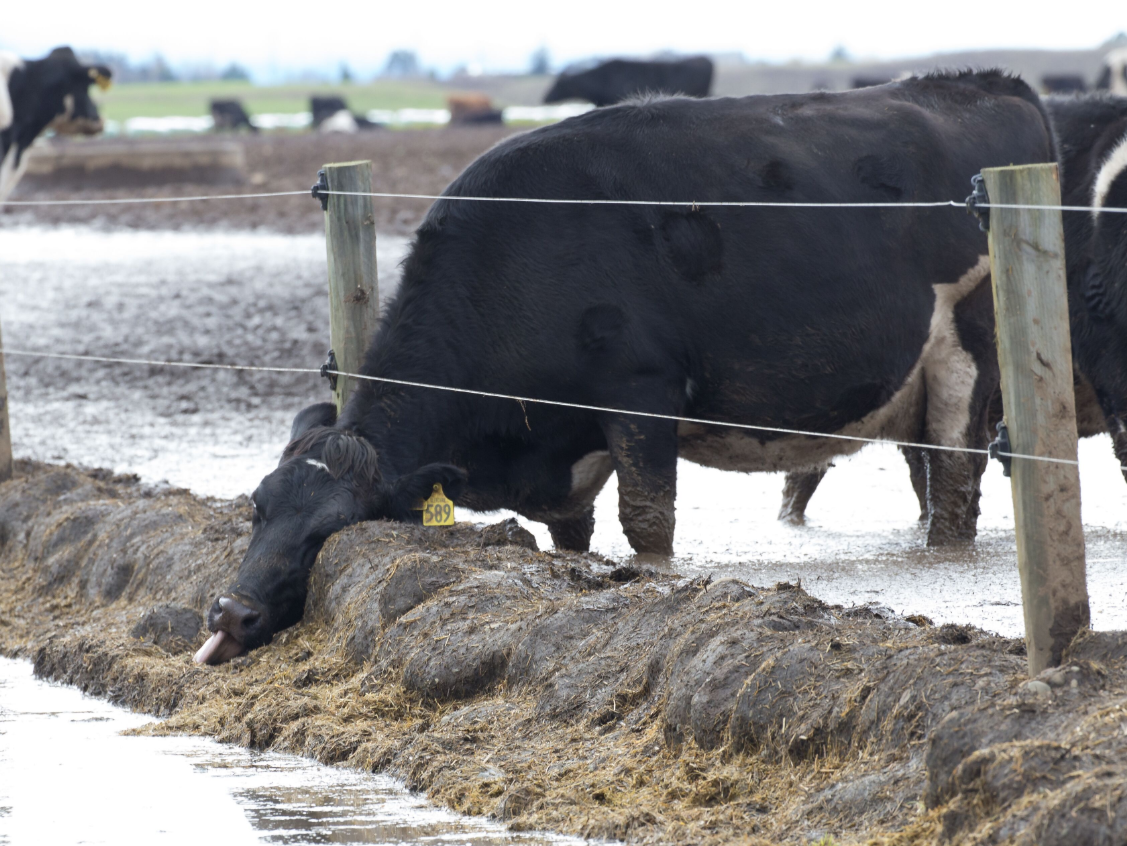
Luxon ’s Three Years of War on Freshwater 2023-2026
Weakening freshwater policy has been a constant focus of the Luxon Government. Fonterra, Dairy NZ , Beef and Lamb have demanded changes to allow more freshwater pollution and the government has delivered, in spades.
-
State of the Climate vs War on the Climate
The NZ Government is systematically introducing policies which are increasing emissions or slowing down emissions reductions.
-

Vote for the environment this New Zealand election 2026
Keen to vote for the environment in the upcoming 2026 New Zealand election but don’t know how? We’ve got you!