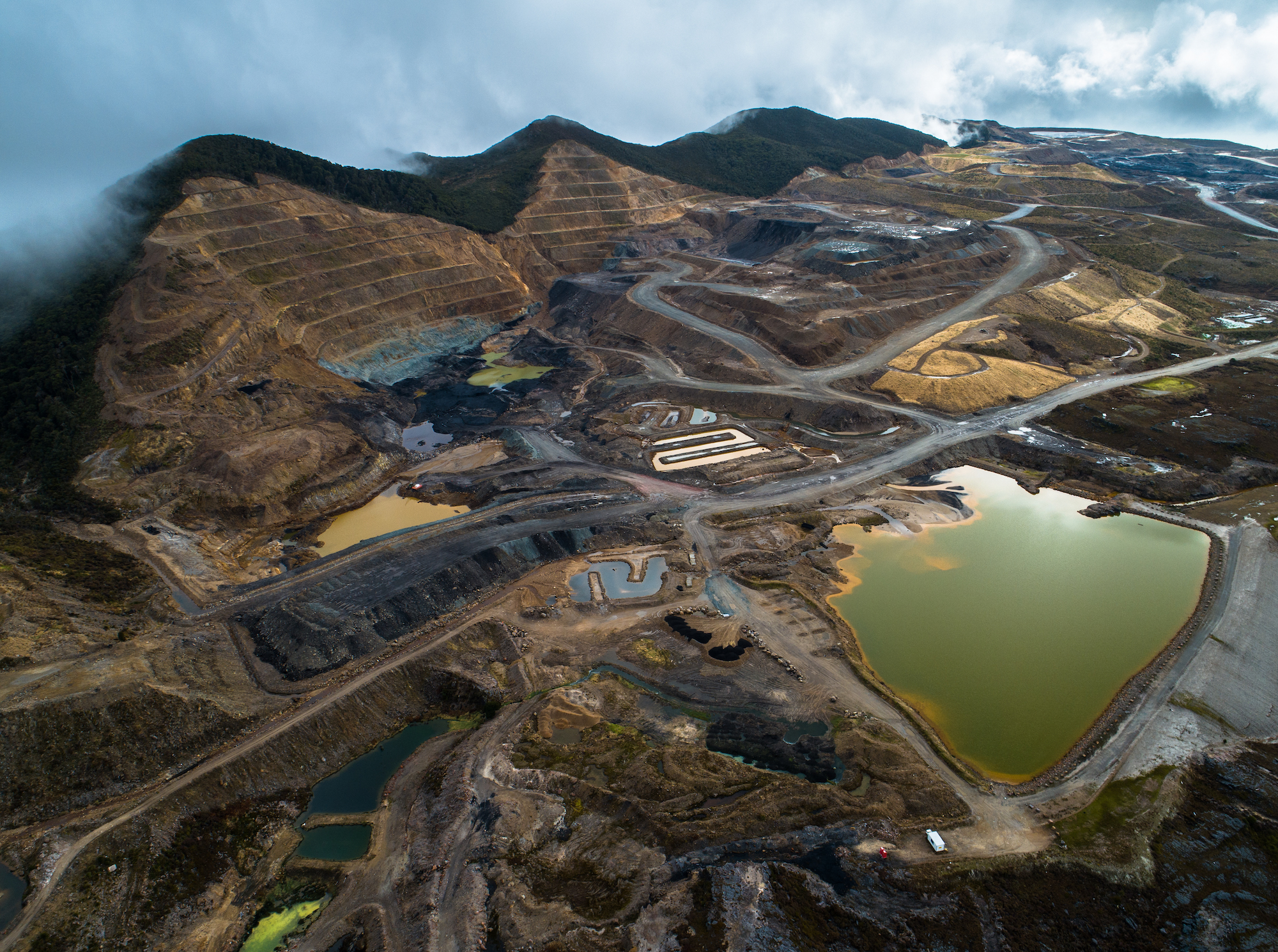
The ‘Conservation Land Is Under Attack’ map is an interactive map showing where some of New Zealand’s most precious wild places could be sold or turned into toxic, open-cast mines under Luxon’s Conservation Amendment Bill.
Explore the interactive map below, or click here to open it in a new window. For a full breakdown of what this map means and how we created it, read on below.
On this page
What is the ‘Conservation Land Is Under Attack’ map?
The ‘Conservation Land is Under Attack’ map is an interactive map revealing the overlap between deposits of minerals the Government has identified as ‘critical’ to its mining agenda, and the public conservation land at risk under the Government’s Conservation Amendment Bill.
The Government is proposing to make it easier to commercially exploit and sell off public conservation land, at the same time that it is pursuing an aggressive mining push. This map helps connect the dots.
The map shows where the known deposits of 32 different minerals the Government has deemed ‘critical’ overlap with public conservation land. The map also shows the conservation land areas which would become easier to sell off and commercial exploit under the Bill.
Anyone concerned about the Government’s proposed gutting of the Conservation Act is able to use the map to explore the areas at risk.
What is the Conservation Amendment Bill?
The Government’s proposed Conservation Amendment Bill is the biggest attack on conservation land since it was created.
They want to gut the Conservation Act and make it easier to sell off a staggering five million hectares – around 60% of all conservation land in Aotearoa for sale.
Not only that, the Conservation Amendment Bill would change the entire purpose of the Conservation Act. If the bill passes, the Department of Conservation (DOC) would be directed to enable commercial exploitation “to the greatest extent practicable” on all conservation land.
It is not a Conservation ‘Amendment’ bill – it’s a Conservation Exploitation Bill.
Once our wild places are carved up, sold off, or mined, we can’t get them back.
The mining risks
As part of its pro-mining agenda, the Coalition Government created a list of 37 minerals they deemed ‘critical’. The map shows where known deposits of these minerals overlap with public conservation land.
This map shows the areas most at risk. In future mining corporations could have easier access to vast swathes of the conservation estate if the Government passes the Conservation Amendment Bill.
This Government has pursued an aggressive pro-mining agenda since taking power it has:
- Announced its goal of doubling minerals exports by 2035.
- Brought in the Fast-track Act which reduced environmental protections and public oversight of mining projects.
- Let the mining industry help it rewrite a major rollback to national mining rules to reduce environmental protections over mining on and around wetlands and biodiversity hotspots.
- Invited officials from Trump’s government and mining lobbyists into the halls of power at Parliament for a roundtable.
And Luxon is currently negotiating a war minerals deal with Trump’s America.
The Conservation Amendment bill is the final and most egregious assault in the Luxon Government’s wider war on nature.
Are National Parks at risk?
The National Parks of New Zealand would lose significant protections if the Conservation Amendment Bill passes. While they would not become eligible for sale, or be able to be mined under the Bill, they would be opened up to greater commercial exploitation.
This is because the Bill proposes to change the entire purpose of the Conservation law, and DOC’s core mandate to enable more commercial exploitation of all conservation land.
DOC would be directed to enable commercial exploitation “to the greatest extent practicable” on all public conservation land, including our National Parks and even remote offshore islands.
This Bill would turn our conservation law and the Department of Conservation itself from a protective shield for the conservation estate into a tool for corporations to exploit it.
The Bill would also give the Government the power to establish Commercial Exploitation Zones within National Parks. These zones could allow for private resorts, hotels, shops, restaurants, gondolas, roads or monorails to be built in the heart of our most protected wildernesses, including National Parks.
The Government has called these exploitation zones ‘visitor amenity areas’ in the Bill, but don’t be fooled, the actual proposal in the bill allows for much more than a few picnic tables.
Are these minerals really ‘critical’?
The Luxon Government decided to deem 37 minerals as ‘critical’ by putting them on a list. One of the reasons they stated for why they decided to create this list was to “strengthen our relationships with international partners.“
Right now Luxon is negotiating a minerals deal with Trump’s USA that would open up Aotearoa to more destructive mining. So in reality some of these so-called critical minerals could be used to feed the US war machine linked to genocide and potential breaches of international law.
Antimony, for example, is used in munitions and armour-piercing rounds, and was classified as a critical mineral in part for its use in “defence”.
While it is true there are some minerals required for the renewable energy transition, prioritising demand for minerals is crucial for a just green energy transition. By combining ambitious energy efficiency, shared mobility (public transport), and advanced recycling, the demand for minerals can be significantly reduced for a green transition.
Mining poses significant risks to ecosystems, waterways and local communities. Mining must not be allowed to push into no-go zones like protected conservation lands.
Thousands of people in Aotearoa have said there must be no minerals deal with Trump. We reject the destruction of lands, rivers and the seabed here that will lead to the destruction of lives elsewhere.
Data and sources used to create the ‘Conservation Land Is Under Attack’ map
The map was produced using data from the Department of Conservation (DOC) and GNS science (now known as Earth Sciences NZ).
Greenpeace has mapped the entire conservation estate using the DOC Public Conservation Land data. Land parcels were then listed as eligible or ineligible for sale based on Schedule 3 of the Conservation Amendment Bill.
The minerals layer is drawn from the Geological Resource Map dataset published by Earth Sciences NZ. This dataset identifies the known deposits of 32 of the minerals on the Governmennt’s ‘critical’ minerals list. These deposits are only shown on the Greenpeace map where they intersect with conservation land.
Which conservation areas are at risk?
All conservation land is at risk of being commercially exploited because the Government is trying to change the purpose of the Conservation Act. But around 60% of the conservation estate – up to 5 million hectares of it – is especially at risk because it would become easier for the Government to sell off or exchange it.
At the moment under the Conservation Act it’s very hard for the Government to sell off any conservation land. It can only sell off one category called ‘stewardship land’ – and only after it has been assessed and found to have ‘no or very low conservation value’.
However, Luxon’s Government wants to change that with the Conservation Amendment Bill by expanding the types of conservation land that can be sold off or exchanged and replacing the crucial ‘no or very low” test with a much weaker test.
The Department of Conservation has not done a full analysis of all the areas that could be sold off under these changes. But DOC has provided some analysis to the Coalition Government that confirms the proposed test for sale is so weak that the following places would be able to be sold:
- Pristine beech forest in Lewis Pass
- Ancient podocarp forest on the West Coast
- High-country tussock lands in Eastern South Island
That’s why we’ve created the map – so you can explore for yourself and find information about the threats to the conservation land we all cherish.
What we can do to defend conservation land
Here are some simple people-powered actions you can take right now to defend conservation land.
Share the map
Share the link to the map to friends you know are also concerned by the Government’s planned gutting of the Conservation Act.
Sign the petition
Public conservation land belongs to Aotearoa. Tell the Government: our conservation land is not for sale.
Sign the petitionEmail your local MP
Use your citizen powers to pressure decision makers. Not sure how to contact your local MP? Find your local MP’s details here.
Find out more
To find out more about the Conservation Amendment Bill, and what we’re doing to fight it, check out more about our campaign to Defend Conservation Land.