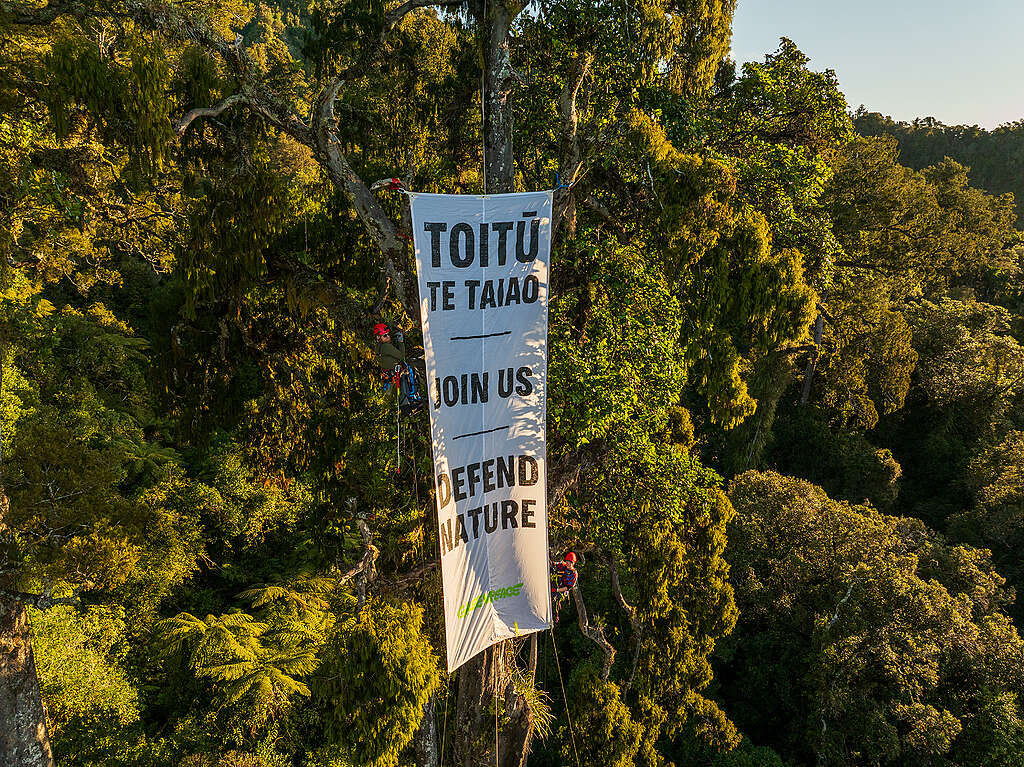
This World Conservation Day Greenpeace Aotearoa recreated one of New Zealand’s most iconic environmental actions to defend nature.
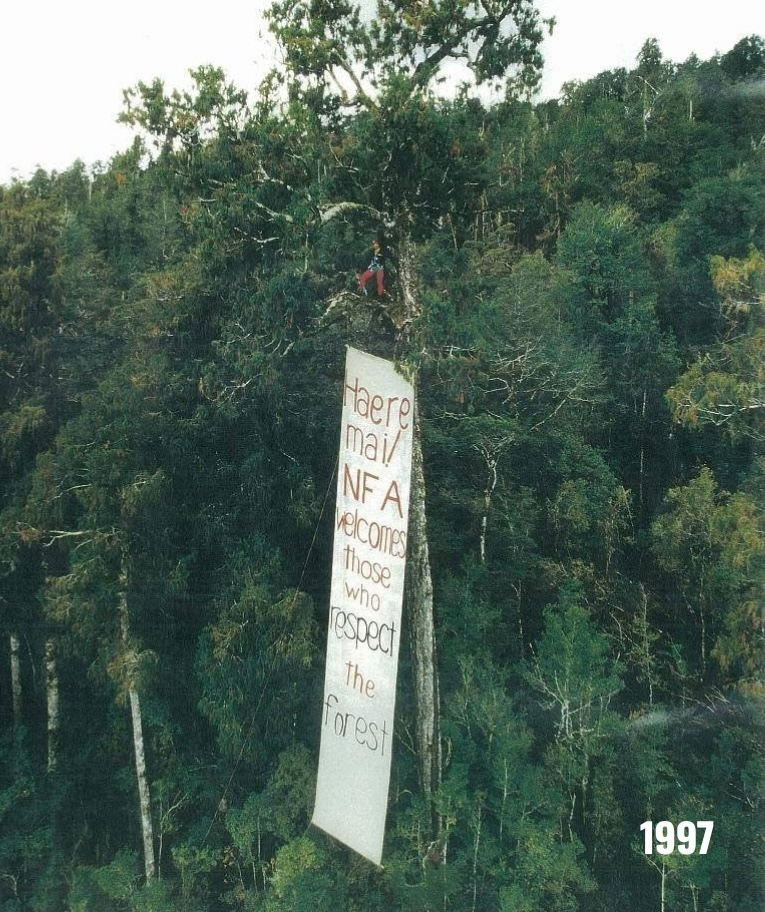
In 1997 a group of environmental activists scaled a tree and didn’t come down. They started a tree sit-in that continued for five months, putting their bodies on the line to stop the logging of native forests on public land.
An image from that time became a lightning rod for the Native Forest Action (NFA) campaign to save the old growth native forests.
One of the activists – Pat McNamara – stood in red pants in a towering tree above a giant banner saying: ‘Haere mai / NFA welcomes those who respect the forest’. The image was featured on a poster that could be found on walls in towns and cities around New Zealand, inspiring a generation of environmental activists.
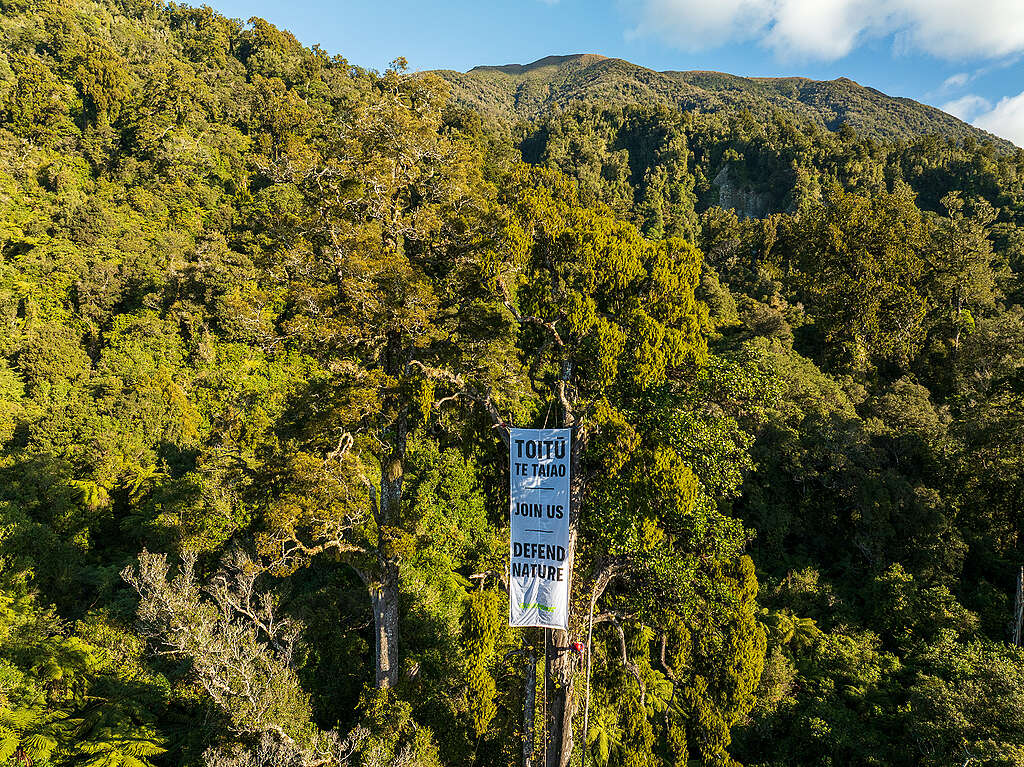
This World Nature Conservation Day (28 July) Greenpeace climbed back into the trees. Deep in an ancient West Coast forest, climbers hung an 18 square metre banner from the canopy of a rimu recreating this iconic environmental protest.
We recreated the image to remind us all that trees can’t defend themselves – we enjoy protected forests because of the actions of countless everyday people who cared, followed a shared vision and summoned the courage to stand up and do something.
That campaign, led by grassroots group NFA from 1997 to 2002, was eventually successful and led to the end of all logging of native rainforest on public land.
The campaign to end logging of native forests
The 1990s were a time when forests on public land were still being logged by a state-owned company.
For five years NFA marched, petitioned, blockaded logging roads, occupied trees and persisted. They acted locally and shared the story nationally.
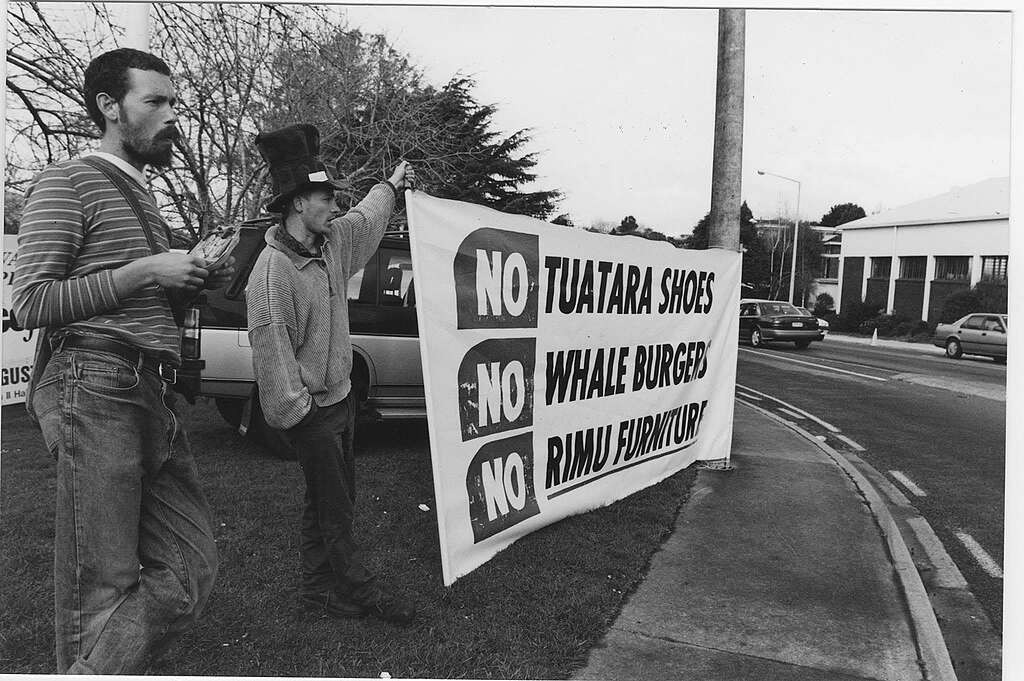
Because of them, many of the forests we treasure are still standing. In 2002, native forest logging on public land was put to an end, and 130,000 hectares of West Coast forest were added to the conservation estate.
29 years later the Conservation Amendment Bill is risking forests again
Today, the protected ancient forests, endangered wildlife, and the places we go tramping, hunting, camping and fishing are under threat because of the policies of Luxon’s Coalition Government.
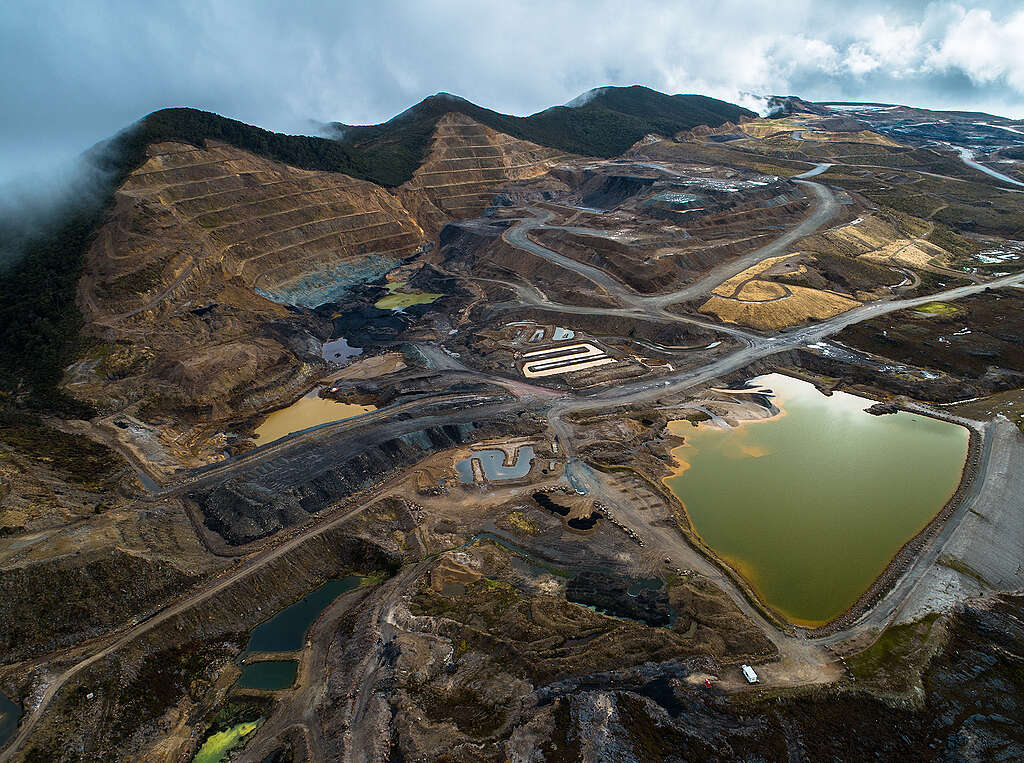
The Conservation Amendment Bill threatens to fundamentally rewrite the purpose of conservation in Aotearoa and make it easier to commercially exploit and even sell off public conservation land. The Bill could open up untouched landscapes into commercial fast food restaurants, hotel chains and open cast mines.
If this Bill passes it would fundamentally change the purpose of our conservation law in Aotearoa. Instead of protecting nature, it would direct the Department of Conservation to enable commercial exploitation of public lands ‘to the greatest extent practicable’, potentially opening conservation land up to logging once more.
The Government’s unpicking of many of New Zealand’s environmental legal protections such as replacing the RMA (Resources Management Act), the Fast Track Bill and looking to sign a minerals deal with the USA threatens natural ecosystems we depend on for life.
We can’t let that happen.
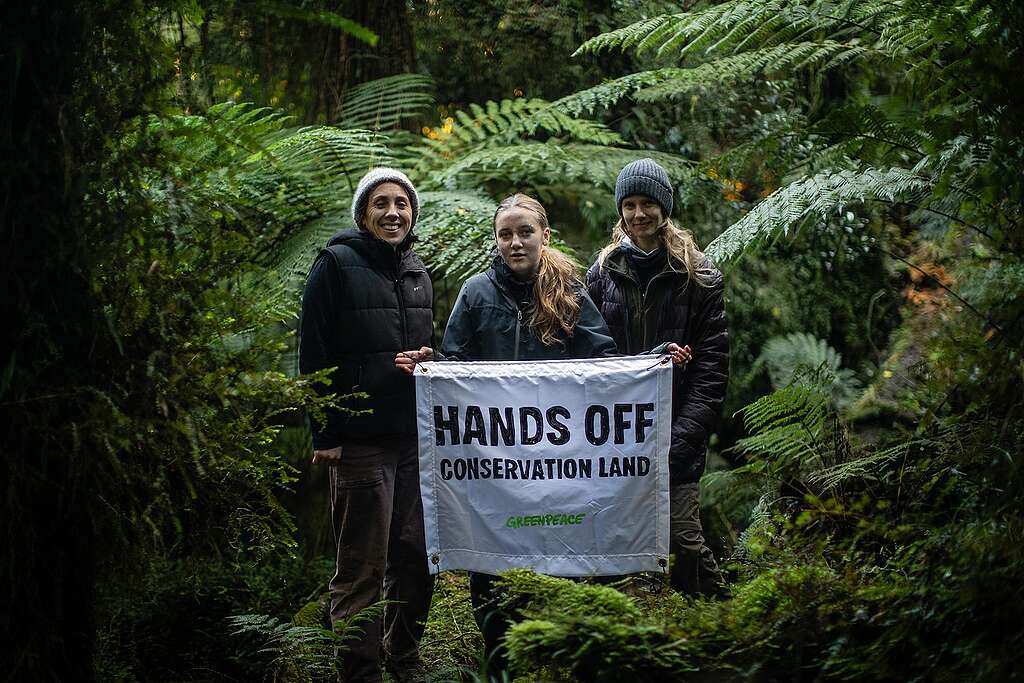
Make a noise for conservation land!
Today we face another defining moment.
Conservation lands are legally protected because of the actions of countless everyday people who chose to resist the unchecked exploitation of nature. People who climbed trees, hung banners, marched, organised and refused to give up. It wasn’t automatic, it wasn’t because of the kindness of politicians, and it wasn’t easy!
We enjoy the Forest Parks, Wildlife Areas, Conservation Areas, and Reserves around the country because of the vision and actions of those before us.
Today, you and I are also part of a movement of people who are now standing up to tell the Government to ‘bin the bill’ to protect their own local conservation areas.
Taking inspiration from those activists before us
The native forests of Aotearoa are unique and have stood for centuries. Long before there was what we now call ‘conservation lands’ these forests were already ancient.
For centuries, iwi and hapū have cared for these forests through connections of whakapapa, guidance of mātauranga and commitment to kaitiakitanga.
More recently, legally protected areas only exist today because everyday people refused to accept their destruction. The people of New Zealand have defended native forests, creating the conservation reserves and National Parks we know today. The land, waters and wildlife of Aotearoa have endured because generation after generation spoke up and stood up on their behalf.
The modern conservation movement grew globally from the 1950s and 1960s as the perspective of society widened to see the damaging impact of human activities on natural areas, wildlife and ecology.
Environmental activists of the times led high-profile actions in the podocarp forests of the West Coast, kauri forests of Pūketi, and giant rimu forests of Pureora and Whirinaki-Te Pua-a-Tāne.
Campaigns to protect the native forests of Aotearoa have grown over time, and continue to the present day. To name a bare handful of moments:
- In the 1880’s Ngāti Tūwharetoa sought to ensure that the mountains of Tongariro, Ngāuruhoe and Ruapehu would never be sold to private interests.
- In this video you can see MPs invited to visit the Waipoua Forest in 1948 as part of an effort to protect the kauri: Logging native forests, Te Ara.
- In 1977 the Maruia Declaration petition was presented to Parliament calling for legal recognition of native forests and an end to their milling. It had been signed by an incredible 341,551 people who called for better protection for native forests.
- Activists held tree sit-ins in 1978 to stop the logging of virgin forest at Pureora, now a Forest Park near Taupō.
- In 1985 the Government ended native logging in Whirinaki State Forest after years of public campaigning to protect it.
In the 1990s Native Forest Action campaigners themselves inspired a generation. Their actions inspired a wave of activism that achieved a ban on all logging of native forest on public land. Many environmental activists now working in various kaupapa were inspired to first get involved in a cause because of the NFA campaigning.
The book Fight for the Forests tells the remarkable story of the NFA campaign, how a group of young activists became aware of government plans to mill vast areas of West Coast beech forest and began campaigning to halt this.
Will you make some noise for nature?
Will enough of us stand up again to protect the forests of today? We can’t do it without you.
You don’t need to spend months in a tree. Join a local photo action, help make a banner, gather some friends at your favourite reserve, or organise something in your own community.
Join the Day of Action to Bin the Bill
We’re calling for a national day of action on Saturday 15 August to make a noise for conservation land and protect the forests of today. People around the country will host their own events and actions to speak out against the Conservation Amendment Bill! Join or organise an event by going to binthebill.nz.
March for Nature! Hands off conservation land
Together with Forest & Bird and allied groups Greenpeace is coordinating the March for Nature. At 1pm on Saturday 19 September 2026 people will come together in Auckland to say ‘hands off conservation land’. Find out more at marchfornature.nz
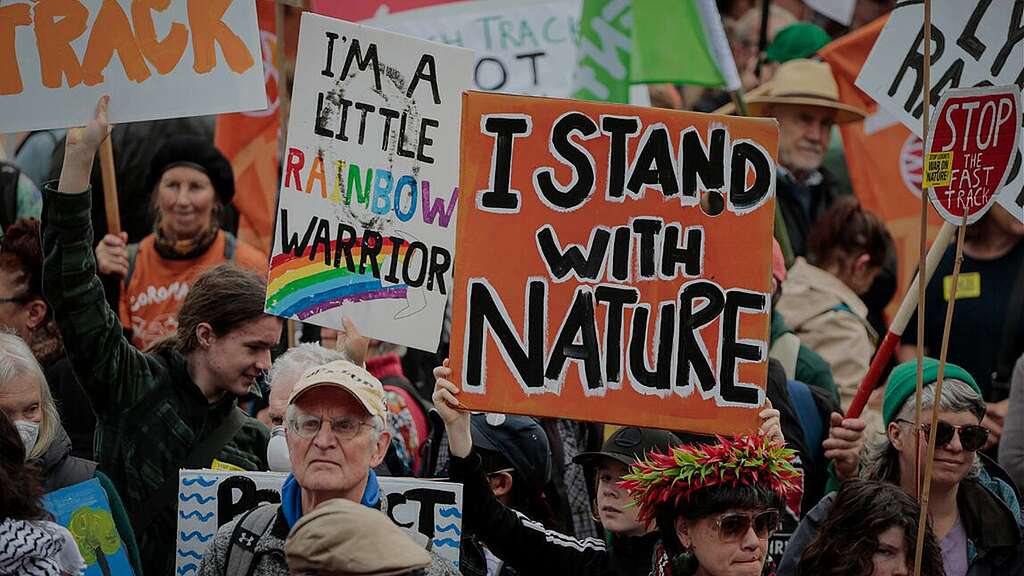
Join us in Auckland on Saturday, September 19th 2026 at 1pm for a peaceful protest to defend conservation land.
Take ActionThe Luxon Government thinks they can slip the Conservation Amendment Bill through with minimal fuss. With your help, we’re going to show them just how wrong they are.
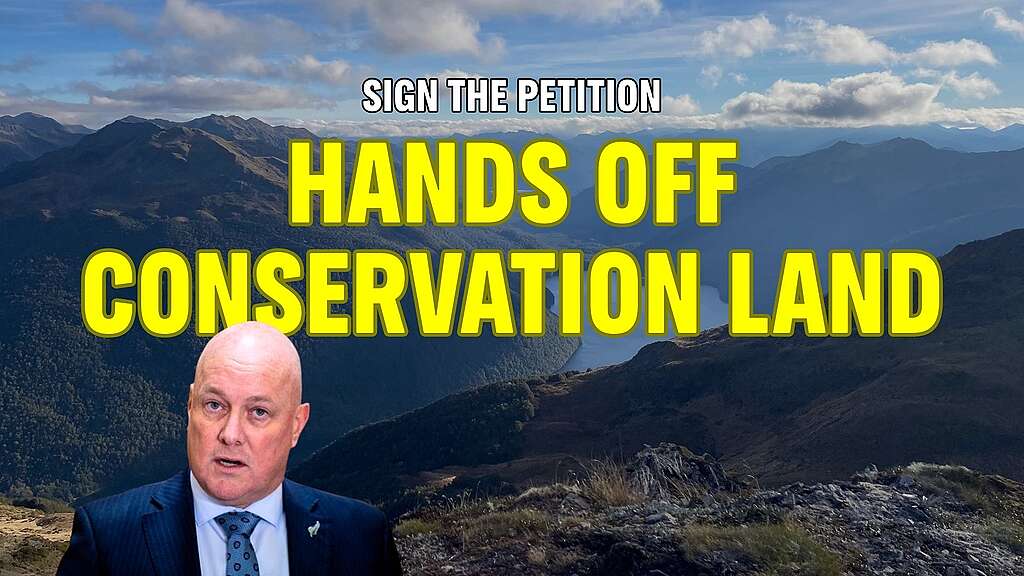
Public conservation land belongs to Aotearoa. Tell the Government: our conservation land is not for sale.
Sign the petition