In 2022 the National Animal Welfare Advisory Committee (NAWAC) proposed to improve the pretty dreadful lives of many dairy cattle in New Zealand by an extensive update to the Code of Welfare for Dairy Cattle.
The dairy industry and the Minister, dairy company owner Andrew Hoggard, fought the changes and ultimately they were largely abandoned, leaving cows stranded.

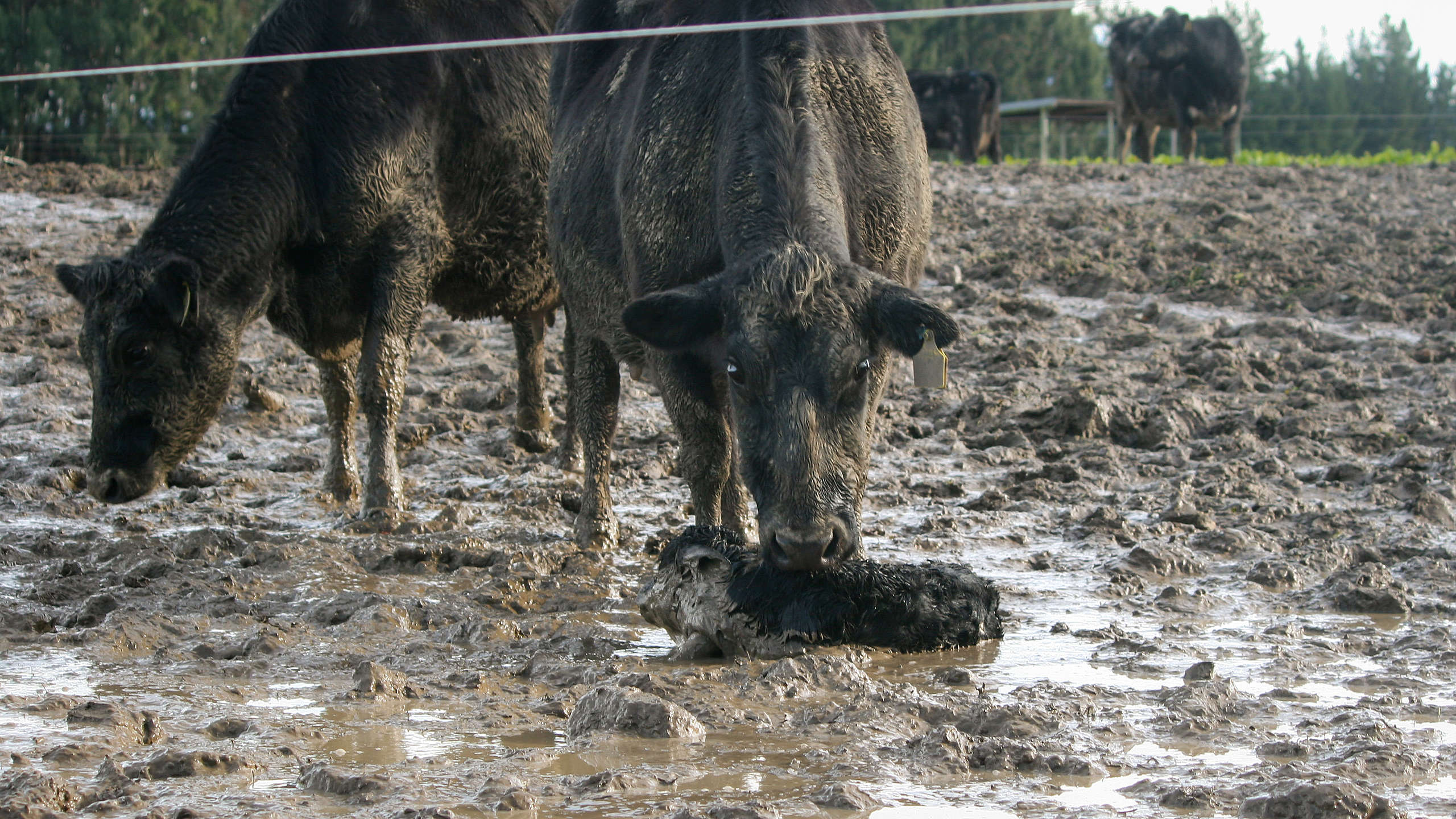
Consistent with the law, many dairy cattle are left in deep mud up to their udders throughout the winter. This is a widespread industry practice called intensive winter grazing. They often give birth in mud. Many dairy cattle have no access to shelter from the cold winter rains and snow, and no access to shade from the hot summer sun. Many dairy cattle are left skinny and boney with prominent spine and rib cage. They have no legal protections from these conditions.
The 2022 draft Code of Welfare for Dairy Cattle would have significantly improved the lives of dairy cattle by requiring that they have access to at least ten square metres of dry land, that they must not give birth in mud, they must have access to shade and shelter, and that they must not be left so skinny.
However, after four years of strident lobbying by the dairy industry, and intervention by the dairy-company-owning Associate Agriculture Minister Andrew Hoggard, when the new Code was finally published in September 2026, the Code improvements were gutted. It became a list of guidelines that can be ignored rather than rules that could be enforced.
Dairy cows were left with no regulations to protect them from suffering miserable lives living in mud, with no shelter from the sun or rain, skinny, giving birth in mud.
Fonterra takes it milk from intensive winter grazing like this:

Did Hoggard declare a conflict of interest?
Andrew Hoggard pushed back against the draft updated Code. He told the Committee to focus more on the profits of dairy companies. And then only later declared a conflict of interest as the owner of a corporate dairy company and former head of agribusiness lobby group Federated Farmers. He claims he withdrew from the process due to a conflict of interest, but he did this only after he had inappropriately influenced it.
So what did the dairy industry want?
The industry lobby group, Dairy NZ, opposed virtually every measure to make life better for dairy cows. I know this because I did an official information act request for their submission – it is linked above.
Dairy NZ opposed the rule that prevented dairy cows getting sooo skinny. And the rule was weakened.
Dairy NZ opposed mandatory animal welfare audits. And they were dropped.
Dairy NZ opposed specific regulation of intensive winter grazing. And the section on intensive winter grazing disappeared.
Dairy NZ opposed the requirement that a cow had access to ten square metres of dry land. And the rule was dropped to just become guidance.
Dairy NZ opposed bans on the use of electric shocks on cows. And the rule was weakened.
Dairy NZ opposed the requirement for shade and shelter. And it was totally dropped.

A captured regulator
As we’ve seen with food safety, the government is a captured regulator, captured by agribusiness that it is supposed to regulate. The Ministry of Primary Industry does what industry wants rather than what is in the public interest.