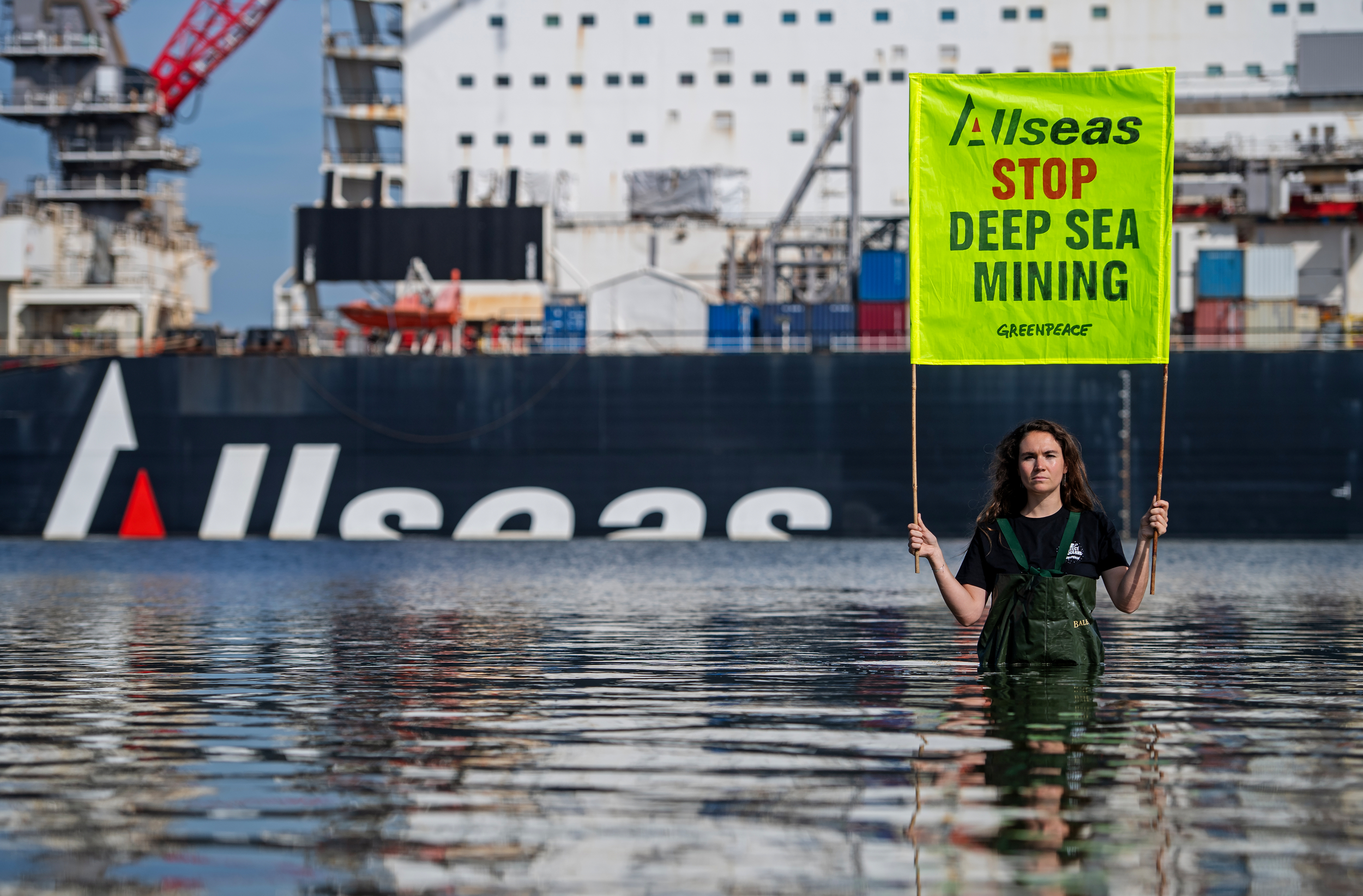
Amsterdam, Netherlands – Public transportation, improved recycling programmes, and advanced battery technologies are shown as crucial solutions to limit mineral demand for a green transition according to a new report.
‘Beyond Extraction: Pathways for a 1.5°C-aligned Energy Transition with Less Minerals’, was commissioned by Greenpeace International, and authored by academics at the Institute for Sustainable Futures at the University of Technology, Sydney (UTS) in Australia. Using different 1.5°C-compatible energy scenarios to explore pathways toward mineral sufficiency and efficiency, the report shows how Earth’s minerals can be administered for a clean renewable energy transformation that protects vital Earth support systems from terrestrial or deep sea mining of so-called ‘critical minerals’.
“Mining often brings environmental destruction and social harm. It is reportedly linked to child labour, workers’ rights violations, land grabs from Indigenous Peoples, ecosystem damage, and threats to communities. Around the world, the minerals ‘rush’ repeats extractivist and colonial patterns, disregards the rights of Indigenous Peoples and local communities, and threatens to undermine the very possibility of a just and green energy transition,” says Elsa Lee, Co-Head of Biodiversity at Greenpeace International.
“We all want a just world where energy is clean, affordable and available to everyone, rights are respected, peoples’ land access and livelihoods are protected, and our planet has a stable climate and rich biodiversity. With this report we underline that it is incumbent upon our governments who regulate the extractive industry to power an ambitious energy transition without mining critical ecosystems on land or at sea,” added Lee.
A key recommendation of the report is that decision makers must prioritise mineral use for essential energy transition purposes. In an era of eroding international cooperation and intensifying conflict, this underscores the importance of coordinated action to protect people and nature, and achieve climate objectives.
Greenpeace International deep sea mining campaigner Ruth Ramos said: “Lines have been crossed on the land that need never be crossed in the deep ocean. Now we know: not only does deep sea mining run against science, ethics, people and the planet, it’s not even needed for a renewable transition. What is needed is for the nations of the world to unite against rogue actors like The Metals Company and Donald Trump and their affronts to international law and cooperation, and instead keep moving towards a moratorium on deep sea mining. Imagine if humans could have protected the world from the harms of the fossil fuel industry before it even started – that is the opportunity when it comes to deep sea mining: it is a historic privilege, and one we must now embrace wholeheartedly.”
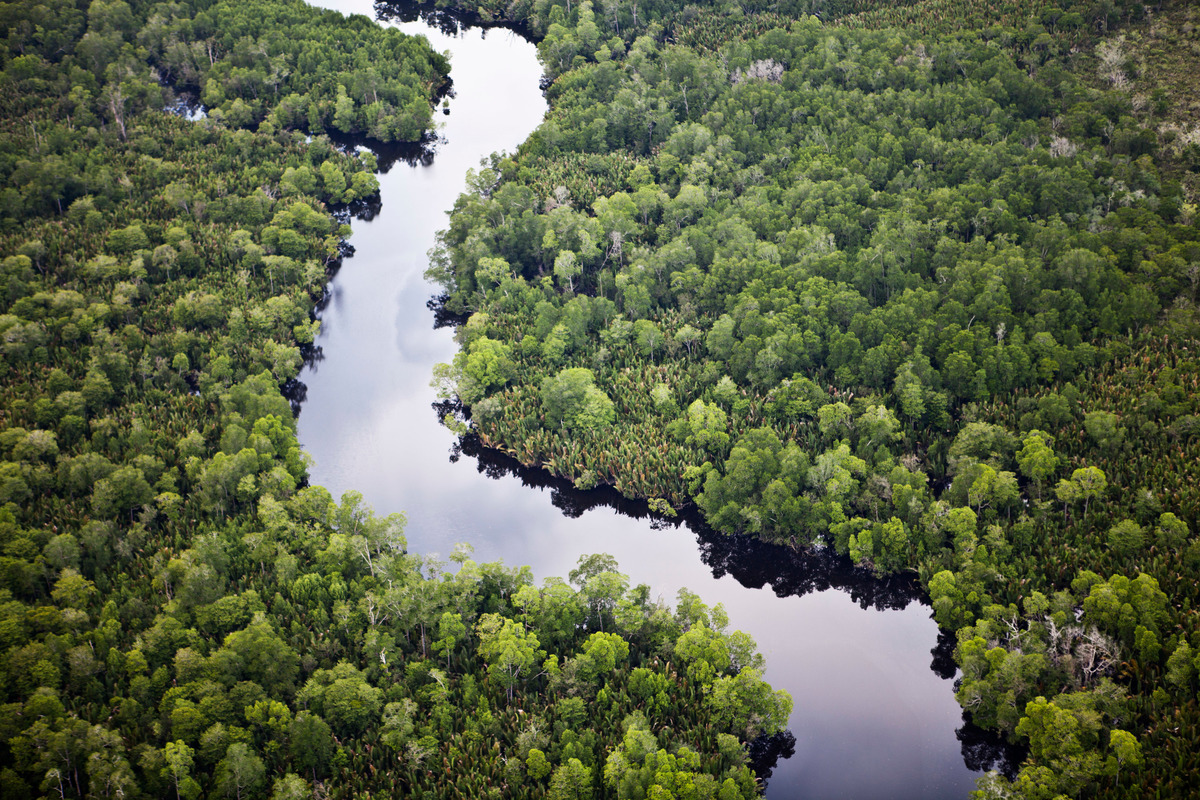
As part of the report, potential mineral reserves areas were compared with areas that – due to their exceptional environmental, ecological, and social importance – must be off-limits to mining. The analysis finds that there is no need to mine these off-limits areas—including, amongst others, the global ocean and protected areas on land —for an ambitious energy transition.
Report author Professor Sven Teske said: “This research highlights how sound policies and innovative technologies can limit mineral demand in a 1.5°C-aligned energy transition. Realising this potential, however, requires responsible political leadership and decisive action today.”
ENDS
Notes:
Report: Beyond Extraction: Pathways for a 1.5°C-aligned Energy Transition with Less Minerals
Research briefing for Beyond Extraction report
Photos available in the Greenpeace Media Library
Contacts:
Greenpeace International Press Desk, +31 (0)20 718 2470 (available 24 hours), [email protected]