Please select which cookies you are willing to store.
Necessary Cookies (required) Always enabled
These cookies are required for technical reasons so that you can visit our website and use the functions we offer. These cookies are used to recognise you between successive visits and thus provide you with a better experience, storing your consent preferences and the last Greenpeace.org website visited.
We use tracking and analysis tools to ensure continuous optimisation and demand-oriented design of our website. These cookies will allow us to collect statistical and anonymised data, such as how visitors use our website or which pages are accessed most frequently, to ultimately improve Greenpeace.org and provide you with a better experience of our website.
In addition to the Performance cookies mentioned above, we may also place in your browser cookies from third-party services (e.g. Facebook or Google) to track the effectiveness of our online marketing strategies and to deliver adverts more relevant to you and your interests. These cookies may also be used to serve advertising to you after you have left our site (retargeting cookies).
August 2nd is Earth Overshoot Day, when the planet groans, burdened by the greed of richer, overconsuming countries and people. According to the Global Footprint Network’s analysis, today marks the point when humanity starts consuming resources beyond the level the planet can replenish in a year.
Overshoot Day has arrived earlier and earlier over the past 50 years. Those of us in wealthier countries must take this as a reminder of our collective responsibility to live lives of greater sufficiency, and to choose governments who will reign in the corporations trampling Earth’s fragile ecosystems and pushing the planet beyond its limits.
According to Global Footprint Network’s rankings, more than a quarter of countries in the world do not overshoot. However, the problem of reducing our ecological footprint is not that we do not have models of sustainable living – it is that most of these countries are characterised by poverty. The richer countries which have been burning fossil fuels to excess have not yet taken the challenging, yet completely doable steps, to live without them. Imagining new ways of living requires some sort of blueprint to guide us.
Uruguay – a story of political will and bold action
One country that offers some ideas for moving forward is Uruguay: a small nation of rolling hills whose experience shows that reducing consumption of the Earth’s resources does not mean a lower standard of living. While there is no ‘one size fits all’ template for sustainability, Uruguay shows that a country’s leaders can be intentional in reducing its ecological footprint.
Looking at its recent past, Uruguay highlights the importance of political will and bold action in achieving sustainability and shows that it can go hand in hand with both economic security for the many and social justice. Uruguay has one of the lowest levels of income inequality in Latin America and an almost complete absence of extreme poverty. The government has invested heavily in education, healthcare, a minimum wage indexed to inflation, and a progressive tax system that redistributes wealth from the rich to the poor – all of which have helped to reduce poverty and inequality.
This focus on social welfare has helped to create a more stable and resilient society, with its people less vulnerable to economic shocks and more likely to weather downturns. It’s no surprise that Uruguay is one of the happiest countries in Latin America, with a strong social safety net and a high standard of living.
Achieving energy independence
Uruguay reduced its dependence on fossil fuels by creating a renewable energy sector that makes it a world leader on this front. In 2008, Uruguay embarked on a countrywide transition to renewable power that today has created one of the world’s greenest electricity grids, powered by 98% renewable energy, mostly hydropower and wind. This commitment to clean energy has created new jobs and economic opportunities, as Uruguay has become a leader in renewable energy technology and exports.
While Uruguay’s leaders have made some good choices over recent decades, not all of its government’s decisions are beyond reproach. Facing the worst water crisis in its history, drought compounded by mismanagement and uncontrolled growth of urban areas has reportedly resulted in the depletion of the main reserve that supplies the capital, Montevideo. Activists have also criticised the authorities for prioritising water for transnationals and agribusiness at the expense of its own citizens, including plans for a Google data centre that is projected to use millions of litres of water.
We are at a crossroads in human history. Those of us living in countries that had an overshoot day long before today can indeed live well without such extreme overconsumption. We can push our governments to follow the example of countries like Uruguay and implement policies that prioritise collective well-being.
For Uruguay’s leaders, businesspeople, and workers, the green transition did not just represent a shift to renewables, it also signalled a shift in their own mindset. Rather than contemplate the paralysing crises of the future, they could approach them as everyday problems with people-centred solutions. Let’s use these positive examples to get rid of Overshoot Day completely.
The AI boom is not progress if it deepens extraction, environmental harm and attacks on democracy. From Ireland to New Jersey, people are resisting a model of AI development that concentrates profit and power while offloading the environmental and social costs onto everyone else.
We analysed 37 government responses introduced since 28 February 2026 to the Iran war oil shock. Many risk deepening the fossil fuel dependence that caused the crisis in the first place.
The world’s largest dairy exporter, New Zealand dairy giant Fonterra has admitted that the packaging on its flagship Anchor-brand butter breached fair trade laws in order to settle a lawsuit brought by Greenpeace Aotearoa in 2024.

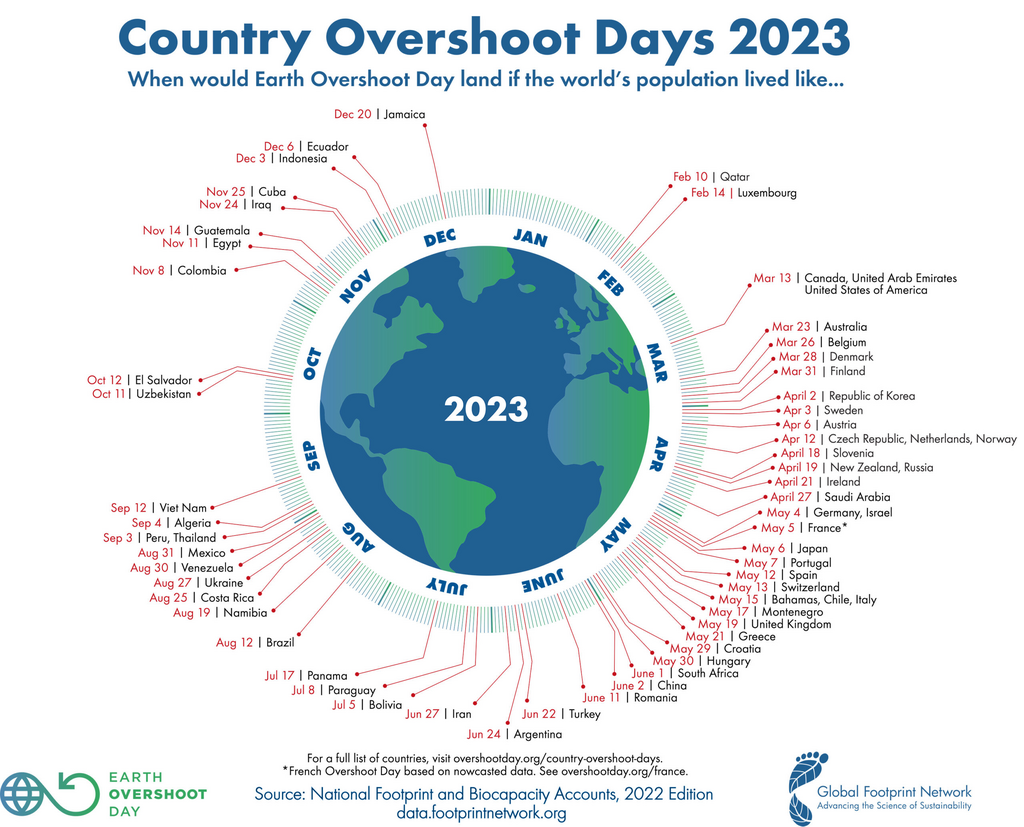 © Global Footprint Network
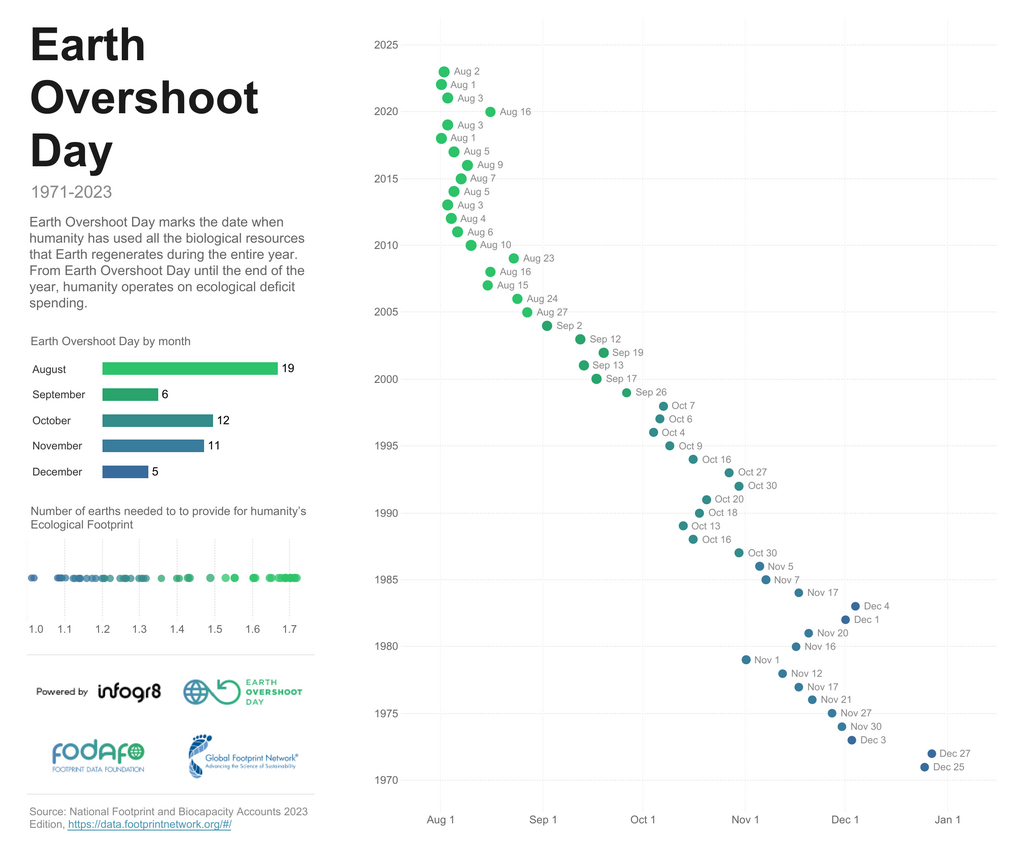 © Global Footprint Network
 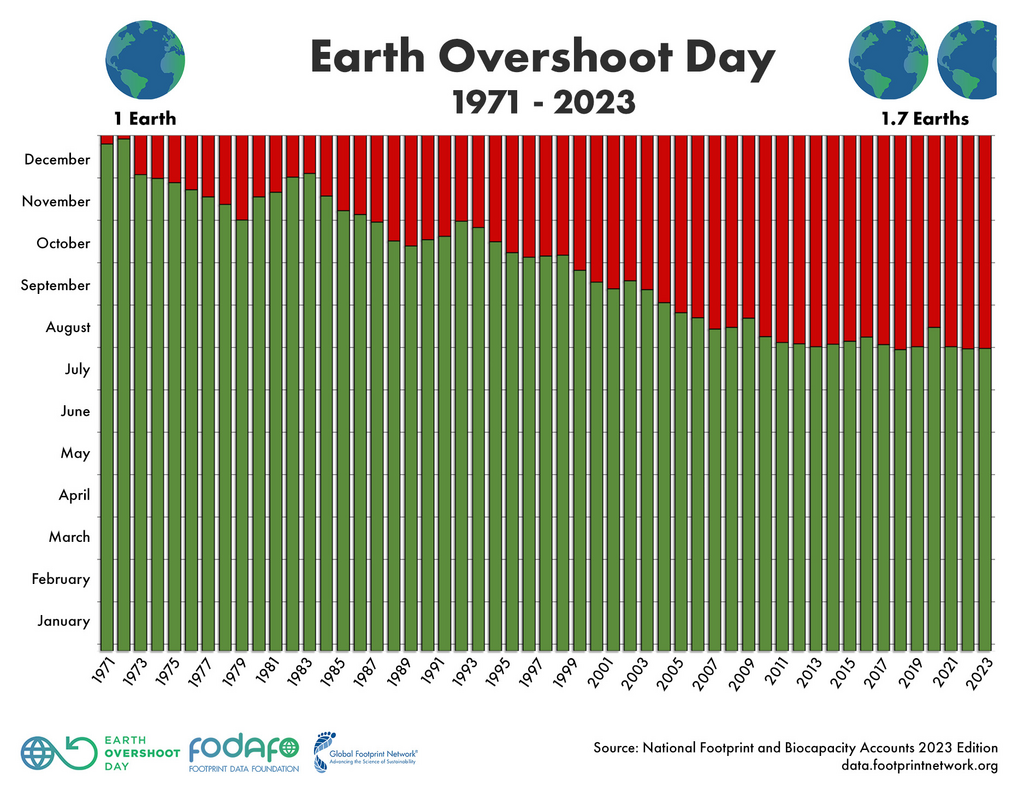 © Global Footprint Network” alt=”Earth Overshoot Day history from 1971 to date.