
Notable wins in the climate, environmental and social justice space to inspire us in our fight for a better, greener, and fairer world for all.
Papua. Major land rights win for Indigenous Peoples

On 6 June, 4000 Indigenous Papuans finally received legal recognition of customary rights over 97,411 hectares of tropical rainforests in South Sorong Regency. The newly recognised Indigenous lands of the Knasaimos Peoples spans an area almost the size of Hong Kong.
As with many Indigenous communities across Tanah Papua (the western half of New Guinea, also known internationally as West Papua), the Knasaimos Peoples have been fighting for decades to protect their customary lands from exploitation by external interests such as logging and plantation companies. Today’s ruling finally provides legal recognition of their rights to the land, forests, water, and other natural resources that are their ancestral heritage.
Germany & the Netherlands. New gas platform paused over environmental concerns
The highest Dutch court suspended the construction of a new gas drilling platform close to the Borkum island off the coast of Germany and the Netherlands. The court’s announcement came while 21 Greenpeace activists blocked the platform from being installed. The construction of the platform remains on hold until the court has concluded on how to proceed in response to appeals against the drilling project brought by local citizens and environmental organisations. This further delays the Borkum gas drilling project and is a crucial milestone in ending new fossil fuel projects.
South Africa. Shell loses appeal in case halting plans for oil and gas exploration

Big win against Shell in South Africa! After protests by the community and fishers, Shell loses its appeal against the landmark decision in 2022 which ruled against their plans to conduct oil and gas exploration off the Wild Coast of South Africa. The court says Shell failed to properly inform and consult affected communities, taking into account community rights and environmental harm. Unfortunately, the fight is not yet over as the court has left the door open for Shell’s application to renew its exploration right. Together with allies and the community, Greenpeace Africa is resolute in continuing to fight to stop Big Oil from exploiting the planet for its own profit.
Global. Renewables generated a record 30% of global electricity in 2023

For the first time, renewables provide 30% of global electricity. More good news is that solar and wind generation growth in 2023 surpassed fossil fuels. This is a striking win to usher in clean and green renewable energy and end the age of fossil fuels.
Oceans. World’s highest oceans court ruling to protect our oceans.
In a historic Advisory Opinion, the International Tribunal for the Law of the Sea (ITLOS), the world’s highest oceans court, found that greenhouse gas emissions are a form of marine pollution and countries are obligated to reduce emissions for the sake of our oceans. The ruling is a huge victory in the protection and preservation of the marine environment.
Brazil. Prosecutor urges banks to halt funding to Amazon ranches linked to illegal activities
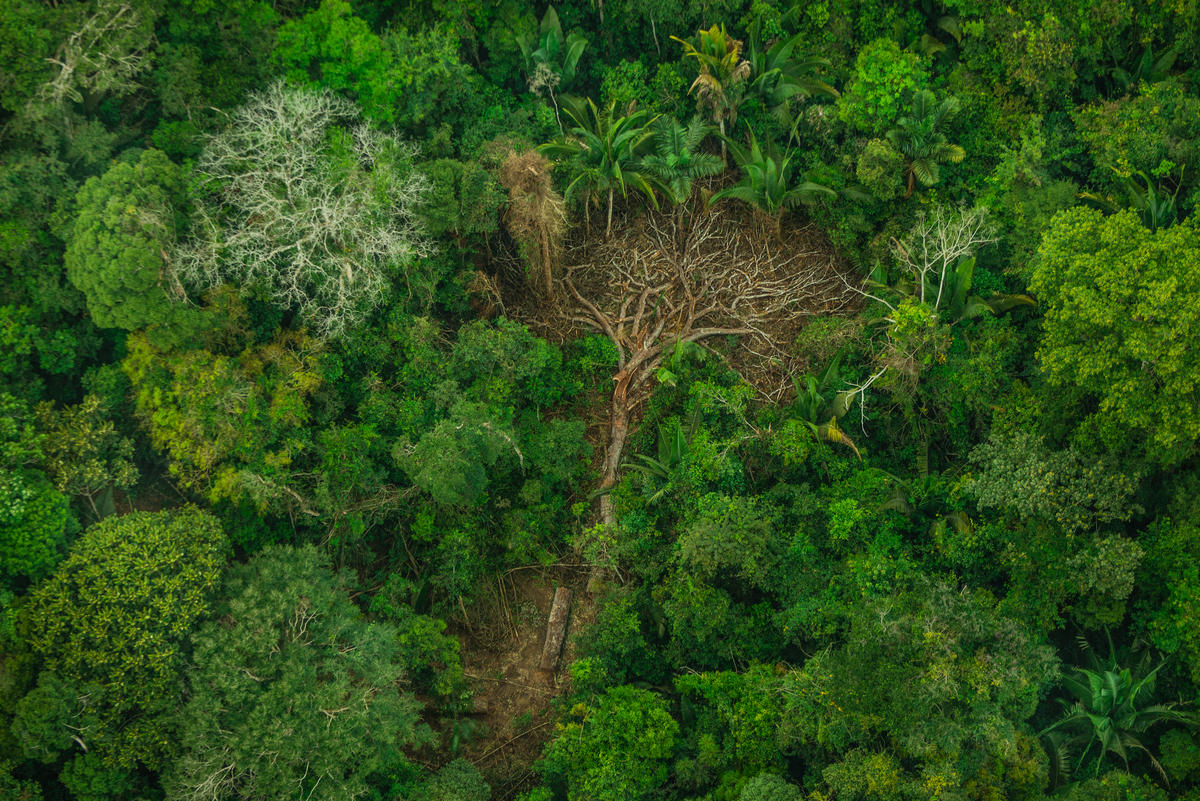
The Brazilian Federal Public Prosecutor’s Office (MPF) has recommended that eight banks immediately terminate contracts granted via the rural credit system to properties located within public forests, Indigenous lands and conservation units in the Amazon. The move follows Greenpeace Brazil’s report, Bankrolling Extinction: Banks and Investors as Partners in Deforestation, which found that rural credit – a key element of Brazil’s agricultural policy – has been financing thousands of rural properties that are driving illegal deforestation, land grabbing of Indigenous territories, and other irregular activities.
The Prosecutor’s Office has now made it clear that banks must take responsibility for their actions and stop financing properties that do not comply with regulations. This is a stunning achievement in the campaign to defund the destruction of nature in Brazil’s Amazon.
Senegal. Greater transparency in management of fishing
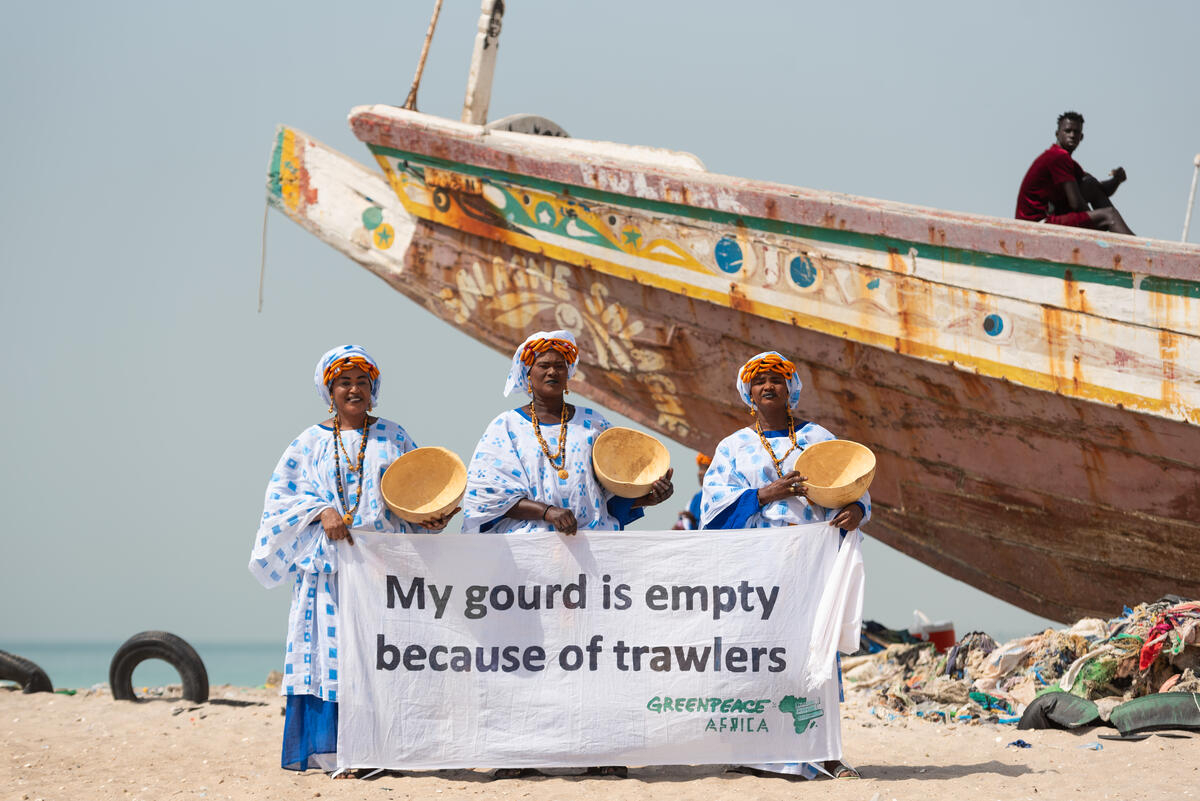
Greenpeace Africa has been demanding for greater transparency in the management of fishing in Senegal, including the publication of the list of vessels authorised to fish in the country’s waters. The authorities have responded by making the list public, demonstrating the new administration’s commitment to transparency. Dialogues have ensued on illegal fishing vessels, leading to the President asking for an audit in order to identify irregularities.
Oceans. The EU ratifies the Global Ocean Treaty

Late April, the EU Parliament voted to ratify the Global Ocean Treaty, which will help governments to protect 30% of the global ocean by 2030, a target that has been agreed by all countries in 2022. It is the first regional organisation to do so, and now we need the 27 EU member states to step up and do their part in ratifying the treaty. At present seven countries – Palau, Chile, Belize, Seychelles, Mauritius, Monaco and the Federated States of Micronesia- have set the ball rolling and we hope the momentum snowballs to get 60 ratifications in time for the Treaty to enter into force by the next UN Ocean Conference in June 2025.