Looking back on the 2026 World Cup, it was undoubtedly an emotional roller coaster for fans. From fun and comradery at fan festivals, to loss and controversy, the last few weeks have been a whirlwind of soccer hype, shwag and of course, lots of corporate advertising. We joined the festivities to let Dove – official personal care sponsor, whatever that means – know that if it really cared about men’s health like its ads suggest, it’s time to kick plastic out of its packaging.
Unilever’s Dove brand used the World Cup to endlessly promote its Men + care products in a campaign about protecting men’s ‘sensitive parts’. Dove is always selling itself as a company that cares – about ‘real beauty’, empowerment, and health. But its plastic-centred business model tells a different story.
Billions of Dove branded plastic packaged products are produced every year, contributing to a growing public health emergency. Unilever is responsible for hundreds of thousands of tonnes of plastic entering global markets, driving consequences on a global scale. As a top global plastic polluter according to brand audits conducted over several years, Unilever is a major contributor to the waste and pollution crisis.
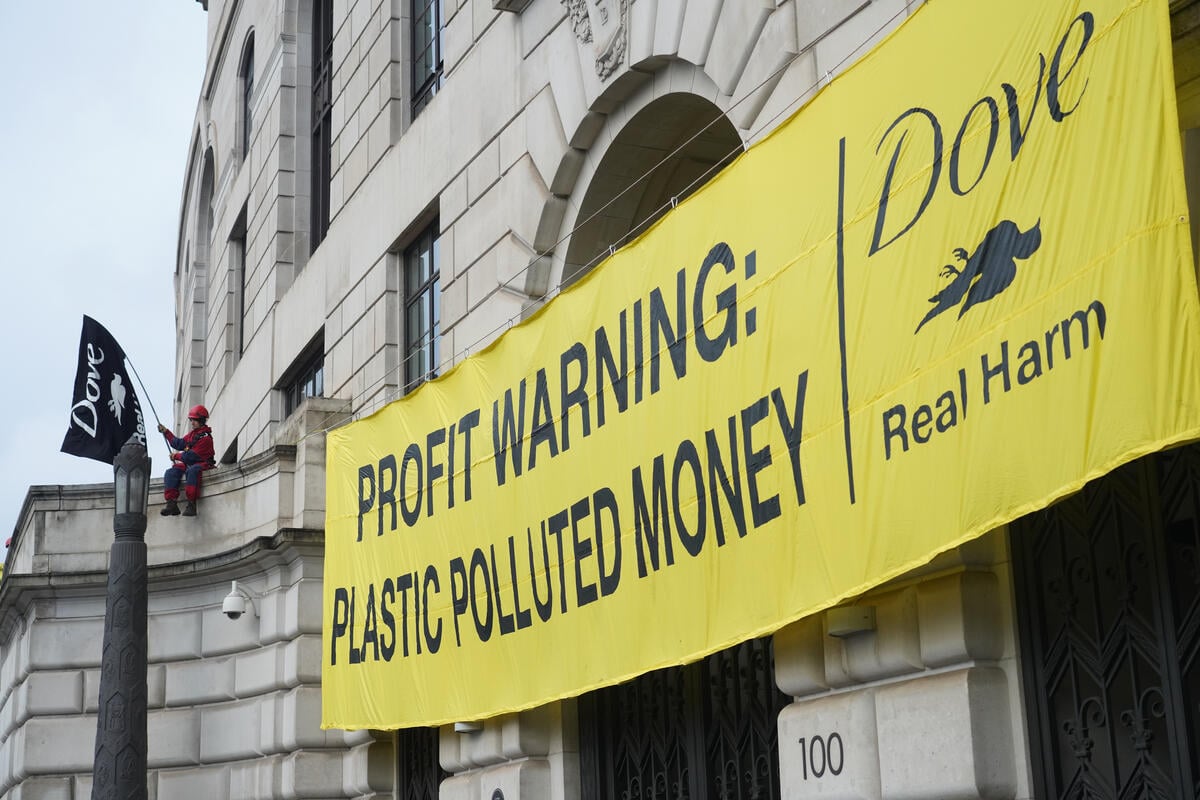
Plastic pollution is a public health issue at every stage. Plastics are made with thousands of chemicals, many of which are a concern to human health. Microplastics are being found nearly everywhere, including our bodies. The growing body of science on plastic and health make it hard to ignore the role that major consumer goods polluters are playing in our collective plastic burden.
Recent headlines about a possible connection between exposure to microplastics and/or plastic chemicals and impacts on sexual health and fertility have us thinking about…the package.

Early studies reveal microplastics may be showing up in penile tissue and semen. Some plastic associated chemicals are capable of interfering with male hormone systems. A new study has identified how exposure to polyethylene microplastics could contribute to erectile dysfunction in mammals. With all the human suffering the plastic pollution crisis already causes, the prospect of plastic impacting sexual health is a striker’s kick in the balls.
During quarter finals, as fans gathered at an event near the Brooklyn Bridge, Greenpeace USA lit up the bridge and the New York skyline with a message for World Cup fans: “Defend Your Balls. Dove, Kick Plastic Out.” As a trusted brand, we thought its customers should know that Dove is not only a top sponsor of World Cup, it’s also a top sponsor of plastic pollution, and that’s not only an environmental problem, it’s a human health concern.
The Plastic Detox documentary created a buzz earlier this year because it raised some important, and alarming, questions about how exposure to plastic’s chemical cocktail through everyday products could be taking a toll on sexual health and fertility. While the science isn’t yet at a stage to connect every dot, growing concerns add yet another reason that plastic-dependent companies like Unilever should halt business as usual and consider what it could be contributing to.
Microplastics and plastic associated chemicals can enter our bodies through what we eat and drink, the air we breathe, and what we put on our bodies. Microplastics have the potential to damage human cells and tissues, and plastic chemicals include known endocrine disruptors, some of which have been identified in the human body, have shown evidence of detrimental health effects even at very low levels. Plastic pollution is a growing public health emergency, and while policy makers react in slow motion instead of proactively with the precautionary approach, companies like Unilever are taking advantage of the lack of health and plastic regulations that would turn off their throwaway plastic machines once and for all.
Somehow companies like Unilever have normalized pollution as a part of their business model, and work hard to normalize false solutions that never get at the heart of the issue – making too much plastic. But the harm that plastic packaging has caused to people and the planet, particularly in countries in South and Southeast Asia, and Africa that have been flooded with sachets, is anything but normal, or ethical. Greenpeace UK first shone a light on Dove’s toxic influence with the release of its 2023 report, and since then the movement to ditch sachets and return to more traditional low waste product delivery practices has grown louder. Some communities have clearly said enough is enough.
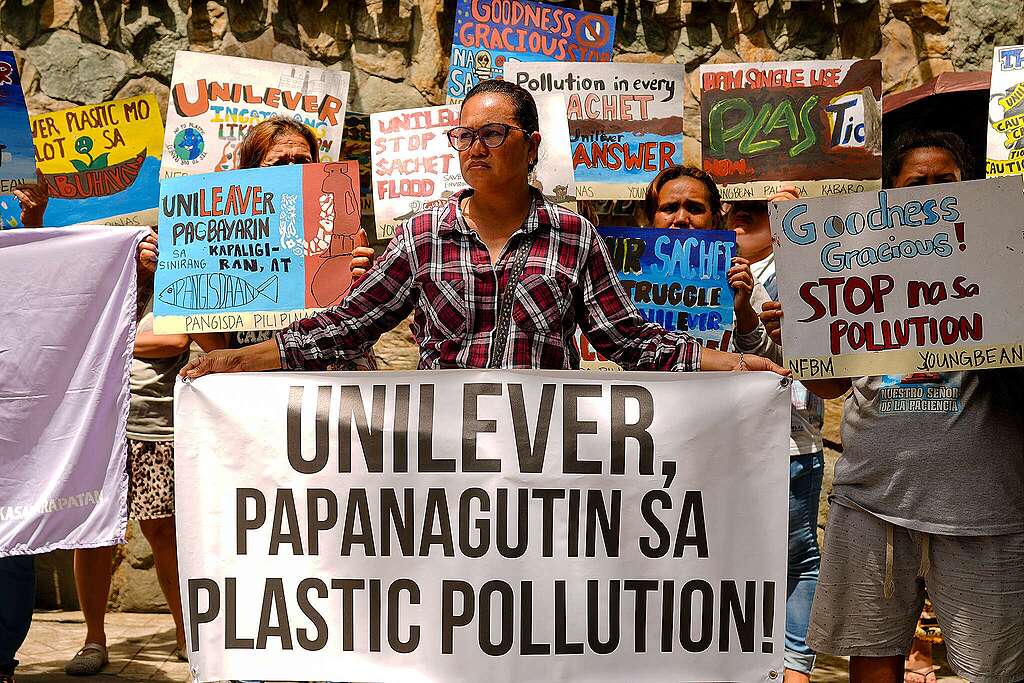
In April 2026, a brave group of people composed of Filipino fisherfolk, youth, waste workers, and environmental advocates filed a landmark pollution complaint at the Department of Environment and Natural Resources against Unilever PLC and Unilever Philippines, Inc. on behalf of their communities. These groups rose up against Unilever to hold it accountable for the decades of environmental and economic damage caused by the company’s massive production of single-use plastic sachets.
Billions of sachets have inundated Philippine waterways, coastal communities and cities, leading to floods, contaminated food systems, degraded ecosystems, and disrupted livelihoods of fisherfolk and waste workers. Because of their multi-layer design, sachets are persistent, non-recyclable, and an environmental menace. Accusing Unilever of violating multiple major environmental laws, the coalition is seeking accountability. They seek administrative fines, an immediate cease-and-desist order on the manufacturing of flexible plastic packaging, and a mandate for the corporation to exclusively fund the cleanup of affected Philippine waterways.
Unilever knows it has a plastic problem. So what will leadership do next? Dove Men + care customers need a win.
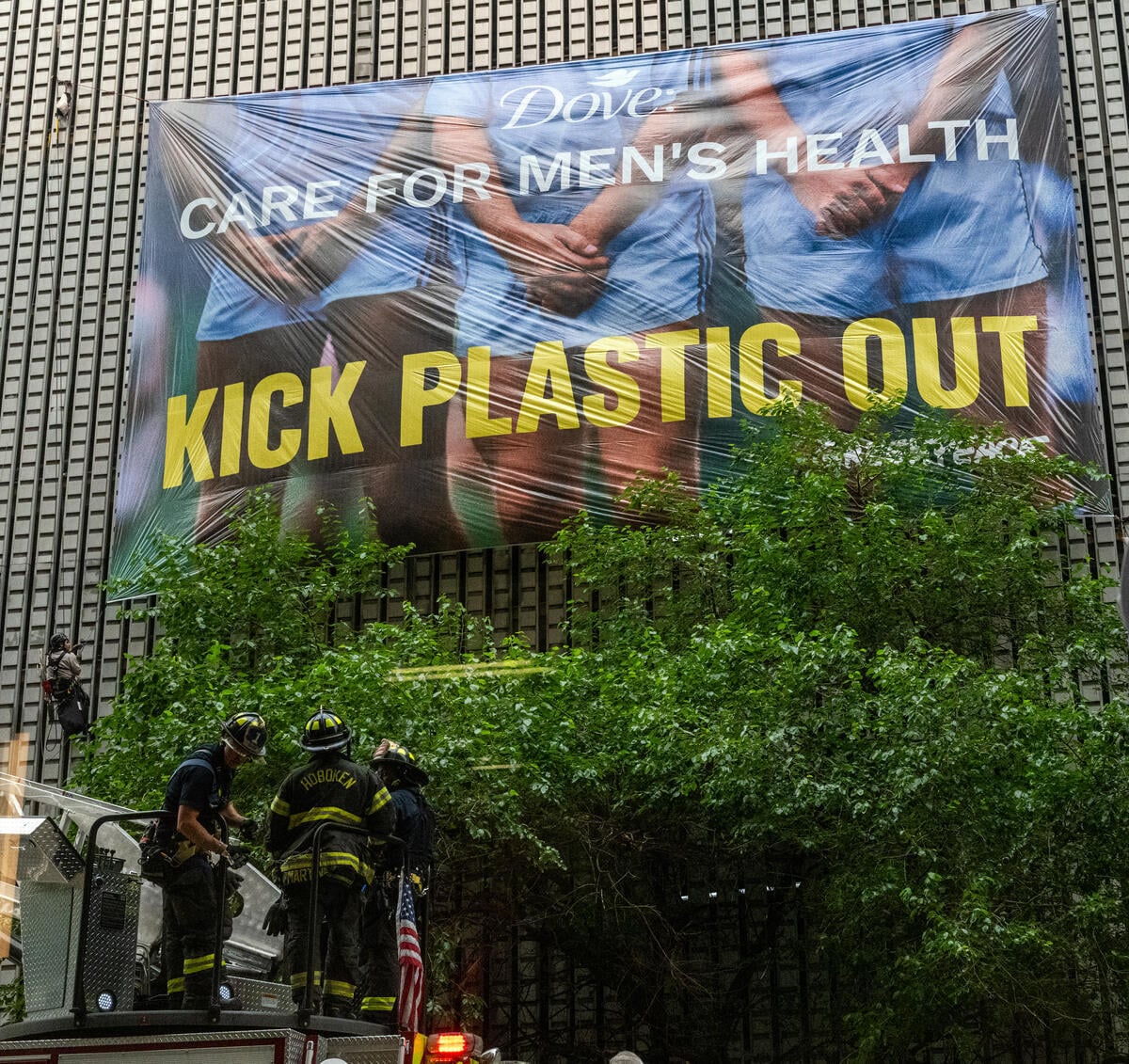
Just days ahead of the World Cup 2026 finals, Greenpeace USA activists unfurled a 50-foot banner outside Dove’s USA headquarters with the message “Dove: Care for Men’s Health, Kick Plastic Out.” Activists dressed in soccer jerseys also handed out ‘red cards’ penalizing Dove.
Unilever must immediately take the following actions to step up its game.
- Commit to phase out plastic packaging, starting with sachets,
- Create a roadmap to transition to reuse and refill globally
- Continue to call for a strong Global Plastics Treaty that cuts production
- Collaborate to grow support for strong regulations on reduction and reuse
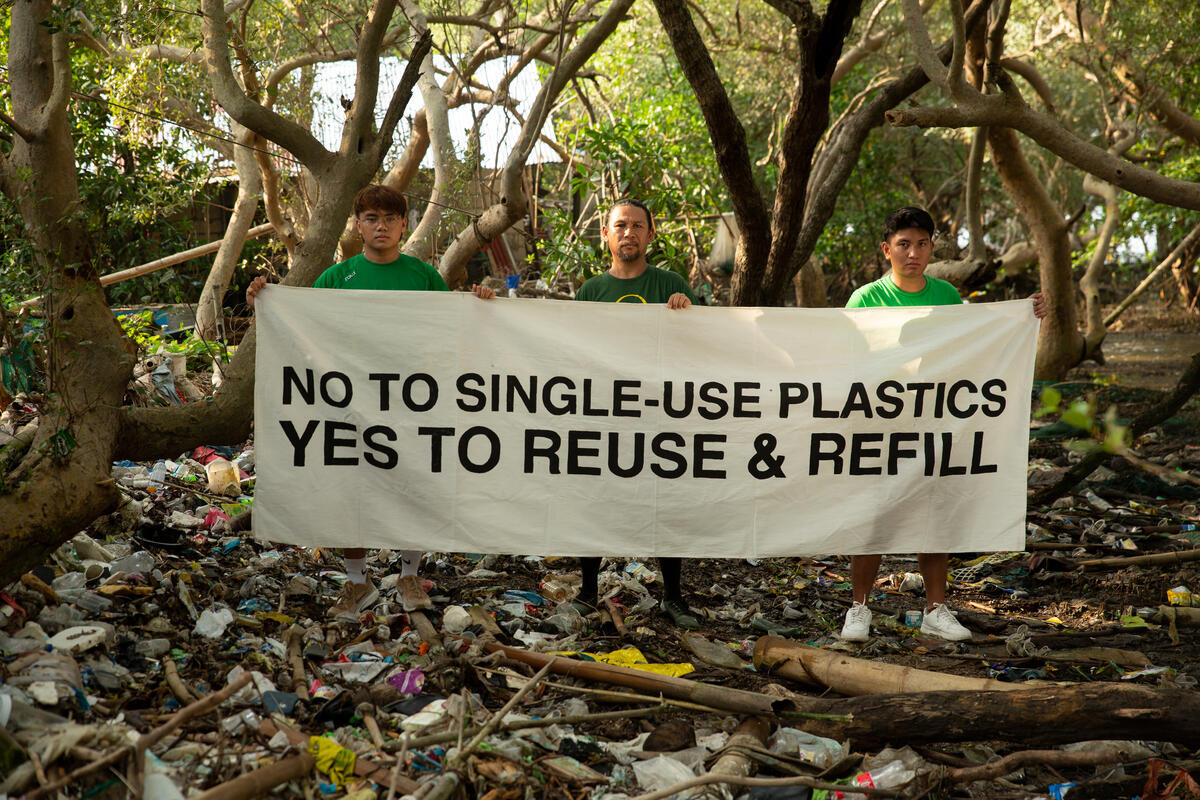
Greenpeace and thousands of people have asked Dove to ditch plastic sachets and swap its plastic packaging for reusable alternatives. Dove has invested in various reuse projects, including the much anticipated city-wide, multi-brand, multi-retailer reuse initiative in Ottawa, Canada that is set to launch later this year. Various Dove personal care products will be part of the project, meaning reusable packaging alternatives will actually be available on store shelves. Unilever’s role in this reuse project is the type of leadership we need more of from the company, and what we don’t need more of is 100% plastic packaging or paper-based sachet false solutions that continue to perpetuate a broken, harmful, plastic-dependent, single-use system that continues to drive the waste and pollution crisis worldwide, every single day.
Unilever is demonstrating that it knows that healthier, plastic-free, reusable packaging options for personal care products exist, but still refuses to expedite a reuse transition and put people before profits.
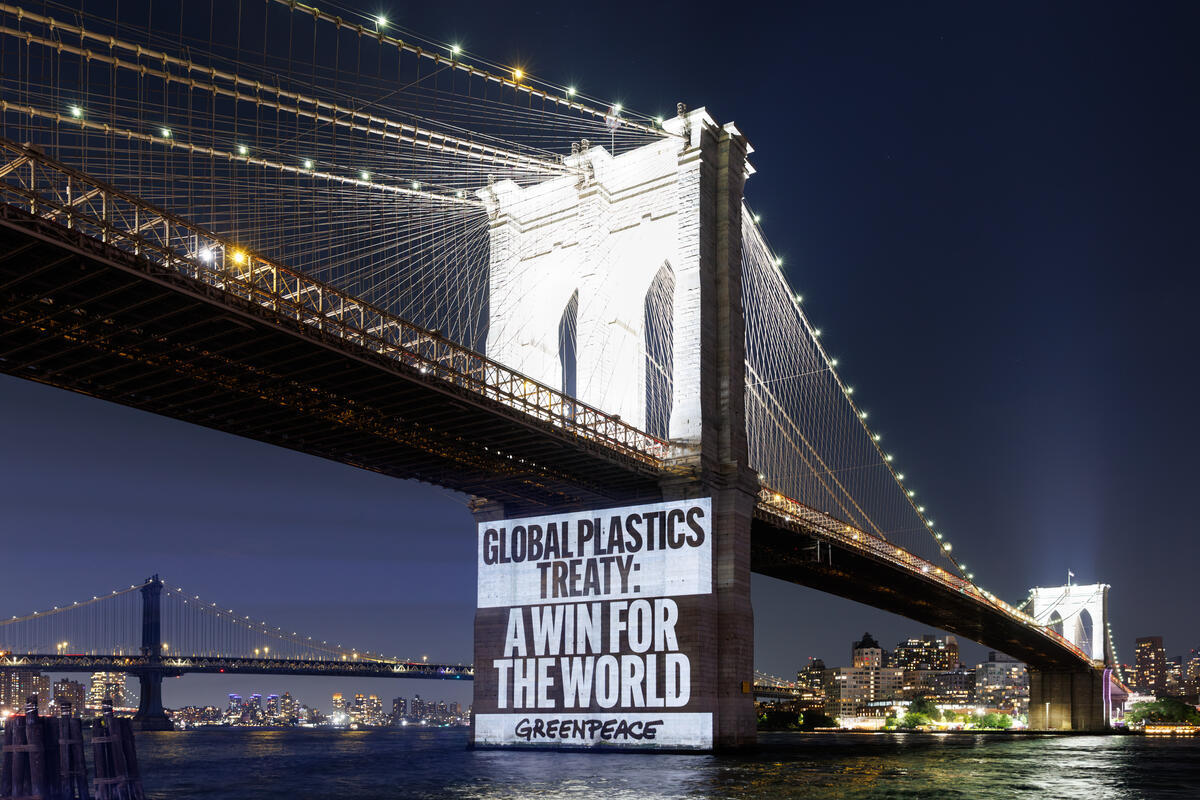
Companies serious about ending their plastic problem should commit to ditch plastic and call for a strong Global Plastics Treaty that accelerates a shift from plastic-dependent business models to plastic-free, zero waste, non-toxic reuse systems worldwide.
Join us in urging Unilever to kick plastic out of its packaging!
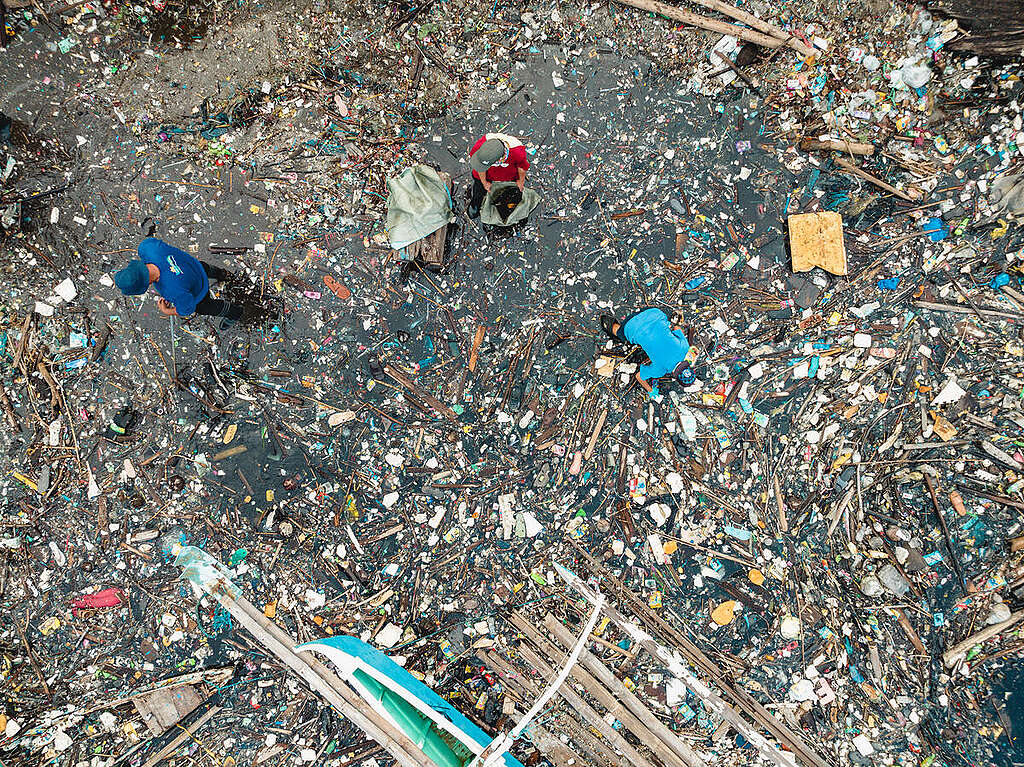
Plastic packaging isn’t a necessity; it’s Dove’s choice.
Add your nameSarah King is a senior campaign strategist at Greenpeace Canada for the Plastic Free Future campaign.