For a long time, the answer to this question seemed pretty simple. Being rich meant having money. Lots of it. Enough to live extravagantly, buy whatever you want and never really have to worry about the cost. But over the last few years, the conversation around wealth has become a lot more complicated.
It has become harder and harder to ignore just how much wealth is concentrated in the hands of a tiny few, particularly at a time when the cost of living is rising, inequality is growing and governments are struggling to find the money needed to respond to the climate crisis.

And extreme wealth does not exist in a bubble. The way money is accumulated, taxed and distributed has a very real impact on the societies we live in and the planet we all depend on.
That is where Fair Share for People and Planet – a Greenpeace campaign to fight for fair global tax rules – comes in.
Why the world needs fair taxation
In 2025, we asked people around the world to join us in calling for fairer global tax rules and a future where everyone can live safely, securely and with dignity on a liveable planet.
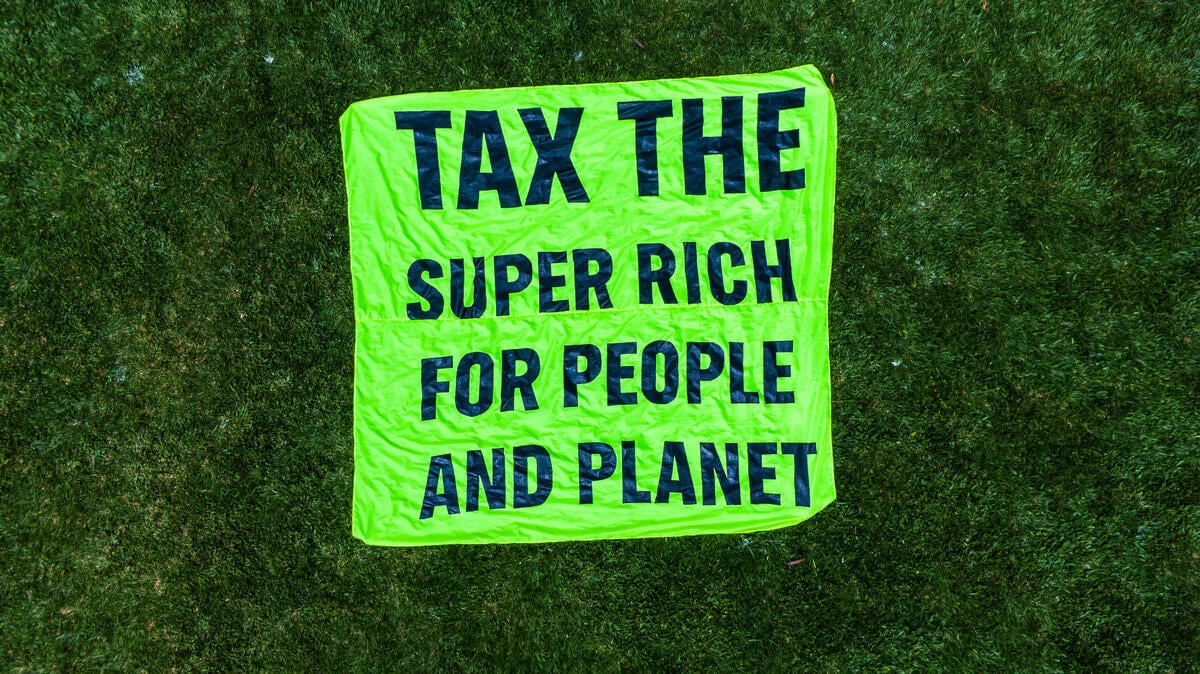
Put simply, we’re asking governments around the world to make the super rich pay their fair share. The money for fighting the climate crisis is there, it’s just in the wrong hands. By setting up new global tax rules, we can change a currently pretty unfair game for the better.
And now we have reached a pretty big milestone.
200,000 people have added their names to our Tax the Super Rich petition.
Climate action needs money. So does healthcare. Education. Public transport. Disaster response. Sustainable housing. Clean water. Stronger public services.
The list goes on.
But the world is not simply short of money. Huge amounts of wealth already exist. The problem is that too much of it is concentrated at the very top, while governments do not always have the political or fiscal tools needed to direct those resources towards the things our societies urgently need. And in some places, the problem is deepened by corruption too, meaning people cannot rely on governments to manage resources fairly or transparently.

That is one of the central ideas behind our Fair Share campaign: there is enough money to fund climate and nature action, but too much of it is concentrated in the hands of the super-rich. Fairer taxation can help redirect more of that wealth towards people, the planet and essential public services.
This is why Greenpeace is talking about tax. Climate justice and economic justice are deeply connected.
When a flood destroys homes, when a drought threatens food supplies, when extreme heat puts lives at risk or when the cost of basic necessities rises, the impact is not felt equally.
Who has savings? Who has insurance? Who can relocate? Who has access to healthcare? Who gets support when things go wrong?
These are climate questions, but they are also economic ones.

What will fair taxation on extreme wealth achieve?
At its heart, Fair Share is about something pretty simple: creating fairer tax systems where those with the greatest wealth contribute more towards the functioning societies we all depend on.
It is about making sure our tax systems reflect people’s ability to contribute, and making sure governments have the resources they need to invest in a safer and more secure future.
The campaign is also part of a much bigger global effort to change the rules themselves.

Greenpeace and allies around the world are pushing for an ambitious UN Global Tax Treaty, including stronger measures for taxing high-net-worth individuals and multinational corporations. The bigger goal is to build the public pressure and political leadership needed to unlock more public money for a fast, fair and people-focused transition.
Because fair taxation is not just a nice idea. It is a practical solution.
It can help fund climate action, public services, debt relief and stronger communities, while moving us away from the idea that philanthropy or voluntary generosity can somehow replace functioning and fair tax systems.
What has the Fair Share campaign to tax the super rich achieved so far?
Over the past year, this conversation has moved from policy spaces into streets, cities, social media feeds and everyday conversations around the world.
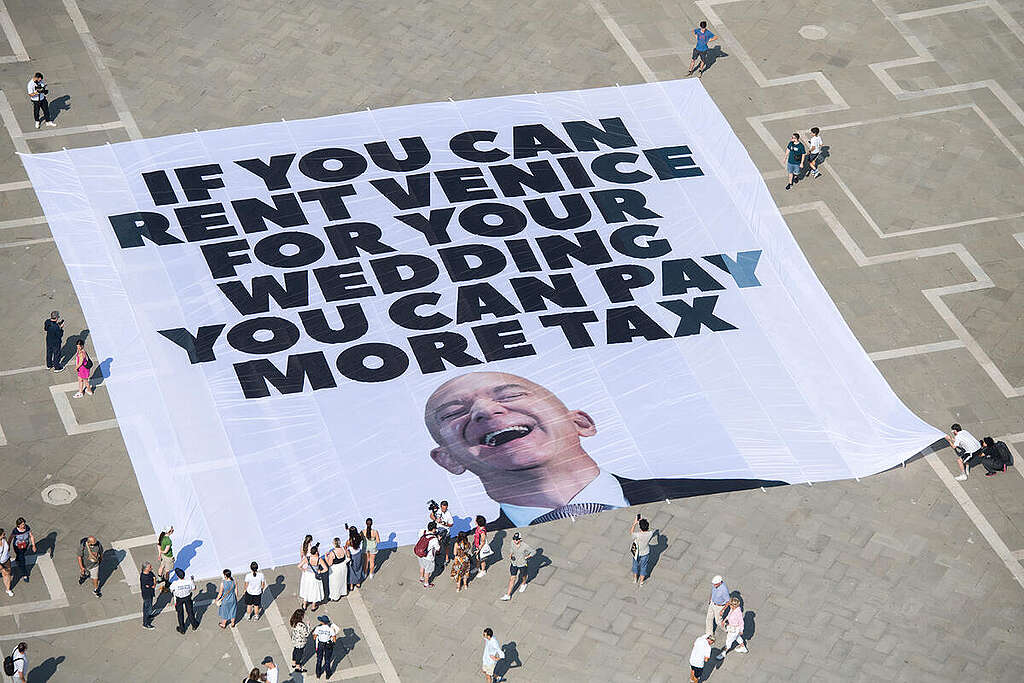
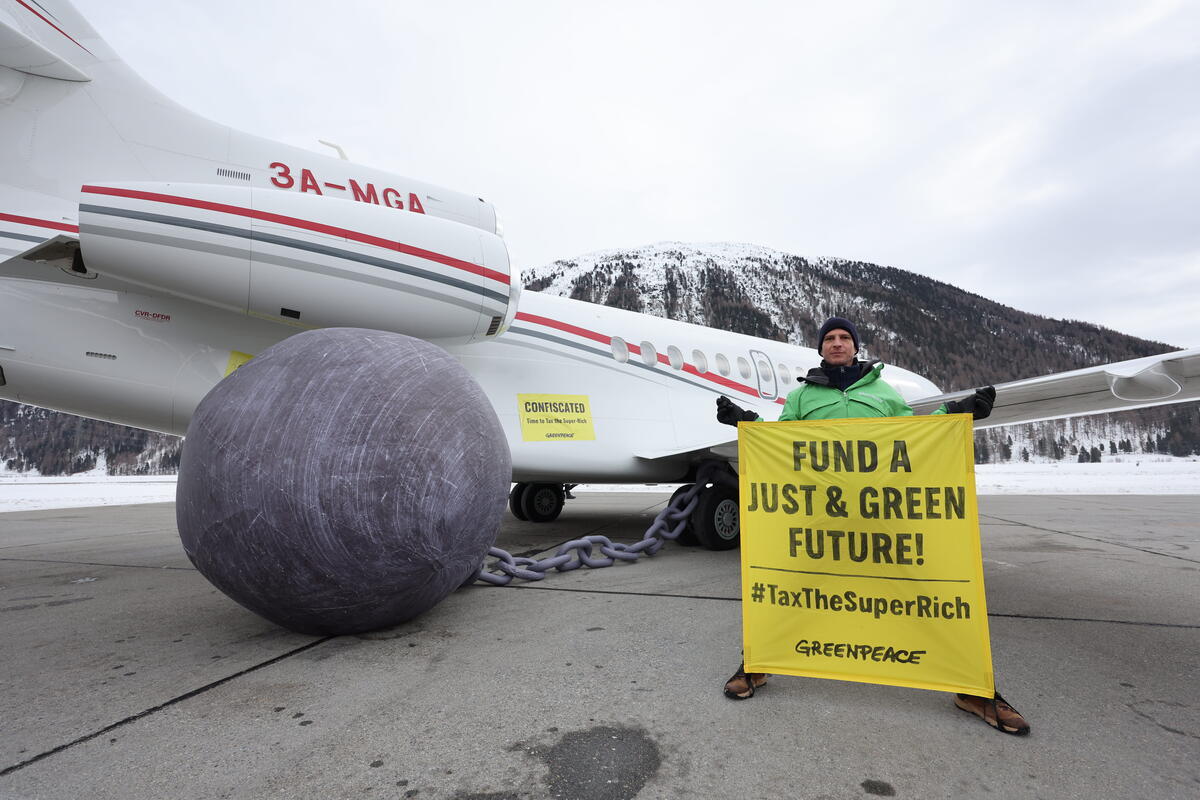
In Venice, a Greenpeace action calling for Jeff Bezos to pay more tax became part of a much wider conversation around extreme wealth. Social media videos featuring footage of the action received more than 35 million views, while the protest received widespread international media attention.
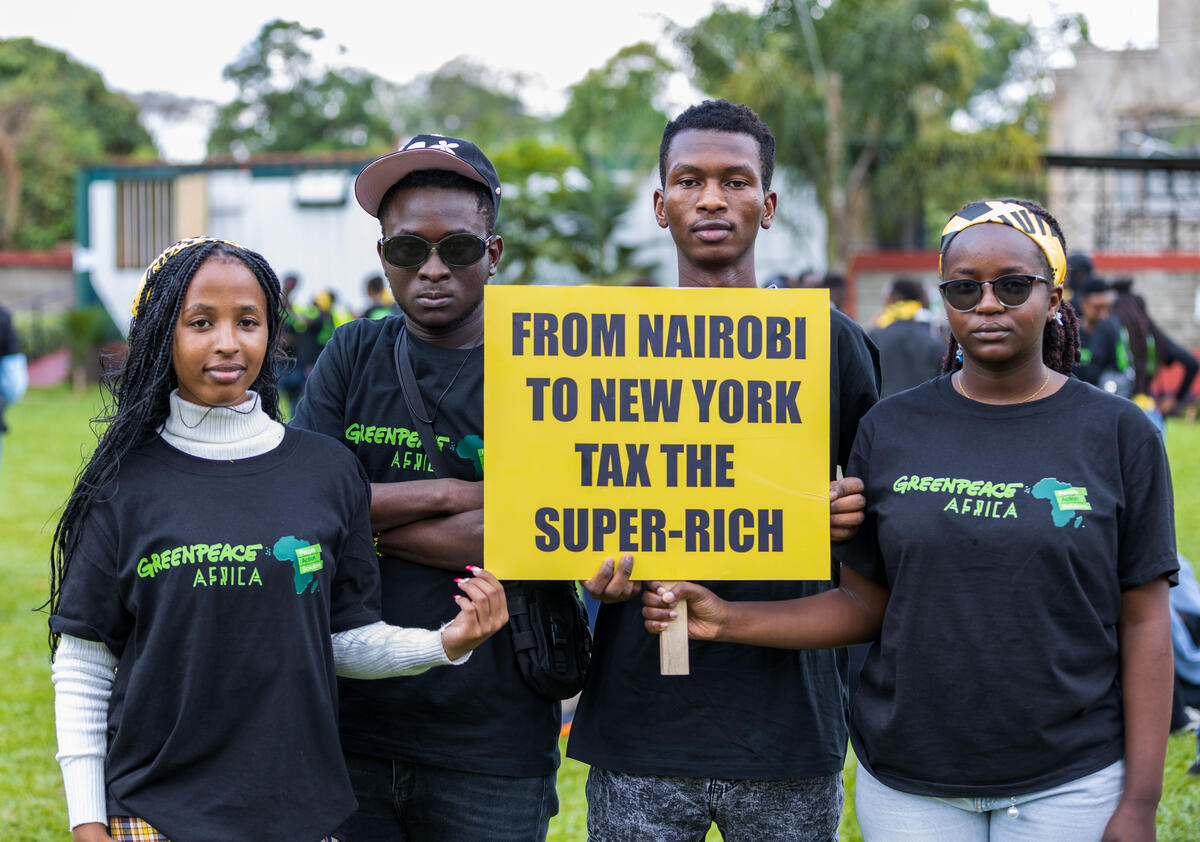
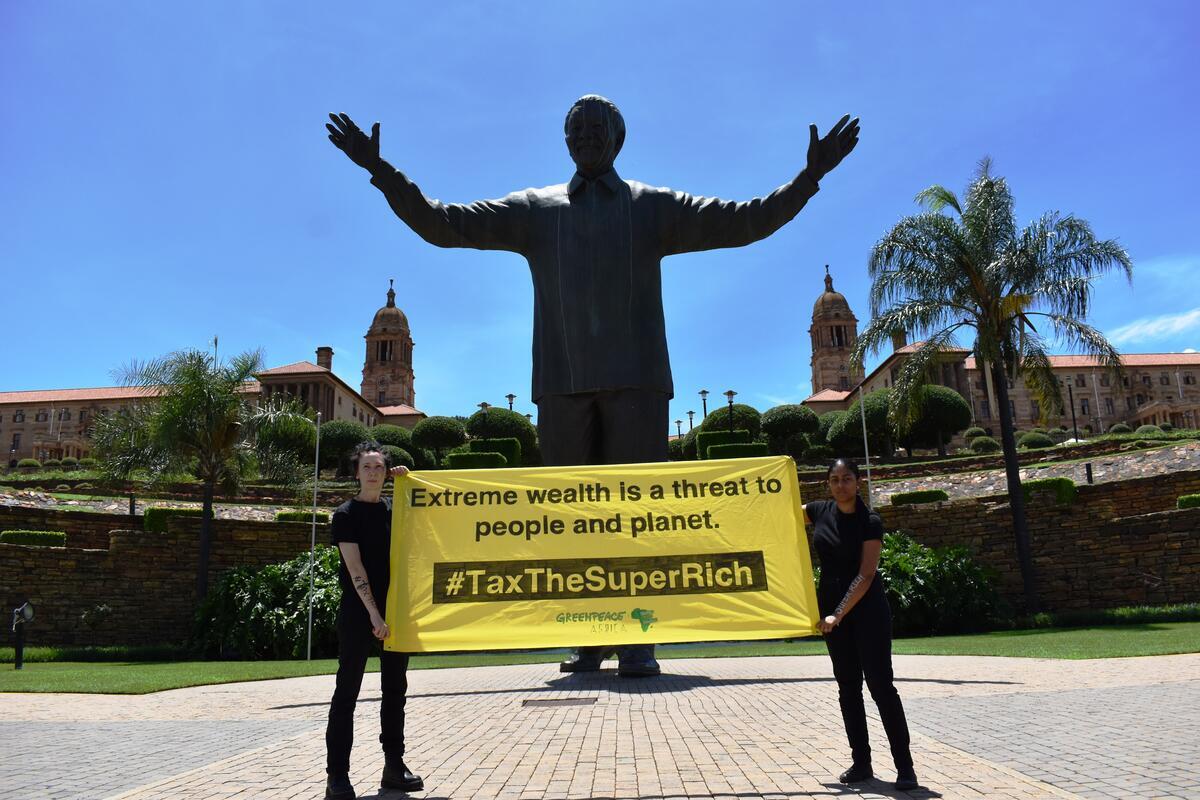
In Johannesburg, Greenpeace Africa took the call to Tax the Super Rich directly to the G20 in 2025.
We have also been testing how people actually respond to conversations about tax.
Across six African countries, some of the most convincing messages were based on a very simple principle: people with more wealth should contribute more according to their ability.
Other strong messages focused on how fair taxation can help countries fund development, and how greater tax contributions from billionaires and large corporations can help improve things like schools, hospitals and roads.
People power works
That number matters because of what it represents.
It is 200,000 people saying our economies can work differently.
It is 200,000 people asking governments to build fairer tax systems.
It is 200,000 people saying that those with the greatest ability to contribute should play their part in funding the societies we all rely on.
And it is 200,000 people joining a much wider movement asking what our economies are actually for, and who they are supposed to serve.
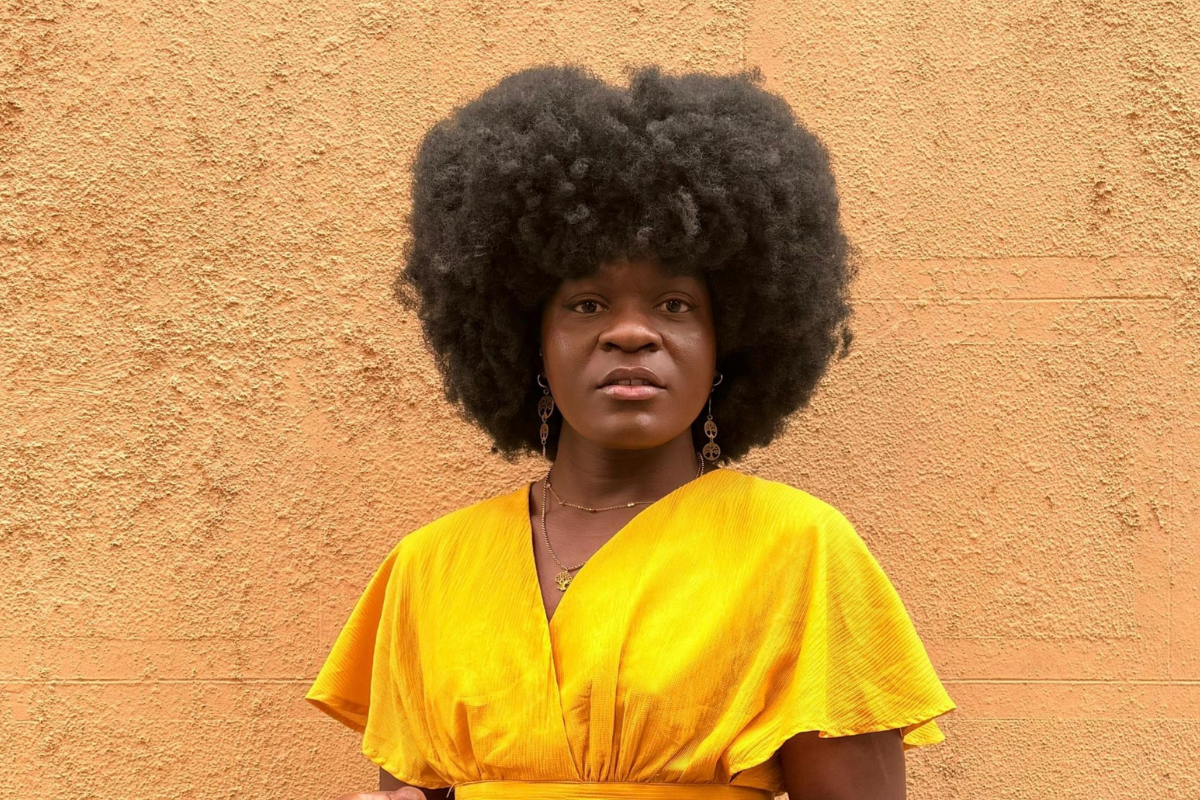
I am one of those 200,000 people.
So what does being rich actually mean?
And for me, this conversation has changed how I think about being “rich”.
The rose-tinted, dollar-sign glasses have slowly come off. Material wealth starts to feel a little less important when compared with the richness of human connection, safety and a healthy environment.
Being rich in life now means being able to breathe clean air and drink clean water. It means having food on the table. It means having people I love around me. It means being able to pursue my dreams and knowing that there are systems in place to support me when things go wrong.
It also means living on a planet where a flood, drought, wildfire or other climate disaster does not have the power to completely undo everything a person has worked for.
Because wealth is not only about how much money someone has.
It is also about security. It is about choices. It is about whether you can afford groceries, access healthcare or rebuild your life after a climate disaster.

What kind of future will we fund?
Creating a world where more people can experience that kind of richness requires investment.
That is why fair taxation matters.
Fairer taxes on extreme wealth could give governments more resources to invest in climate action, strengthen public services, help communities adapt to a changing climate and build societies where more people have the chance to live secure and fulfilling lives.
No amount of private wealth can create a separate planet.
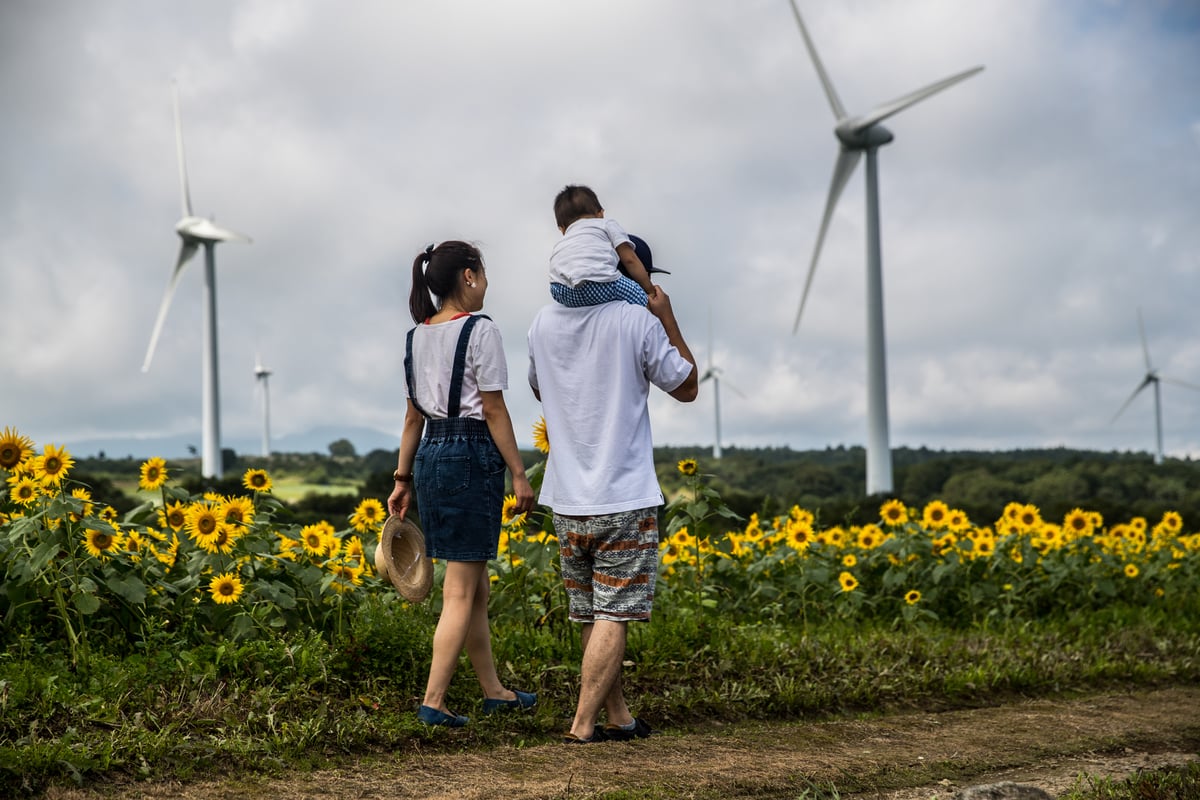
We all depend on the same air, the same water, functioning societies and a stable climate. And that is what makes the 200,000 milestone feel so important. It shows that more and more people want governments to act. It shows that fair taxation is no longer just a technical conversation happening behind closed doors. It is becoming part of a much bigger public conversation about fairness, justice and the kind of future we want to build.
And 200,000 people is not the end of that journey.
It is proof that the movement is growing.
Every person who adds their name strengthens the call for governments to create fairer global tax rules, tax extreme wealth more fairly and invest that money in the people and places that need it most.
Because being rich in life should not mean having more than you could ever use while that extreme wealth comes at the expense of the planet we all share.
It should mean living in a world where everyone has enough.
Naeemah Dudan is a Digital Specialist for Greenpeace Africa, based in South Africa.
Together, let’s urge governments to tax the super-rich and fund a green and fair future.
Add your name