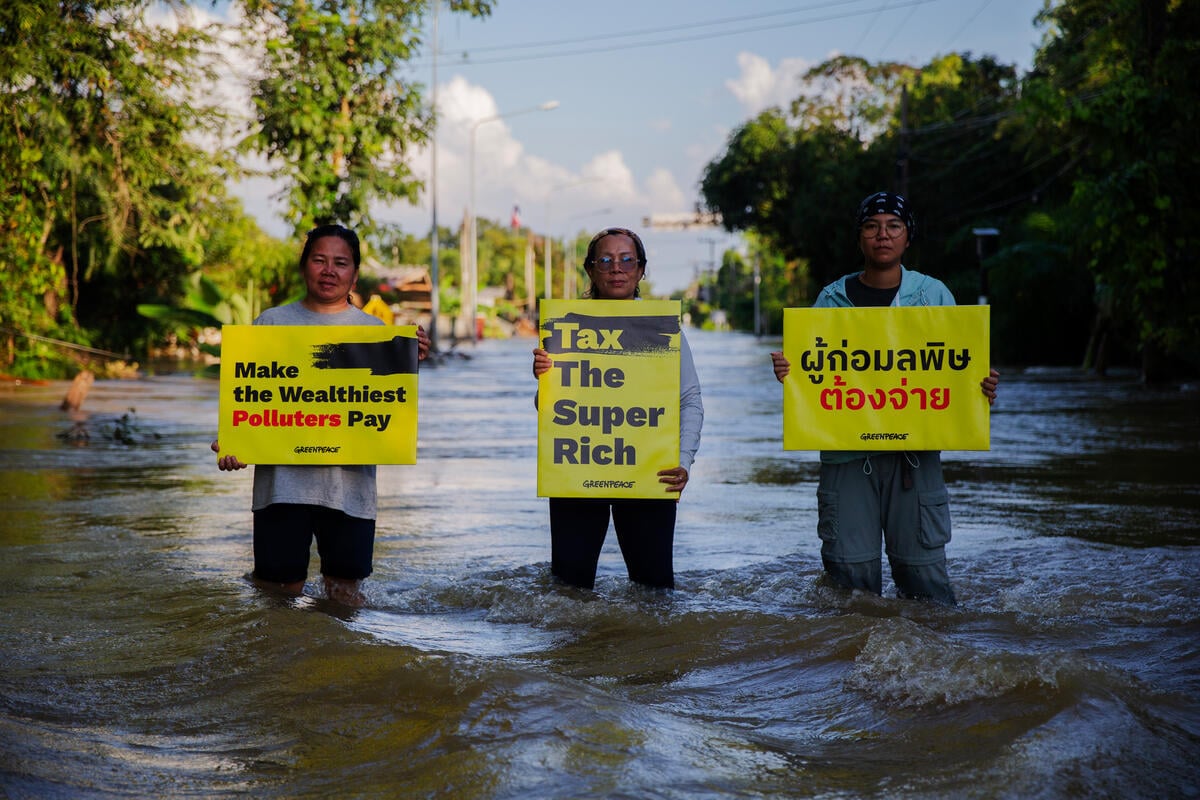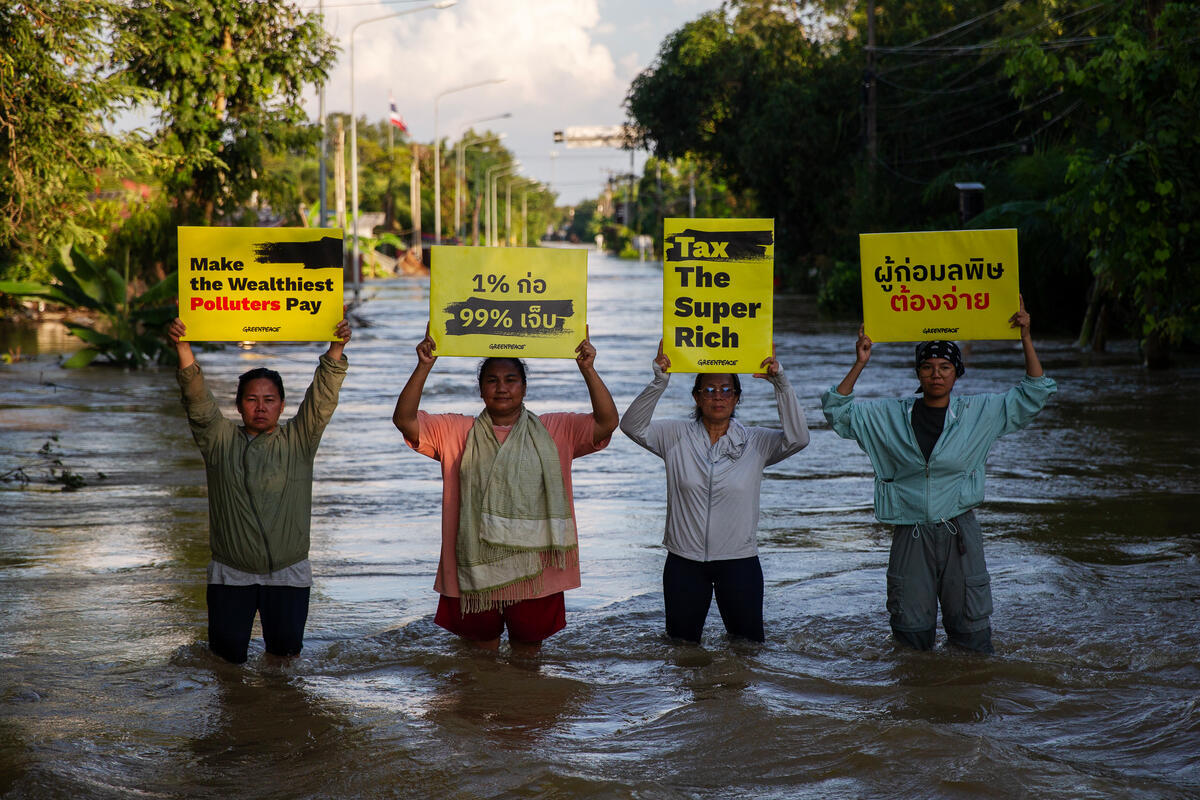

New York – As the fifth round of negotiations concludes at the United Nations in New York, an ambitious Global Tax Treaty – also known as the UN Framework Convention on International Tax Cooperation – remains within reach. Major improvements to the zero draft text are still needed, however, to deliver global tax rules that will help solve the connected climate, nature, and inequality crises, rather than letting corporate polluters and the super-rich off the hook.
Nina Stros, Global Senior Policy Expert, Greenpeace International Political Unit said: “Global South demands for fair and inclusive international tax rules are starting to shape the text of the Framework Convention, and that is real progress. But without trust and a commitment from all parties to negotiate in good faith, we risk an empty treaty that fails to address problems everyone acknowledges exist. The most ambitious version of the Global Tax Treaty can only be built on truly international tax cooperation, where every voice counts, including those of the communities hit hardest by the climate crisis, not just predominantly those of the wealthiest polluters and their patrons.
“Outside these negotiating rooms, people are living through extreme weather and rising bills, paying for a crisis they did little to cause, while the wealthiest polluters keep profiting. Too many countries are losing revenues to tax havens. The Global Tax Treaty is a once-in-a-generation opportunity to correct the unfairness and the dysfunctions of existing tax agreements and the broken corporate tax system. It’s time for every country to step up and bring concrete solutions that work for people and the planet.”
Key takeaways from INC-5 include:
- A strong Global Tax Treaty is still a long way off, but the developments from this session were encouraging. Negotiations moved from the abstract to the concrete. The draft text is moving towards a fairer allocation of taxing rights over multinational profits, which could overhaul the unfair and undemocratic system currently shaped by the Organisation for Economic Co-operation and Development (OECD).
- Global South countries showed strength and unity, many coming together to defend strong language on fairer allocation of taxing rights and to push for more robust articles, including on taxing high-net-worth individuals (HNWI) and on harmful tax practices. Some emerging and middle-income economies played a bridge-building role, including regarding the article on sustainable development; arguably a sign of wider shifts in global power and of a growing understanding that this treaty is instrumental in delivering other UN agreements, like those under the United Nations Framework Convention on Climate Change (UNFCCC) and the Convention on Biological Diversity (CBD).
- Wealthy nations, particularly in Europe, favoured complaining over proposing solutions. Despite countries championing climate action in other global forums, European countries mostly stayed silent on sustainable development here, and many called for changes that would defend the status-quo of corporate and super-rich tax-dodging. They must move from complainer to solution-seeker, not only to rebuild trust with the Global South and unlock ambition, but so that their own people benefit from the hundreds of billions of dollars a year that could be reclaimed by holding the wealthiest polluters to account.
- Momentum is building towards environment-aligned tax and spending. Several Global South countries signalled they would bring forward new proposals to strengthen the treaty’s environmental tax and sustainable development provisions in Article 4, which some Global North countries have expressed interest to explore. With more ambition, this could lay the legal foundations for global and national progressive polluter taxes, while ensuring that governments’ tax and spending policies support global climate and environmental agreements.
- Heightened discussions on Article 6, concerning the taxation of high-net-worth individuals (HNWIs), particularly across G77 countries, showed that cross-regional cooperation and alliances hold a significant potential for a bolder outcome.
There was also broad support among countries for bringing civil society and other stakeholders into future Conference of Parties (COP) meetings, which will be vital to raise ambition and hold countries to account through this process as it moves towards delivering the treaty.
Negotiations for the Global Tax Treaty will continue until mid-2027. The sixth round of negotiations will be held in Nairobi from 30 November to 11 December 2026, followed by three further rounds of negotiations next year. Greenpeace will continue to attend, urging every country to be guided by the realities their people face outside the negotiating room, and to hold negotiators to the promise this treaty represents.
ENDS
Contact:
Greenpeace International Press Desk, +31 (0)20 718 2470 (available 24 hours), [email protected]