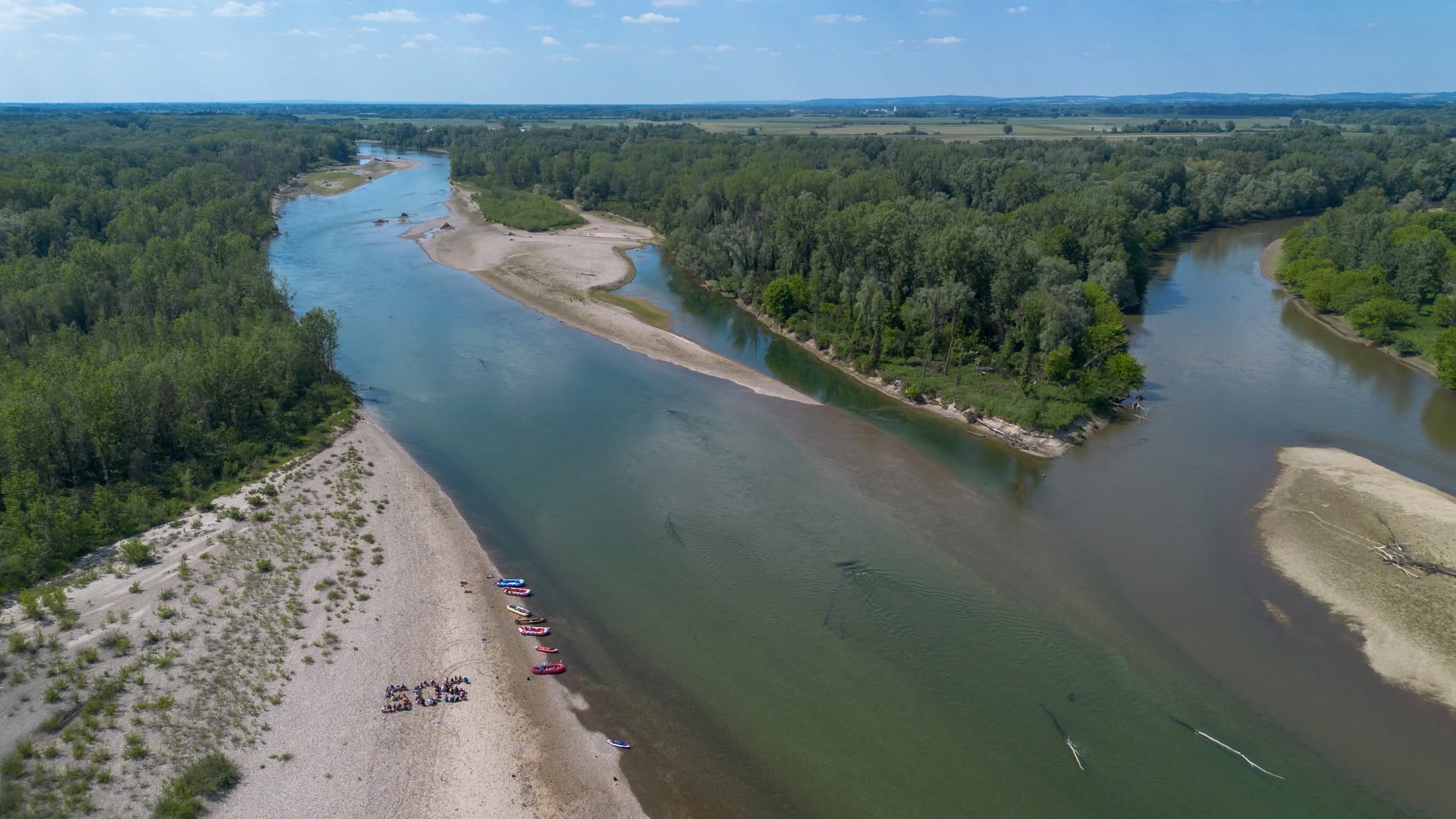
Amid crashing waves, birdsong, and the breeze, dozens of Indigenous Peoples gathered, sitting on senats – traditional mats distinct to the Raja Ampat archipelago in West Papua, Indonesia. They attended a three-day gathering starting on 20 August 2026 called Heyul Pelei Koranu Fyak (The Grand Assembly of Raja Ampat Indigenous Communities), which brought together Indigenous Peoples and local communities from the archipelago and other parts of Papua and Indonesia, and also welcomed Indigenous representatives from the Amazon, Africa, and Malaysia.
The gathering, supported by Greenpeace Indonesia and the local NGO Institut USBA, aimed to strengthen solidarity in protecting Indigenous lands, waters, and biodiversity.
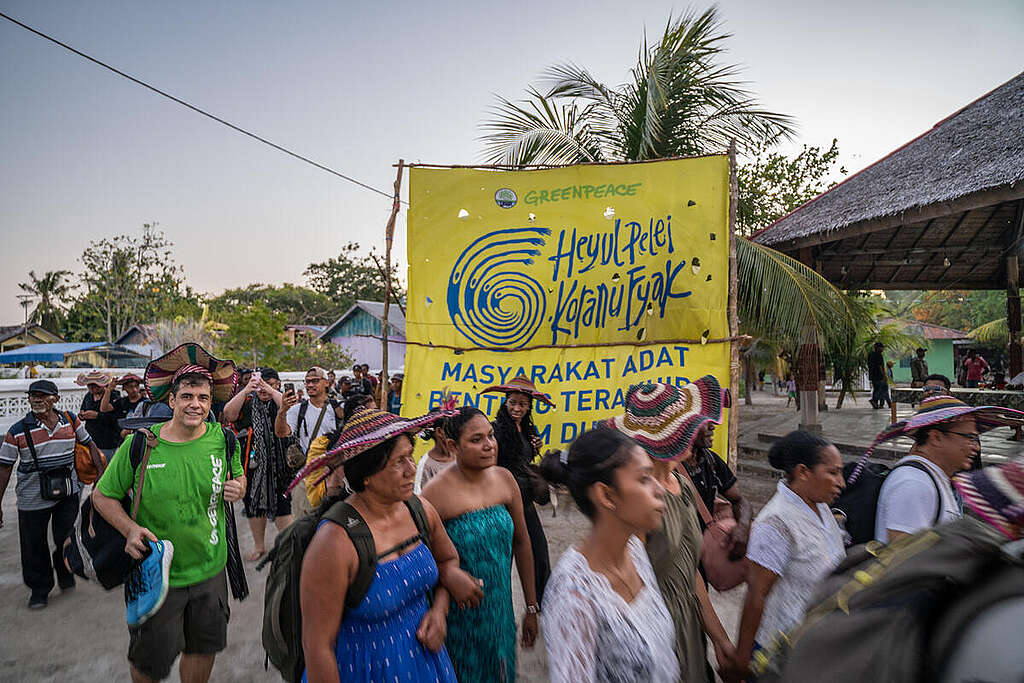
Indigenous Peoples around the world are facing escalating pressure from extractive industries. Despite the public outcry through the #SaveRajaAmpat campaign last year, the area known as ‘the last paradise on Earth ’ is still under threat from nickel mining. Raja Ampat is located in the Coral Triangle and is home to 75% of the world’s coral. Meanwhile in the Amazon, thousands of hectares of rainforest in the Indigenous territories are being destroyed by illegal gold mining.
Indigenous Peoples are resisting the destruction and maintain a deep, intergenerational connection to their lands, forests, oceans, and ecosystems. Their knowledge and relationship with nature demonstrate that ecosystems are most resilient when local peoples who depend on them have the power to defend and manage their territories. In Raja Ampat, for instance, Indigenous communities practice sasi, a temporary prohibition on harvesting specific natural resources within a designated area of land or sea to allow ecosystems to naturally rest, recover, and regenerate.
“There is the tradition of creating an ecological calendar; there is a taboo that requires us to speak in local language upon visiting certain places; also there is a myth for not catching big fish. They are all our ancestors’ way to preserve nature. We have to protect our cultural diversity as it also safeguards Raja Ampat biodiversity,” said George Mentasan, a Papuan anthropologist who spoke at the gathering.
Panh O Kayapo, an Indigenous Kayapo woman from the Amazon, said that Indigenous women hold a significant role in protecting biodiversity. She went on to say that Indigenous communities must not give in to the colonial extractivist forces exploiting their territories. She said, “We are the Indigenous women who protect not only our children, but also our biome. I speak up about women’s role not only for our generation, but also for generations to come, for them to have a better future.”
After three days of exchanging stories, knowledge, and struggles, the gathering resulted in the Arborek Declaration. The document calls on governments to recognise that Indigenous’ knowledge and way of life are the solutions for halting biodiversity loss and the climate crisis. It also reflects the Indigenous communities’ commitment to strengthen global solidarity in their fight defending their territories.
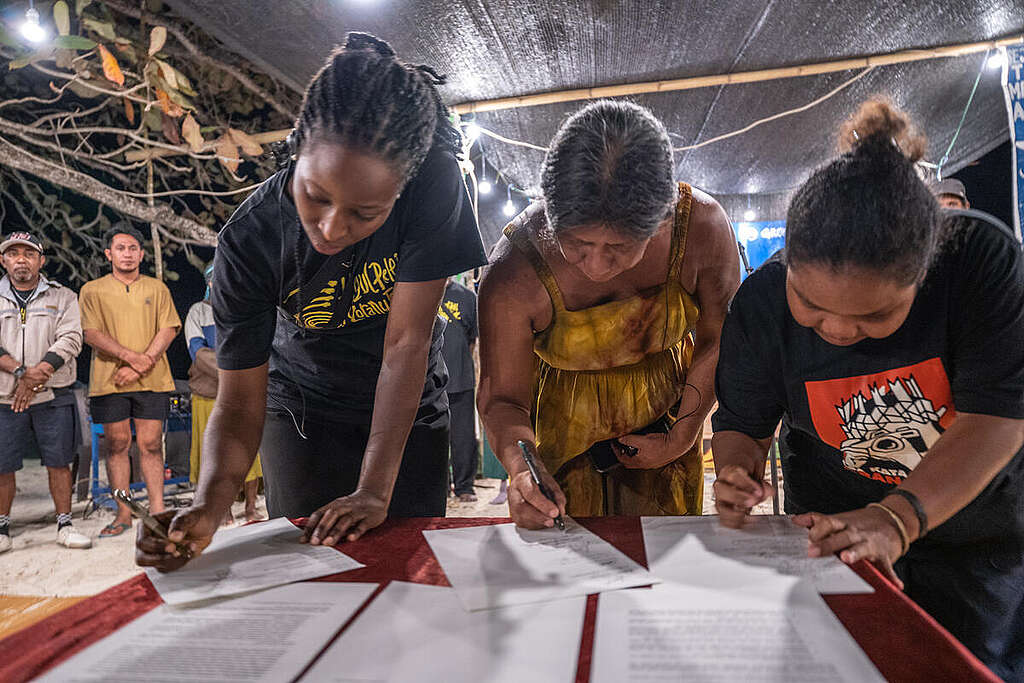
The Arborek Declaration also carries out important calls as governments prepare to review progress on the Kunming-Montreal Global Biodiversity Framework at CBD COP17. Greenpeace is calling for Indigenous and traditional territories to be fully recognised as a key part of achieving the global goal to protect at least 30% of land and oceans by 2030.
Protecting nature must not come at the expense of the people who have cared for these territories for generations. Governments must ensure that conservation respects the rights of Indigenous Peoples and local communities, including their right to decide how their territories are protected and managed through Free, Prior and Informed Consent (FPIC).
Syahrul Fitra, Greenpeace’s Co-lead of Global Forest Solutions project said, “Indigenous and Traditional Territories must be recognised on their own terms, rather than communities being forced into conservation models that do not reflect their rights, governance systems, or choices. Governments must also ensure direct access to biodiversity finance, so Indigenous Peoples and local communities have the resources to strengthen their own systems of protection and governance.”
Budiarti Putri is a Communications Campaigner for Greenpeace Indonesia
Notes:
Photos are available in the Greenpeace Media Library

Ask political leaders to act on their promises to stop ocean and forest destruction.
Join now