Malaysia Can Do More: The Haze Crisis Demands Corporate Accountability, Not Just Diplomacy
To YAB Dato’ Seri Anwar Ibrahim
Prime Minister of Malaysia
In response to your statement today that Malaysia has done everything possible to address the ongoing transboundary haze crisis but Malaysia has no plans to take legal action or issue diplomatic note , Greenpeace Malaysia believes that Malaysia can and must do more. We recognise the diplomatic efforts undertaken by the Malaysian government, including engagement with Indonesia and offers of assistance to address forest and land fires. However, after more than three decades of recurring haze, we must ask: If Malaysia has truly done everything possible, why are communities across the region still suffering from the same crisis, year after year?
The haze crisis is not simply a matter of unfavourable wind conditions or a diplomatic dispute between ASEAN countries, it reflects longstanding failures in environmental governance, including forest and peatland destruction, unsustainable land-use practices, inadequate enforcement and a lack of corporate accountability. While Malaysia cannot enforce environmental laws within Indonesia’s borders, it can strengthen domestic legislation, investigate Malaysian corporate connections to environmental destruction overseas and champion stronger regional cooperation. These responsibilities remain within Malaysia’s power to pursue. Until we have fully explored them, it is premature to conclude that everything possible has been done.
This Is Not About Blaming Indonesia. It Is About Holding Polluters Accountable.
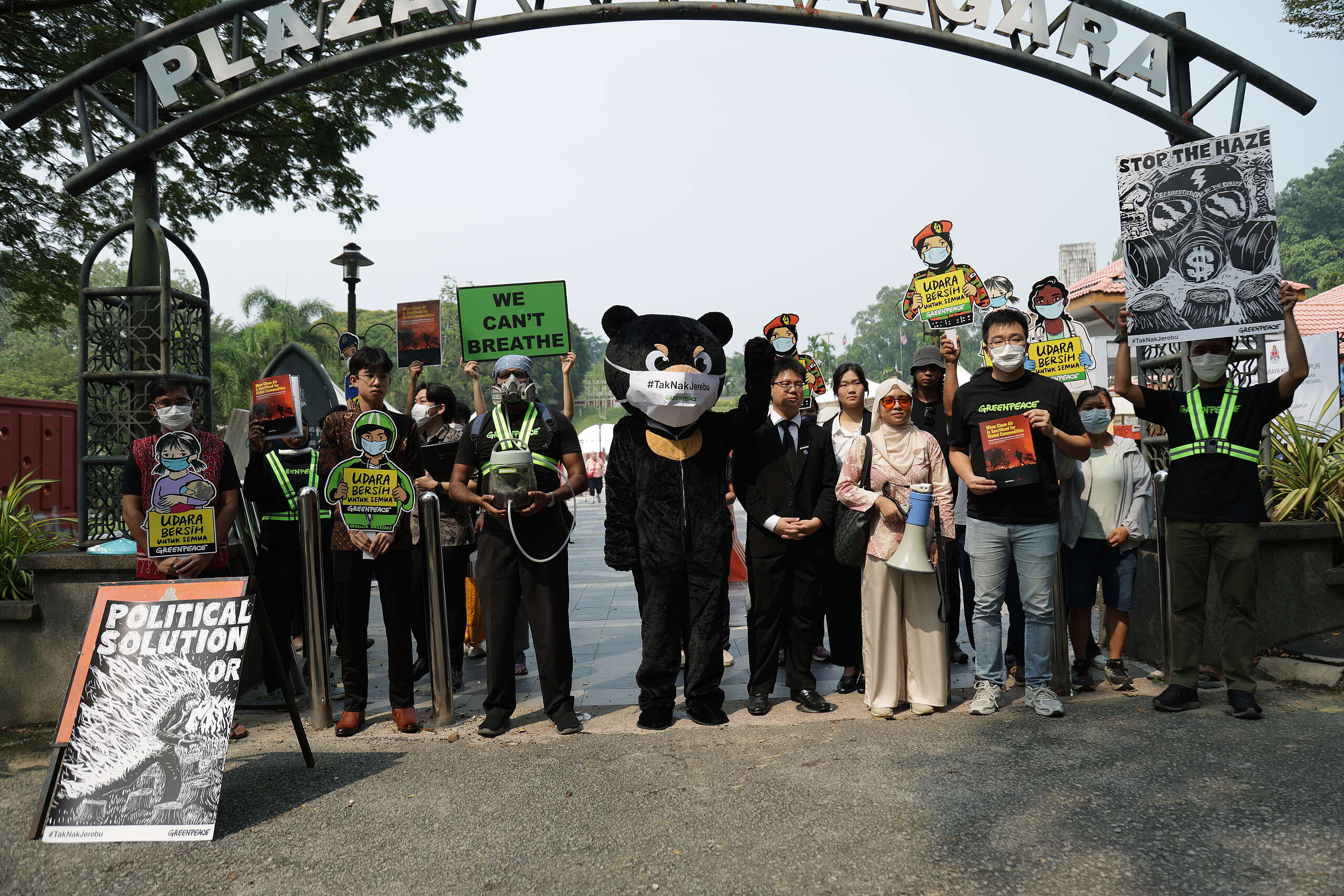
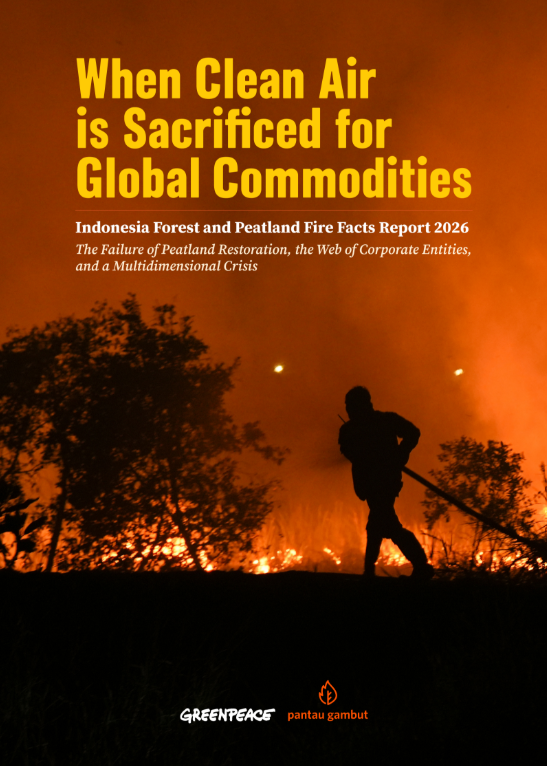
Indonesian communities are among the worst affected by forest and peatland fires, suffering from hazardous air pollution, loss of livelihoods and environmental destruction. Our response must reflect solidarity with these communities rather than deepen divisions between neighbouring countries. On 21 August 2026, Indonesian lawmaker Marwan Dasopang highlighted the plantation interests of Malaysian and Singaporean companies in Indonesia and called for greater responsibility from these actors. On 4 September, Greenpeace Malaysia joined civil society allies outside the Indonesian Embassy in Kuala Lumpur, where we submitted a memorandum demanding transparency and cross-border corporate accountability, including the disclosure of Malaysian companies potentially linked to forest and peatland fires. A month later, on 5 October, Greenpeace and Pantau Gambut released findings identifying corporate entities associated with haze-source points in Indonesia, including entities with Malaysian and Singaporean corporate connections. These findings raise serious questions about corporate ownership, investment and responsibility. Although satellite-detected haze-source points do not establish legal liability on their own, they provide an important starting point for further investigation using verified burn-scar data, concession maps and corporate ownership records. Civil society has brought forward findings that warrant further investigation. The Malaysian government must now work with Indonesian authorities to establish the facts, examine the involvement of Malaysian-linked companies and address legal gaps that prevent accountability. This is not about attacking Malaysian businesses. It is about ensuring that companies responsible for environmental destruction cannot evade accountability while communities bear the consequences.
Diplomacy Must Be Matched by Stronger Laws and Accountability
Southeast Asian governments have discussed transboundary haze for decades. The ASEAN Agreement on Transboundary Haze Pollution was signed in 2002, yet recurring haze continues to threaten public health and livelihoods across the region. Diplomatic engagement and emergency assistance remain important, but they must be supported by transparent information-sharing, independent investigations, stronger enforcement and meaningful legal accountability. Malaysia also has an important responsibility to strengthen its own legal framework.
In December 2021, Greenpeace Malaysia and the CERAH Anti-Haze Action Coalition filed a landmark complaint with SUHAKAM, calling for haze pollution to be addressed as a human rights issue. This was followed by SUHAKAM’s roundtable discussions in 2022 and the publication of its Silent Enemy report in 2024, which provided recommendations for strengthening clean-air governance and addressing transboundary haze. Malaysia had also previously considered introducing a Transboundary Haze Pollution Act, but the proposal did not progress into legislation. For years, civil society organisations, researchers and affected communities have raised these concerns and proposed solutions. The government does not lack recommendations. What remains missing is the political commitment to translate them into enforceable laws, stronger institutions and meaningful corporate accountability.
Parliament Has Opened the Door. The Government Must Now Act.
Recent parliamentary developments, including the emergency motion on transboundary haze and engagement with the Parliamentary Special Select Committee, have created an important opportunity to move from public concern towards meaningful policy reform. Greenpeace Malaysia therefore calls upon the MADANI government to take three concrete steps:
- Commit to a Clean Air Act with enforceable transboundary haze provisions, including mechanisms to investigate and pursue accountability for responsible Malaysian-linked companies operating or investing beyond our borders.
- Initiate transparent investigations into Malaysian corporate links to forest and peatland fires in Indonesia, using credible scientific evidence, concession records and corporate ownership information, in cooperation with Indonesian authorities.
- Strengthen ASEAN cooperation on transboundary haze prevention and accountability, including transparent information-sharing, joint investigations, peatland protection and stronger enforcement mechanisms.
We urge the government to announce a concrete, time-bound roadmap for these actions before the current parliamentary sitting ends in December 2026, with clear ministerial responsibilities, legislative milestones and mechanisms for public reporting. Parliamentary discussions must lead to meaningful action, not become another chapter in the decades-long history of unresolved haze pollution.
Clean Air Must Come Before Corporate Profits
The consequences of this crisis are not abstract. When haze strikes, children’s education is disrupted, outdoor workers face prolonged exposure to polluted air, and families bear additional costs to protect their health. Communities living near the fires in Indonesia face even greater threats to their health, livelihoods and surrounding ecosystems. Meanwhile, the economic benefits of forest-risk commodities continue to flow through regional and global supply chains. We cannot allow a situation where profits are enjoyed by a few while the health, environmental and economic costs are borne by millions. Protecting forests and peatlands, preventing fires and ensuring corporate accountability are not obstacles to economic development. They are essential foundations of responsible and sustainable development. The right to clean air must never be compromised for short-term corporate profits.
Malaysia Can and Must Do More
After more than three decades of recurring haze, we cannot continue treating this crisis as an unavoidable seasonal emergency. We recognise that addressing transboundary haze is complex and requires cooperation between governments, businesses and communities. But complexity cannot become an excuse for inaction. Malaysia has an opportunity to demonstrate regional leadership by strengthening its own laws, investigating Malaysian-linked corporate actors and working with Indonesia to prevent forest and peatland destruction.
The question is no longer whether Malaysia has done its best. The question is whether Malaysia is prepared to do what is necessary. Success should not be measured by the number of diplomatic meetings held, but by whether fewer forests burn, responsible corporations are held accountable and communities across Southeast Asia can finally breathe clean air.
Regional problems require regional accountability
Greenpeace Malaysia remains committed to constructive engagement with your administration, Parliament, Indonesian civil society and affected communities to advance lasting solutions. The haze will eventually clear. But our responsibility to prevent the next crisis must not disappear with it. After more than 30 years, Southeast Asia deserves more than another cycle of fires, haze and diplomatic assurances. We deserve clean air, corporate accountability and lasting solutions.
With urgency,
Heng Kiah Chun
Interim Country Representative
Greenpeace Malaysia
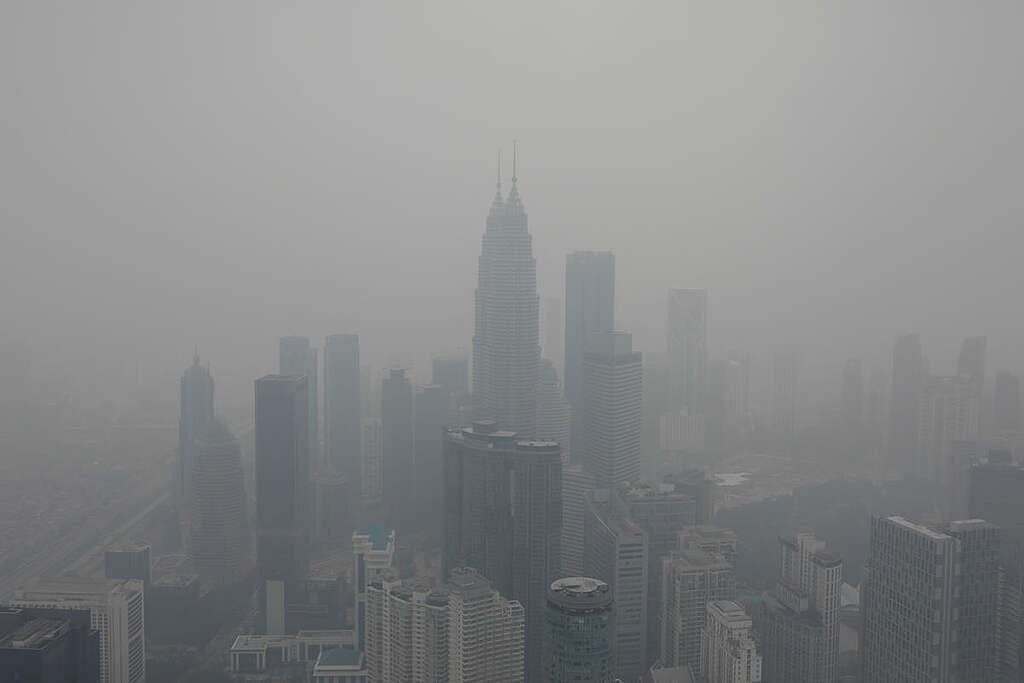
Year after year, haze returns to Malaysia. Act now, because we shouldn’t have to accept this as a norm.
Sign petition