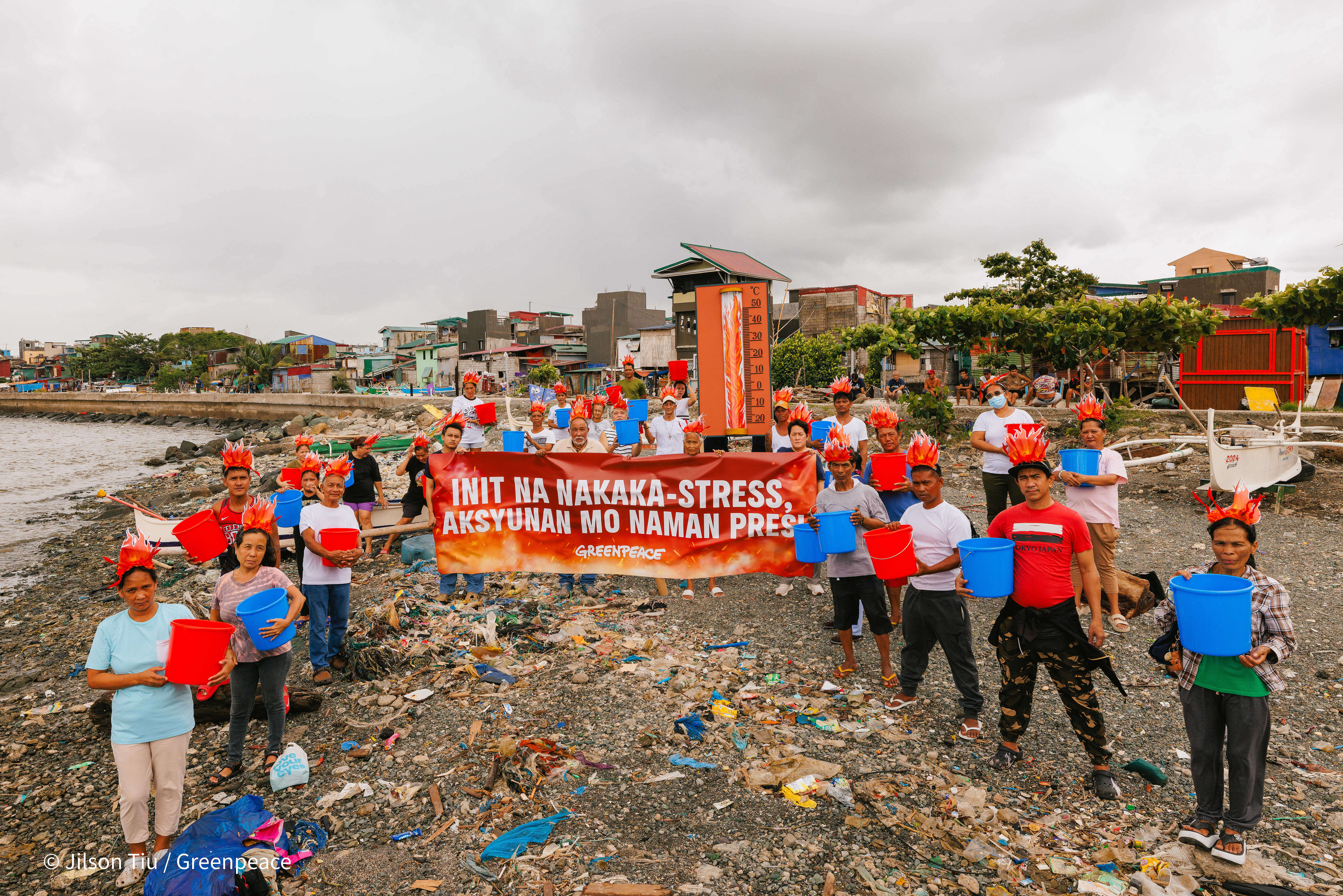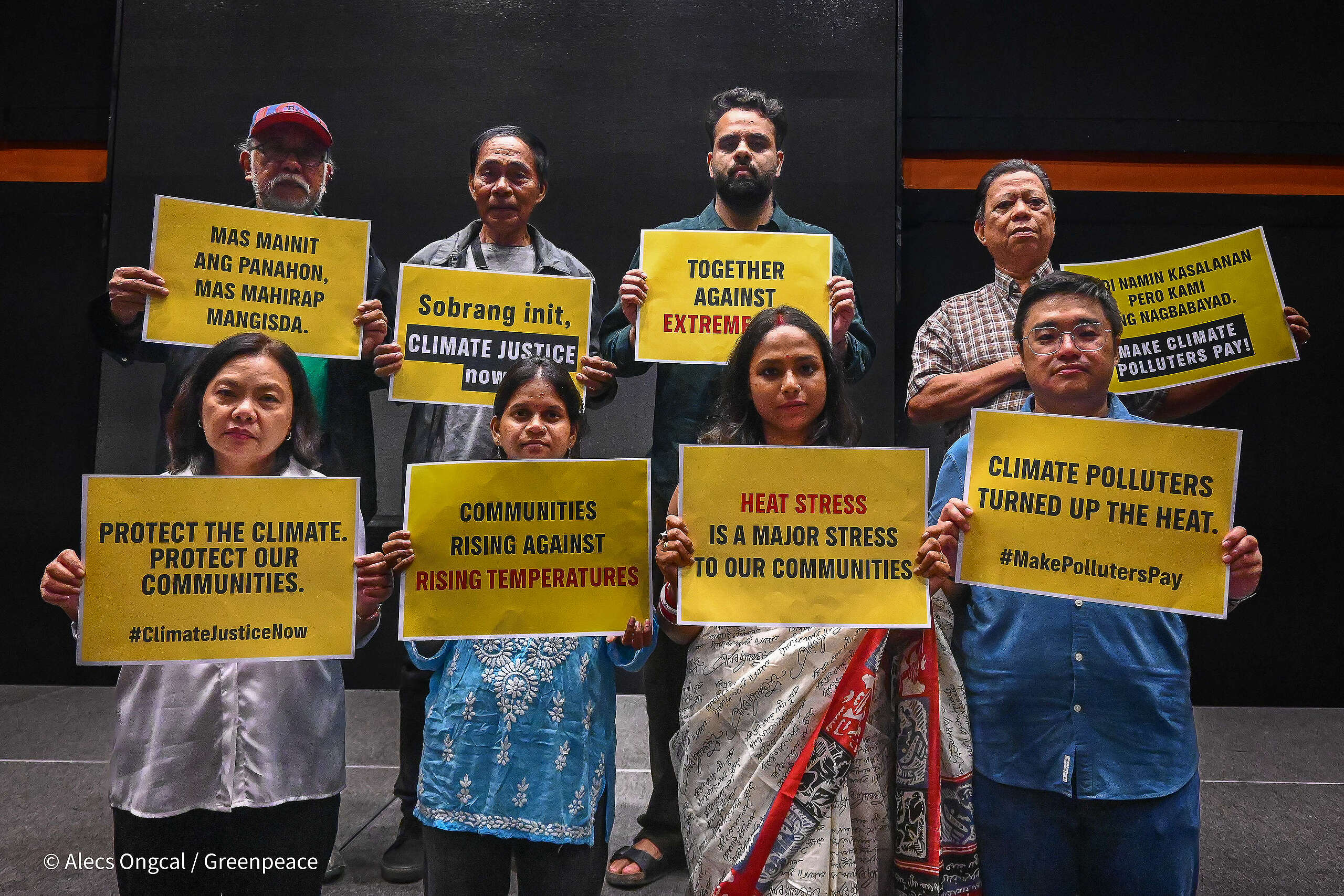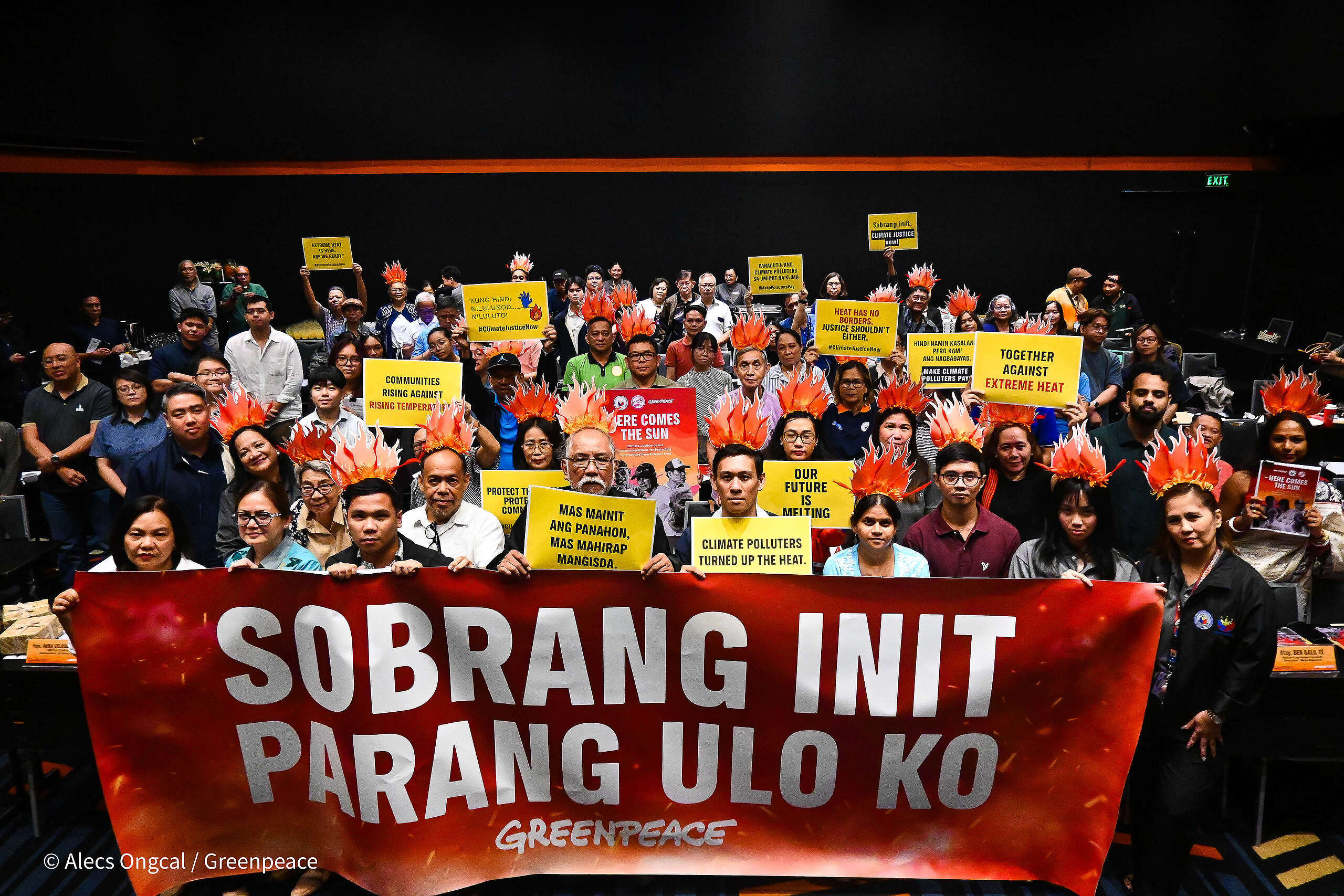
Quezon City — Environmental advocates called on President Ferdinand Marcos Jr. to fast-track the process of breaking free from dirty and destructive energy sources as the First Conference on Transitioning Away from Fossil Fuels begins its sessions in Santa Marta, Colombia today.
The five-day conference—organized by the Colombian and Netherlands governments—will be participated in by 53 countries including the Philippines. The Philippine government’s involvement comes as a last-minute decision. Greenpeace Philippines challenges the Marcos administration to make even stronger commitments in phasing out fossil fuels.
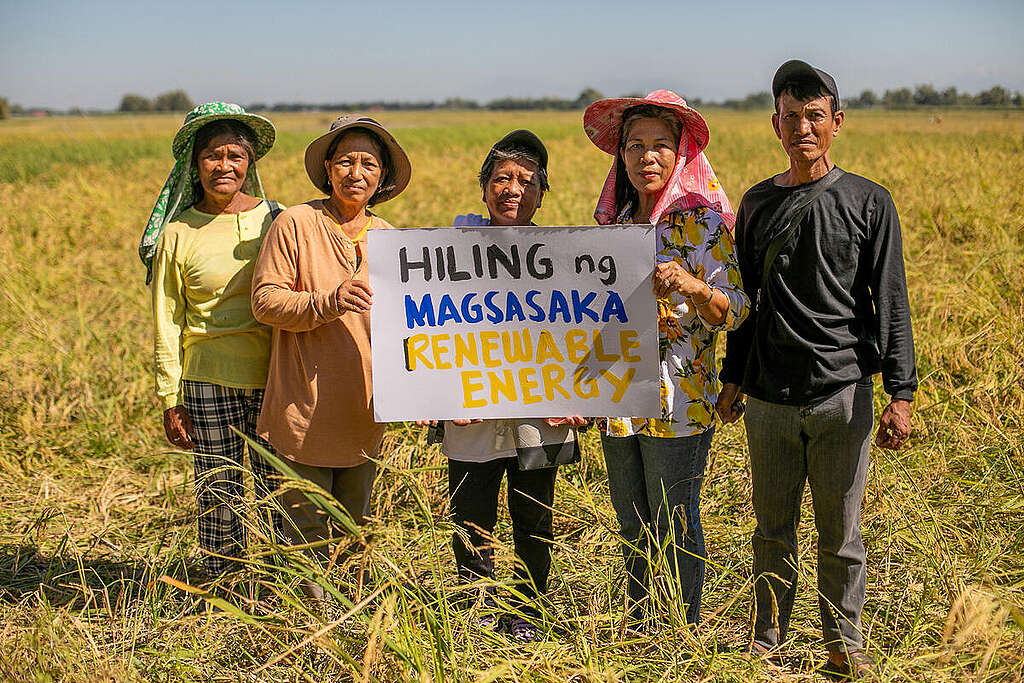
“It is a shame that we still stake our future to fossil fuels while being the most climate-vulnerable country. There is no future for Filipinos in relying on fossil fuels,” said Greenpeace Philippines climate campaigner Jefferson Chua.
“As the US-Israel war on Iran continues to plunge countries like the Philippines into an economic crisis due to rising fuel costs, we’re seeing how the few companies that control the lion’s share of the world’s oil profit from the war and people’s suffering. We’re paying the price of their profiteering, in the form of worsened extreme weather events and economic shocks.”
Meanwhile, national and regional governments have recently been flirting with the idea of increasing local oil and gas exploration1 in the country, in the hopes of stabilizing both supply and price of petroleum products. Exploration sites included are the protected Liguasan Marsh, Tawi-Tawi and Cebu. However, Chua warned that it might further deepen the country’s dependence on fossil fuels aside from possible increase in carbon emissions.
The Philippines consistently ranks as the most disaster prone country in the world,2 with human-induced climate change brought by the fossil fuel industry exacerbating impacts on developing nations. Greenpeace Philippines likewise calls on Marcos to enact a “polluter-pays” surtax on the profits of fossil fuel corporations.
“This is not only to bridge the climate finance gap and ensure a just transition towards more sustainable sources of energy, but also to align public spending with climate goals and commitments,” continued Chua. “This must be complemented with the development of a national phase out roadmap to ensure a timeline on the rapid phase out of gas and fossil fuels.”
“We likewise call on Marcos to stand with hundreds of Filipinos that have taken the bold step of suing fossil fuel companies like Shell in court for increasing the likelihood of strong tropical cyclones such as Super Typhoon Odette. Beyond the need to pivot to renewable energy, it is equally important to hold these climate polluters accountable.”
Notes to the editor:
[1] Local oil, gas expansion to lock PH into fossil fuels, raise emissions amid energy crisis
[3] Filipino communities to sue Shell for damages linked to Super Typhoon Odette
For more information and interview requests, please contact:
James Relativo, Communications Campaigner
Greenpeace Southeast Asia – Philippines
[email protected] | +63919 069 3424