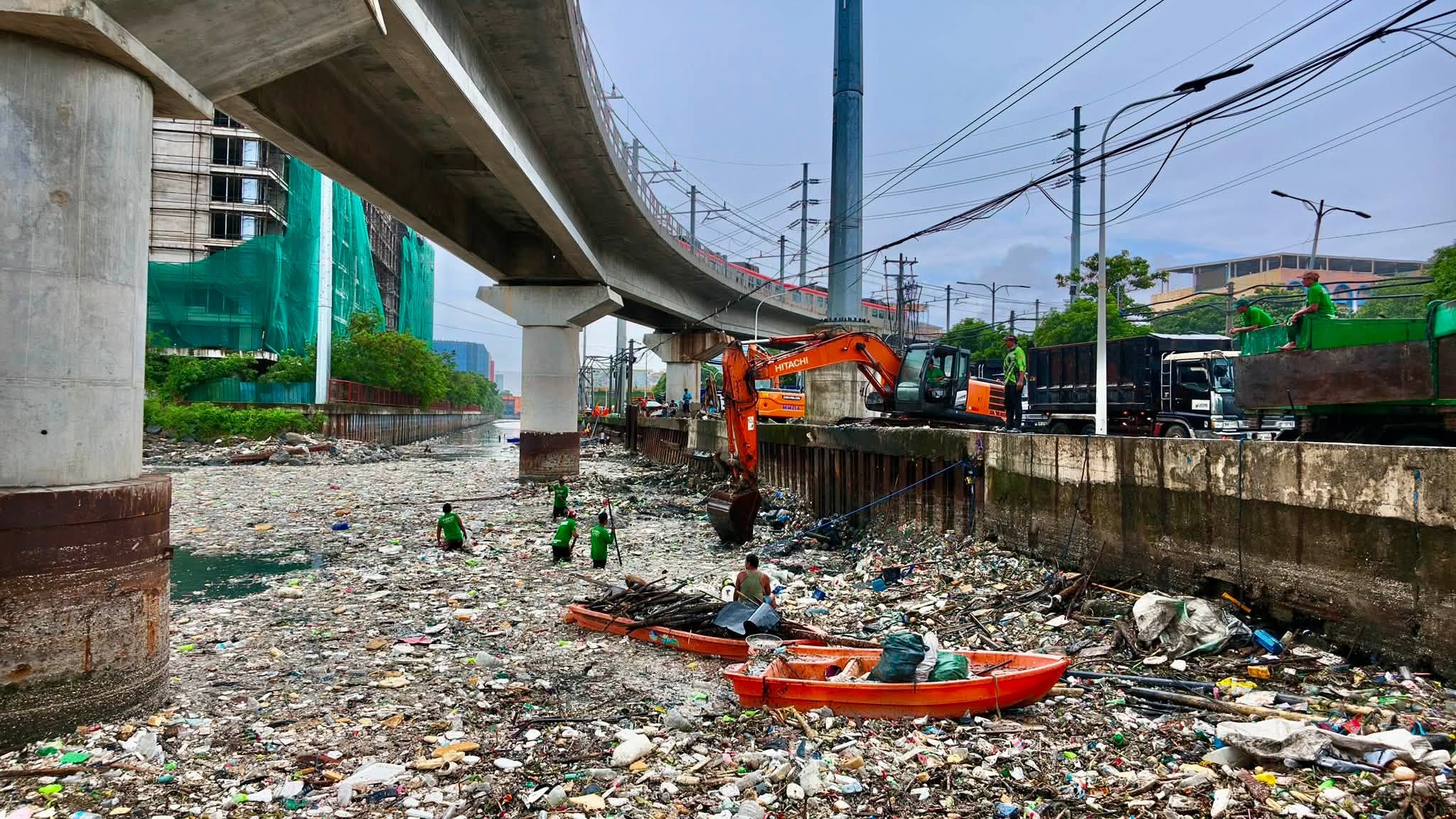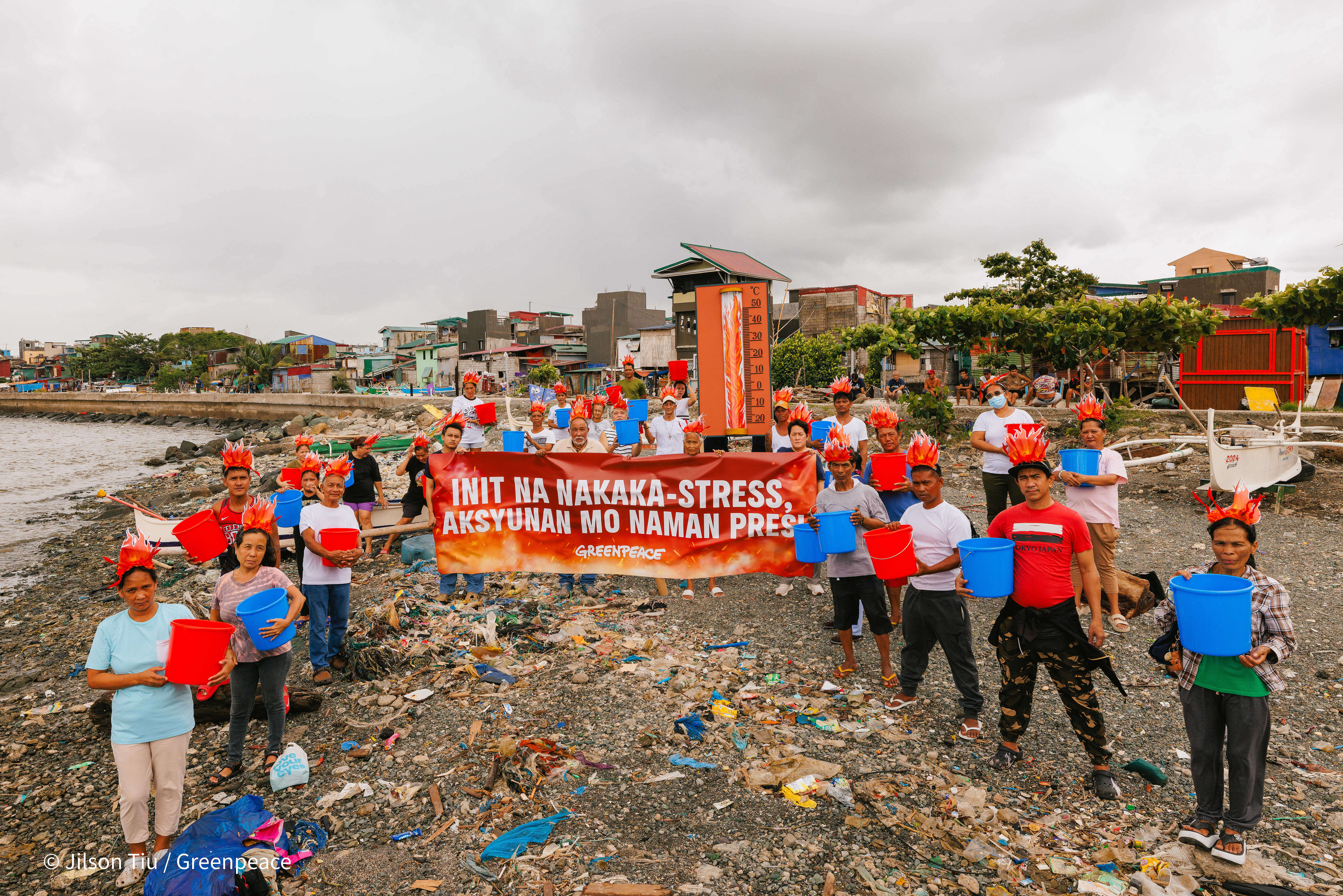
Quezon City — The cutting down of 617 decades-old trees along Quirino Avenue and Roxas Blvd. in pursuit of profits by the country’s richest of the rich is deeply alarming and unacceptable. At a time when communities are already suffering from extreme heat, stronger typhoons, worsening floods, and escalating climate impacts, the destruction of mature urban trees is a reckless act that puts people at further risk.
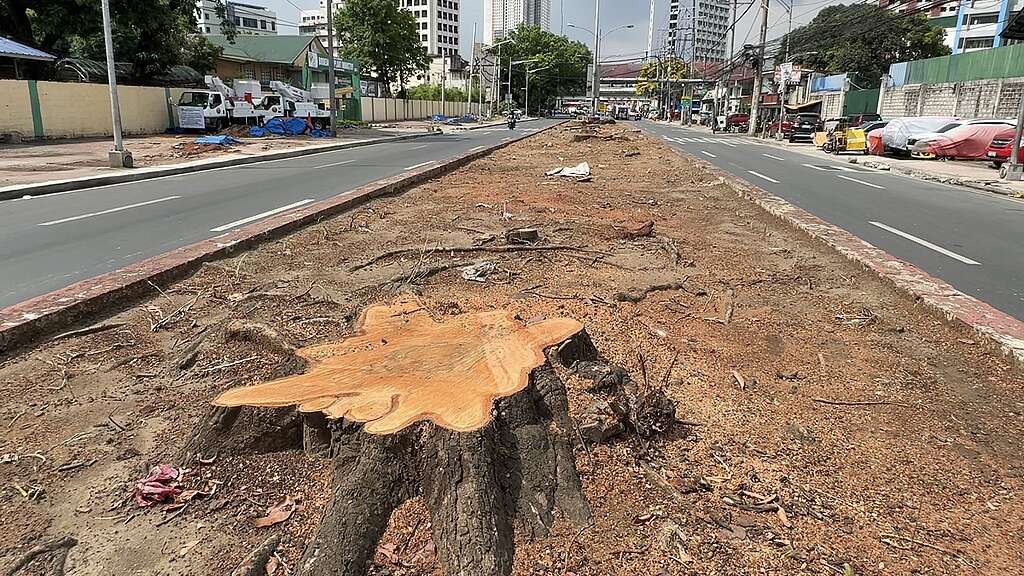
We strongly condemn this massacre of trees under the San Miguel Corporation’s Southern Access Link Expressway (SALEX) Project[1] and reject the idea that development must come at the expense of the environment and public welfare. We must ask: development for whom? For the profit of billionaires? The project will only serve as a major profit engine for the already super rich, sacrificing public green spaces and worsening urban heat for another elevated expressway.
Exposing lower-income households to even higher temperatures is anything but progress. It’s an injustice. Shrinking what remains of our green spaces to make way for even more pavements only makes life in the Metro even more unbearable—especially for those who can’t afford the luxury of air-conditioning units.
Cutting down old-growth trees has not just been happening here in Manila, but everywhere in the Philippines. In Palawan, 26,617 are to be cut[2] in the name of the Berong Nickel Project, also with the blessing of the Department of Environment and Natural Resources (DENR). Also troubling is the controversial Caticlan-Boracay bridge[3] by SMC which has earlier triggered strong opposition from environmental advocates.
Nothing can replace fully grown trees and their importance for the people right now. Their ecological benefits—from providing shade and cooling communities to absorbing carbon and reducing flood risks—have been built over decades. The DENR’s proposed solution of planting seedlings fails to address the immediate loss. Saplings will take many years before they can provide the same level of protection and environmental services that these mature trees already offer today. Under no certainty would all of them survive.
Beyond the immediate environmental damage, the destruction of mature trees also has serious implications for poverty reduction and social justice. Trees and healthy ecosystems serve as natural protection for communities—especially poor and vulnerable households that have the least capacity to absorb climate shocks and recover from disasters. When trees are removed, communities become more exposed to flooding, stronger storm impacts, landslides, extreme heat, and deteriorating public health conditions.
The burden of these impacts is not shared equally. Low-income families, informal settlers, workers in the informal economy, children, older persons, and communities living in hazard-prone areas often suffer the most from climate-related disasters. Every flood event, heat wave, or storm intensified by environmental degradation can mean lost livelihoods, damaged homes, interrupted schooling, higher health costs, food insecurity, displacement, and deeper indebtedness. These impacts trap already vulnerable sectors in cycles of poverty and make recovery increasingly difficult.
Development cannot be measured solely through infrastructure expansion or private investment returns. Genuine development must strengthen resilience, reduce inequalities, and protect people from falling further into poverty. Cutting down mature trees without exhausting alternatives undermines climate adaptation efforts and contradicts commitments to disaster risk reduction, environmental justice, and inclusive, people-centered development.
Metro Manila residents are already enduring dangerous heat stress, while climate change continues to intensify destructive weather events across the country. In this context, cutting down healthy trees for corporate-led infrastructure projects is irresponsible and disconnected from the realities faced by ordinary Filipinos.
SMC must be fully held accountable for prioritizing profit over the welfare of people and the environment. Likewise, we demand that the DENR fulfill their mandate to act as real stewards of the environment and not further enable its destruction in the name of profit. The public deserves full transparency on how these permits were granted, which communities will be affected by the project, what environmental safeguards were considered, and why alternatives that could preserve the trees were not prioritized.
Government agencies and corporations must stop treating nature as collateral damage for projects that primarily benefit private interests. Urban trees are critical public infrastructure in a warming world and therefore, protecting them is not optional—it is essential for public health, climate resilience, and environmental justice.
We urge authorities to permanently cancel the planned tree-cutting activities, conduct an independent review of the project and its environmental impacts, and ensure meaningful public consultation with affected communities. In this climate crisis, protecting people means protecting the ecosystems that keep our cities livable.
SIGNED,
Greenpeace Philippines
National Anti-Poverty Commission-Victims of Disaster and Calamities Sectoral Council
Notes to the editor:
[1] DENR: Quirino tree cutting under for SALEX underwent review
[2] DENR backs Nicole project tree-cutting plan in Palawan
[3] ‘Quo vadis,’ Boracay? Experts warn of proposed bridge
For more information and interview requests, please contact:
James Relativo, Communications Campaigner
Greenpeace Southeast Asia – Philippines
[email protected] | +63919 069 3424
You may also help by urging the Philippine Congress to protect our communities, future generations, and the environment by passing the Climate Accountability (CLIMA) Bill. Add your support by clicking the button below.