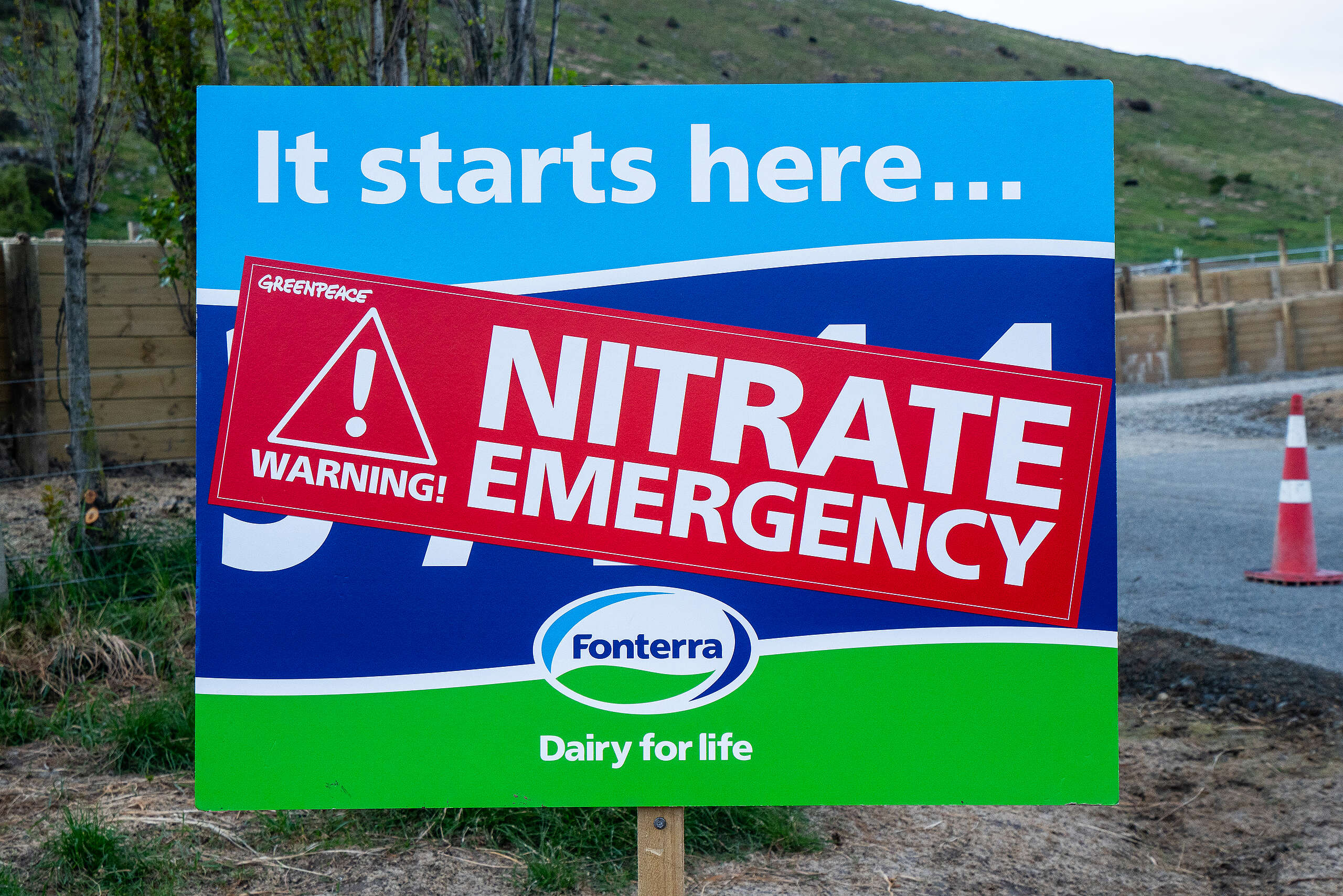
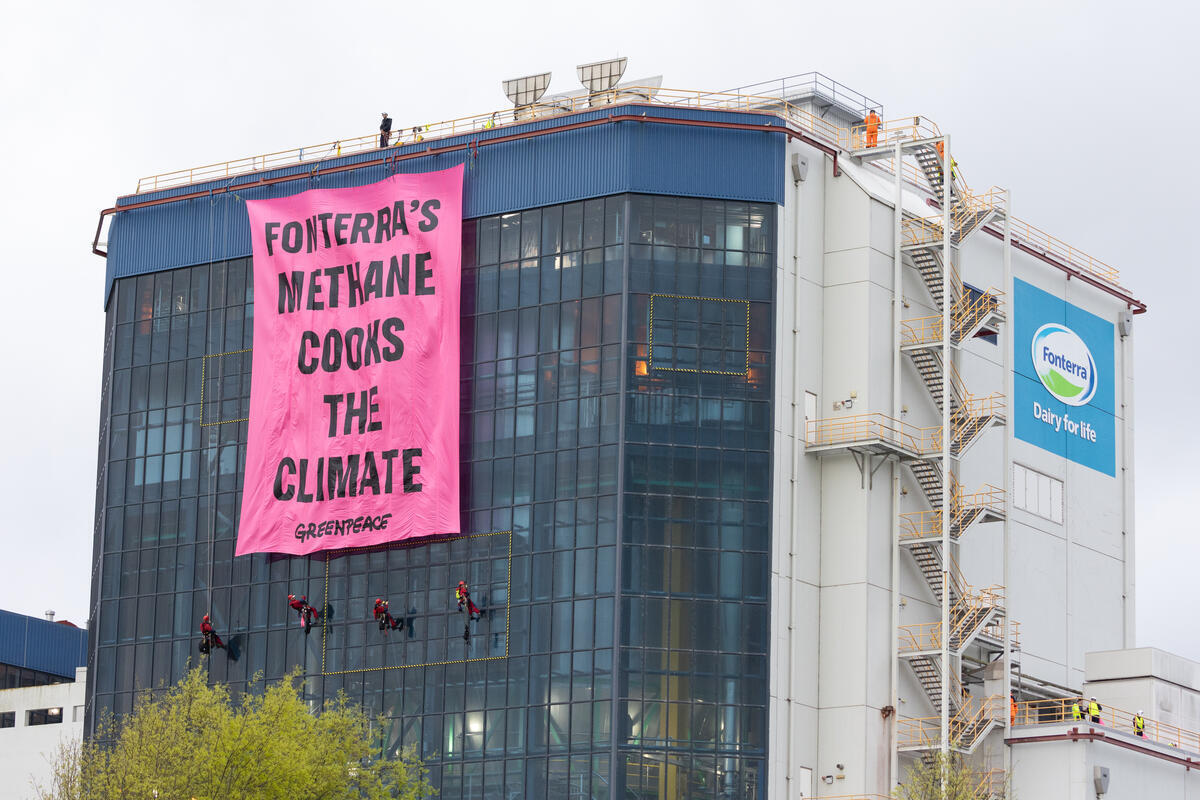
Right now, New Zealand is in the grip of Fieldays – our biggest agricultural event of the year. It is a seemingly mandatory pilgrimage for politicians of all stripes, who eagerly squeeze into Swanndris and gumboots for their annual photo op.
In my experience, challenging intensive livestock production in New Zealand is virtually synonymous with economic treason. Fieldays is the annual ritual where politicians compete to prove they have their arms most firmly wrapped around the supposed “backbone of the economy.”
In this backslapping frenzy, the far-right ACT party has reheated its favorite clickbait: abandoning the Paris Agreement. They’ve launched a new policy to weaken New Zealand’s agricultural methane targets, entirely at the behest of the agribusiness lobby.
Meanwhile, our Prime Minister is playing a double game. Just weeks after his government happily took the global stage to back a landmark UN resolution on climate change, he did a 180 for the domestic crowd. Assuring conservative voters who might defect further right, he declared that his “primary end game” is not actually reducing emissions at all. Instead, he says it is growing the economy and livestock productivity via technological saviours.
I’ve written before about how this “technology will save us” refrain is classic predatory delay. But it props up a tired old myth that gets trotted out every time New Zealand farming faces climate scrutiny:
“New Zealand dairy is the most efficient in the world.”
It’s a line designed to reassure us that everything is fine. It claims that there’s nothing to see here, and we can keep doing business as usual. But the data tells a different story.
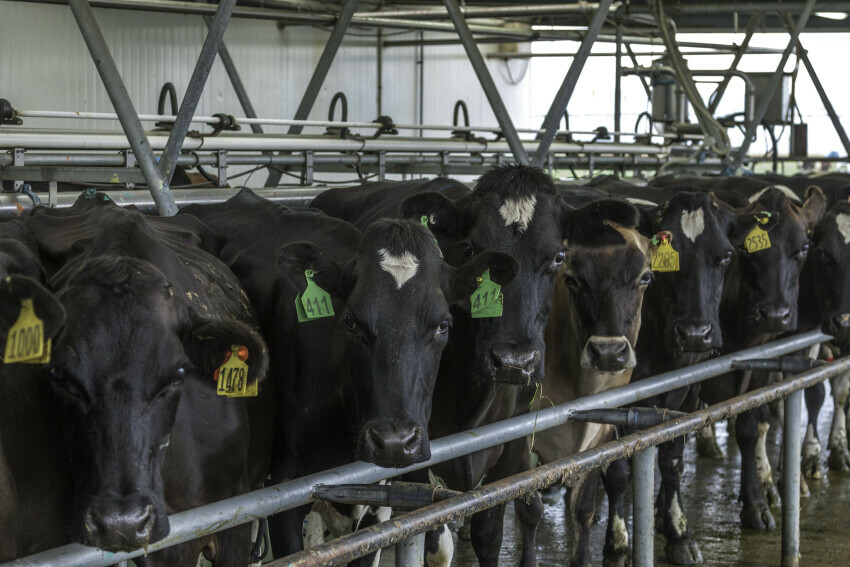
Firstly, New Zealand’s dairy industry admits it’s not the most efficient
It’s telling that the people who actually run the industry aren’t as confident as the politicians are. When the biggest dairy producer in the country – and the biggest exporter in the world – starts to quiet quit on their own claims, you should pay closer attention.
In 2024, Fonterra reported that emissions from its New Zealand dairy farms were 20 percent higher per kilo of milk than their Australian counterparts. Even Nestlé, Fonterra’s largest customer, has publicly challenged the narrative. Their global leadership hasn’t just questioned the “lowest carbon” claim; they’ve effectively told the NZ dairy sector to step up its game or get left behind.
The single scientific paper that doesn’t even say what politicians say it says
So why can they claim “most efficient”? We can trace this claim back to one single study, which was funded by a lobby group, DairyNZ.
When you dig into the methodology, the researchers admit they can’t definitively claim New Zealand is the number one, most efficient dairy producer without a much more detailed, apples-to-apples comparison. They basically compared New Zealand’s data against a hodgepodge of different studies from other countries, each using different methodologies.
Is efficient dairy production the same as efficient food production?
When we ask, “Is New Zealand dairy the most climate-efficient?”, we are asking the wrong question. It’s like asking if oil from Saudi Arabia or oil from the Canadian Tarsands is more “climate efficient”. Oil is simply a fuel. What we really want to know is what is the most efficient way to transport ourselves or to power our societies. When we ask that question, we get a different answer entirely.
The OECD’s data is the real eye-opener here. When you look at the economic value we generate per unit of CO2 emitted, New Zealand is the sixth worst in the OECD. Why? Because we’ve turned our land into a giant, high-volume “mine” for milk powder. We export 95% of it — mostly to satisfy a global craving for confectionery like KitKats and Snickers — and we bear all the environmental cost right here at home. If we were asking “is New Zealand the most efficient producer of food”, we’d get a wildly different answer.
Feeding a non-essential market
The dairy industry constantly tells us that New Zealand dairy is essential to “feed the world.” But look at some of our biggest customers: Nestle, Mars, Starbucks. Fonterra is expanding factory capacity specifically to make more cream cakes. Fonterra reports that, in China, people are actively switching from plant-based products to dairy-based alternatives. Marketing by Fonterra and others portrays dairy as premium. So, when incomes go up, people choose to spend a bit more and buy dairy instead of plant-based.
Ultimately, this isn’t about food or nutrition. It’s all about profit.
A vision worth fighting for
I refuse to accept that our only choice is to continue mining the land for milk powder. We have a clear path to something that would benefit farmers, nature, the climate and rural communities: ecological farming.
With an election coming up here in New Zealand, I’m astounded that our politicians seem to be spending more time making social media content at Fieldays than coming to the table with a real plan for the future of farming.
Between the urgent need to reduce emissions from the agricultural sector, and the sky-high fertiliser prices thanks to Trump’s illegal war on Iran, it is clear that how we farm in New Zealand has to change.
We can either cling to a status quo that is failing the climate, rivers, animals, and our farmers’ financial health, or we can lead the transition to a better way of farming that benefits us all. I know which side of history I want to be on. What about you?
Call on world leaders to stop intensive meat & dairy expansion.
Take Action