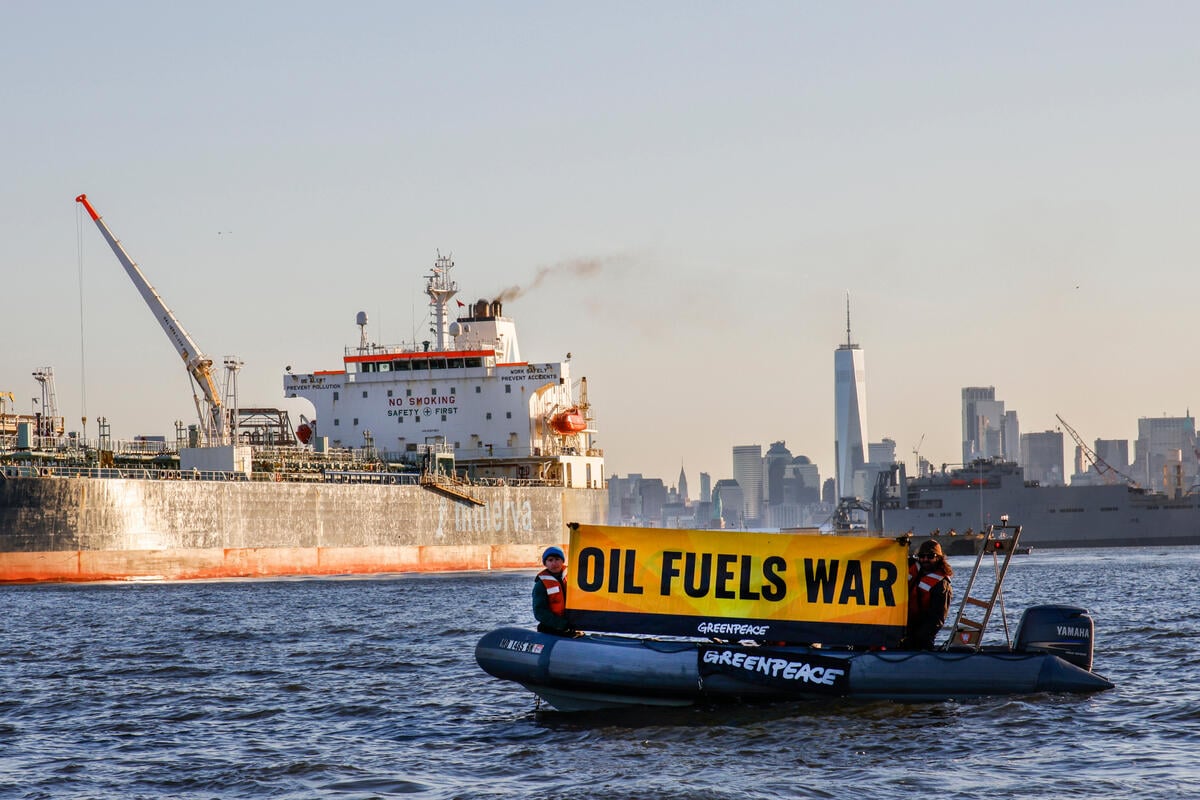
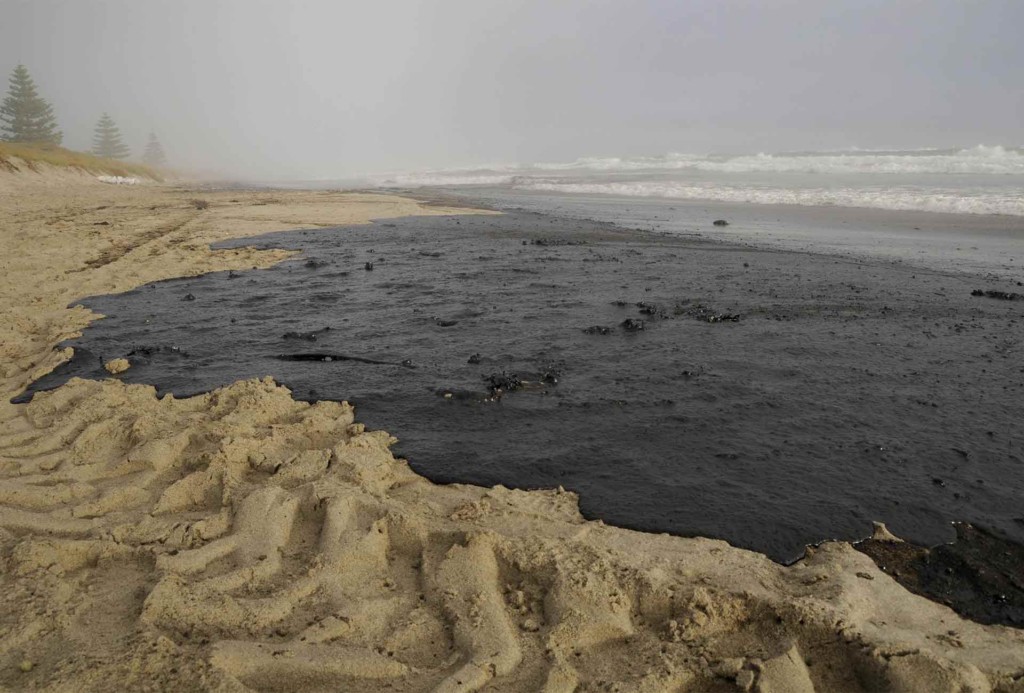
The Container ship Rena inexplicably crashed into the Astrolabe Reef, about seven kilometres north of Motiti Island, near Tauranga early on Wednesday. It is carrying 1700 tonnes of heavy fuel oil, some of which has already started to leak into the sea.
Since then, fears of a potential environmental disaster have grown as the leaking oil has spread, threatening wildlife, including whales, birds and seals. Indeed, Environment Minister Nick Smith was quoted as saying that the spill from the ship “had the potential to be New Zealand’s most significant maritime pollution disaster in decades”. This is very disturbing news.
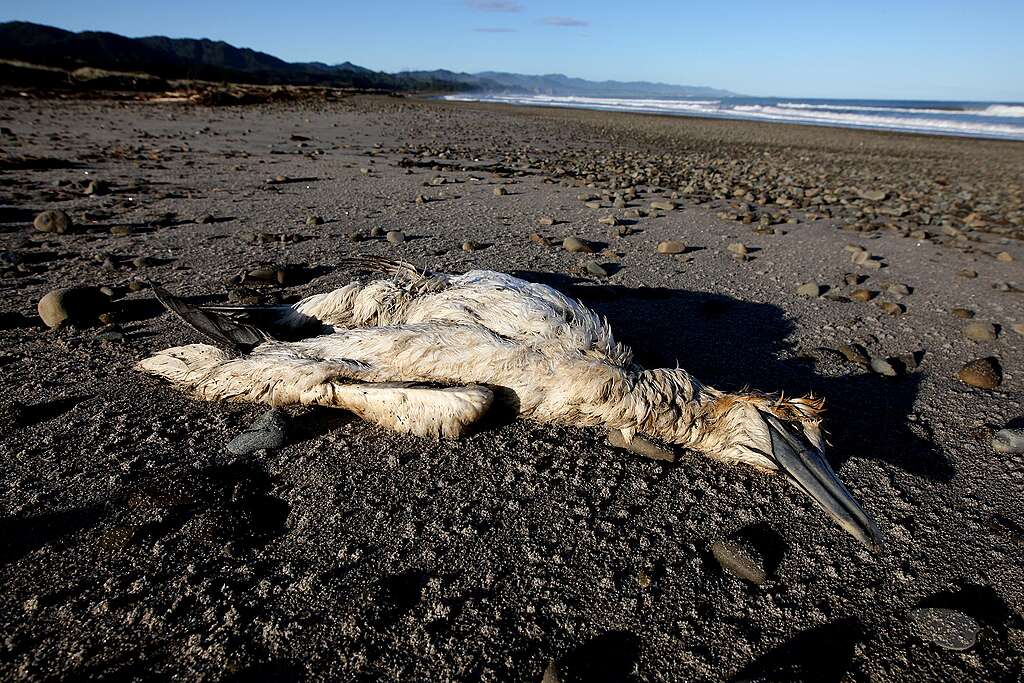
Oiled seabirds have already been found dead close to the Rena, and more birds have been spotted in the water, covered in oil. It is also potentially disastrous for the blue whales and dolphins presently calving in the area, as well as numerous other marine species.
Response teams have so far been unable to deploy oil booms to contain the spill. The response so far as been to use a dispersant called Corexit 9500 – which is being sprayed on the water to disperse the oil. Corexit is the same chemical used in the Gulf of Mexico to deal with the oil from BP’s Deepwater Horizon spill.
Unfortunately, ‘dispersal’ essentially means never cleaning up the oil. It will just stay out there and continue to pollute the marine environment. The reason is that Corexit acts like a surfactant and attracts the oil. The oil then forms globules and sinks to the bottom.
Some studies have shown that Corexit 9500 is four times as toxic as the oil itself. Both are now going into the ocean water. It’s not a good situation.
As the authorities battle to get the spill under control and mitigate against the worst environmental effects, we also hope that this incident gives the Government pause for thought with regard to its deepwater oil drilling plans. This accident is an unfortunate reminder of just how difficult it is to deal with oil spills at sea. It’s a slow spill in a relatively accessible place, and the weather and sea conditions have been favourable yet even so, it is testing NZ’s response capability to the limits.
It’s shaping up to be a significant disaster, but, bad as it is, it will be a walk in the park compared to what would happen if we had a Deepwater Horizon-type spill.
Greenpeace has offered Maritime NZ the support of our inflatable boats, experienced drivers and volunteers to assist in the oil clean up, and the New Zealand Wildlife Health Centre is calling for volunteers to assist in the recovery and rehabilitation of oiled wildlife but as yet there is little anyone can do.
Despite the best intentions, the oil spill response team in Tauranga will not be able to do enough. There is no ‘enough’.
The tools we have to respond to oil spills are orders of magnitude too small to combat the damage they do. We can’t fix oil spills; we can only prevent them. And we can only prevent the really catastrophic spills by saying no to deep sea oil drilling.
Sign the open letter to the oil industry – We will resist oil exploration
Sign on