
Summer is here, and as I watch the trees and flowers blossom, I’m reminded that our campaigns often unfold in the same way. In the work we do, we plant seeds of change. And that change isn’t always immediate or visible—sometimes, the roots need to grow and take hold first. But once they do, they blossom into something beautiful. And today, I want to share some of the most recent campaign updates and victories to bloom within the Greenpeace network.
Campaign Updates
Historic Resolution at the UN General Assembly
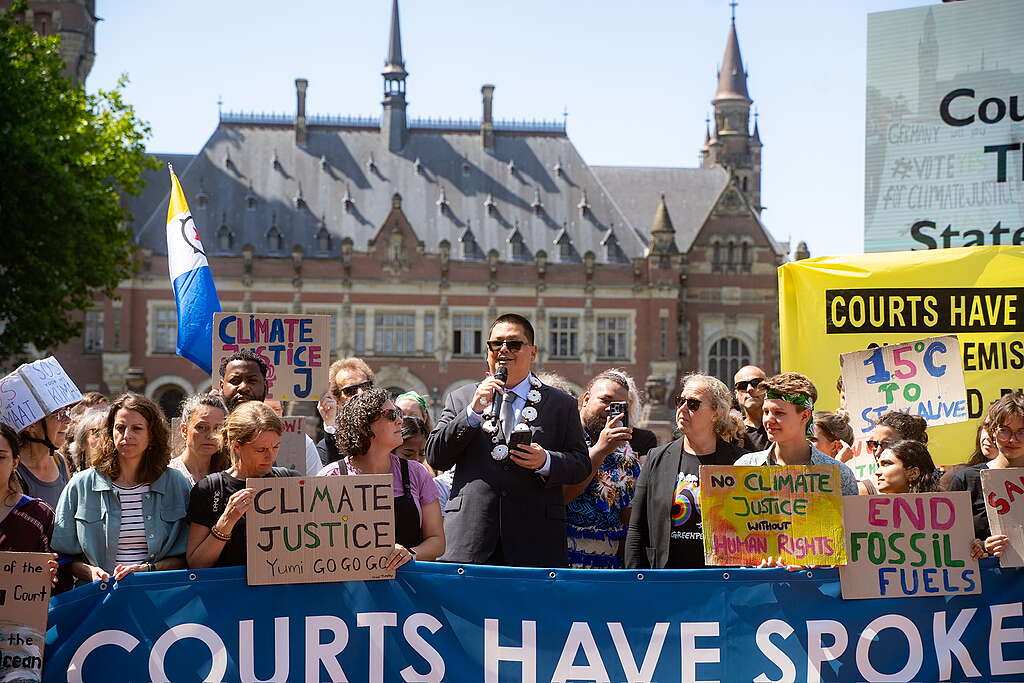
Last year, the world’s highest court delivered a historic win for climate justice.
In July 2025, the International Court of Justice (ICJ) ruled on climate change and state responsibility, finding that the right to a clean, healthy, and sustainable environment is fundamental for all other human rights—and that governments should consider the rights and wellbeing of future generations when making decisions about climate change. The Court’s decision also obligates states to regulate businesses based on the harm caused by their emissions, regardless of where that harm takes place.
Now, the UN General Assembly has taken an important first step toward putting that ruling into action. On May 20, member states voted overwhelmingly to support the decision, with 141 votes in favour. This outcome formally reaffirms the Court’s findings, and calls on governments to align their policies with their legal obligations to limit global warming to 1.5°C.
Greenpeace, as a network, has been campaigning on this for six years! It all started with Pacific youth and the Vanuatu government, eventually becoming a global movement. Now, that movement has shaped the climate agenda in such a way that climate action has become a legal duty, and not just a policy choice.
Major Step Forward for Greenpeace International’s Anti-SLAPP Lawsuit Against Energy Transfer
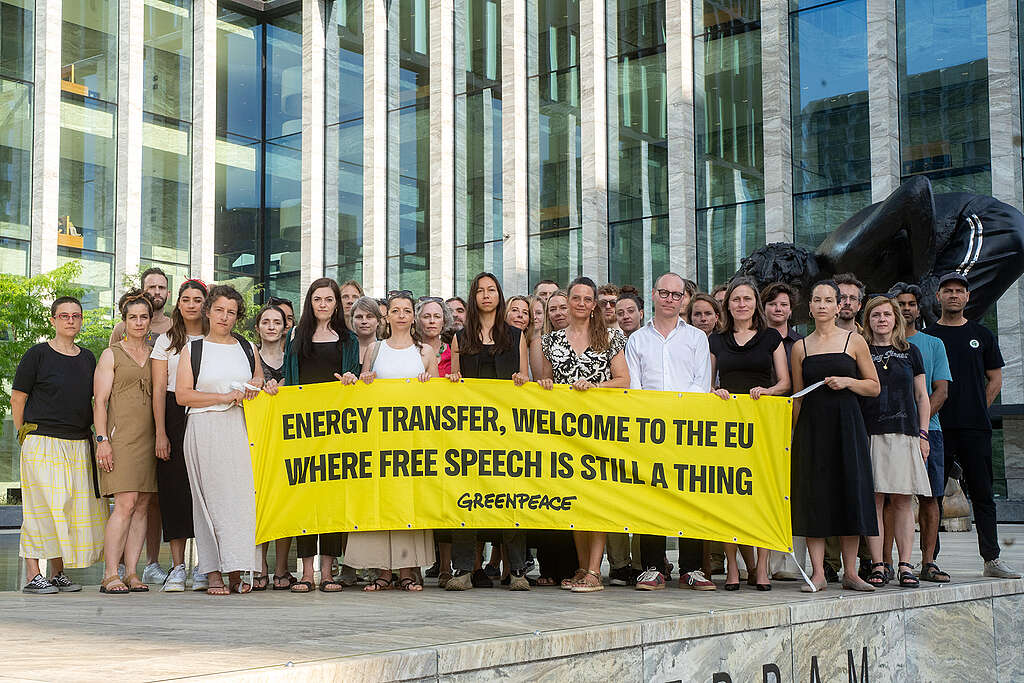
Greenpeace International has cleared an important hurdle in its legal fight against Energy Transfer.
In February 2025, Greenpeace International (GPI) filed a lawsuit in Dutch court, seeking to recover damages and costs resulting from the US-based company Energy Transfer’s repeated lawsuits against Greenpeace entities in the United States.
On June 3, 2026, the Dutch court entirely dismissed Energy Transfer’s preliminary pleas to throw out Greenpeace International’s anti-SLAPP lawsuit or suspend the proceeding. Instead, the court told Energy Transfer to file its defence on the merits under Dutch law, and ordered the company to pay legal costs to Greenpeace International.
This ruling marks the third time Energy Transfer has failed to halt this specific case, following unsuccessful legal challenges before two levels of North Dakota courts.
This is a massive milestone in the global fight against corporate bullying. It proves that when we are persistent, we can hold even the biggest polluters accountable to the law.
And while Greenpeace International celebrates this significant milestone in the Netherlands, the legal defence continues intensely in the US. In the US SLAPP brought by Energy Transfer, the Greenpeace defendants have asked for a new trial. If not granted, then they are fully prepared to appeal to the North Dakota Supreme Court.
After all, defiance is in our DNA. The Greenpeace network will persevere because our supporters’ respect and love for our Earth is bottomless—it cannot be sued into submission.
Action Alert
Deep Sea Arctic Expedition
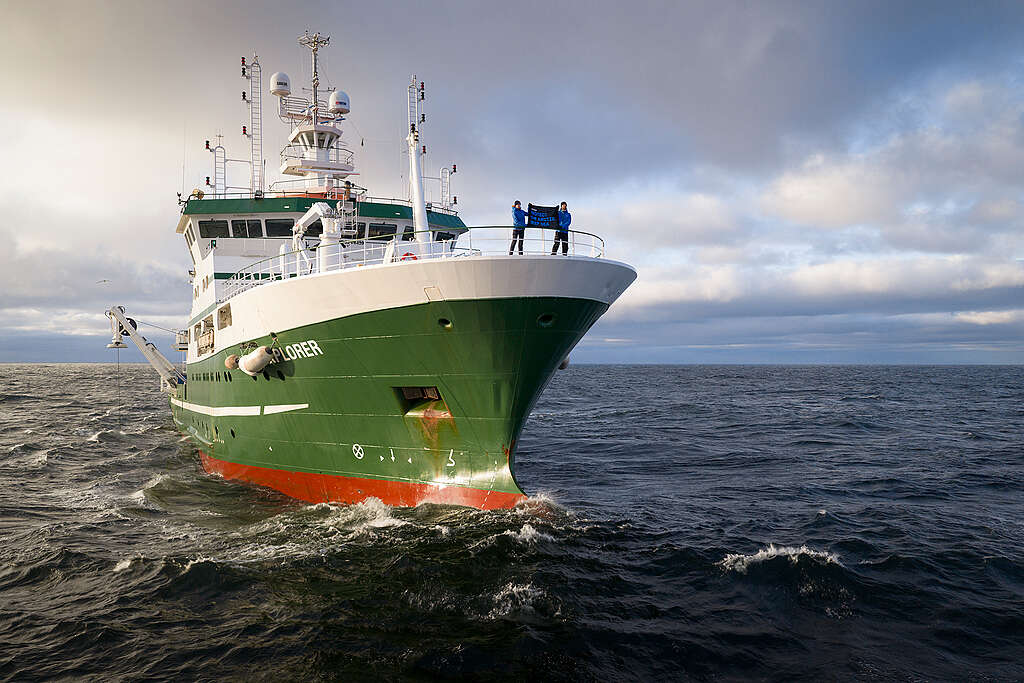
Dr. Sandra Schöttner, Greenpeace Science Lead, and Daniel Bengtsson, Communication Lead of the expedition, on the bow of the Deep Arctic Expedition research vessel in the Norwegian Sea.
Greenpeace recently concluded its Deep Arctic expedition with findings of new species—and over 100 hours of video from the deep sea!
On May 8, Greenpeace launched a month-long scientific expedition to explore the life and wonders of the Arctic deep sea. The expedition brought together a team of renowned researchers to document and protect the “Banana Hole,” a remote pocket of international waters between Norway and Greenland. The area is home to volcanic hot springs, ancient sponges, and whale habitats.
The expedition is a first of its kind in the organization’s history, and comes at a critical time, as the deep sea faces the imminent threat of mining. Greenpeace is actively campaigning to protect these fragile high-sea ecosystems under the new UN High Seas Treaty, while lobbying against Norway’s plans to allow seafloor mineral extraction in the region.
We can’t protect the surface of the planet while destroying its depths.
Film Launch
SLAPP SUIT

THEY WANT US SILENT.
We’re turning up the volume. 🔊
Corporate bullies are using predatory lawsuits called Strategic Lawsuits Against Public Participation (SLAPPs) in an attempt to silence anyone who speaks out for the public good.
Javier Bardem and Yasmin Finney have joined forces with the Greenpeace network to expose this playbook of intimidation.
We can’t stay silent. If you agree that power belongs to the people—not corporate bullies—watch, save, and share this video.
Photo of the Month
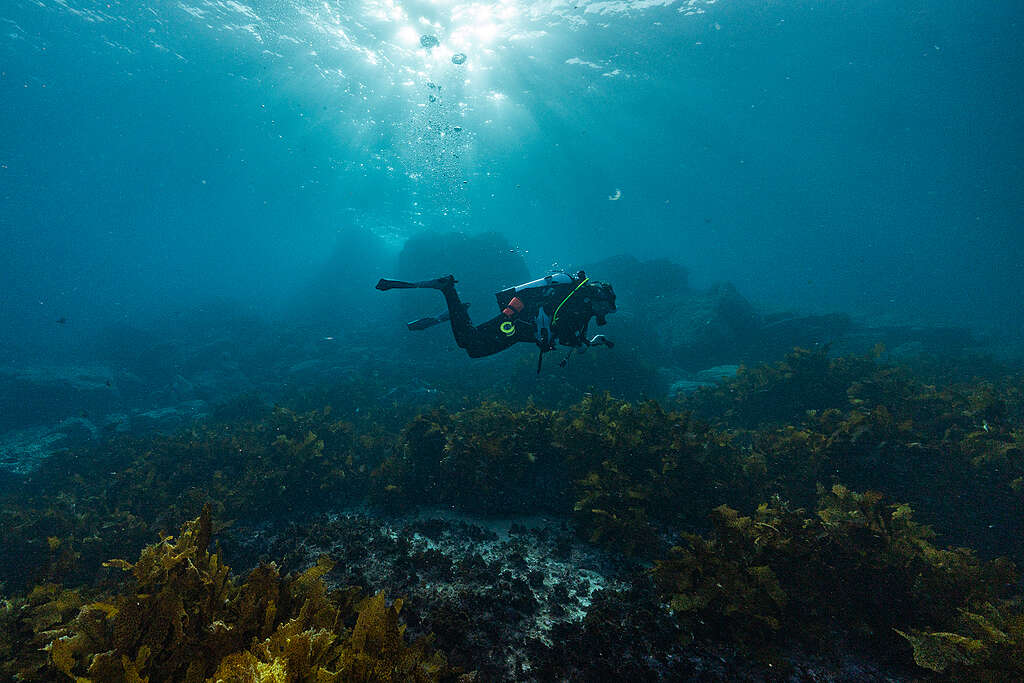
Jervis Bay is famous for its crystal-clear waters and marine life. This Australian bay, with its deep ocean canyons and seagrass meadows, is a refuge for sharks, seals, seabirds, and migratory whales.
In May, Greenpeace Australia Pacific travelled to Jervis Bay and another marine park on Oceania (a campaigning vessel) to document these ecosystems’ beauty and wildlife—as well as the industrial fishing activities, like bottom trawling, that threaten these supposedly “protected” waters.
Greenpeace is calling on the Australian government to ban industrial activities from the marine parks network, asking that it create more fully protected ocean sanctuaries and connect the network to new high seas ocean sanctuaries.