You might not always see soy, but it could be in your chocolate, your shampoo, your cooking oil. Soy is in almost everything, which is exactly why almost no one asks where it comes from.

‘Contains soy. May contain deforestation.’ is the alert from a new Greenpeace Brazil campaign. Without a clear commitment to zero deforestation from across the sector, it is difficult to guarantee that the soy used in thousands of everyday products does not come from a deforested area in the Amazon rainforest.
Where does the soy we consume without knowing it come from?
There is a trail, and it leads straight to the forest, with every purchase, on every shelf, to every company that built a brand on the word sustainability and then agreed to dismantle the greatest mechanism that made that word verifiable: the Soy Moratorium. The soy trade in the Amazon is dominated by a handful of large companies like Cargill, Bunge, Amaggi, and ADM among them, that decide, in practice, whether or not the soy that reaches you is or not free from deforestation.
Could these items be on your shopping list?
Soy is the base of obvious food like oil, plant-based milk, textured protein, but it is also a ‘hidden’ ingredient. Soyby-products, such as soy oil and soy lecithin, are found in a massive number of processed products like biscuits, cosmetics, and animal feed that turns into meat, eggs, and milk on your table, alongside many other processed goods we wouldn’t even imagine.
We could be consuming soy produced in deforested areas of the Amazon without even knowing it. That is why a clear commitment from across the entire sector is essential.
What has changed in the protection of the Amazon against soy?
For 20 years, an environmental agreement called the Soy Moratorium prevented the purchase of soy grown in areas of the Amazon deforested after 2008. The mechanism worked, and the figures for the reduction in deforestation linked to the grain during this period proved it: production advanced, exports grew, and Brazil became the world’s largest soy producer.
The Moratorium proved that it is possible to produce without deforesting, but its effectiveness has always bothered those who want to remove barriers for predatory production. So, in recent years, the battleground has shifted and moved into politics.
As a result of an agribusiness movement that wanted to see the end of the Moratorium, Brazilian state governments in Mato Grosso, Rondônia, Maranhão, and Tocantins passed laws withdrawing tax benefits from companies with environmental criteria that are stricter than what legislation requires, and CADE – Administrative Council for Economic Defense – opened an investigation into allegations that the agreement constitutes anti-competitive practice.
In January 2026, the very companies that sustained the agreement abandoned it. ADM, Bunge, Cargill, Louis Dreyfus, and Amaggi, among others, which for years used the reputation of deforestation-free soy to access demanding markets, gave in to tax benefits and political pressure and set aside the instrument that helped build that advantage. Thus, the guarantee of zero deforestation in the Amazon soy supply chain, which lasted for nearly two decades, ceased to exist.
Instead of backing down, companies should expand their commitments.
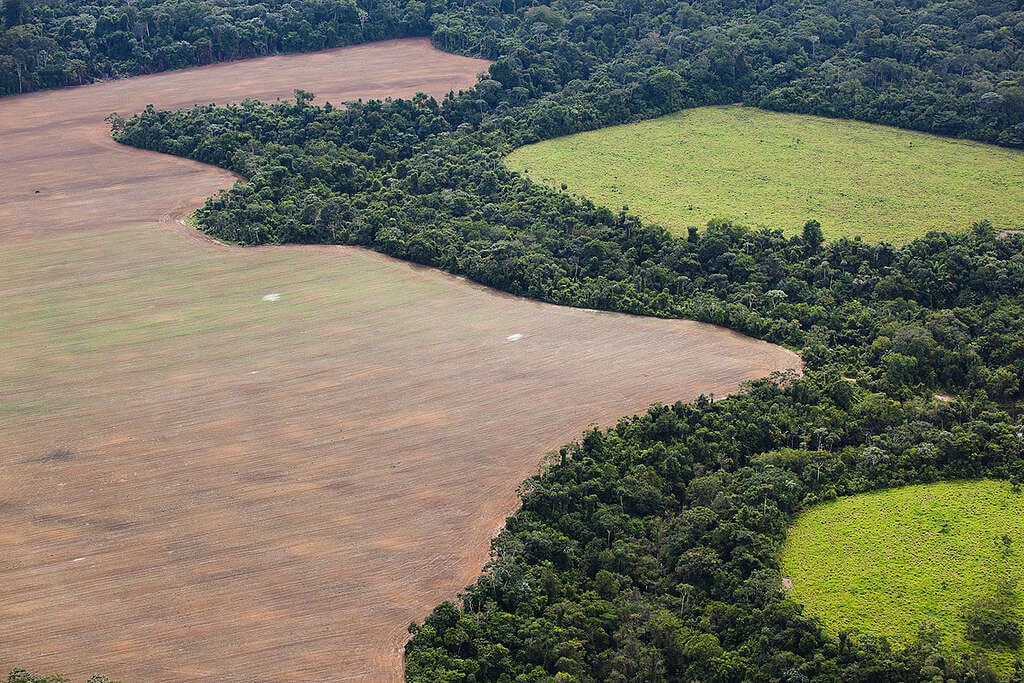
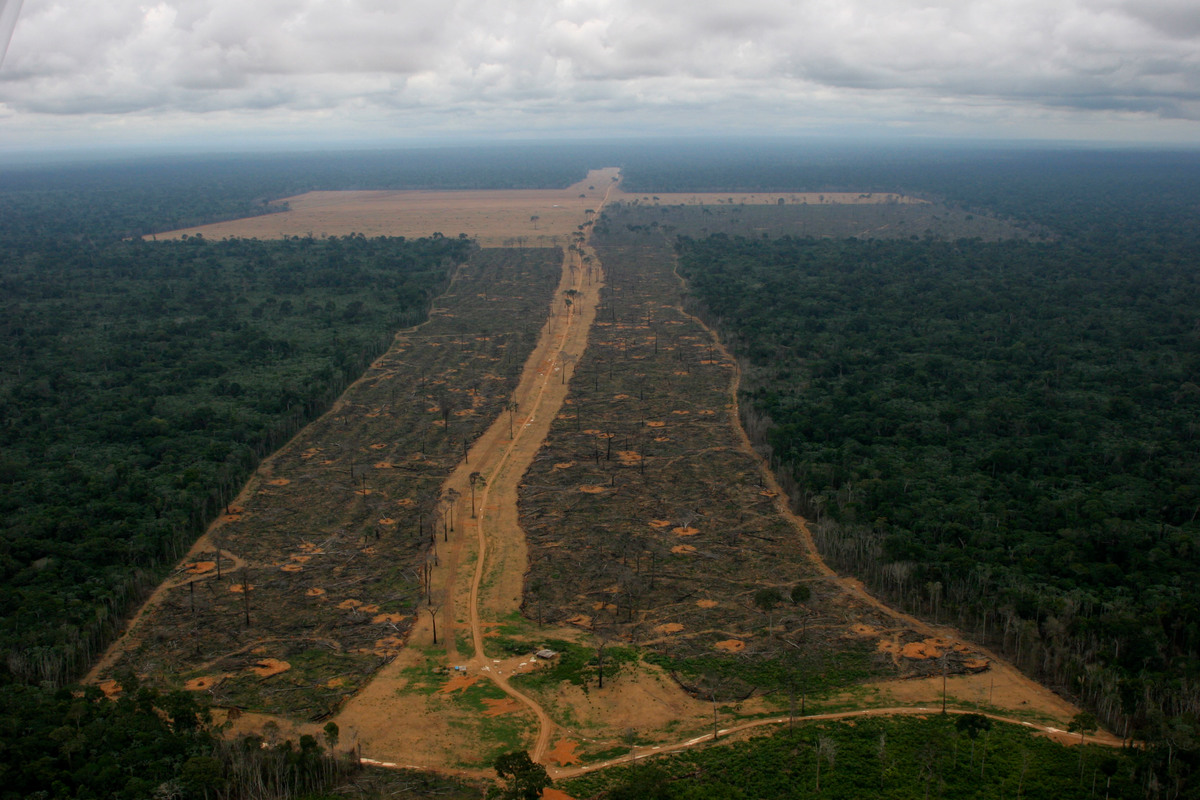
The Amazon, without the protection that was lost in early 2026, is at serious risk. Without clear zero-deforestation criteria, poor transparency, and weakened monitoring, soy will once again eat the Amazon.

According to the article The Rise and Fall of the Amazon Soy Moratorium, from Science Magazine, potential impacts of soy on the Amazon without a zero-deforestation commitment include:
- 1.4 million hectares (2 million football pitches) projected to be deforested by 2036 without the Moratorium
- Another 9.1 million hectares (the size of Portugal) suitable for soy could be legally deforested
- 28.7 million hectares of unallocated public forests (an area the size of Italy) are at risk of land grabbing and illegal deforestation
Additionally, 1.7 million hectares deforested before July 2008 in soy farms remain available for use, instead of deforesting new areas. Showing that continuing implementing Zero Deforestation is completely feasible.
If it contains soy, it may contain deforestation. And those who decided that the Amazon is worth less than the next harvest need to be accountable for it. We cannot accept anything less than zero deforestation.
That is why we are demanding action:
Companies that trade soy (traders) such as Cargill, Bunge, Amaggi, and ADM: Recommit to zero deforestation in the Amazon – monitoring production right from its source on the farm and rejecting soy from farms deforested after 2008. Expand these commitments to other threatened Brazilian biomes, like the Cerrado, and to other products at risk of deforestation, such as maize.
Banks, buyers, and retailers: Commit to the same zero deforestation requirements. Do not finance or buy products linked to deforestation.
Click here to sign our petition (in Portuguese).
Caroline Haddad is a Communications and Engagement Forests Campaigner at Greenpeace Brazil.