You might not recognise their name, but chances are you’ve had their food in your fridge or in your local restaurant.
Headquartered in the Netherlands, JBS is the largest meat company on earth. It is controlled by billionaire brothers whose companies have pleaded guilty to bribery, been forced to pay millions to settle labour rights violations cases, and whose supply chain has been linked to massive deforestation in the Amazon rainforest. JBS is also a massive polluter, estimated to be responsible for more climate wrecking methane emissions than oil giants Shell and ExxonMobil combined.
Why JBS’s US$6 billion Nigeria expansion is a climate and human rights threat
Right now, JBS is engaged in a $6 billion global expansion, with almost half earmarked for Nigeria, from where it plans to bring its destructive industrial livestock model to sub-Saharan Africa for the first time. Community groups in Nigeria fear that the expansion will cause irreversible environmental damage and threaten access to land and water that local communities depend on for food security – all to line the pockets of wealthy international elites.
With a track record like this, it’s easy to see why JBS prefers to stay in the shadows. It has long shirked corporate transparency while peddling empty promises. Its approach to Nigeria appears no different. Information published about its plans is extremely limited and despite the efforts of community groups in Nigeria, no environmental or social impact assessments have been published.
That’s why we need to drag them into the light.
Dragging JBS industrial meat expansion in Nigeria out of the shadows
Earlier this year, Greenpeace Netherlands activists took over JBS’ first shareholder meeting on Dutch soil to deliver a letter demanding they disclose the truth about their expansion plans. Using a new Dutch law which allows access to certain corporate data for the purpose of building litigation against a company, JBS were given 21 days to hand over files relating to the climate, nature and human rights impacts of its historic operations and its planned expansion.
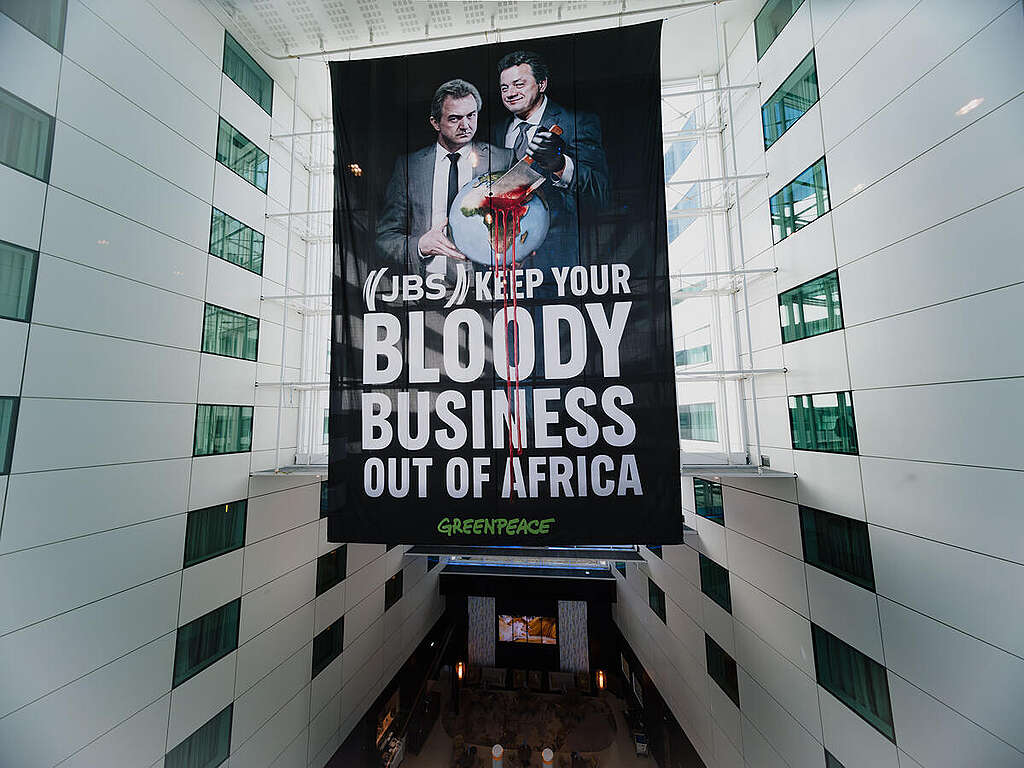
Just hours before the deadline, JBS responded in its usual way: denying responsibility, refusing transparency, and completely dismissing anyone who dares to challenge them. JBS ignored the voices of thousands of Greenpeace supporters who emailed in support of our action and all those in Nigeria whose livelihoods are on the line.
Greenpeace Netherlands hoped it wouldn’t come to this. They didn’t want to trouble a judge with this matter. But JBS’ intransigence has left them no choice. Today, Greenpeace Netherlands has submitted a petition to a Dutch court asking it to force JBS to release the files. This is the first step towards stopping JBS’ dangerous plan to open new industrial frontiers in Africa and beyond before it even starts.
See you in court!
JBS appears to believe that despite moving to the Netherlands, it doesn’t need to follow Dutch rules. Today’s legal action aims to prove it wrong – and lay the ground for a first major climate and nature lawsuit against the dangerous expansion of the global meat industry.
Greenpeace Netherlands believes that JBS’ historic business practices and its future expansion plans are inconsistent with the company’s climate and biodiversity obligations and therefore breach Dutch duty of care, a legal obligation requiring companies to act in line with international human rights law.
This is the basis of groundbreaking litigation that Greenpeace Netherlands is building against JBS. Today’s action brings us one step closer to that goal. If the judge rules in Greenpeace’s favour, it will be a huge victory for transparency against corporate interest. And it will provide Greenpeace Netherlands with crucial information to robustly challenge JBS’ dangerous business model in court and hold it to account before its global expansion causes further harm.
JBS tears up climate and nature pledges – act now!
This legal intervention couldn’t have come at a more crucial time. Just weeks ago, JBS scrapped flagship commitments to eradicate deforestation from its supply chains and reach Net Zero emissions by 2040. With them, safeguards for traditional communities and Indigenous peoples may well also be gone.
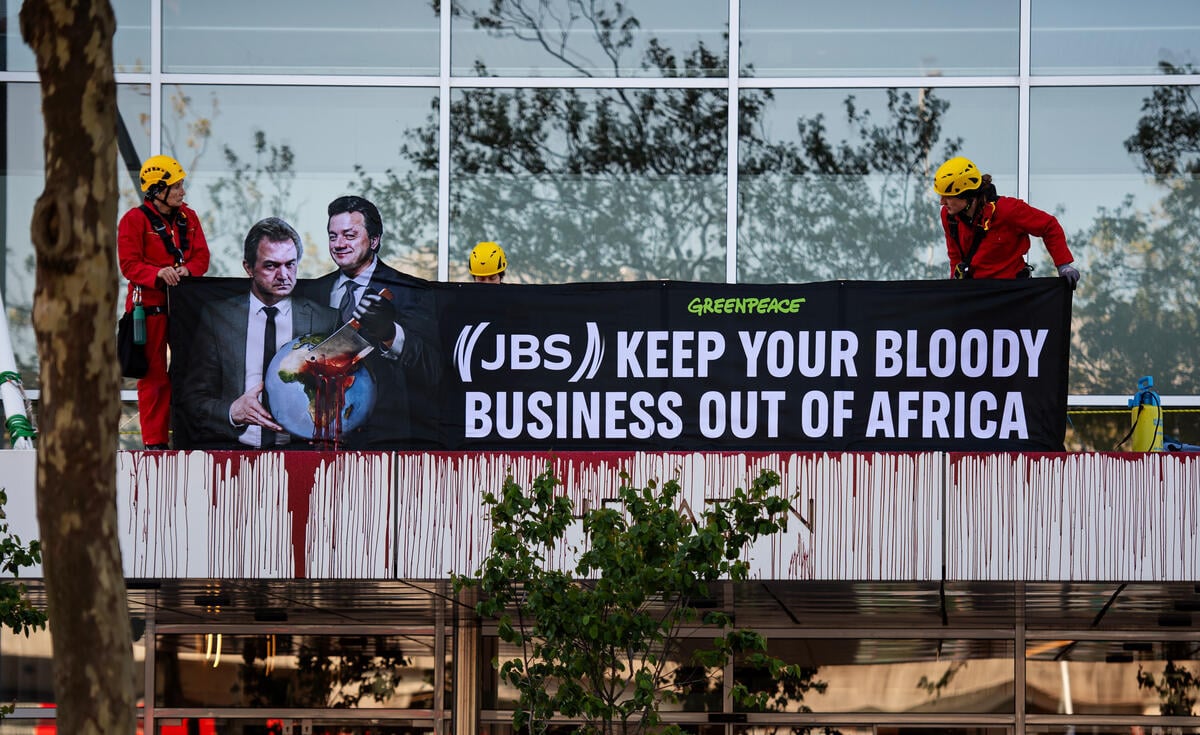
Make no mistake, these were always empty promises that JBS was never realistically going to deliver. But now JBS appears to have given its supply chain carte blanche for the wholesale sacrifice of ecosystems from the Amazon to its new frontiers in sub-Saharan Africa, while abandoning responsibility for greenhouse gas emissions exceeding those of Spain, a country of nearly 50 million people. Its expansion plans will balloon these impacts even further.
We can’t let JBS get away with it. And that’s where you can help.
We believe that public interest must come before commercial confidentiality, that corporate impunity must come to an end and that private wealth accumulation should never trump a healthy planet. We believe states like the Netherlands which host multinational corporations must hold them accountable – wherever they operate in the world.
But we need a massive wave of public support to show the courts the strength of global concern about JBS’ plans.
Stand in solidarity with local communities fighting the corporate takeover. Stand up for nature and the climate. Help us stop the new wave of destruction before it starts.
We need to stop the expansion of the world’s largest meat company. Join the People vs. Big Ag.
Join nowDaniela Montalto is a Global Campaigner at Greenpeace UK based in London.