26. aprila 1986 zgodaj zjutraj je eksplodiral reaktor št. 4 v jedrski elektrarni Černobil, v Ukrajini. To je povzročilo nekaj, kar so Združeni narodi poimenovali “največja okoljska katastrofa v zgodovini človeštva”.

Černobil je bila nesreča, za katero je industrija jedrske energije trdila, da se ne more nikdar zgoditi.

25 let kasneje nas je jedrska nesreča v mestu Fukušima na Japonskem spomnila, da tveganje ponovne nesreče kot je bila v Černobilu še vedno obstaja, do nje lahko pride kjer koli se uporablja jedrska energija.

Dolgožive radionuklide, ki so se sproščale v zrak po nesreči v Černobilu pomenijo, da se katastrofa nadaljuje – desetletja kasneje. Še vedno vpliva na življenja milijonov ljudi.

Tukaj je navedenih 15 dejstev, ki jih morda še niste vedeli o katastrofi:

1. Pred več kot 30-imi leti je reaktor 4 eksplodiral v jedrski elektrarni v Černobilu, v Ukrajini. Skoraj pet milijonov ljudi še vedno živi na prizadetih območjih.
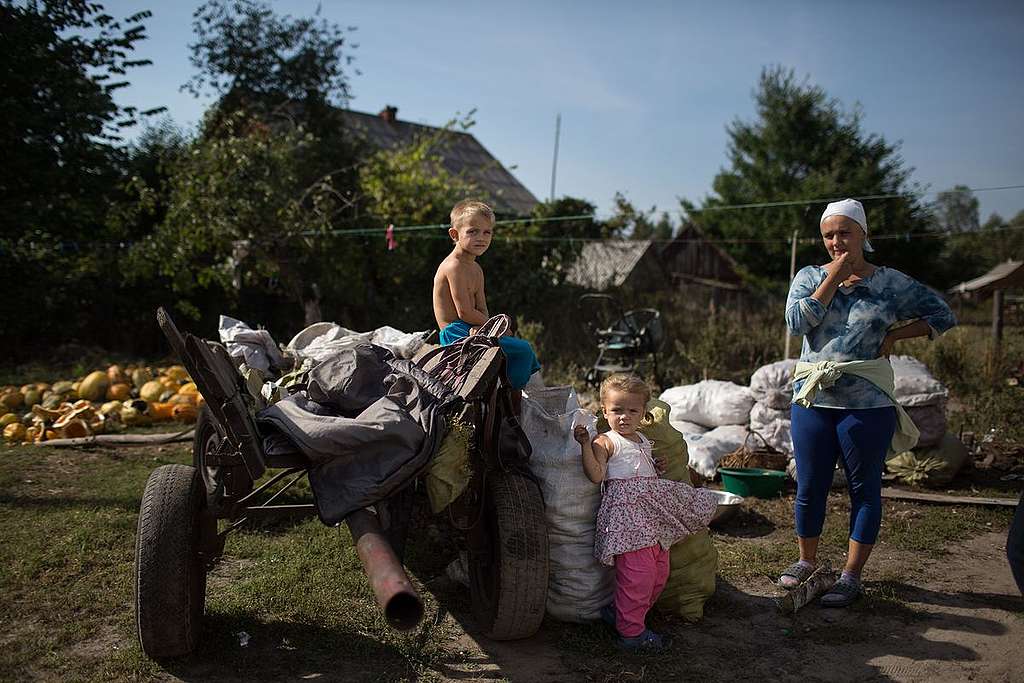
In the village of Vezhytsia, the Rokitne District of the Rivne Region, a family has just brought a wagon full of locally grown potatoes.

To understand better how contamination affects the lives of Chernobyl survivors, Greenpeace carries out two pilot investigations into the remaining radionuclide contamination of locally produced food and forests.

2. Količina radioaktivnega sevanja, ki je bila izpuščena v ozračje je približno 200-krat višja od celotne emisije atomskih bomb, ki sta zadeli mesti Nagasaki in Hirošima. [1]
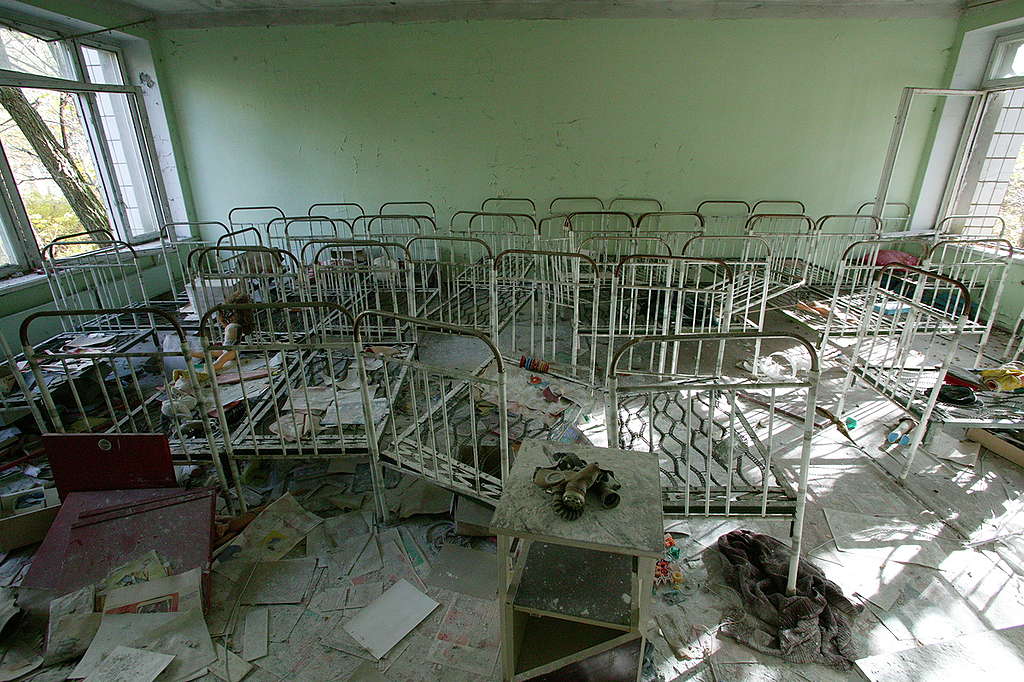
Remains of the kindergarten in the town of Pripyat that was left abandoned after the nuclear disaster.

3. Ljudje v najbližjem mestu Pripjat so bili evakuirani šele dva dni po nesreči. V tem času so bili številni že izpostavljeni visokim stopnjam sevanja.
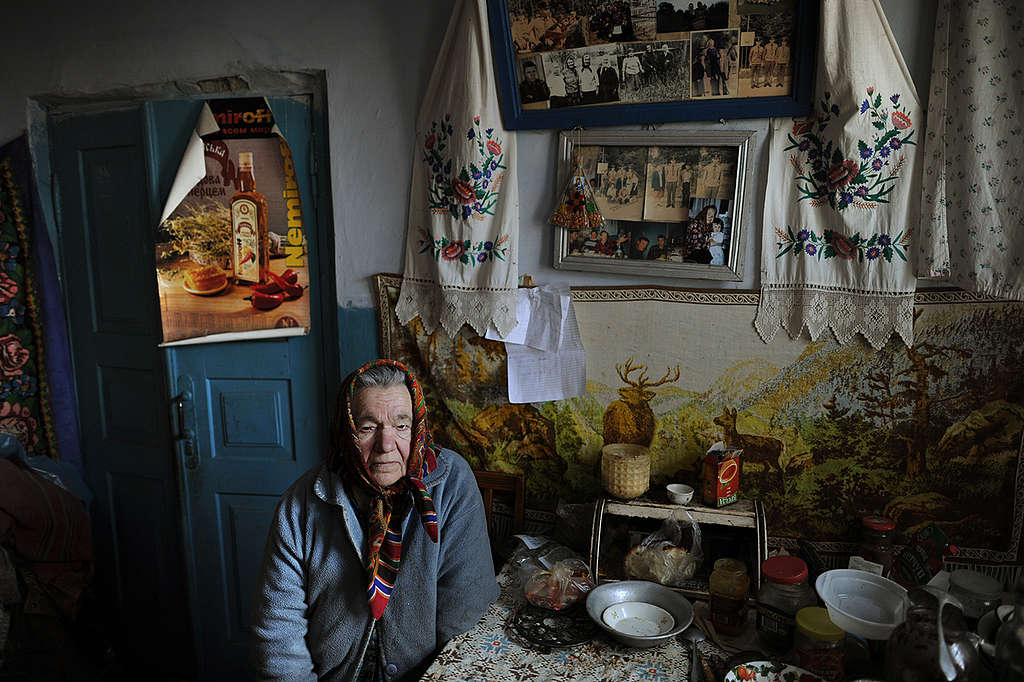
People have come back into their villages in the 30 kilometres zone of Chernobyl after the nuclear accident although the radiation is still high. Mostly old people who want to stay in their houses like Maria (72) and Ivan (75) Sholjaruk.

4. Radioaktivni dež je padal vse do Irske. Ukrajina, Belorusija in Rusija so bile najbolj prizadete države. 63 odstotkov radioaktivnih padavin iz Černobila je zadelo njih.
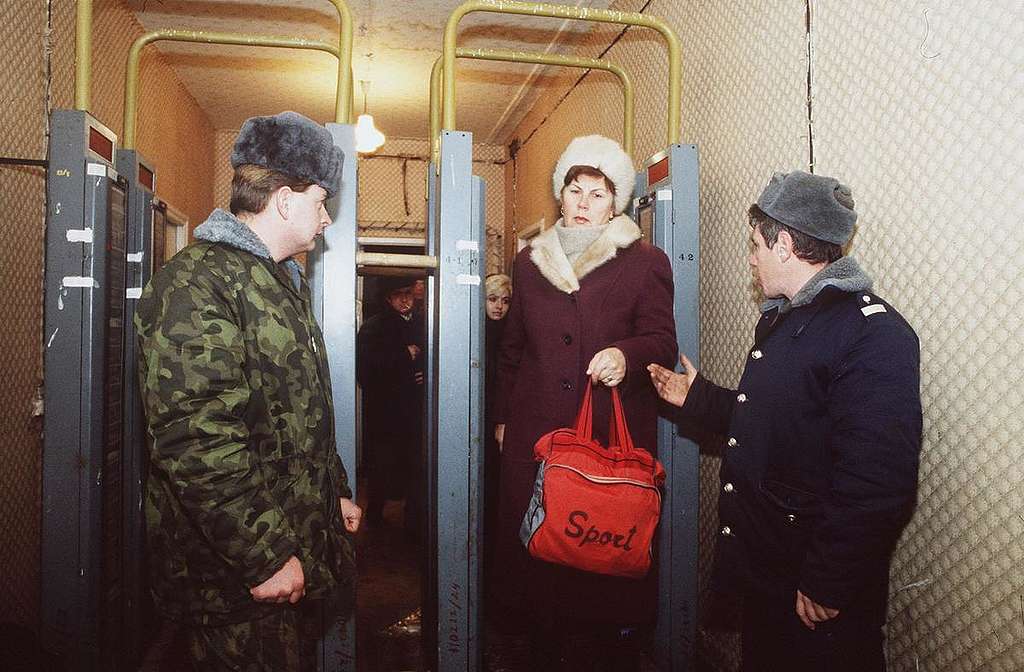
Decontamination centre in Pripyat.

5. Ker so mesto Pripjat zaradi zelo visokih stopenj sevanja ljudje zapustili, so volkovi, divji konji, bobri, divji prašiči in druge živali naselile mesto.
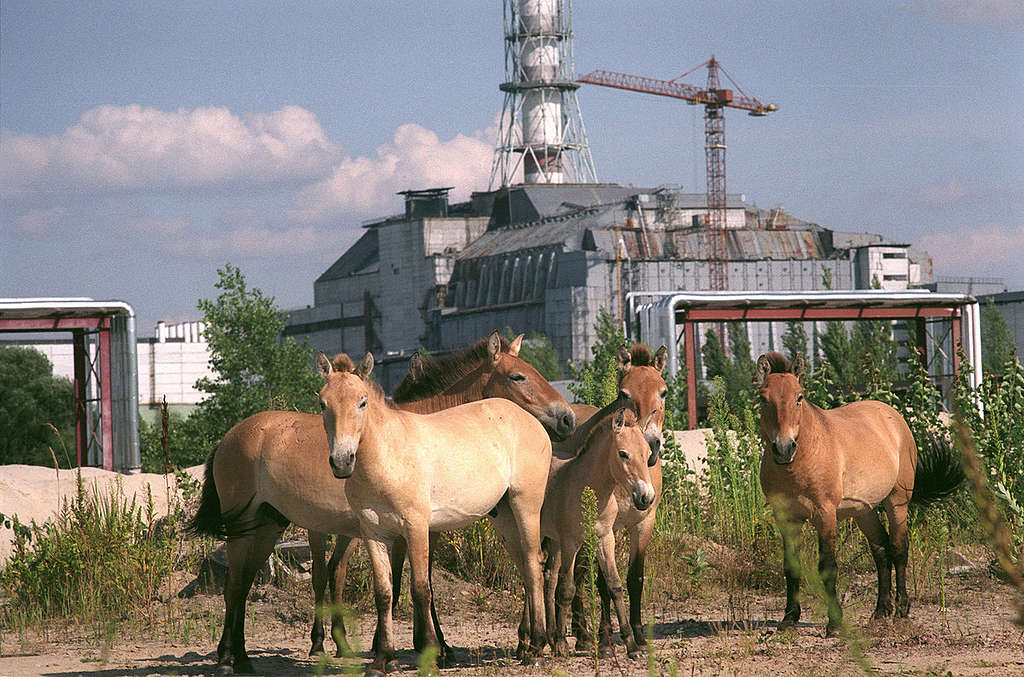
Wild Przevalsky horses from the Ukrainian nature reserve Askania-Nova were introduced into the Chernobyl exclusion zone a couple of years ago. Despite the fact that the horses feed on radioactive grass, they all look well. As they are moving within an area of 3000 square kilometers, it is very difficult to view them. In the picture, they are seen in a rare moment in front of sarcophagus of Chernobyl Unit No 4.

6. Živali, ki živijo v varni coni, ki obkroža jedrsko elektrarno v Černobilu (3 km) imajo višjo smrtnost, povečane genske mutacije in zmanjšano rodnost.
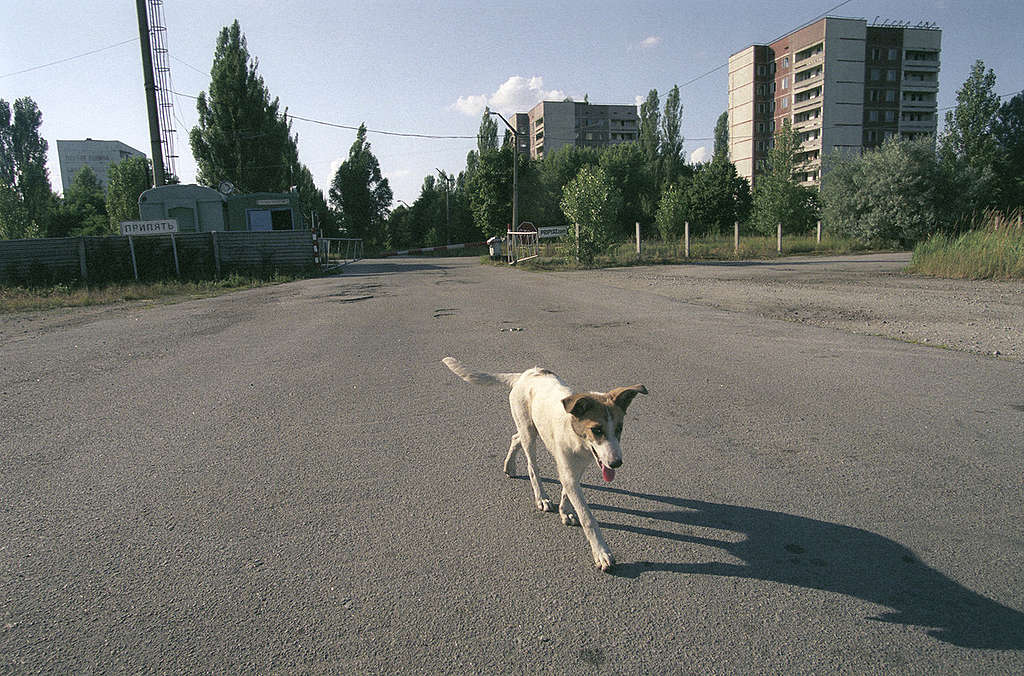
Abandoned and stray dogs are the only inhabitants of the town of Pripyat, which is now completely deserted. Pripyat is situated less than 3 kilometers from the Chernobyl nuclear power plant. Before the Chernobyl disaster the town had around 48,000 inhabitants. After the accident people were forced to leave their home with a promise they could return in 5 days. But they never could go back. Radioactive contamination here is still very high. People need a special permit to enter this area.

7. Mislili bi si, da so bili preostali reaktorji v Černobilu prav tako takoj izključeni. Ampak namesto tega je bilo delovanje preostalih treh reaktorjev v jedrski elektrarni ponovno zagnano in vodeno še nadaljnjih 13 let, vse dokler jih niso trajno izključili leta 2000.
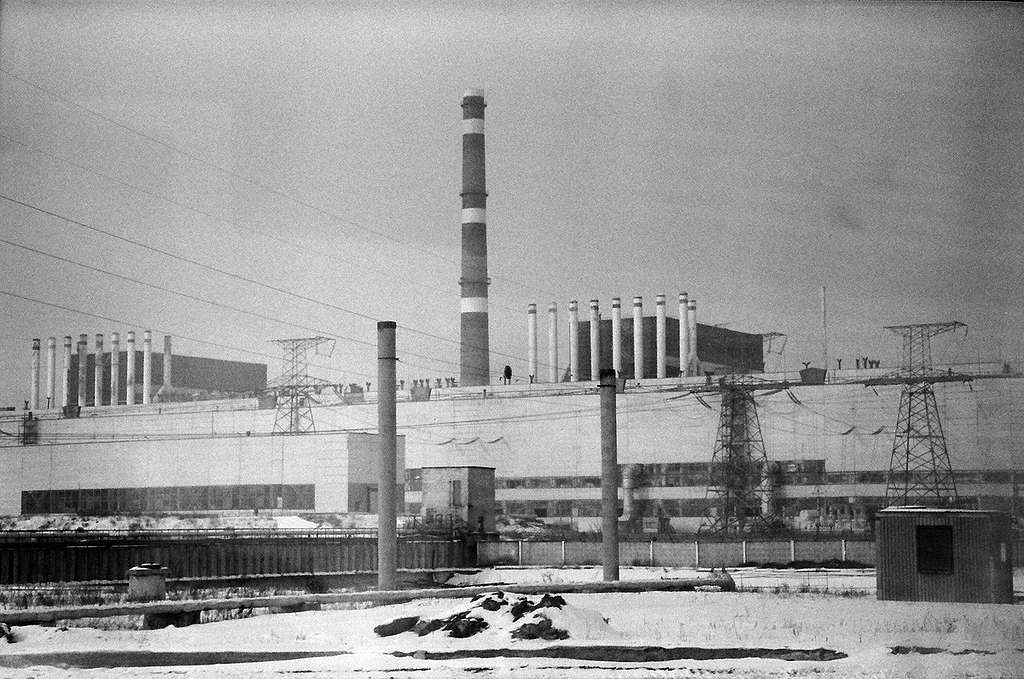
Reactor 1 & 2 at Chernobyl nuclear power plant in Ukraine.  The pictures were taken at 1997, 11 years after the nuclear accident at Chernobyl in April 1986 by Stefan Füglister, former Nuclear Campaigner of Greenpeace Switzerland.

8. Še vedno so prisotne radioaktivne snovi, inkapsulirane v razpadajoč cementni sarkofag, ki so ga zgradili čez reaktor po nesreči. Trenutno gradijo novo trdo lupino čez obstoječ sarkofag. Ampak zdržala naj bi zgolj 100 let.
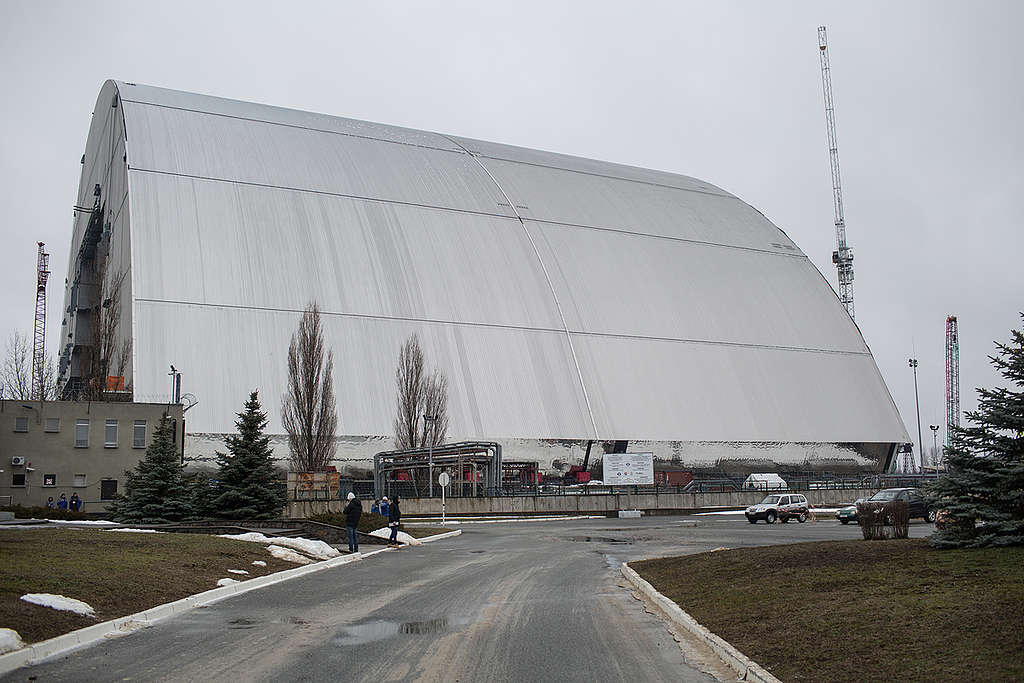
Thirty years after the nuclear disaster Greenpeace revisits the site and the Unit 4 with the New Safe Confinement (NSC or New Shelter).

The new giant structure is intended to contain the nuclear reactor. Its primary goal is to prevent the reactor complex from leaking radioactive material into the environment and the secondary goal is to allow a future partial demolition of the old structure.
The NSC is designed to contain the radioactive remains of Chernobyl Unit 4 for the next 100 years while giving scientists the time to create technologies to deal with the melted core of the reactor.

9. Gozd v bližini katastrofe je dobil ime “rdeč gozd,” po tem, ko je visoka stopnja sevanja ubila drevesa in pustila za sabo le velika območja bledo rdečega mrtvega bora.
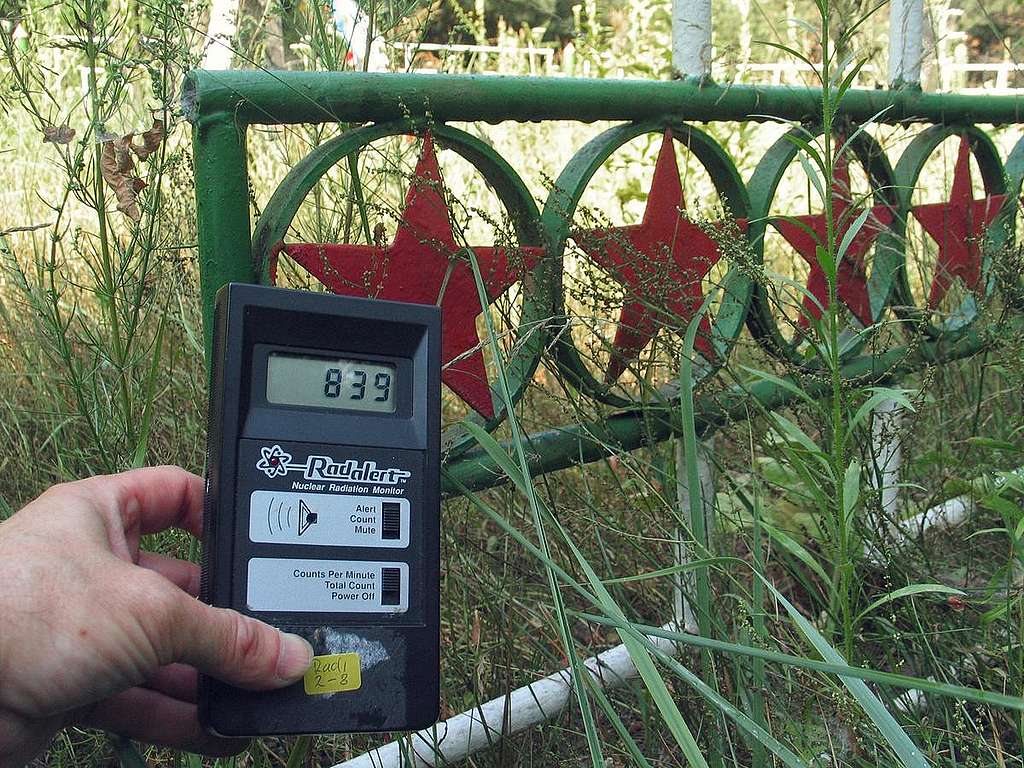
Measuring radiation at the site of the so-called "Red Forest.  The name "Red Forest" comes from the ginger-brown colour of the pine trees after they died following the absorption of high levels of radiation from the Chernobyl accident.   In the post-disaster cleanup operations, the Red Forest was bulldozed and buried in the ground. After twenty years radioactive contamination here is still very high. Dosimeter shows well over 800 microroentgens per hour.

10. Jedrska industrija in vlade Ukrajine, Rusije in Belorusije želijo zapraviti milijarde za nove jedrske projekte, medtem ko zanemarjajo svojo odgovornost, da bi podpirali tiste, ki so preživeli nesrečo v Černobilu. Zmanjšujejo posledice nesreče in zmanjšujejo stiske, s katerimi morajo ljudje v okolici Černobila živeti.
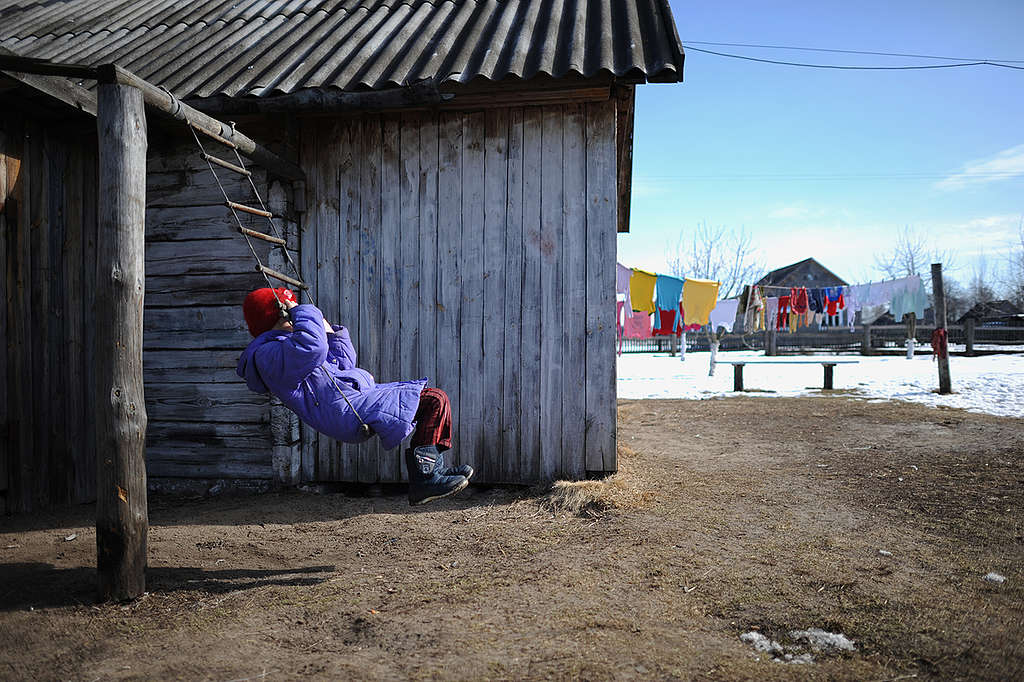
The village Drosdyn in Rowno area, 200 kilometres west of the nuclear power station Chernobyl. Due to the sour earth everything growing there is radioactive contaminated.Children playing.

11. Sedaj lahko rezervirate tudi izlet v Černobil! Turistične agencije organizirajo dnevne izlete v zapuščeno mesto Pripjat, ki se nahaja prav ob uničeni jedrski elektrarni.
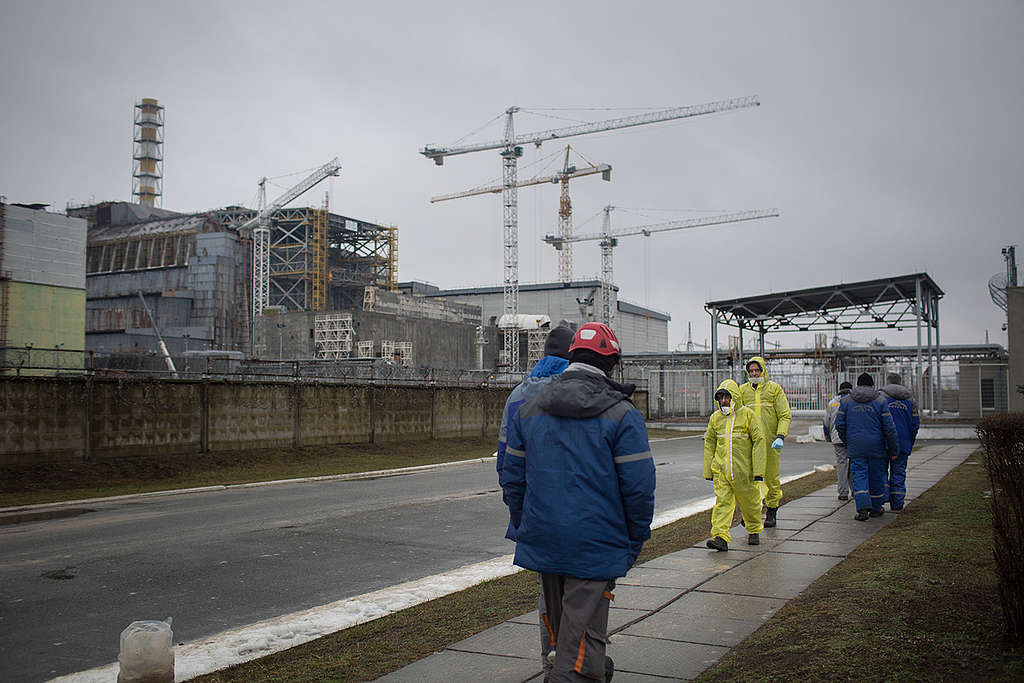
Thirty years after the nuclear disaster Greenpeace revisits the site and the Unit 4 with the New Safe Confinement (NSC or New Shelter).

The new giant structure is intended to contain the nuclear reactor. Its primary goal is to prevent the reactor complex from leaking radioactive material into the environment and the secondary goal is to allow a future partial demolition of the old structure.
The NSC is designed to contain the radioactive remains of Chernobyl Unit 4 for the next 100 years while giving scientists the time to create technologies to deal with the melted core of the reactor.

12. Pripjat je močno okuženo mesto in bo ostalo zapuščeno, saj je na tem območju moč najti ostanke nevarnega plutonija, snovi, ki ima razpolovni čas 24.000 let!
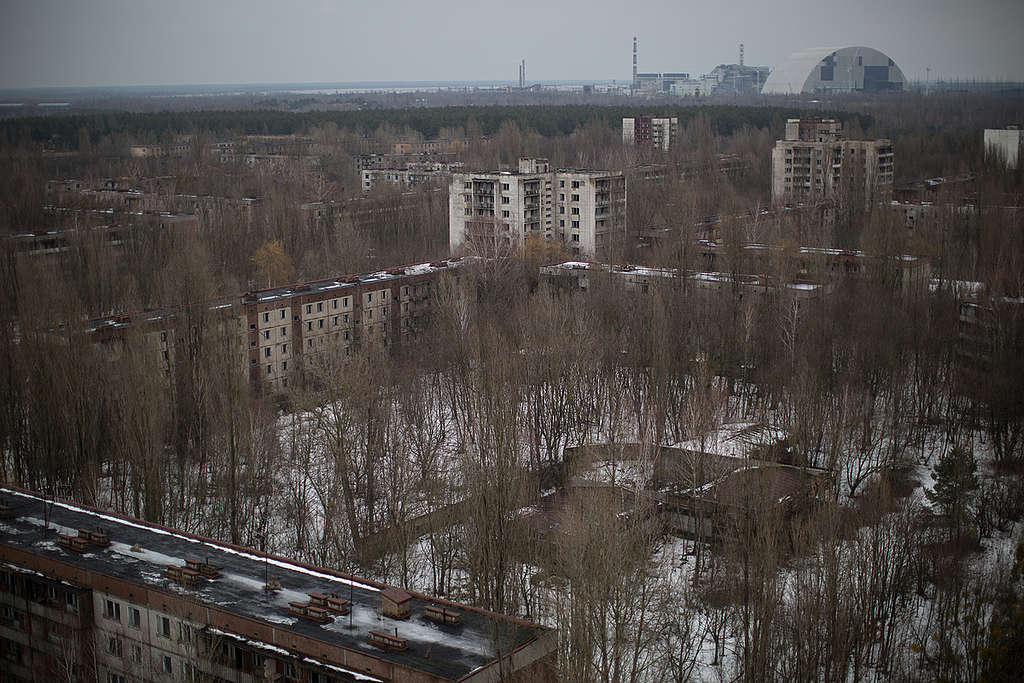
Abandoned buildings. 
Thirty years after the Chernobyl nuclear catastrophe Greenpeace revisits the site of the Unit 4 with the New Safe Confinement (NSC or New Shelter) and the abandoned town of Pripyat.

The Chernobyl plant is visible in the far background.

13. Sevanje je bilo tako močno, da se je barva oči gasilca Vladimirja Pravika spremenila iz rjave v modro.
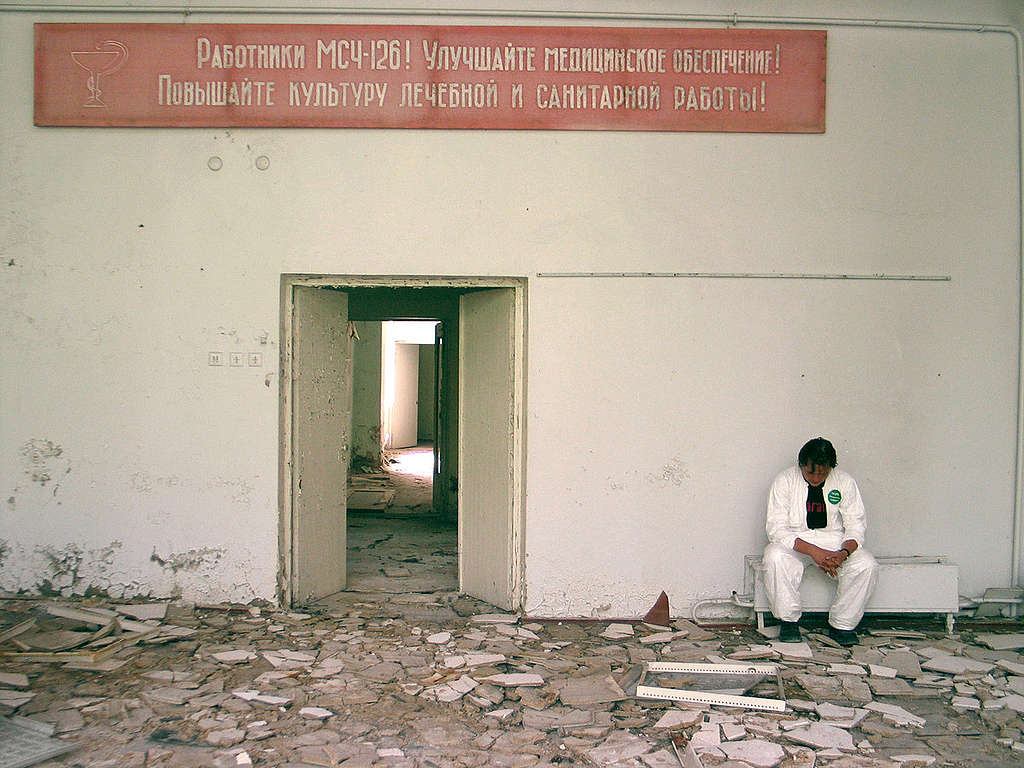
Abandoned Hospital in Pripyat. Radioactive contamination in Pripyat is still very high. One needs a special permit to enter this area. Before the Chernobyl accident, the town of Pripyat was considered the "glory" of the former Soviet Union. More than 48,000 inhabitants were living here - less than 3 kilometers from the Chernobyl nuclear power plant. Many of them were employed directly in the power plant. Today Pripyat is like a ghost town.

14. Švedska je bila prva država, ki je obvestila svet o nesreči, po tem, ko je vlada Sovjetske zveze prvotno na skrivaj prikrila nesrečo.
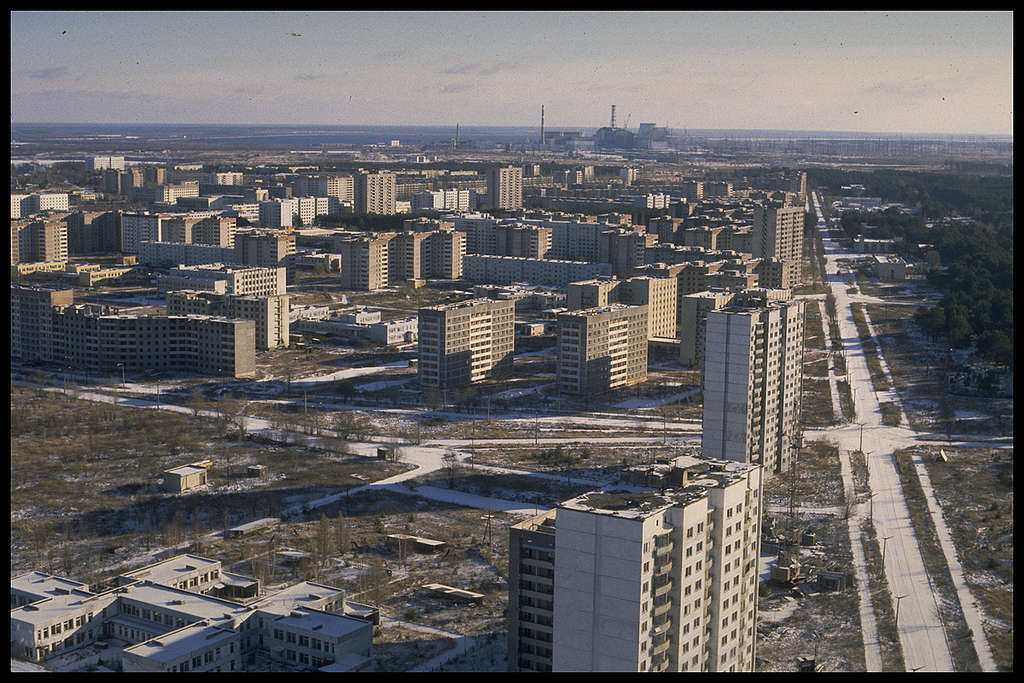
The deserted city of Pripyat. Chernobyl nuclear power station in background, Ukraine.

15. Na prizadetih območjih nesreča v Černobilu vpliva na vse aspekte človeških življenj. Sevanje iz jedrske elektrarne Černobil lahko najdemo v hrani, ki jo jedo, v mleku in vodi, ki ju pijejo, v šolah, parkih in otroških igriščih ter v gozdovih, iz katerih pridobivajo les, ki ga porabijo za kurjavo, da jim je toplo.
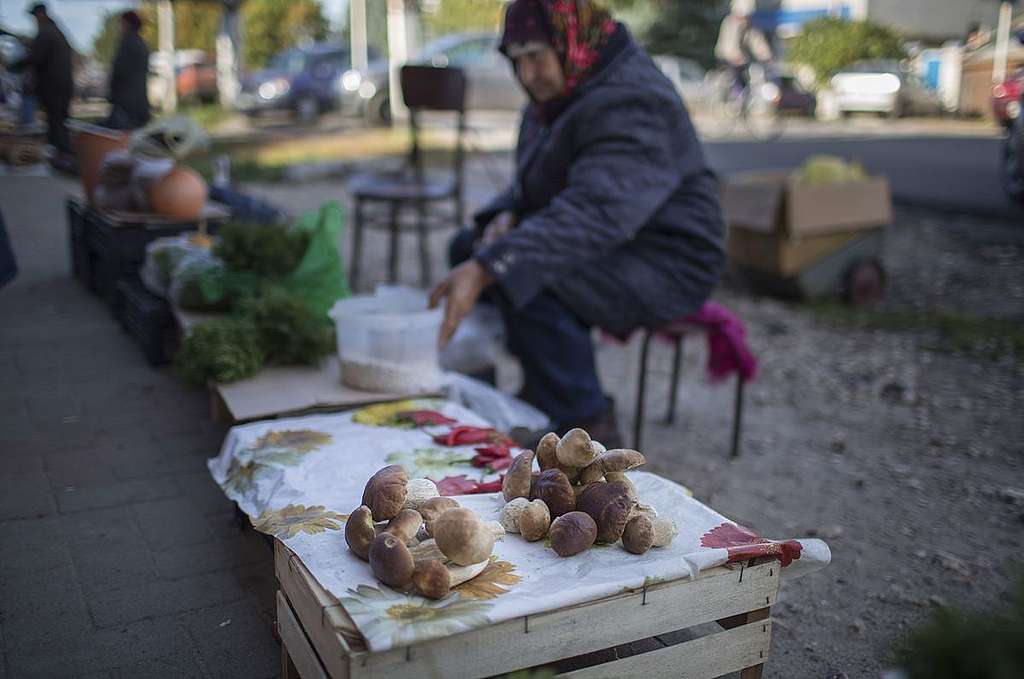
In the town of Novozybkov in the Bryansk region in Russia, residents sell local produce outside the local bazaar. Here the food does not pass radiation control.

To understand better how contamination affects the lives of Chernobyl survivors, Greenpeace carries out two pilot investigations into the remaining radionuclide contamination of locally produced food and forests.

En sam dogodek za vedno spremenil naše dojemanje jedrske energije. Černobil je eden najbolj prepoznavnih sinonimov za katastrofo na svetu. Njegova zapuščina je, da služi kot univerzalni opomin na grozne posledice jedrske energije, ko gre kaj narobe.

[1]
https://iris.who.int/bitstream/10665/41801/1/9241561815_eng.pdf (str. 3)
https://www.vice.com/en/article/30-years-after-the-chernobyl-disaster-locals-are-still-eating-radioactive-food/
https://www.history.com/news/8-things-you-may-not-know-about-chernobyl (ocena vsaj 100x)
https://inis.iaea.org/collection/NCLCollectionStore/_Public/28/058/28058918.pdf (400x krat več kot samo Hirošima)


Rainbow Warrior Near the Queensland Coast. © Tom  Jefferson / Greenpeace
Doniraj

Greenpeace ne sprejema finančnih sredstev inštitucij EU, vlad, korporacij ali političnih strank – naše delo je mogoče le zaradi donacij posameznikov.

Pridruži se