
Beluga Whales
Delphinapterus leucas
Beluga whales live in coastal waters, making them especially threatened by human pollution and fishing nets. There are between 62,000 and 85,000 beluga whales worldwide.
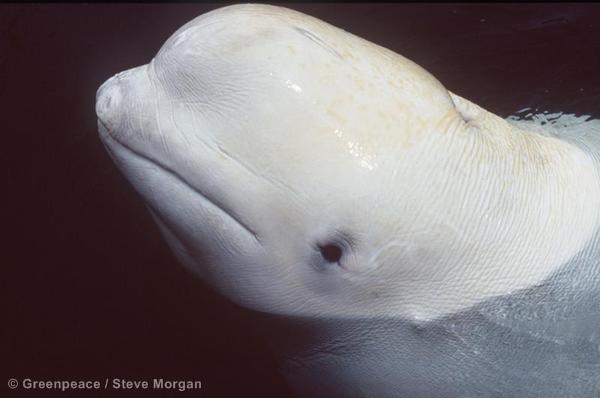
Estimated population: 62,000-85,000 worldwide. Cook Inlet population considered depleted.
Ways to identify this species: toothed whale, small head, adults have white skin, babies appear gray.
Beluga Whale Biology
- Beluga whales are migratory and inhabit the Arctic and sub-arctic regions of Russia, Greenland, and North America. They travel to warmer waters for spring. Beluga whale populations in Cook Inlet, Alaska do not migrate.
- Adult males range from 11 to 15 feet in length and weigh up to a ton. To preserve body heat in chilly Arctic waters, the beluga’s blubber can be up to five inches thick.
- The beluga’s dorsal fin is only a bump; a larger fin would get in the way as the whale breaks through the ice to breathe.
- Beluga whales produce a variety of sounds, including whistles, squeals, moos, chirps and clicks. They are very social animals, hunting, migrating and living in pods numbering into the hundreds.
Threats to Beluga Whales
- Because belugas prefer to live in coastal waters, they are threatened by human pollution and the risk of entanglement in fishing nets.
- Beluga whales were hunted during the 18th and 19th centuries.