


Greenpeace South Asia expresses its deepest sorrow and solidarity with everyone affected by the catastrophic Bhotekoshi flood and mudslide in the district of Rasuwa in Nepal. Our thoughts are with those who have lost loved ones, those still waiting desperately for news of family and friends, the communities whose homes and livelihoods have been destroyed, and everyone working to rescue survivors and provide assistance.
Hundreds of people are missing, and countless homes have been destroyed. The scale and suddenness of this disaster are horrifying, especially as it comes barely a year after another devastating flood struck the same region. As the climate crisis escalates, frontline communities face a growing risk of being hit by one disaster while still struggling to recover from the last one.
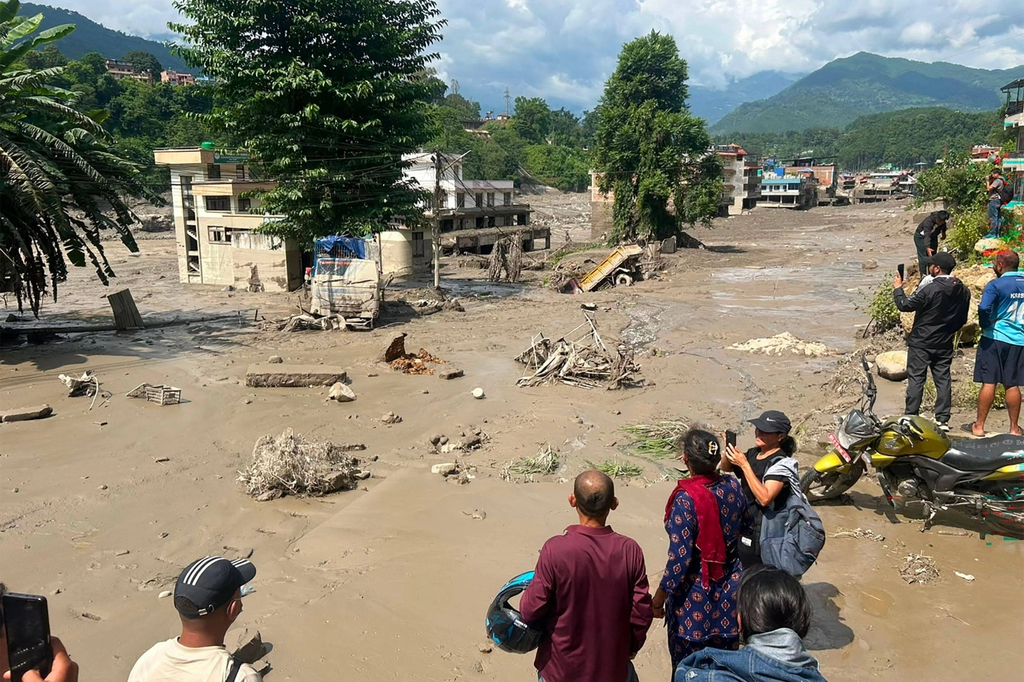
What started in Langtang Himal does not stop there. The Nepal flood also threatens hundreds of communities living downstream, including in India. The states of Bihar and Uttar Pradesh are now on high alert, as they face damaging floods almost every year as a result of their proximity to Nepal.
The immediate priority must be saving lives, finding people who remain missing and ensuring that affected communities have access to safe shelter, food, clean water, healthcare and other essential supplies.
Rescue teams, local communities and authorities are working under extremely difficult conditions. With roads and bridges damaged and electricity supplies disrupted, reaching affected communities and delivering essential assistance remains a major challenge.
Greenpeace calls for all available resources to be mobilised towards emergency response and recovery, with particular attention to vulnerable communities and people whose homes, livelihoods and access to essential services have been disrupted.
Scientists say it’s too early to determine exactly what role global warming played in this particular event, but preliminary investigations have pointed to a collapsed glacier as the cause, and the wider trend is not in question: a warming world is increasing the risk of such disasters.
Global heating, mostly driven by fossil fuel emissions from just 32 companies, is rapidly transforming the Himalayas. Even if warming can be limited to 1.5C as a global average, more than a third of the ice volume of glaciers within the extended Hindu Kush Himalaya region is projected to be lost this century.
Glaciers are shrinking, snow and ice are melting, permafrost is thawing, and mountain slopes are becoming less stable. These changes are creating a more dangerous environment in which catastrophic floods, landslides, and avalanches like this one are more likely to occur.
Every fraction of a degree of additional warming increases the danger, while communities who did least to cause the crisis bear the greatest human and financial costs.
Those costs should not be borne by these families, communities and governments of nations struggling to recover from one disaster after another. These are not simply natural disasters. The climate crisis has been driven overwhelmingly by the extraction and burning of fossil fuels, while year after year, international oil giants have made record profits while we pay the price.
Governments must respond to disasters like this not only with emergency relief but also with action to prevent the next one by rapidly phasing out fossil fuels, accelerating the global shift to renewable energy and electrification, investing in adaptation and resilience, and by making big polluters pay towards the costs of the damage their business helped cause.